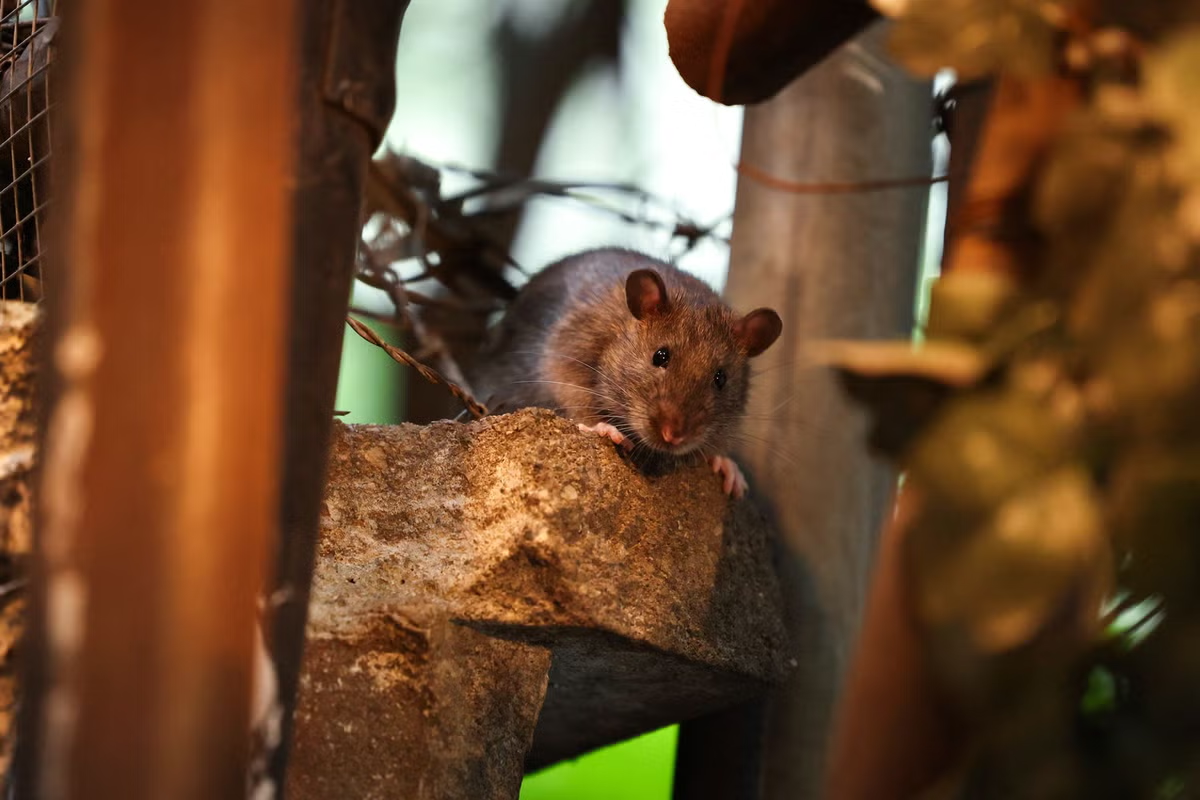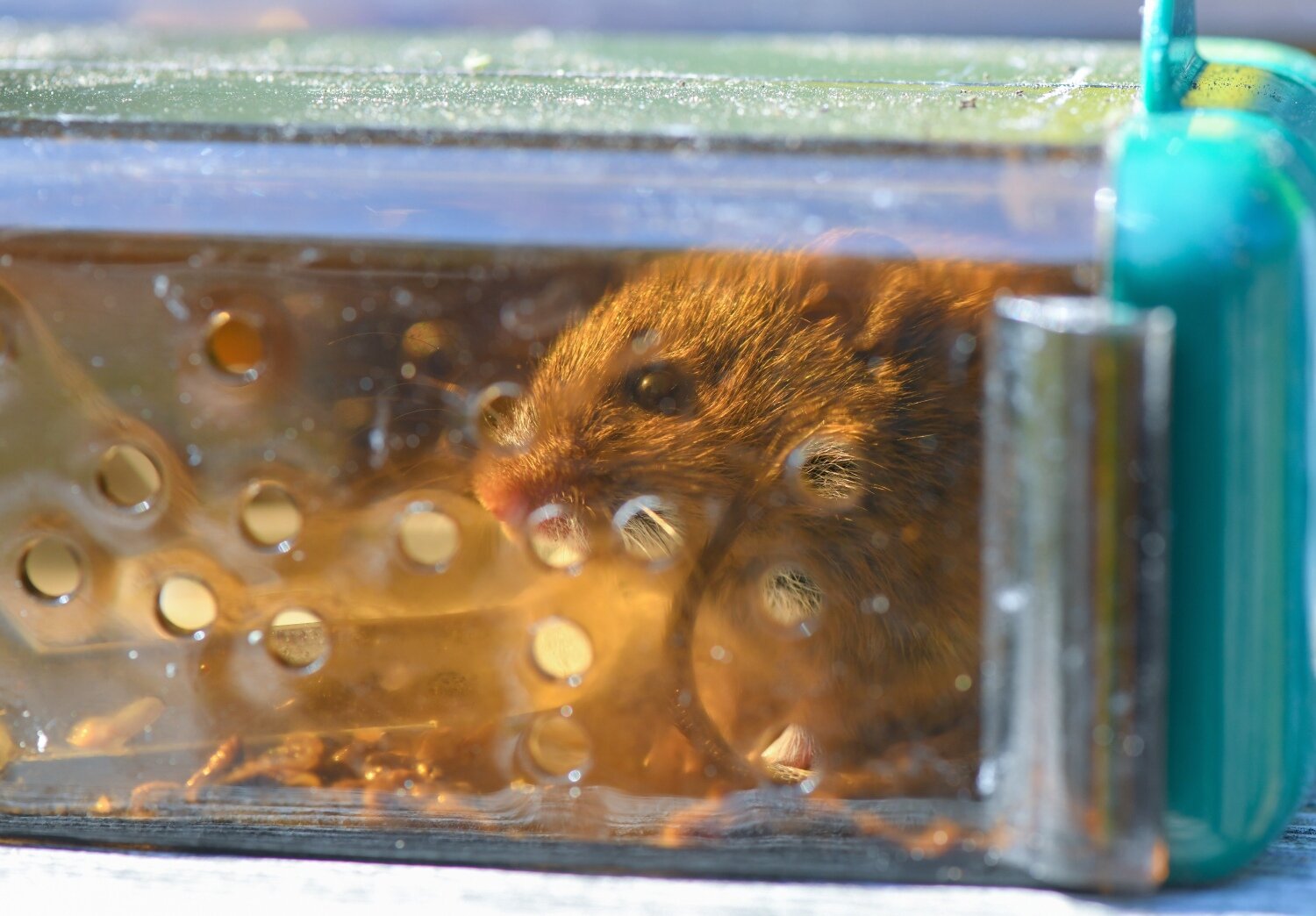
A house mouse caught in one of the traps that scientist Emanuel Heitlinger has set up on farms. Credit: Patrick Pleul, dpa
Scientists analyzed the genomes of gut microorganisms from an extensive population of 875 wild house mice (Mus musculus) collected from farms in Germany. They searched for genes responsible for resistance to common antibiotics and correlated the presence of these ARGs in the mice with a range of environmental and host variables, such as land use and farming practices, livestock density for cattle, pigs and poultry, sex and physical condition of the mice, as well as climatic variables.
The findings are published in the journal Nature Communications.
These statistical analyses aimed to explain the influence these factors have on which and how many ARGs are present in the mice's gut microbiome. In a second step, they compared the resistance profiles in the mice's genomes with resistance genes found in the manure of farm animals, whose genomic data are publicly available from other projects.
Half of the resistance genes found in farm animals are also found in mice