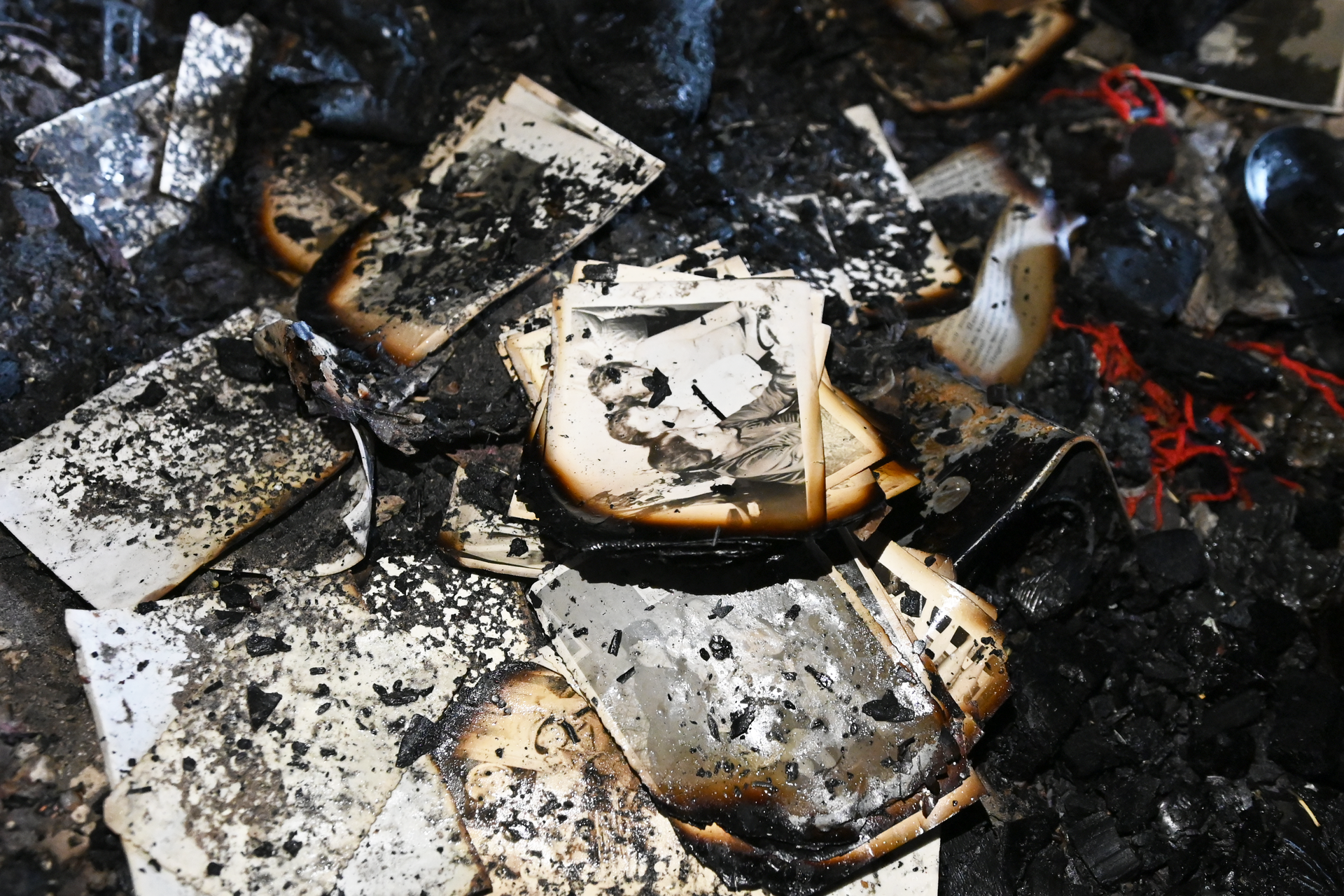
Burnt old photos and books remain in an apartment damaged by a Russian drone strike in Kyiv, Ukraine, on October 10, 2025. (Oleksandr Gusev/Global Images Ukraine via Getty Images)Vincent ArtmanSenior Researcher at the University of OstravaAs Russia's war against Ukraine grinds on with seemingly no end in sight and the Russian leadership rejecting any talk of ceasefires or meaningful negotiations, there has been a growing chorus arguing that Kyiv must face reality, admit that military victory is impossible, enter negotiations, and agree to territorial concessions. "Land for peace" might be a "difficult choice," or so the argument goes, but it is the only way to avoid a crushing defeat. Even setting aside the question of whether such unilateral concessions would actually produce a just and durable peace, what is strangely absent from "land for peace" proposals is any acknowledgment that what is at stake is more than "border adjustments." Territory, after all, is not empty. Indeed, as Olga Burlyuk has argued, the "pornography of land concessions" requires us to imagine a Ukraine without people: since it's "just land" being traded away, "there is no harm in losing some."But even if for some, "land for peace" may appear to be a tidy formula, reality is far messier: millions of Ukrainians live under an occupation regime that is designed to eradicate their identity.
'Land for peace' won't stop Russia's war on Ukrainian identity
As Russia's war against Ukraine grinds on with seemingly no end in sight and the Russian leadership rejecting any talk of ceasefires or meaningful negotiations, there has been a growing chorus arguing that Kyiv must face reality, admit that military victory is impossible, enter negotiations, and agree to territorial concessions. "Land for peace" might be a "difficult choice," or so the argument goes, but it is the only way to avoid a crushing defeat. Even setting aside the question of whether
938 words~4 min read