Sri Lanka is emerging as a complementary manufacturing base for Tamil Nadu’s apparel industry, helping companies diversify production, manage tariff risks and offer customers greater sourcing flexibility.
| Photo Credit:
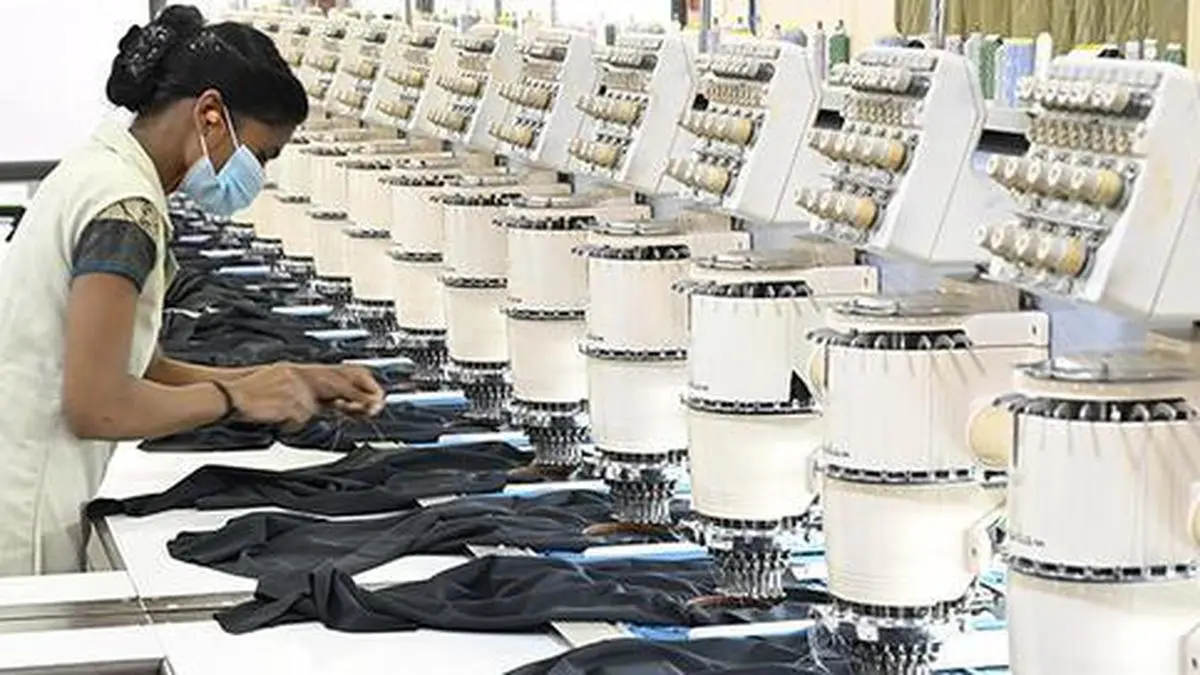
Sri Lanka is emerging as more than an alternative manufacturing destination for Tamil Nadu’s apparel industry, with companies viewing the island nation as a complementary production base that can support growth, mitigate tariff risks and offer customers greater sourcing flexibility.For Avinashi-based SP Apparels Ltd, Sri Lanka is already becoming an important growth platform. The manufacturer and exporter of knitted garments for infants and children expects its Sri Lankan operations to contribute ₹150 crore to ₹200 crore in revenue by March 2027, as the factories acquired and integrated over the past 1.5 years move towards full operational efficiency.The company has spent the period integrating the operations, strengthening systems and improving execution. Chairman and Managing Director P. Sundararajan said that delivery performance, productivity, and quality have improved, with the factories now operating at near full efficiency.SP Apparels currently has around 1,650 machines in Sri Lanka, of which about 1,300 are being deployed for exports. All the acquired factories are fully operational, except one facility operating at about 85-90 per cent capacity, he told analysts.The factories receive base orders from India along with the required raw materials, while shipments have remained on schedule. With integration costs and pre-operative losses expected to taper off, the company expects the Sri Lankan operations to become self-sustaining by March.ExpansionS.P. Apparels is also exploring ways to expand its Sri Lankan manufacturing footprint without committing substantial fresh capital. It plans to work with customer-approved factories on a job-work basis, allowing it to add capacity while limiting investment and operational risks.The company expects this model could add another 500-600 machines within a year. At the same time, its existing machinery base in Sri Lanka could be expanded towards 2,000 machines, providing additional capacity as customer demand improves, said Sundararajan.The strategy effectively creates a dual-country manufacturing network, with Sri Lanka complementing the company’s established production base in India, he said.Sri Lanka offers tariff and sourcing flexibilityChennai-based premium apparel manufacturer Meenakshi India Ltd entered into a contract manufacturing memorandum of understanding with an existing Sri Lankan factory last year. The arrangement was initially intended to provide customers with an alternative country-of-origin option amid uncertainty over US tariffs on Indian goods.Ashutosh Goenka, Chairman and Managing Director, Meenakshi India, said the company had entered into the arrangement when the US imposed a 50 per cent tariff on India. With the tariff situation changing, Sri Lanka’s relative advantage has narrowed.Sri Lanka currently enjoys duty-free access to the European Union for its apparel exports, while Indian apparel faces duties of around 8-12 per cent. Goenka said the India-EU FTA, once operational, could bring India closer to Sri Lanka in terms of market access. “Organically, Sri Lanka is neither cheaper nor better than India. It is the duties and tariffs that make it preferred over India,” he said.Established apparel ecosystem supports exportsAn official of a large textile company in Tiruppur said Sri Lanka continues to have an established apparel manufacturing ecosystem and skilled workforce, although the country imports fabrics from markets such as China. It continues to supply major export markets, including the US and Europe.An official of a garment trading firm, in a social media post, said that with apparel exports surpassing $5 billion and the US, EU & UK accounting for nearly 75 per cent of garment exports, Sri Lanka is a sophisticated market with a professional garmenting ecosystem.Published on August 20, 2026