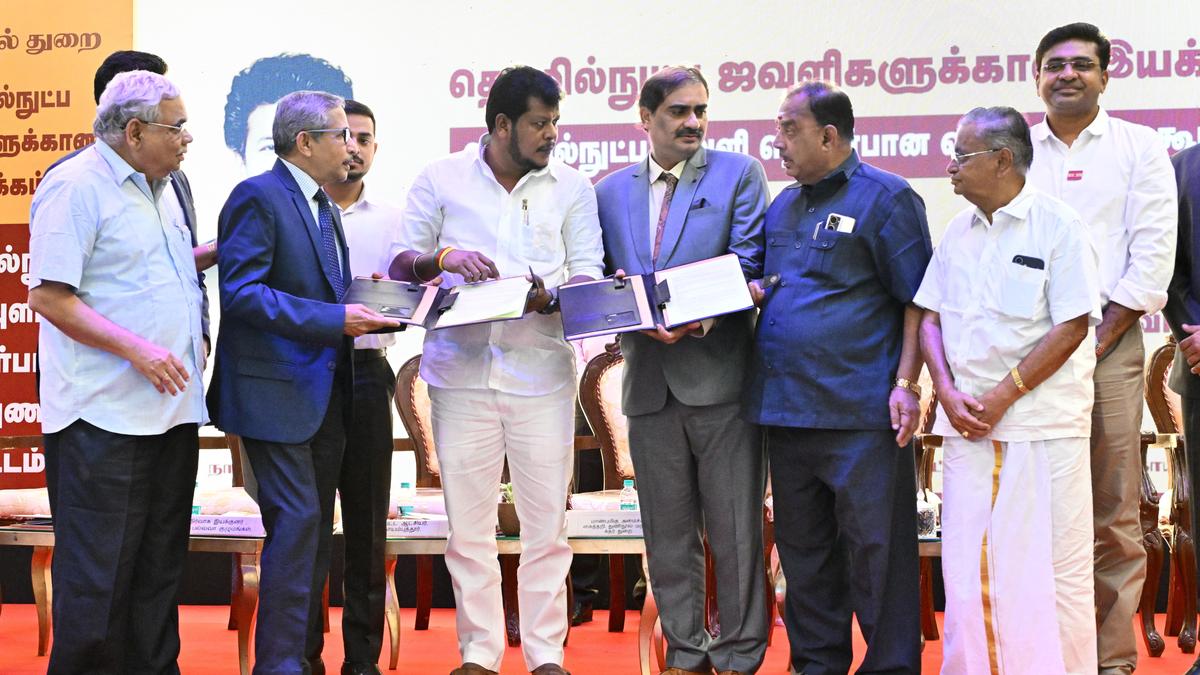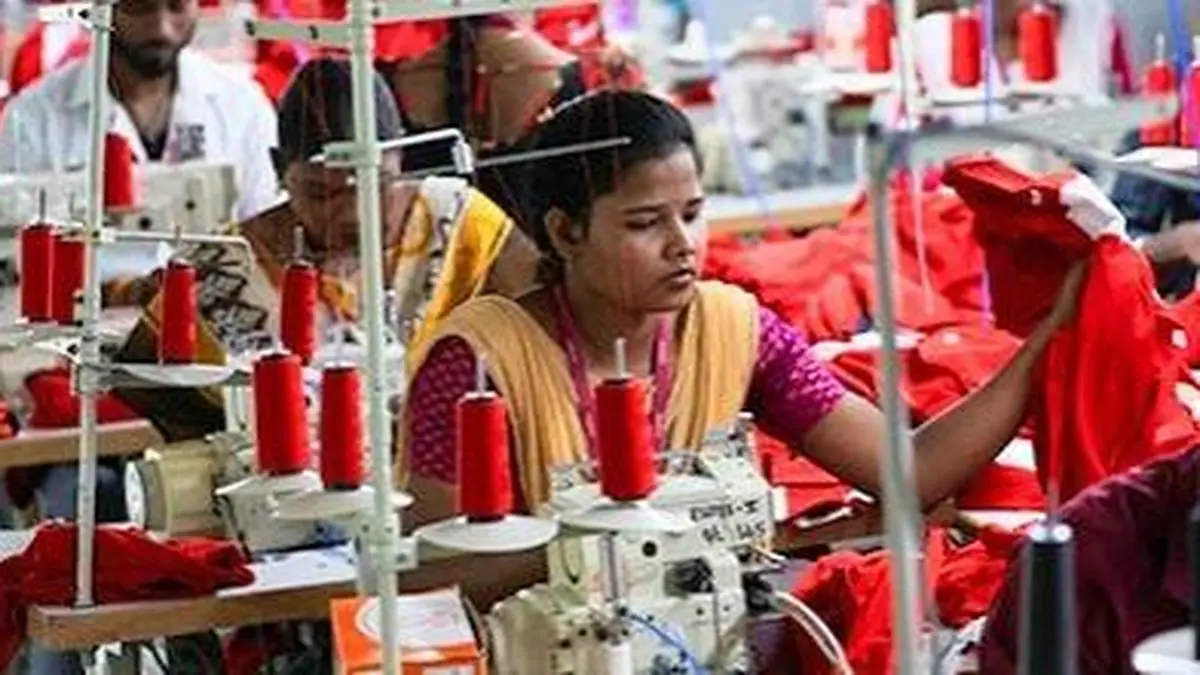
Tamil Nadu's textile industry needs budgetary allocation from the State government to address some of its critical needs for future growth, according to the Southern India Mills Association (SIMA).The Association said in a press release on Monday that Tamil Nadu's textile industry, employing about 70 lakh people, accounts for nearly 25 % of India's textile business.With presence across the value chain, the State accounts for 45 % of the spinning capacity, 22 % of the powerloom capacity, 70 % of the cotton knitted garment manufacturing capacity, 40 % of the home textile manufacturing capacity, and 12% of the handloom capacity. It also contributes to nearly 28% of India's textile exports, valued at approximately $ 10.5 billion.Tamil Nadu is home to 80% of the country's spinning machinery, spares and accessories manufacturing capacity. It's annual contribution for the State GST is over ₹4,500 crore.Durai Palanisamy, the SIMA chairman, said in the release that the industry is facing challenges in textile processing, raw material requirement, and modernisation.The State government should provide adequate budgetary allocation to establish industry-led training centres to upskill the existing workforce.Tamil Nadu produces just about five lakh bales of cotton as against the requirement of 110 lakh bales annually. It holds potential for cultivating specialty cotton such as ELS and organic and naturally coloured cotton.The Tamil Nadu government should announce a dedicated mission to promote cotton cultivation.Further, modernisation of manufacturing machinery is essential for producing high-quality and cost-effective textile products. The SIMA requested the State government to introduce suitable capital subsidy schemes to encourage replacement of obsolete technology textile machinery.Since technical textiles and value-added products manufactured from man-made fibres (MMF) represent the fastest-growing segments of the global textile market, the proposed Tamil Nadu Industrial Policy 2026 should focus on strengthening the State's textile ecosystem and enhancing its share in the national and global markets, he said.A large section of the textile industry in the State is dependent on processing facilities located in other States. While the processing units in Tamil Nadu have successfully adopted the Zero Liquid Discharge (ZLD) system to comply with stringent environmental norms, this has led to accumulation of mixed salts. The State government should formulate a comprehensive scheme for safe disposal of treated waste through deep-sea outfall, wherever technically and environmentally feasible, and establish an effective mechanism for scientific disposal of the accumulated mixed salts, he said. Published - August 03, 2026 07:44 pm IST
SIMA calls for budgetary support to address demands of Tamil Nadu’s textile industry
Textile industry in Tamil Nadu has urged the TVK government to support its growth with budgetary allocation
399 words~2 min read