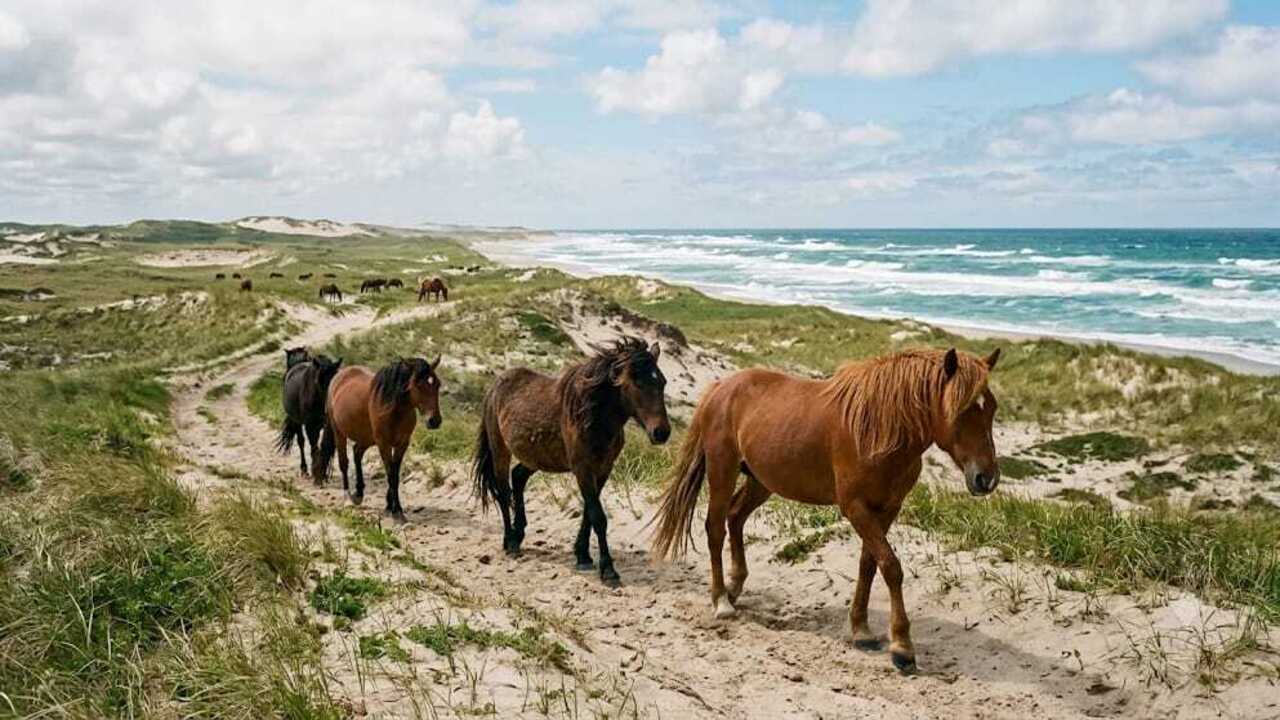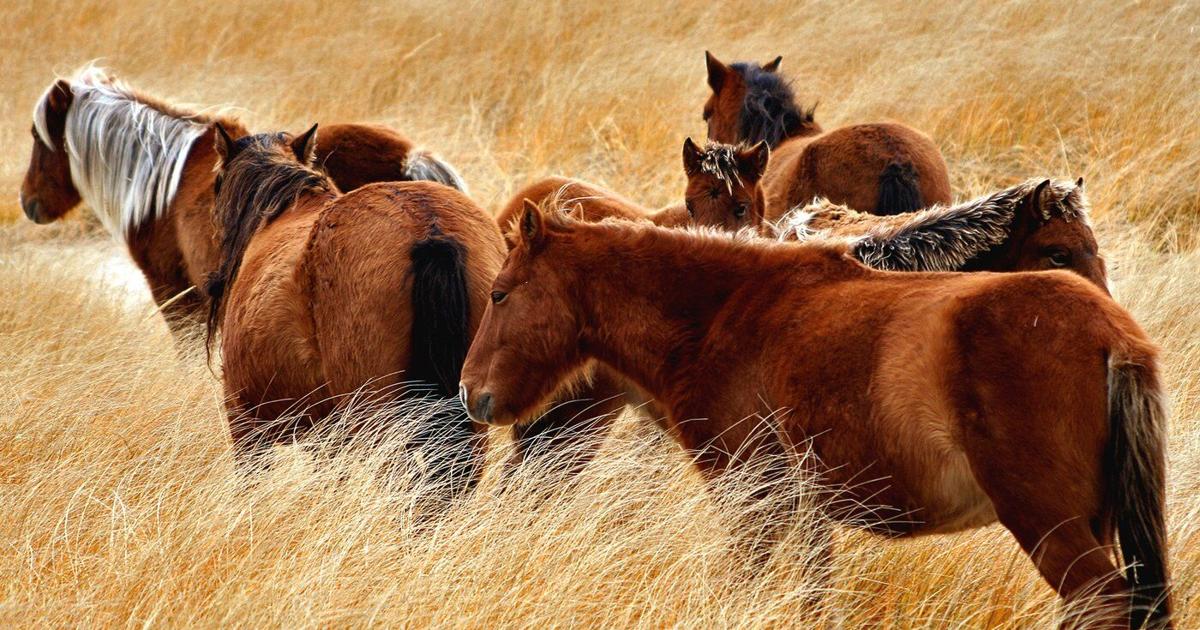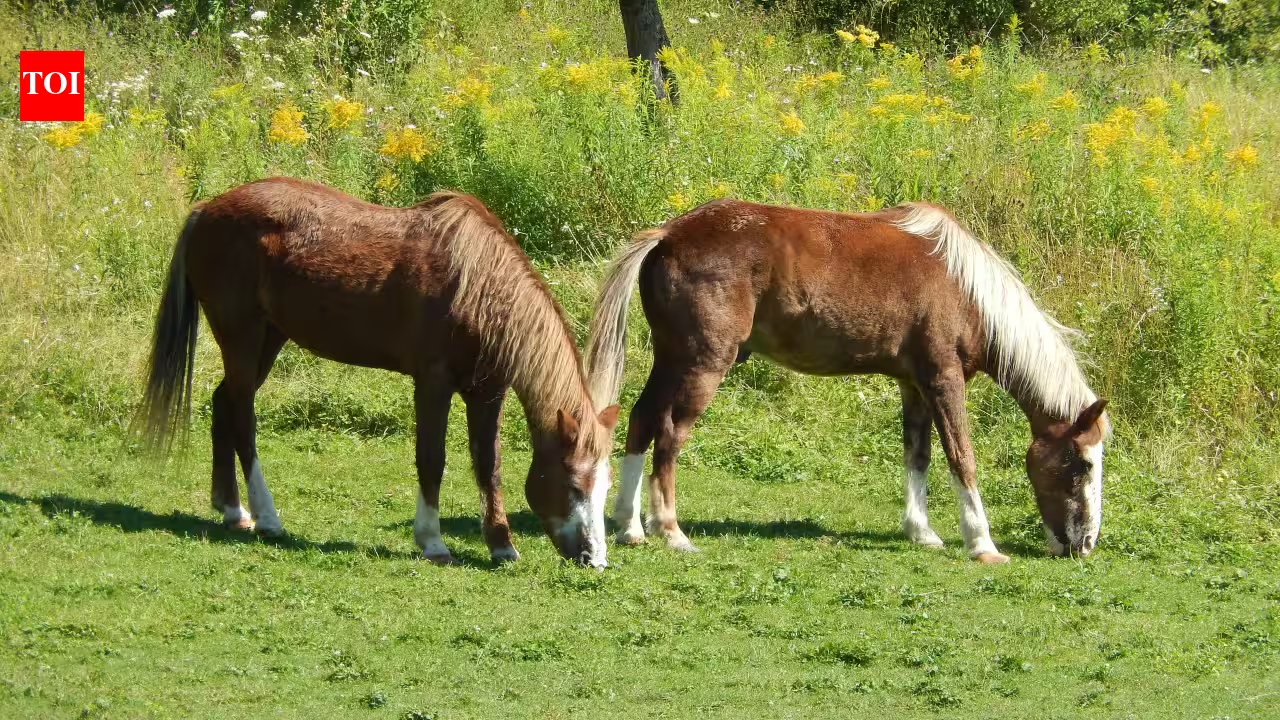
Sable Island Horses at the Shubenacadie Wildlife Park | Wikimedia CommonsAround 1760, Boston merchant and shipowner Thomas Hancock sent horses to Sable Island, a remote crescent-shaped sand island in the North Atlantic. The animals were part of a larger group of livestock placed there during the 18th century, when merchants saw isolated islands as places where animals could reproduce without requiring constant care. After more than 250 years, the descendants of those horses still roam Sable Island without human management. Their numbers have fluctuated widely over the decades, and reached more than 500 in several recent annual counts. The official 2024 count recorded 420 horses. Parks Canada says the population has varied between 374 and 590 in recent years. The story is unusual not simply because the horses survived, but because they are now a protected wild population on an island where people no longer intervene in their breeding or daily survival. Parks Canada's historical account says Hancock shipped horses to the island sometime after 1755. The animals were associated with Acadians that were deported from Nova Scotia during the Great Upheaval, whom Hancock had transported to New England colonies. He also placed cattle, sheep, goats and hogs on the island. Only the horses survived there in the long term.Sable Island Horses at the Shubenacadie Wildlife Park | Wikimedia CommonsA merchant's livestock experiment on a remote sandbarSable Island lies far offshore from Nova Scotia and has always been difficult to reach. Its geography also changes over time as wind and waves reshape its sand dunes. Historical accounts show that domesticated animals had been brought to the island before Hancock's shipment. Parks Canada says Boston minister Andrew LeMercier is generally believed to have introduced horses in 1737 and 1738, decades before Hancock's animals arrived. LeMercier had hoped a settlement on the island could assist people who survived shipwrecks, and records indicate that he later tried to sell the island along with its animals. Hancock's involvement came later. He transported horses, along with other livestock, to an island with abundant grazing, no large predators and little need for fences. The commercial idea was that the animals would survive and reproduce, and they could periodically be harvested and sold. But that plan did not last. The other livestock eventually disappeared from the island, while horses remained. A historical paper published through Dalhousie University's Nova Scotia Museum records that Thomas Hancock placed animals on Sable Island “about 1760,” citing historical accounts that described horses, cattle, sheep, goats, hogs and other animals being landed there. By the end of the American Revolutionary War, the account said, horses were the only animals from that group remaining.The horses eventually became a self-sustaining wild populationSome animals were used to move supplies and rescue equipment when a lifesaving station was established on Sable Island in the early 1800s. But direct human control over the population eventually ended. Parks Canada says the horses have lived on the island without human interference since 1961, when they received formal protection under the Sable Island Regulations of the Canada Shipping Act. Their status changed again when Sable Island became a national park reserve in 2013. Today, Parks Canada treats the horses as a naturalized species. Because the population has existed on the island for generations, the animals are protected under the Canada National Parks Act and the National Parks of Canada Wildlife Regulations. Officials do not control breeding, remove animals to maintain a particular number or provide routine food. Instead, the population rises and falls under the island's natural conditions. Annual records show how sharply those changes can occur. Parks Canada's figures list 180 horses in 1961, 507 in 2010, 583 in 2019 and 591 in 2022. The count then dropped to 374 in 2023 before rising to 420 in 2024. The estimates are primarily based on annual censuses, although some earlier counts relied on aerial photographs.Sable Island horses grazing | Wikimedia CommonsWhy no one manages their numbers todayParks Canada says most deaths occur from late winter into spring, when food can be limited and the island's wet, cold and windy conditions become more difficult. Mortality is higher among foals and younger horses, while population size also changes with births and the availability of resources. Yet officials have chosen not to manage those fluctuations as they would in a domestic herd. The horses are allowed to behave as a wild population, with researchers continuing to monitor their health and numbers. Parks Canada says there is no immediate risk requiring intervention.Sable Island is one of Canada's farthest offshore islands, and is known for its shifting dunes, grey seal colony, wild horses and other species. Its human history extends back centuries, with hundreds of recorded shipwrecks contributing to its reputation as the “Graveyard of the Atlantic.” The island's constantly changing landscape has not erased the horse population introduced there in the 18th century.The latest official figure in Parks Canada's published population table is 420 for 2024, rather than a fixed population of 500. But annual counts have repeatedly exceeded that mark, including 591 animals in 2022. Their descendants remain on the same isolated Atlantic island, surviving without regular human feeding, breeding programs or population control.
In 1760, a Boston merchant left horses on a treeless island in the Atlantic: More than 250 years later, around 500 wild descendants still survive without human care
Around 1760, Boston merchant and shipowner Thomas Hancock sent horses to Sable Island, a remote crescent-shaped sand island in the North Atlantic. The animals were part of a larger group of livestock placed there during the 18th century, when merchants saw isolated islands as places where animals could reproduce without requiring constant care.
860 words~4 min read