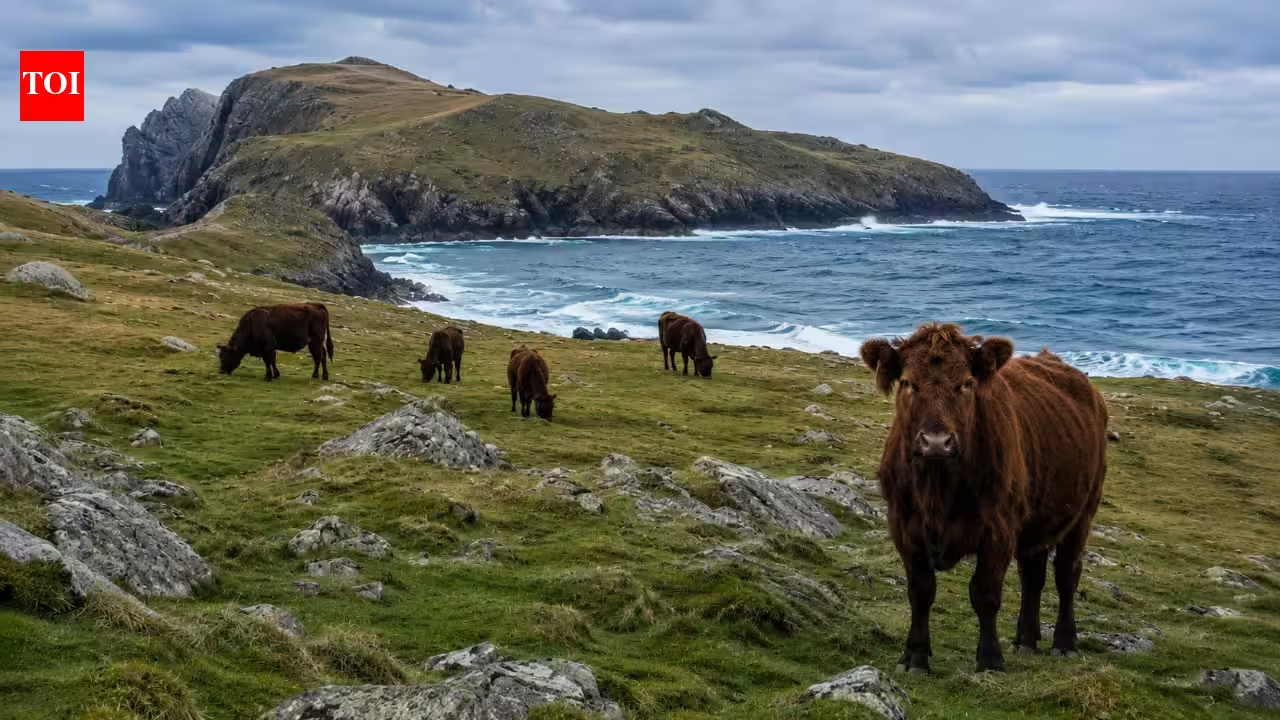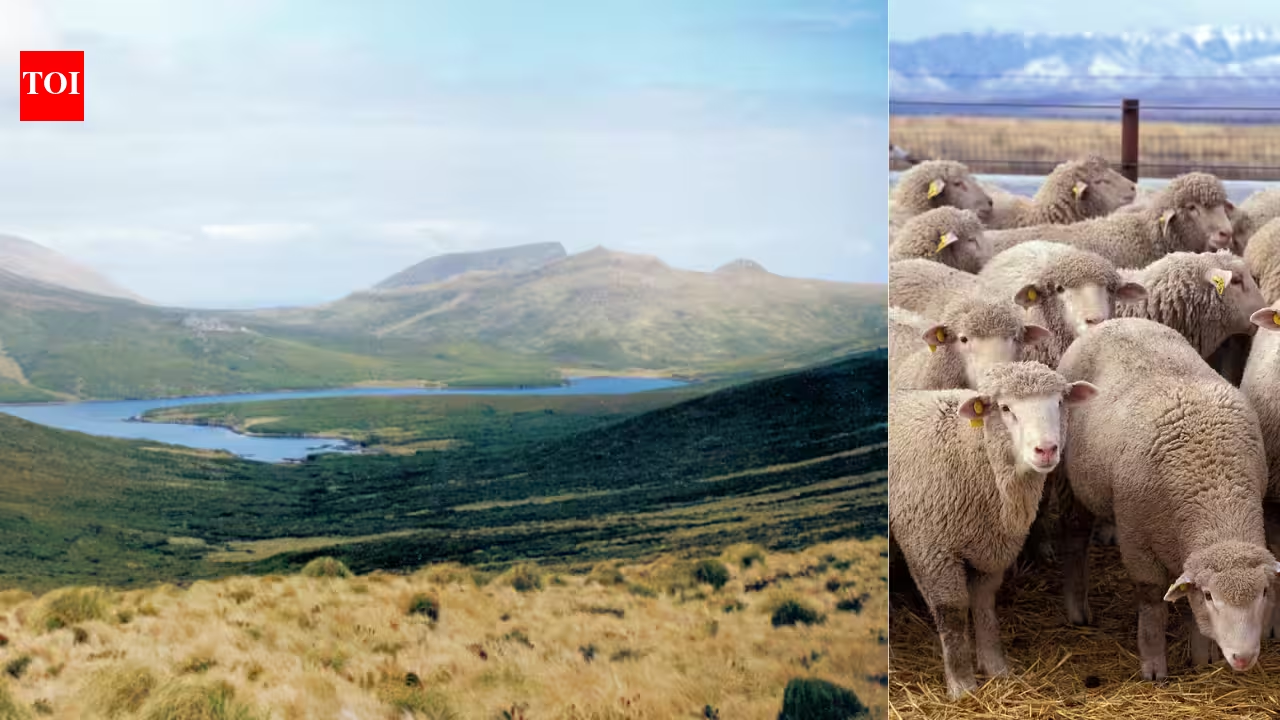
Campbell Island landscape | Wikimedia CommonsSheep farming collapsed on Campbell Island in 1931, and about 4,000 animals were left behind on one of the most remote islands in New Zealand's territory. The farm's final leaseholder, John Warren, had taken over the operation only a few years earlier, but falling prices and severe transport problems made the venture increasingly difficult to sustain. Historical research published by the Australian National University explains that the effects of the Great Depression compounded the problem. Warren and his workers were stranded on the island for two years before being rescued in 1931, and the farm was abandoned.The sheep remained, and the animals were not a single established breed. Sheep farming on Campbell Island had begun in 1895, and successive operators brought different animals to the island over the following decades. The remote farm was about 620 kilometers south of Stewart Island, and was continuously exposed to strong winds, persistent moisture and acidic peat soils. Farming had always been difficult, since regular shipping was unreliable, pasture was limited and maintaining workers on the island was expensive. By the late 1920s, the economic situation had become even more difficult. Warren stocked the island with thousands of sheep, but wool and meat prices fell sharply after 1929. The income from the farm was insufficient to keep the operation going. When the remaining residents finally left, they abandoned not only the farm but also the livestock. Roughly 4,000 sheep and 20 to 30 cattle were left to survive without routine human care.Campbell Island landscape | Wikimedia CommonsThe flock changed after the farmers leftThe abandoned sheep became feral and survived under conditions very different from those faced by managed flocks on mainland farms. Research by M. R. Rudge in the New Zealand Journal of Ecology documented major changes in the Campbell Island population over subsequent decades. Sheep numbers fell from more than 8,000 at their earlier peak to around 1,000 by 1961, before increasing again to approximately 3,000 during the 1960s. The study also recorded changes in reproduction and other characteristics. By 1970, lambing rates were higher than those reported during the farming era, while the sheep had developed the ability to breed at one year of age and to shed their unshorn fleece.Those changes were especially important because the animals had been isolated from ordinary flock management for decades. They were not regularly shorn, selectively bred by farmers or protected from the island's weather. The study described self-shedding as one of the traits that emerged in the population, although the precise evolutionary mechanisms behind every observed characteristic were not established. Field observations also showed variation in breeding patterns across different parts of the island and from year to year. The flock was therefore not simply a frozen remnant of the sheep abandoned in 1931. Decades of isolation and natural selection had produced a population with characteristics that attracted scientific attention.By the 1970s, however, the feral sheep were damaging Campbell Island's vegetation. Conservation authorities wanted the island's native plant communities to recover, and in 1970 a fence was built across the island. Sheep north of the barrier were removed, while the southern population was temporarily retained. This division also provided an opportunity to compare vegetation in grazed and ungrazed areas.Campbell Island landscape with a megaherb community in the foreground | Wikimedia CommonsTen sheep were removed before the cullScientists returned to Campbell Island during the summer of 1975–76 to save a small sample of the unusual flock. Ten sheep were selected and transported to mainland New Zealand for captive breeding. Te Ara, the Encyclopedia of New Zealand, records that the animals had evolved resistance to foot rot and a tendency to shed their fleeces. The sheep were preserved as a rare breed while the feral population remaining on the island was progressively removed to protect the native vegetation. The rescue of those 10 animals was particularly significant because the original island population was later eliminated. Te Ara says about 3,000 sheep still remained on Campbell Island in 1980, when the culling program continued to allow the island's megaherbs to recover. The later eradication campaign ended the free-ranging flock that had descended from the animals abandoned during the failed farming venture.The ANU historical study records that the island became an internationally recognised nature reserve from 1954, although traces of the farming period remained in its vegetation. Introduced pasture plants persisted at some sites long after the farmers and sheep had gone. Meanwhile, the descendants of the sheep taken off the island survived elsewhere in New Zealand.The original flock no longer exists on Campbell Island, but its genetic and physical legacy was not entirely lost. The decision to remove just 10 sheep in 1976 preserved descendants of a population that had spent roughly 45 years adapting to life without conventional farm management on a remote sub-Antarctic island. The traits that drew researchers' attention, including fleece shedding and reported foot-rot resistance, survived because a small group was taken from the island before conservation efforts removed the remaining feral sheep.
In 1931, a bankrupt farmer abandoned 4,000 sheep on a sub-Antarctic island: Decades of isolation produced a flock with rare inherited traits
Sheep farming collapsed on Campbell Island in 1931, and about 4,000 animals were left behind on one of the most remote islands in New Zealand's territory. The farm's final leaseholder, John Warren, had taken over the operation only a few years earlier, but falling prices and severe transport problems made the venture increasingly difficult to sustain.
835 words~4 min read