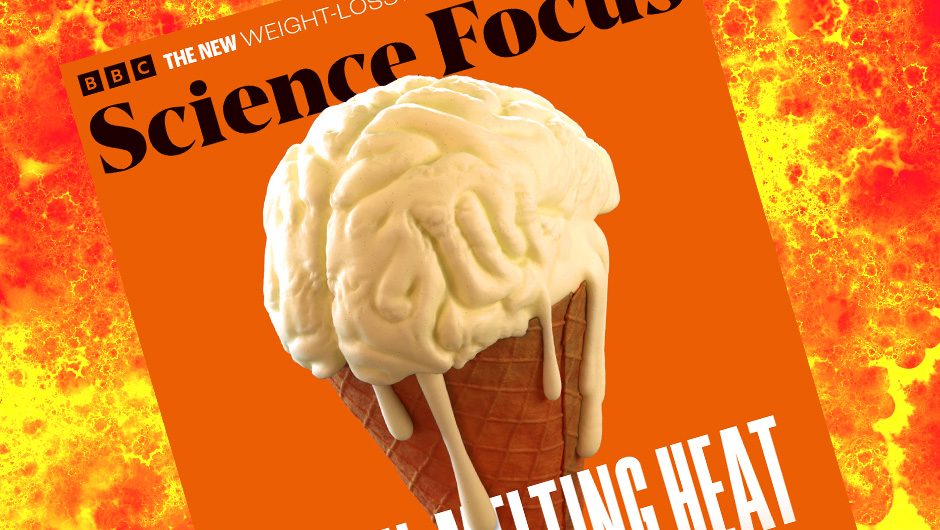
New issue: Brain-melting heat | BBC Science Focus Magazine
As I write this, it’s stupid hot. I mean that literally: it’s so hot that it’s difficult to think. My thoughts feel as though they’ve been wrapped in cotton wool and then set on fire. As it turns out, though, the way I feel isn’t that far removed from what’s happening inside my brain. Nothing is actually burning between my ears, but heat can interfere with the millions of tiny electrochemical interactions that my – and your – neurons rely on to function. Brain cells have a temperature range in which they work at their best, but push the temperature too high and some of the molecular machinery involved in sending signals becomes less reliable. It’s a little like an orchestra losing its conductor: the instruments are still there, but the timing starts to fall apart. Taken to extremes, this is why heatstroke can cause confusion, dizziness and other changes in brain function. And the heat doesn’t only affect the brain directly. As my body heats up, my circulatory system sends more blood towards my skin to help me lose heat, making my heart work harder. Sweating also means losing water and salts, and as dehydration sets in, maintaining a normal blood supply becomes more difficult – adding another challenge for a brain that’s already under thermal stress. Sweat and aggravation are, of course, far from the worst consequences of extreme heat. But this year, the soaring temperatures have felt relentless. Wave after wave of heat has battered Europe and the US, with barely enough respite before the next one arrives. We’re going to have to adapt. We can change our buildings, routines and behaviour to make extreme heat easier to bear. But what happens to the organ that controls all those decisions when the temperature keeps rising? In this issue, we're exploring what heat does to the brain – from our ability to think clearly and make decisions, to our mood, sleep and mental wellbeing. And because knowing it’s too hot doesn’t make it any cooler, we've also found some scientifically proven advice on the fastest way to cool down.
311 words~1 min read
How to spot a liar
There are ways to spot when someone is trying to deceive you. But you have to listen carefully to what they’re saying. Here are five tells to look out for, with studies taken from real criminal trials.
Prediabetes
If you've recently been diagnosed with prediabetes, it could be a blessing in disguise. With the right diet and lifestyle changes, there are ways to reverse the slide towards type 2 diabetes, but doing so means acting on the early warning signs.