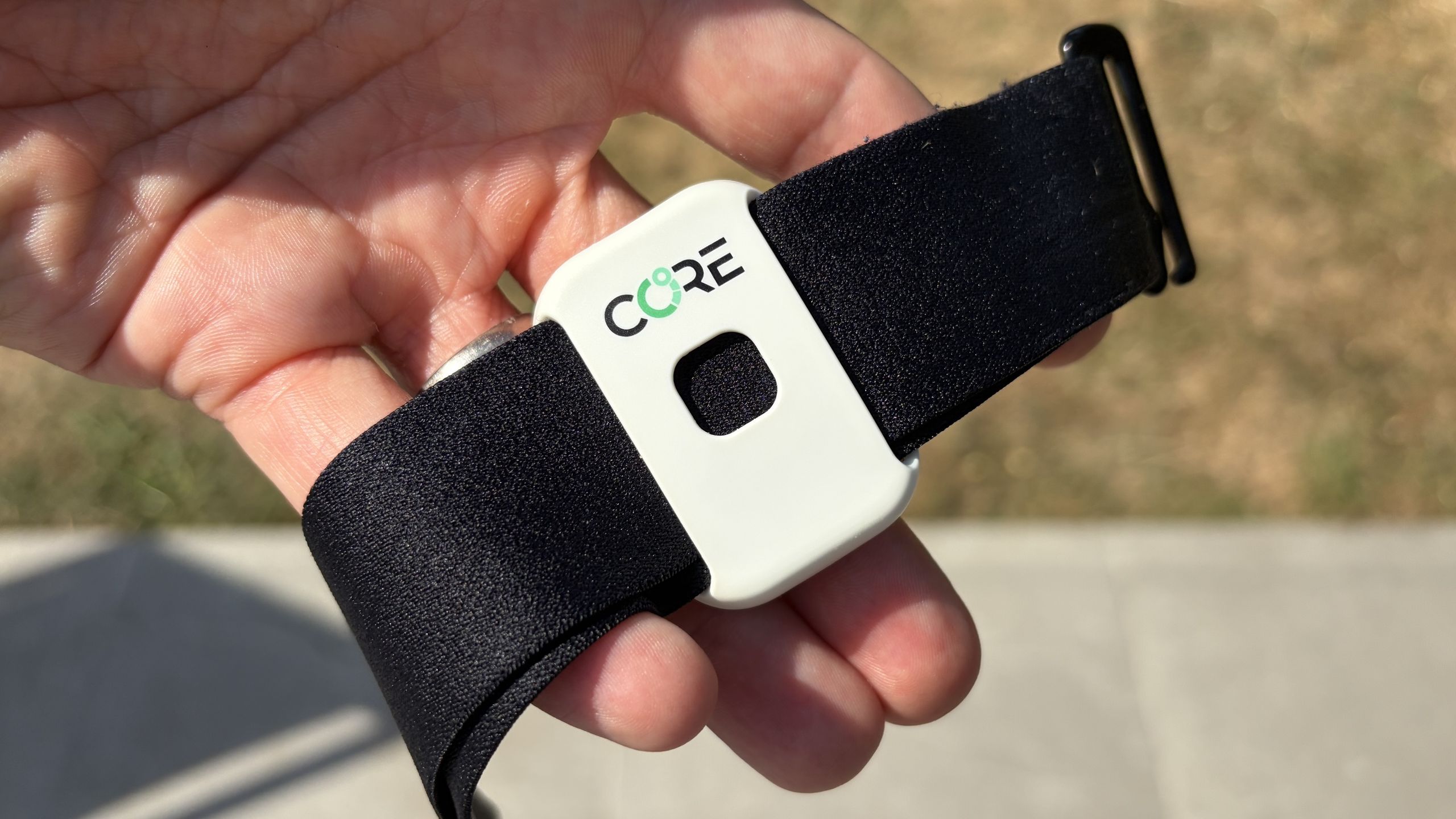
(Image credit: Future)
As someone who lives in the UK, I’ve only really had cause to use the term ‘heat training’ ironically for most of my life. The very idea seems absurd when heading out for a run under cloudy skies in sub-70℉ (21.1℃) conditions, which is what we often call summer.However, this year the UK is experiencing the longest and hottest heatwave of my life, and as someone who runs every day, adapting to and dealing with the heat has become a real part of my marathon training.The temperature has been over 80℉ (26.6℃) on many of my runs for weeks, and it’s peaked at around 95℉ (35℃). As a result, I finally had the chance to test the CORE 2, a thermal sensor you can attach to a heart rate chest strap that monitors skin and body temperature and beams the info live to an app and wearables.This sensor is often used by athletes trying to adapt to the heat, often before having to compete in scorching conditions. That’s not my main aim — hopefully it will have cooled off before the Frankfurt Marathon, which I'm running in late October — but I still found the data useful, and I picked up a lot of new knowledge about how heat affects the body, and there are benefits to heat training even if you plan to race in cold conditions.Here are five things I learned running with the CORE 2 thermal sensor every day for a month.Core temperature doesn’t always track with skin temperature