Originally published on tamiz.pro.
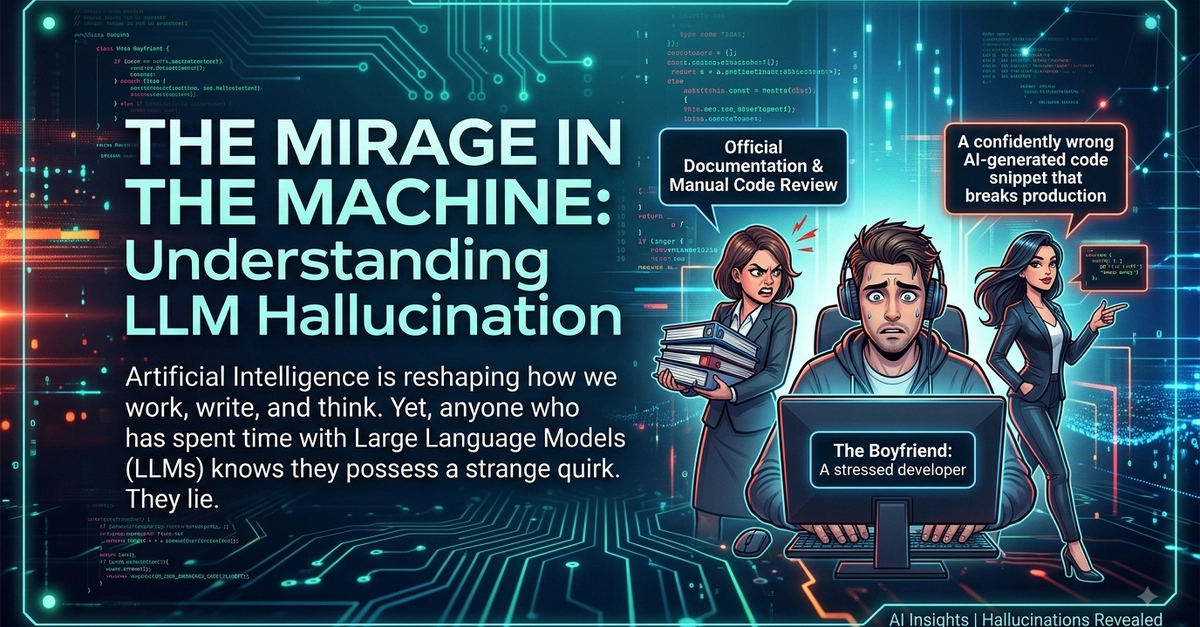
Your production LLM assistant just told a customer their refund was processed. It wasn't. The customer never received it. The support ticket is now a legal liability, and your engineers are scrambling to figure out why a model that passed every safety benchmark in staging produced a confidently false statement in the wild.
This isn't a failure of prompt engineering. It's not a bug in your RAG pipeline. It's what happens when you build production systems on top of fundamentally unreliable text generators and call it done.
The hard truth I need to articulate here is simple: hallucination is not a defect in LLMs—it's a structural property. As long as we treat large language models as oracle-style answer machines, we will ship broken systems. The only viable path forward is a paradigm shift: design for failure, implement self-correcting agent loops, and keep humans meaningfully involved in high-stakes decisions.
Why LLMs Lie — It's Not a Bug, It's Architecture