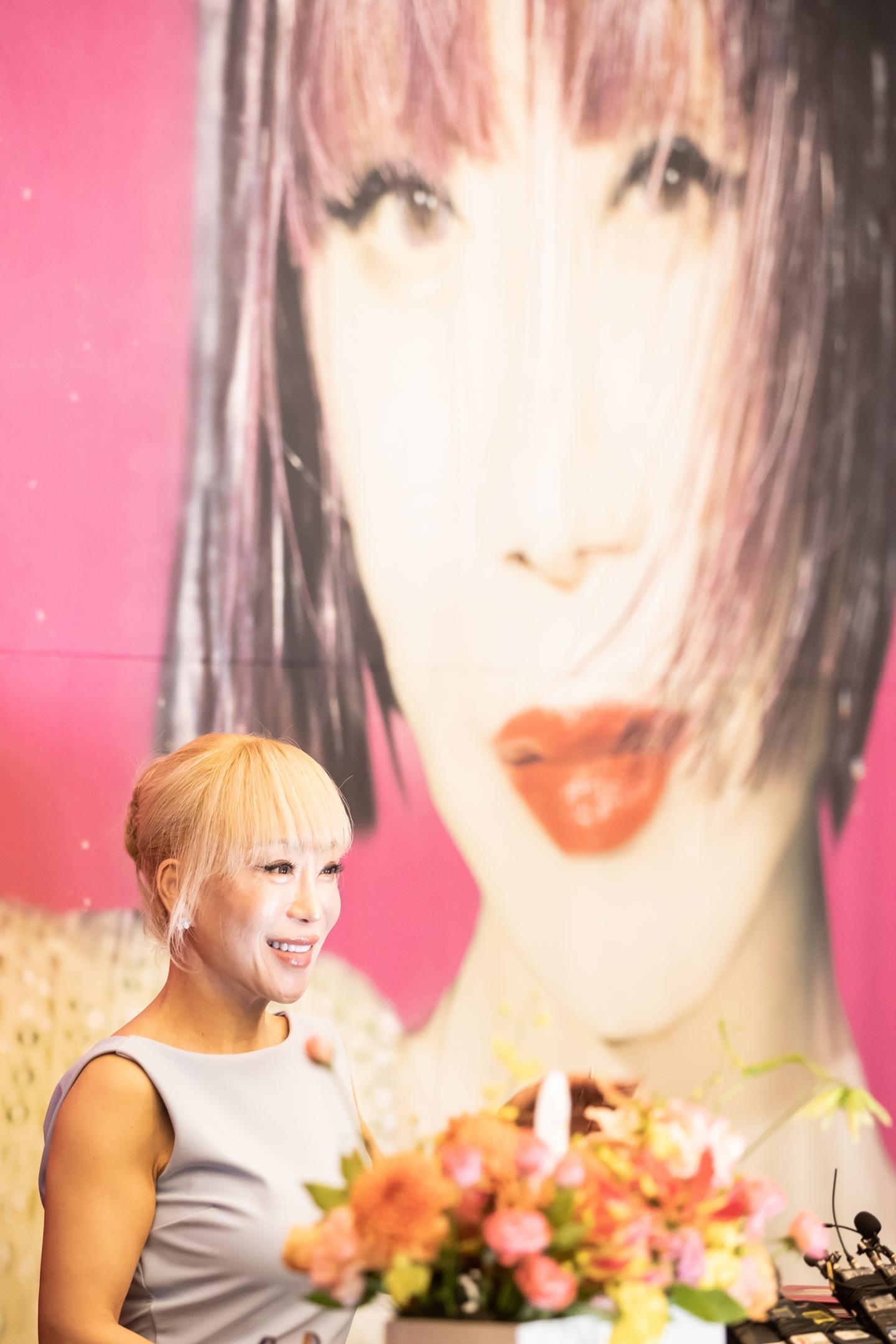
Singer talks about reviving castrato roles, the voice he once wanted to change and why he still hesitates over what to wear Sopranist Samuel Marino poses for a photo before an interview with The Korea Herald at a cafe in Dongjak-gu, Seoul, on Aug. 14. (Yoon Chang-bin/The Korea Herald) When Samuel Marino read the Korean folk tale of Princess Bari — a royal daughter abandoned at birth who years later crosses into the underworld to save the parents who cast her out — he thought of Handel."The connection between Handel and Bari is simply this: being left behind," Marino said in an interview with The Korea Herald in Seoul on Aug. 14, hours before his first rehearsal for an upcoming concert. "Handel wrote so many operas about characters like that — abandoned. So when I read the story of Bari, who was abandoned by her parents, I thought, 'This is just like so many of Handel's stories.'"The Venezuelan-born sopranist — one of a handful of men who sing naturally in the soprano range, without relying on falsetto — will bring that idea to the stage Friday, when he performs at the 2026 Seoul Arts Center International Music Festival with the ensemble Camerata Antiqua Seoul.The 7:30 p.m. concert at the SAC Concert Hall builds a program around Bari's journey using arias from Handel's "Rodelinda," "Giulio Cesare" and the oratorio "Il Trionfo del Tempo e del Disinganno" ("The Triumph of Time and Disillusion").Bari's story, a shamanic myth considered the root of Korea's "gut" ritual tradition, was unfamiliar to Marino until a previous trip to Seoul."Like lasagna, layers," Marino said, laughing, describing how he built the program. "A layer of Handel, a layer of Bari and a layer of Samuel Marino. I just mixed those together, and it worked." Sopranist Samuel Marino poses for a photo before an interview with The Korea Herald at a cafe in Dongjak-gu, Seoul, Aug. 14. (Yoon Chang-bin/The Korea Herald) In the concert, he links an aria from Cleopatra's arc in "Giulio Cesare" to the moment Bari resolves to descend into the underworld for water that can save the parents who abandoned her. In Marino's telling, Cleopatra, too, was left behind — abandoned by Caesar and afraid of being killed in the war."No one who's gone to the underworld has ever come back alive," he said. "But she decided to go anyway, to take the risk. So I chose that moment to connect Cleopatra and Bari."Reaching for Korean folklore, Marino said, was a chance to widen his audience's frame of reference beyond Western storytelling. It is the same instinct that has led fans in China to liken Marino to Mulan, the folk heroine who disguises herself as a man to go to war."I know a lot of Western stories, of course — even opera itself comes from Western storytelling," he said. "But I think it's time for audiences to discover something new."Marino, 33, was born in Caracas in 1993 and trained first as a pianist and ballet dancer. His singing voice — a natural soprano range that never dropped in adolescence — eventually set him on a different path. He studied at the Caracas Conservatory and Venezuela's national ballet school, then continued his vocal training in Paris under the mentorship of soprano Barbara Bonney. He signed with Decca Classics in 2022 and released his debut album, "Sopranista," that same year. His second, "Lumina," followed in 2025.The only voiceThe sopranist voice type remains unfamiliar to many concertgoers, and is often confused with the countertenor, a more common voice type built on falsetto that sits lower."Male soprano is completely different. It's much higher," Marino said. "I can sing in the highest range a woman can sing. Countertenors, when they speak, speak in a low voice. I can't speak in a low voice, because my voice never changed when I was a teenager. This is the only voice I have." Sopranist Samuel Marino poses for a photo before an interview with The Korea Herald at a cafe in Dongjak-gu, Seoul, on Aug. 14. (Yoon Chang-bin/The Korea Herald) That voice has let Marino revive a repertoire that largely vanished after the 18th century: roles written for castrati, men castrated before puberty to preserve a soprano range for the opera stage."It's very difficult to sing these castrato roles," he said. "The music composers wrote for them is extremely difficult. Very few people can sing it. Even I can't sing everything, can't sing all of it flawlessly. So I bring it back, but very carefully, because I have to protect my voice."It wasn't always a voice Marino wanted to keep. As a teenager struggling with his unusually high vocal range, he considered ways to change it — until a doctor suggested he try baroque singing, and he began to hear his voice as a musical possibility rather than a problem. Even then, he said, he doubted it could become a career."In the past, my voice actually felt like something bad to me, something I wanted to change," he said. "I didn't believe I could build a career from singing, because back then people thought singing was too easy, that anyone could do it, so how could you make a living from it? I didn't understand how difficult and technical it really was. I didn't believe in myself."Asked what he'd tell that younger version of himself, he said: "I'd tell myself to believe in myself and to keep dreaming, because that dream is what got me here."Marino has also become known for performing in skirts and gender-fluid outfits, a habit he traces to an online concert in 2022, during the pandemic, when he decided that a plain black tuxedo was too dull for the camera.Despite how natural he makes it look, he said the choice never comes easily. "Actually, I hesitate a lot," he said. "But I think clothes should be fun." He added: "I don't see gender in clothing. If I like something, I wear it."With all the energy he devotes to a performance, the toll afterward, he said, is steep. "I feel drained," he said, "because you have to truly believe what you're singing in order to convey the feeling to the audience."He decompresses the way he does after every show: walking his dog, who travels with him almost everywhere except Asia. "It's a moment for myself," he said. "I can say, OK, this is reality."From Seoul, Marino heads to Belgium for his first production that isn't opera — a play called "Siddhartha," about the life of the Buddha, in which he will speak rather than sing for the first time in his career.Looking back on a career that will arrive at the 10-year mark next year, he said he has stopped chasing perfection."I search for emotion, good or bad, whether people like it or not," he said. Sopranist Samuel Marino poses for a photo before an interview with The Korea Herald at a cafe in Dongjak-gu, Seoul, on Aug. 14. (Yoon Chang-bin/The Korea Herald)
Sopranist Samuel Marino gives Handel a Korean myth
When Samuel Marino read the Korean folk tale of Princess Bari — a royal daughter abandoned at birth who years later crosses into the underworld to save the pare
1,163 words~5 min read