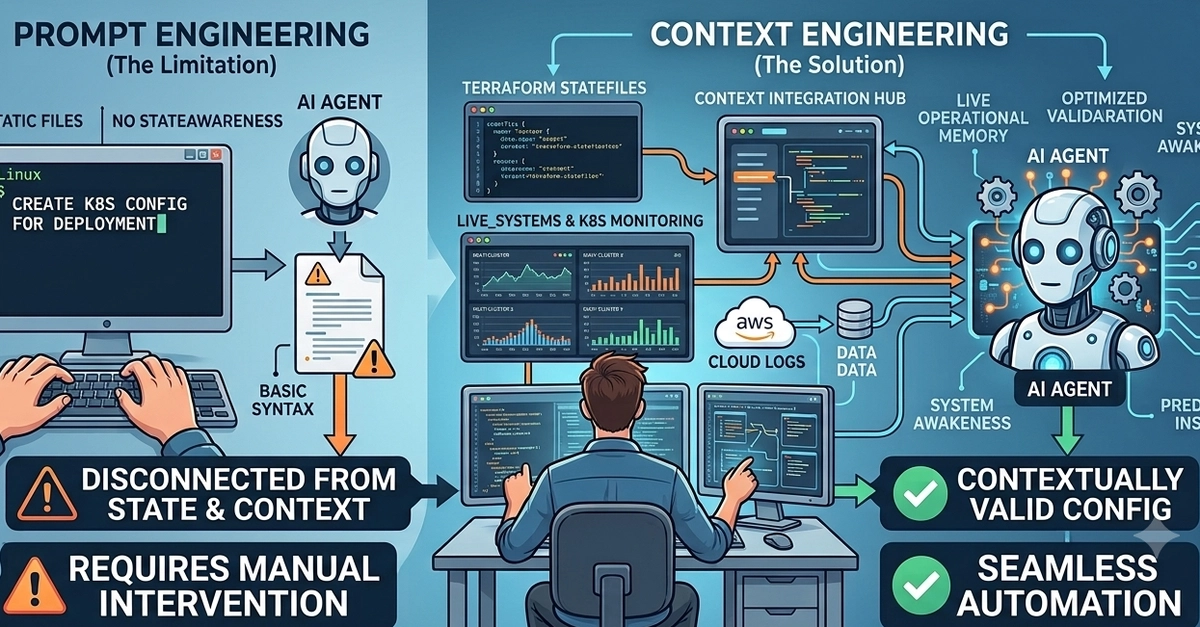
Prompt engineering is a conversation; context engineering is system architecture. In the early days of working with Large Language Models (LLMs), optimizing the prompt was enough for simple text generation tasks. But when you are building autonomous systems—like a self-hosted automation server connecting cloud databases, webhooks, and reasoning nodes—prompts alone will not keep track of APIs, past decisions, and strict output constraints.
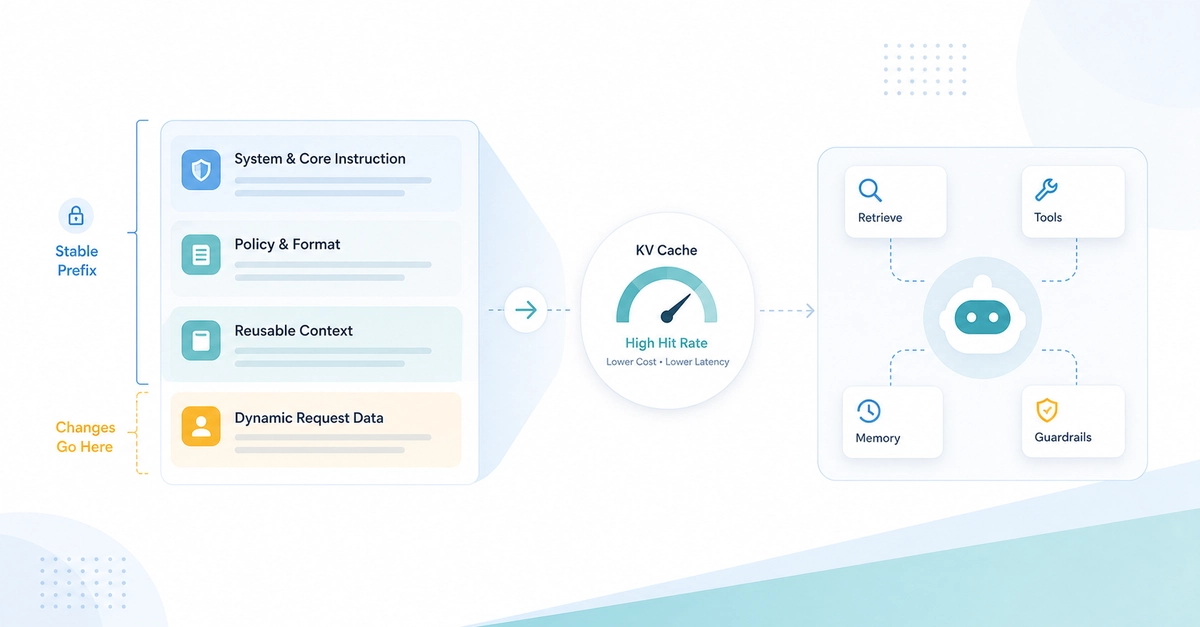
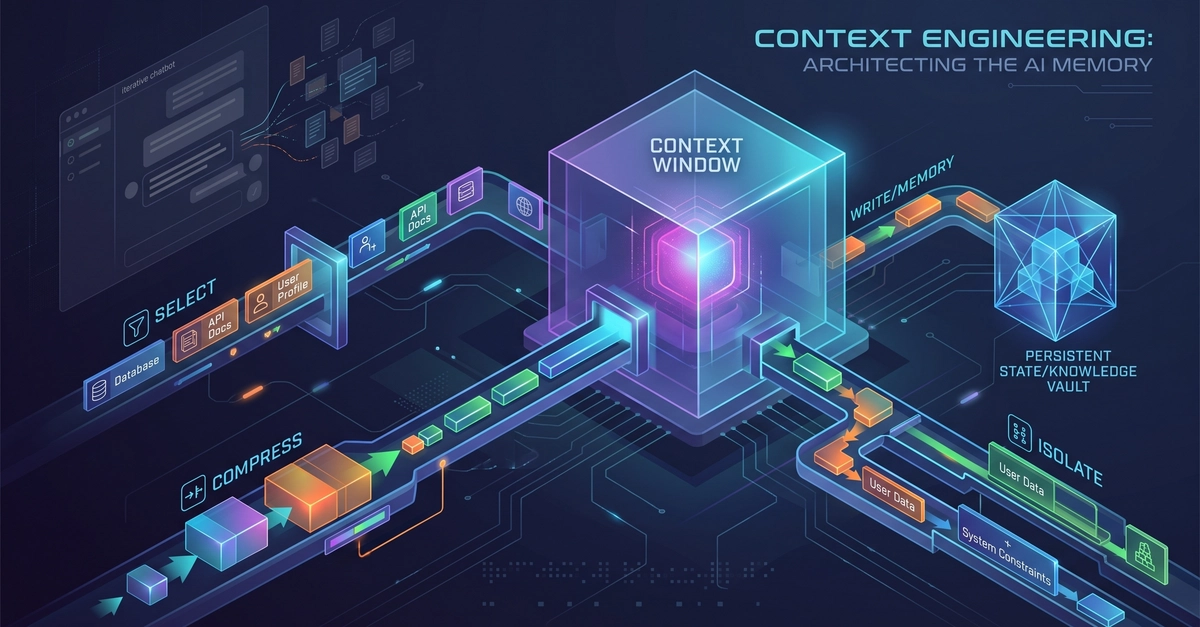
Think of the LLM as the CPU, and the context window as the RAM. Context engineering is the discipline of treating that memory as a scarce resource, meticulously designing the pipeline that feeds the model the exact facts, instructions, and tools it needs at the precise moment it needs them.
The Four Core Strategies
To shift from vibe-coding a chatbot to architecting a resilient multi-agent system, you must manage what enters and stays in the context window using four primary techniques:
Select: Decide exactly which external sources—like database schemas or specific API documentation—enter the context window to maximize the signal-to-noise ratio.