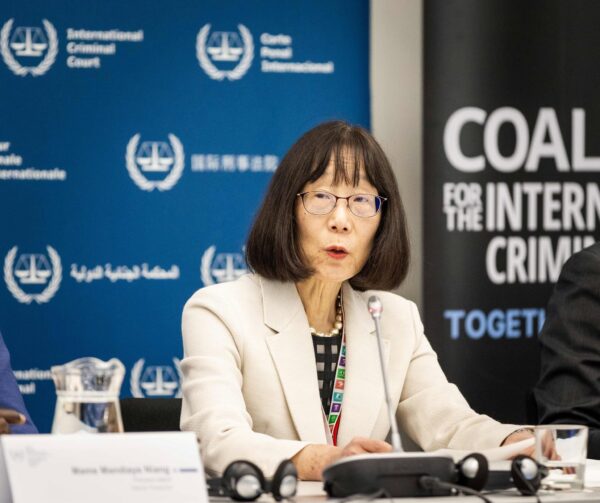
When the United States sanctioned International Criminal Court (ICC) President Akane Tomoko on August 18, Tokyo’s response was swift – and carefully calibrated. The next day, Foreign Ministry Press Secretary Kitamura Toshihiro called the move “very unfortunate,” reaffirming Japan’s consistent support for the ICC and the rule of law.
Prime Minister Takaichi Sanae commented publicly on the same day, telling reporters that she considered the sanctions “very unfortunate” and would continue communicating with the United States and other relevant countries. She did not, however, say whether Tokyo would ask Washington to withdraw the sanctions.
It was a statement of principle, but the restraint was noticeable. After all, Akane is a Japanese judge leading an institution that Tokyo has spent nearly two decades championing. Japan became a state party to the Rome Statute in 2007 and has since been one of the ICC’s strongest supporters.
On January 7, Takaichi herself received Akane and International Court of Justice President Iwasawa Yuji separately, describing the two courts as central to the rule of law and pledging Japan’s firm support. Eight months later, Akane has been personally sanctioned by Japan’s only treaty ally.