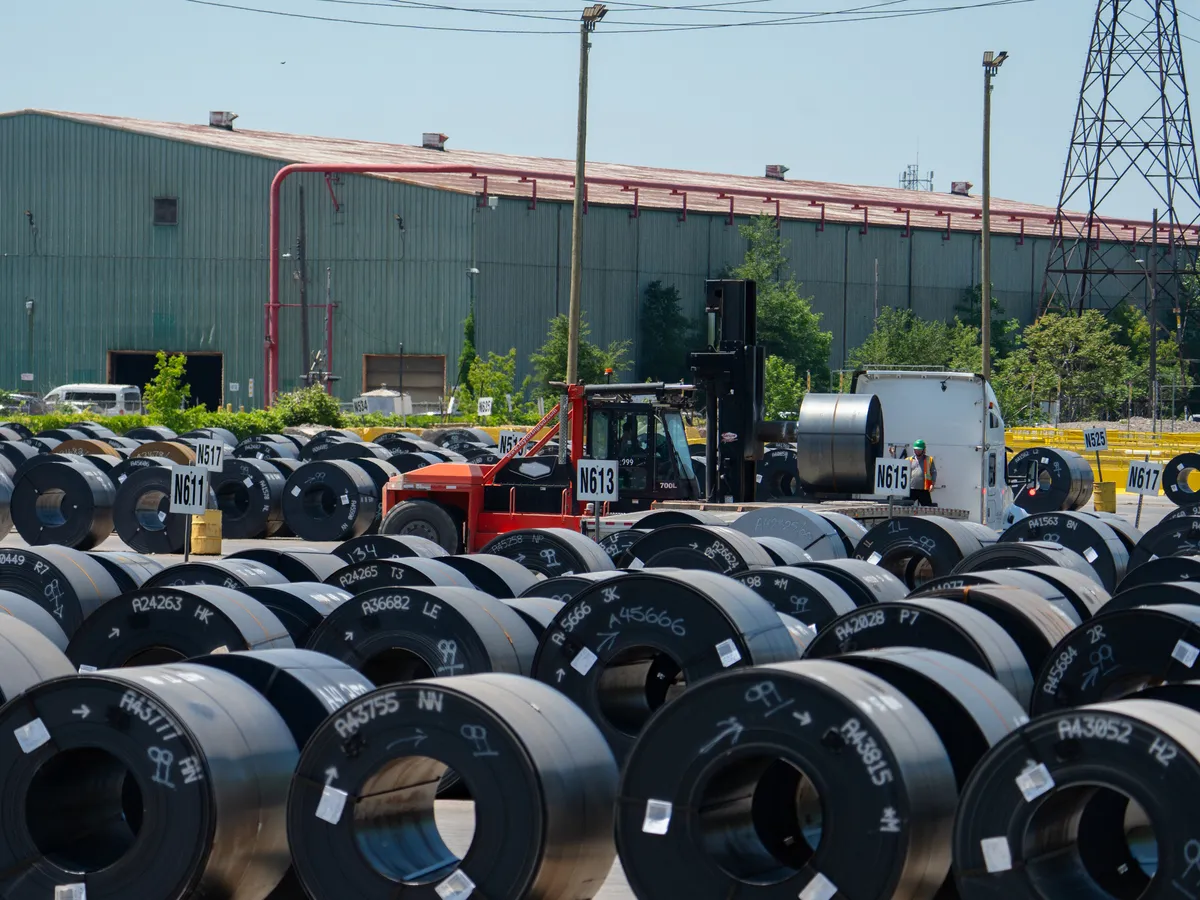
Skip to Content News Archives Economy Energy Oil & Gas Renewables Electric Vehicles Mining Commodities Agriculture Real Estate Mortgages Mortgage Rates Finance Banking Insurance Fintech Cryptocurrency Work Wealth Smart Money Wealth Management Investor Personal Finance Family Finance Retirement Taxes High Net Worth FP Comment Executive Women Puzzmo Newsletters Financial Times Business Essentials More Innovation Information Technology FP500 Podcasts Small Business Lives Told Tails Told Shopping Financial Post Store Obituaries Place a Notice Advertising Advertising With Us Advertising Solutions Postmedia Ad Manager Sponsorship Requests Classifieds Place a Classifieds ad Working Profile Settings My Subscriptions My Offers Newsletters Customer Service FAQ News Economy Energy Mining Real Estate Finance Work Wealth Investor FP Comment Executive Women Puzzmo Newsletters Financial Times Business Essentials HomeCommoditiesEconomyU.S. said to halve tariffs on Canada steel, aluminum in trade dealThe full terms of the broader deal under discussion remained unclear as of Wednesday afternoonAuthor of the article:Canada has focused its efforts on lowering the steel tariff, in particular, as well as the duties on automobiles and domestic manufacturers. Photo by COLE BURSTON/AFP via Getty ImagesThe tentative trade deal between the United States and Canada would lower tariffs on certain Canadian exports of steel and aluminum to 25 per cent, according to people familiar with the matter.Subscribe now to read the latest news in your city and across Canada.Exclusive articles from Barbara Shecter, Joe O'Connor, Gabriel Friedman, and others.Daily content from Financial Times, the world's leading global business publication.Unlimited online access to read articles from Financial Post, National Post and 15 news sites across Canada with one account.National Post ePaper, an electronic replica of the print edition to view on any device, share and comment on.Daily puzzles, including the New York Times Crossword.Subscribe now to read the latest news in your city and across Canada.Exclusive articles from Barbara Shecter, Joe O'Connor, Gabriel Friedman and others.Daily content from Financial Times, the world's leading global business publication.Unlimited online access to read articles from Financial Post, National Post and 15 news sites across Canada with one account.National Post ePaper, an electronic replica of the print edition to view on any device, share and comment on.Daily puzzles, including the New York Times Crossword.Create an account or sign in to continue with your reading experience.Access articles from across Canada with one account.Share your thoughts and join the conversation in the comments.Enjoy additional articles per month.Get email updates from your favourite authors.Create an account or sign in to continue with your reading experience.Access articles from across Canada with one accountShare your thoughts and join the conversation in the commentsEnjoy additional articles per monthGet email updates from your favourite authorsSign In or Create an AccountorThe details have yet to be finalized and are not expected to apply across the board. Different rates could apply to some derivative products that include those metals, said some of the people, who requested anonymity to discuss terms of the agreement before it is announced.Talks between U.S. and Canadian trade advisers continued Wednesday, less than 24 hours after U.S. President Donald Trump paused planned 50 per cent levies on billions of dollars of Canadian goods to allow more time to negotiate. The planned changes to the metals tariffs could help unlock a lasting deal to avert the broader duties before a Friday deadline.Trump in the past has demanded changes to trade agreements or spiked them entirely at the last minute.The move under discussion would generally halve U.S. tariffs on imports of the two metals, which currently face a 50 per cent rate. The countries are also discussing exclusions and other measures that would change the scope of the levies, some of the people said.The full terms of the broader deal under discussion remained unclear as of Wednesday afternoon.The White House, the office of the U.S. Trade Representative and office of the Canadian Prime Minister Mark Carney did not immediately respond to requests for comment.On Wednesday, Trump nodded to U.S. concessions in the ongoing talks. “Got to give something, and we’re doing certain things. We’re paying a high number. We’re reducing it a little bit,” Trump told reporters, without elaborating. “It’s good for everybody, but our farmers are going to be thrilled. Our manufacturers are going to be thrilled.”Trump announced late Tuesday that he would pause implementation of the tariffs on Canadian goods for three days after the two sides signalled progress toward an agreement on tariffs. The two close allies, which did roughly US$900 billion in trade in goods and services last year, have seen their relationship come under deep strain as Trump has ratcheted up trade pressure on Canada during his second term.Last year, Trump imposed tariffs on imported steel and aluminum under Section 232 of the Trade Expansion Act as he erected his tariff wall around the U.S. economy. The duties irked many close U.S. trading partners and several negotiated deals with the administration to cap sectoral tariffs in exchange for making trade concessions.Canada had focused its efforts on lowering the steel tariff, in particular, as well as the duties on automobiles. Canada is the top source of U.S. aluminum imports, though the U.S. has no capacity to meet its own demand and those tariff costs have been largely passed on in entirety to American buyers.However, even as they work to fine tune the details, Trump administration officials are under pressure to avoid applying a reduced rate uniformly across steel and aluminum imports from Canada, some people familiar with the discussions said.The Coalition for a Prosperous America, a manufacturing advocacy group that has supported tariffs, and other stakeholders have lobbied the Trump administration to combine any aluminum tariff reduction with so-called traceability requirements meant to better protect U.S. fabrication that makes up the bulk of the domestic aluminum industry.At risk, they warn, are some 125,000 jobs in the U.S. tied to aluminum rolling, drawing and extruding.Imported Canadian supplies currently make up about half of U.S. aluminum consumption.—With assistance from Brian Platt and Joe Deaux. Join the Conversation This website uses cookies to personalize your content (including ads), and allows us to analyze our traffic. Read more about cookies here. By continuing to use our site, you agree to our Terms of Use and Privacy Policy.
U.S. said to halve tariffs on Canada steel, aluminum in trade deal
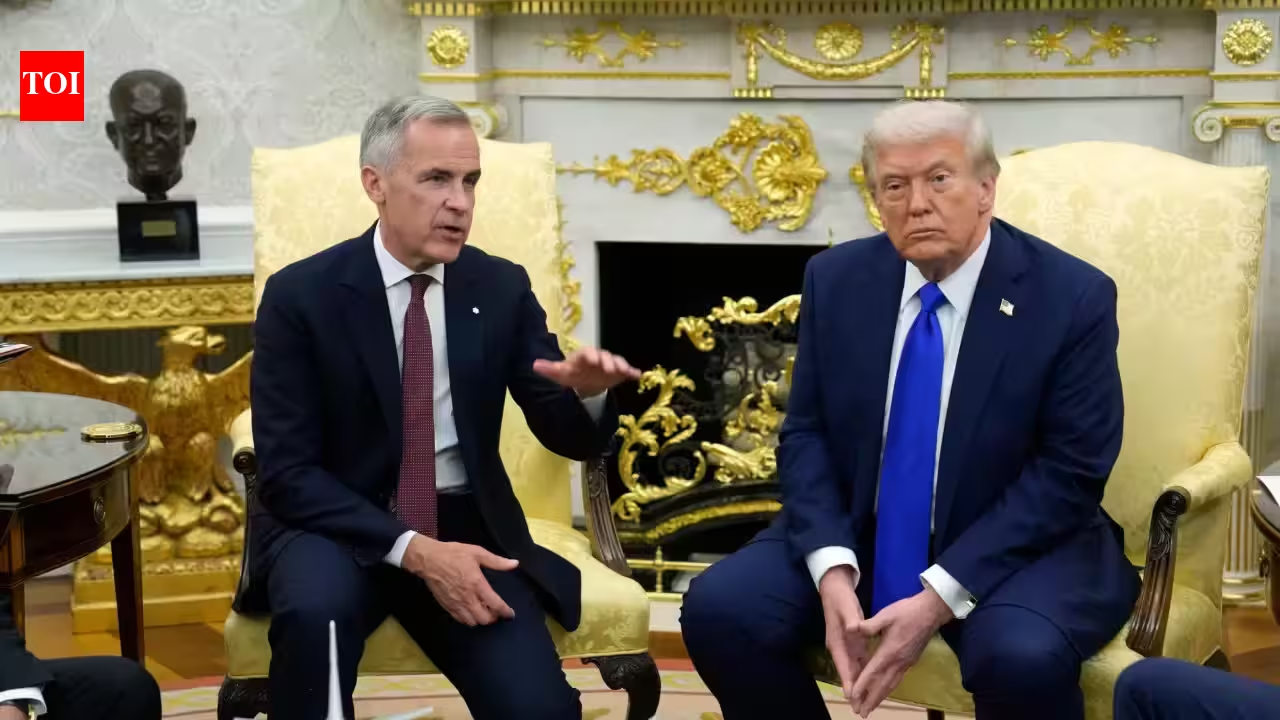
The tentative trade deal between the U.S. and Canada would lower tariffs on certain Canadian exports of steel and aluminum to 25%. Read on
1,025 words~5 min read