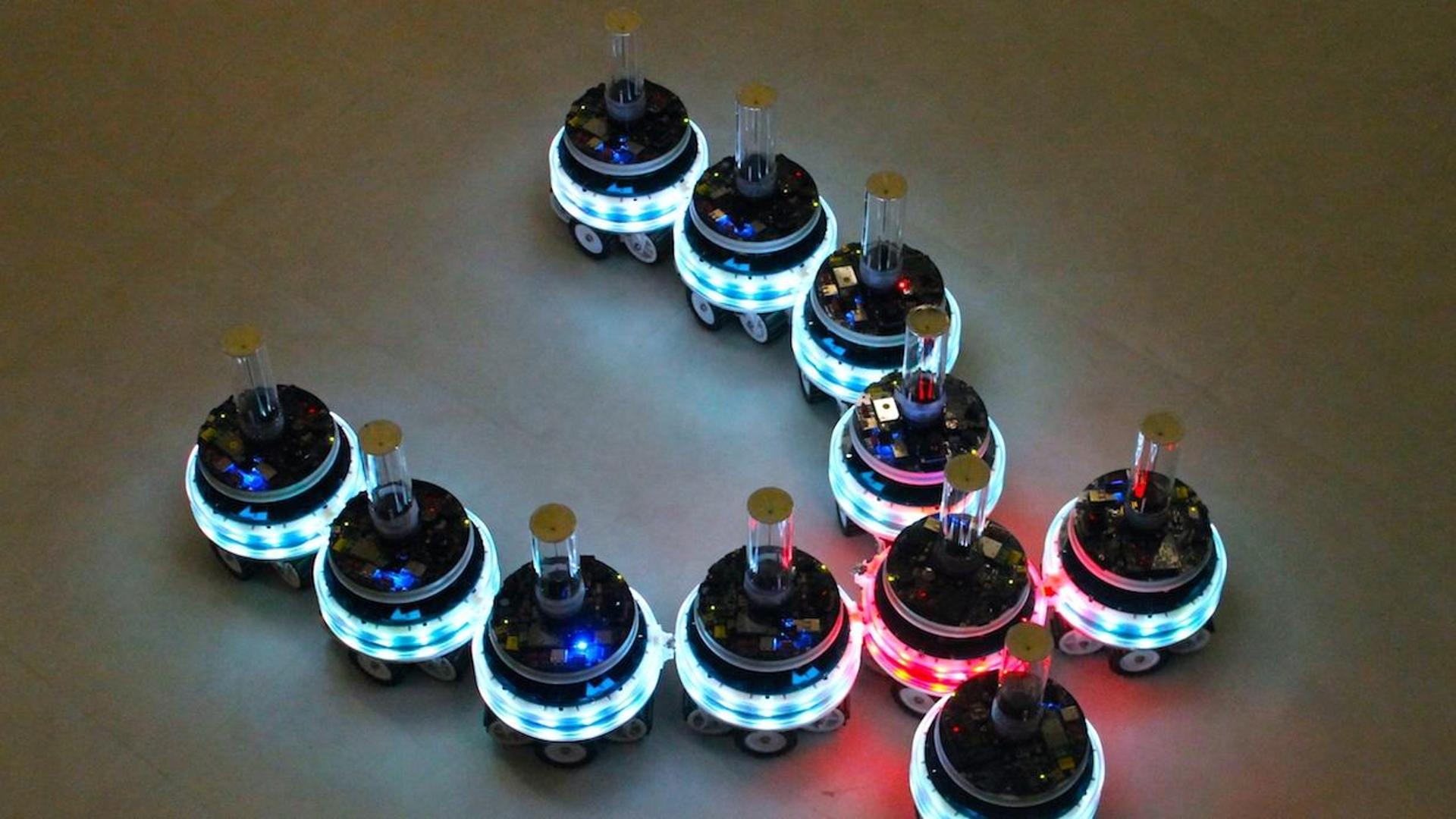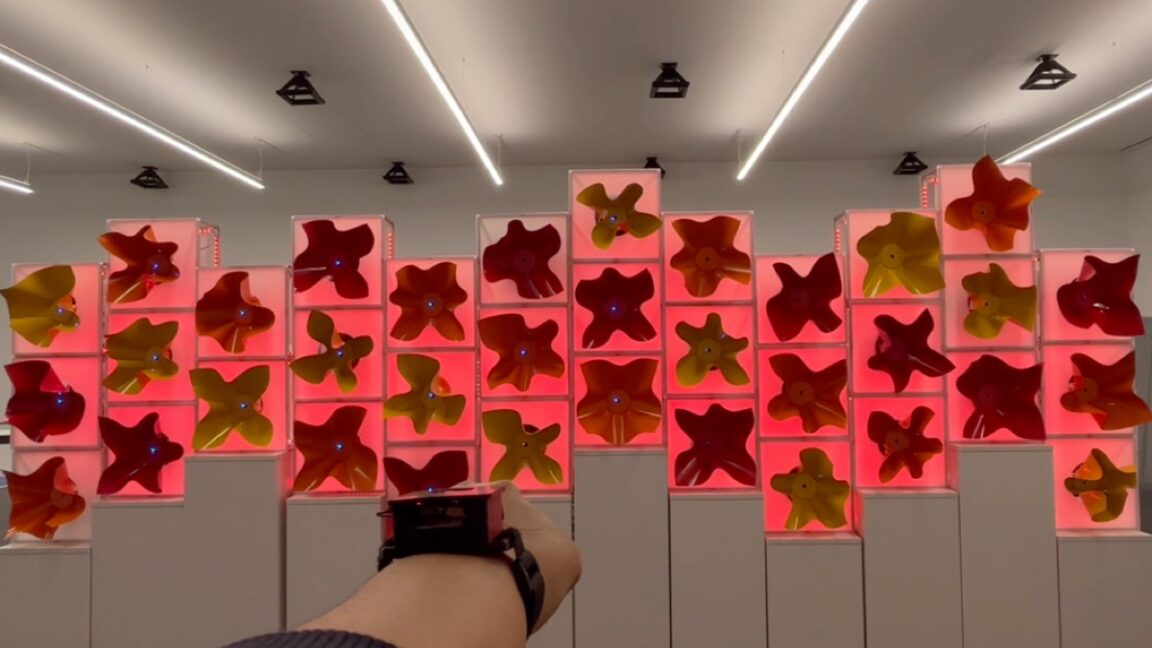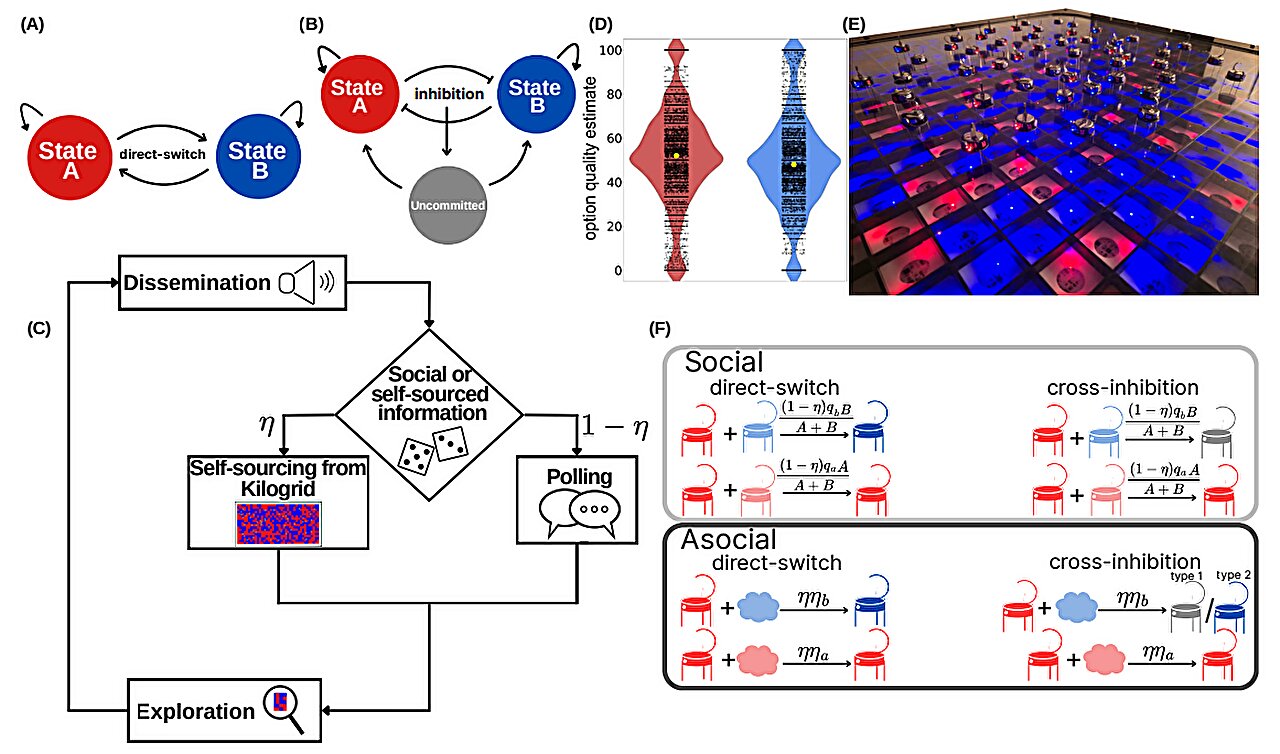
Individual-level decision-making process. Credit: Nature Communications (2026). DOI: 10.1038/s41467-026-76408-4
From searching disaster zones and responding to chemical spills to monitoring fragile ecosystems, future robot swarms may have to act in places where direct human control is difficult or dangerous. To operate autonomously, the robots must be able to decide together which problem to address and where to go next. But collective decision-making creates its own vulnerability: Robots improve their decisions by sharing information, yet faulty machines, inaccurate observations or manipulated messages can mislead the entire swarm.
An international research team led by computer scientist Andreagiovanni Reina from the University of Konstanz has now shown that a simple rule inspired by biological decision-making can help robot swarms reach a clear consensus quickly—even when some of the information circulating in the group cannot be trusted.
Their study, published in Nature Communications, suggests that this widespread interaction rule could make robot swarms less vulnerable to the noisy information that characterizes real-world application scenarios.
Copy the message—or pause first?