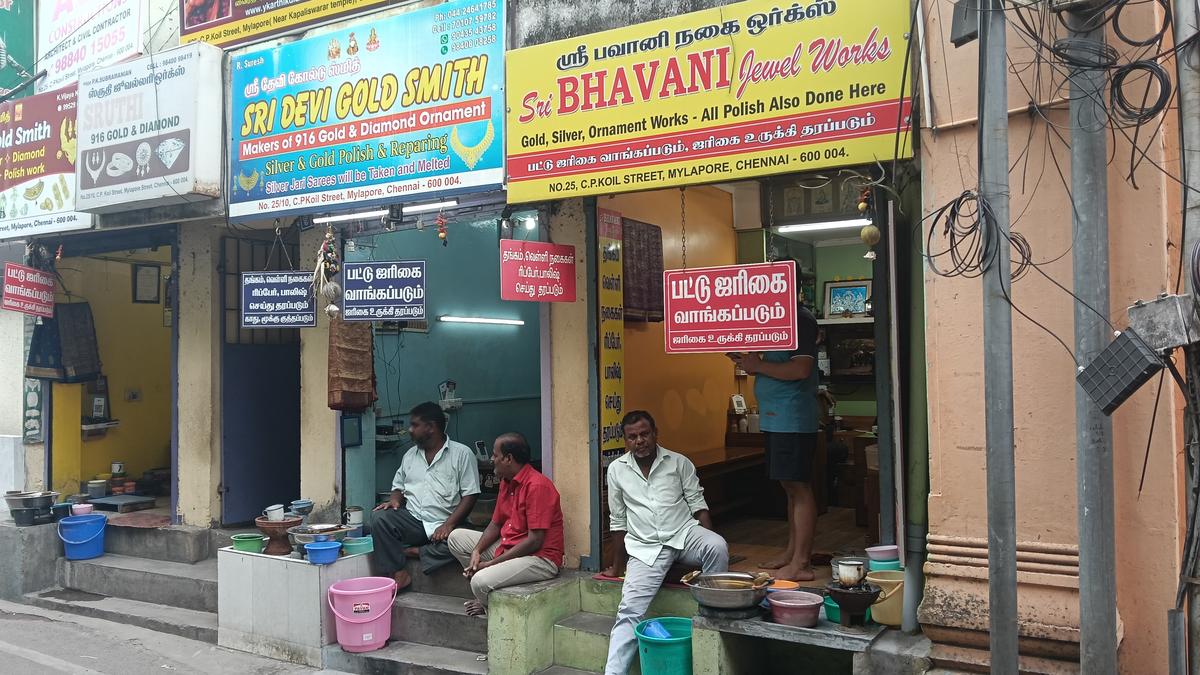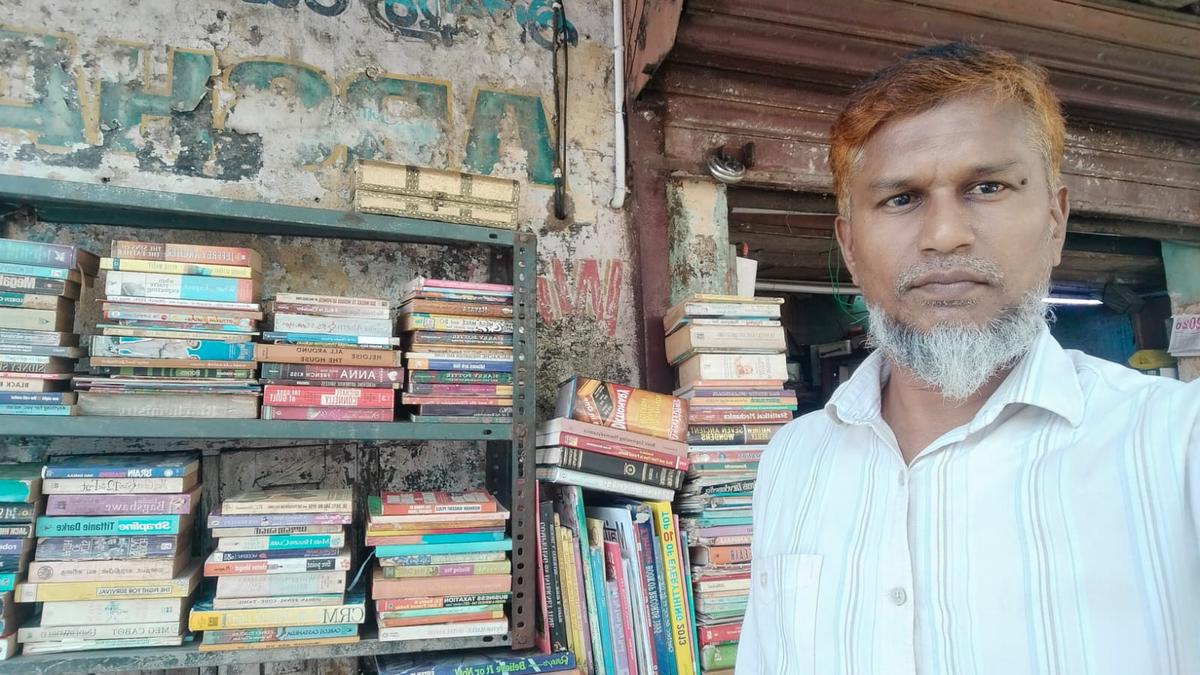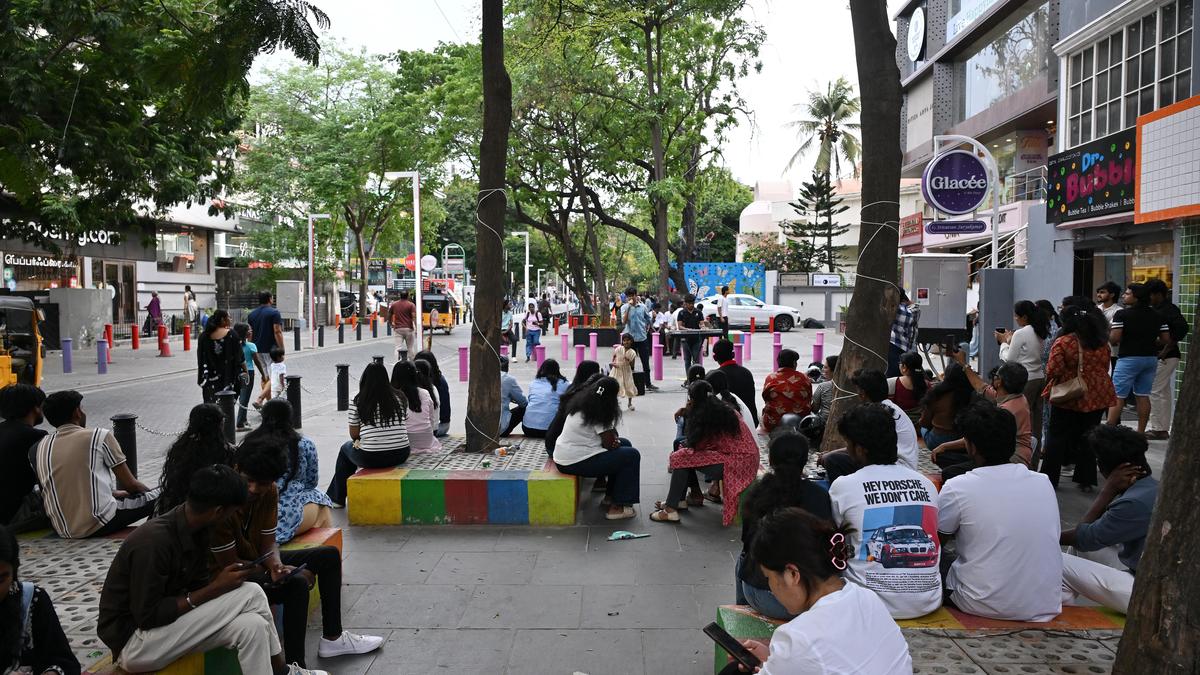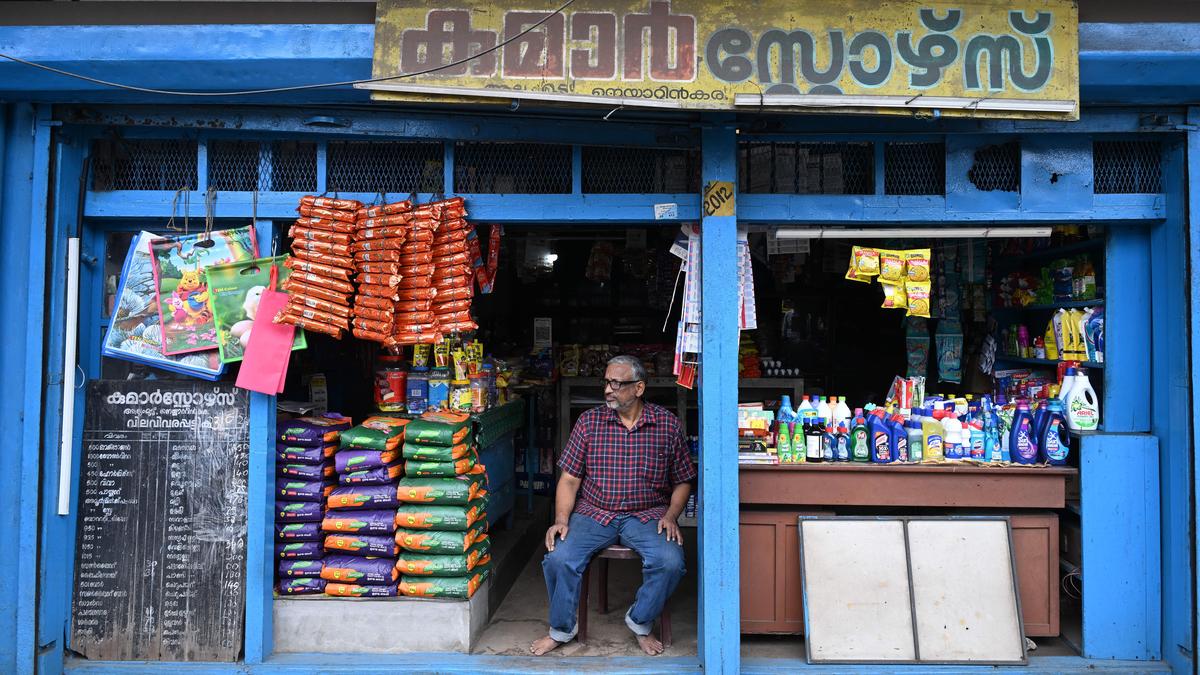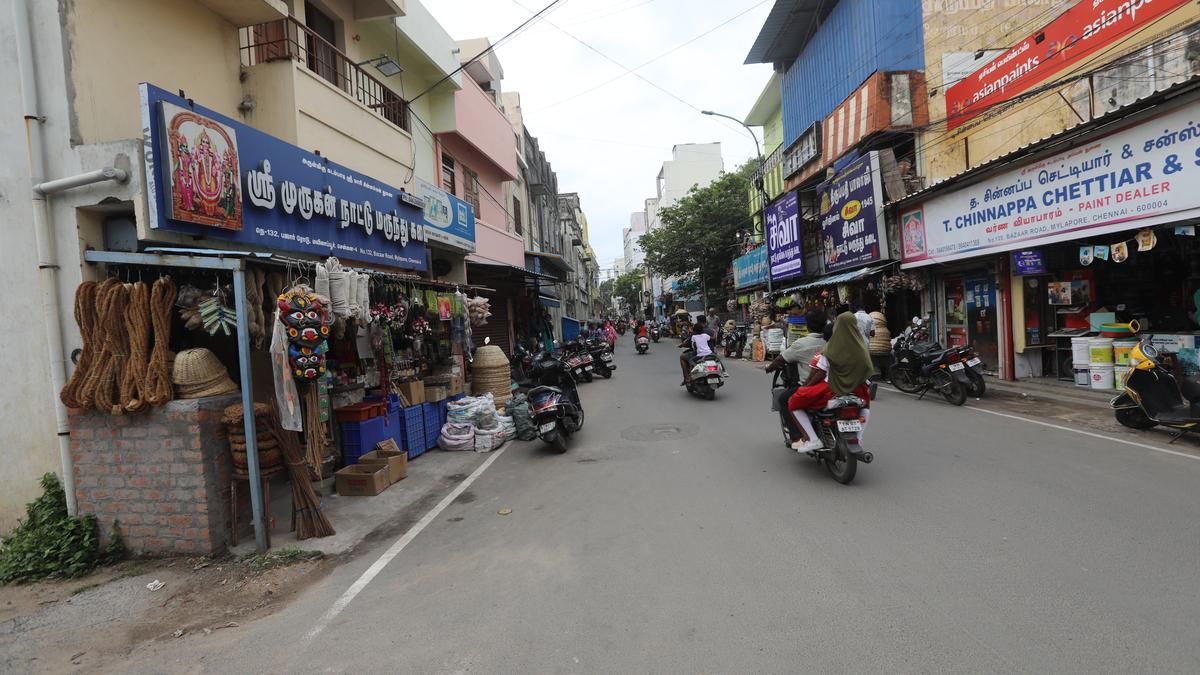
At the point where Kutchery Road is “amputated” by Metro Rail work , two streets peel away in opposite directions. The workaday realities of these two streets, Devadi Street and Bazaar Road, are also on contrasting trajectories ever since this work took over a section of Kutchery Road shutting it down for regular traffic. Devadi Street has become overly industrious working indefatigably shoulder-to-shoulder with Nadu Street to funnel vehicular traffic from North Mada Street into Kutchery Road towards Santhome High Road. It also entertains wheels from Appu Street. While wheels have increased on Devadi Street, the footfall has simultaneously reduced on Bazaar Road. Shopping is a languid, leisurely experience; hive off the comfort factor and you detract a vital component from that experience. When Kutchery Road was fully available to motorists and pedestrians, shopping on Bazaar Road felt natural. Now, with diversions and circuitous detours, it feels forced. Unless there are strong reasons to transact business over a shop counter, people are going to find alternatives; and digital pathways keep those alternatives flowing freely. But Bazaar Road is attractive on account of enterprises that have established a strong presence over decades of retail commerce. Amidst shops that have regularly changed their name board and trade are a multiplicity of enterprises that have persisted with one trade and built immense social capital, installing an emotional hotline with its customers. Examples abound. Picking a handful: Jayakumar Mill, around 70 years old; New Shiva Country Drugs and Herbals, nearly 90 years old, though the old name board pegs it at 80; and there is then the seller of pots Gunasundari N., the third generation entrepreneur in this business. As anywhere else, a strong USP principle works like a charm. For A. Bhaskar, who runs Sri Jayakumar Mill and also Sri Jayakumar Oil Stores along with his brother A. Kumar, his grinding machines stay heard on Bazaar Road above the subterranean rumble of tunnel-boring machines on Kutchery Road because of certain unique offerings. The machines grind the familiar. To name a few, rice, gram and wheat flour, turmeric, vermilion and ragi and health mixes for young mothers after childbirth. And one machine grinds nalangu maavu (herbal bath power), and that has made a huge difference.Besides, as Bhaskar points out, his customers value the fact that this mill dedicates a grinding machine to each variety of items to be ground. So, business keeps plopping into those wide funnel-shaped feed hoppers. The challenge, Bhaskar observes, is more from people’s increasing preference for packaged foods than the reduced access caused by Metro Rail work. While packaged foods have changed the way people buy, impacting the mill store’s business, Metro Rail work has made reaching the shop harder. Bhaskar believes opening even one access route on the Metro Rail-impacted section of Kutchery Road could bring back some of the footfall. A similar disruption has affected New Shiva Country Drugs and Herbals on Bazaar Road, says its owner R. Prakash. Nearly 90 years old, the store began as a herbal medicine shop under Prakash’s grandfather and gradually expanded into pooja articles, dry fruits, and bamboo products. With monsoon comes sniffles and a rush of customers, but through the year, there is a steady flow of commerce, thanks to older customers who grew up relying on country remedies and younger ones who have inherited that faith from their families. Close to New Shiva Country Drugs and Herbals, there are other country medicine shops run by relatives. The concentration of shops of this stripe helps. Prakash notes that New Shiva has branches at Thanithurai Market and North Mada Street, also in Mylapore. Scattered presence helps, particularly in these times. Prakash observes that online business of country medicine is a greater challenge to ford. For seller of earthen pots Gunasundari N., the going is palpably tough. But her resilience is tougher still, which explains her continued presence at Bazaar Road despite mounting odds. Unlike a flour mill or one selling herbal medicine, her business is largely seasonal, the need for pots largely being felt during festivals and functions at home. The thinning of the customer base, she believes, has resulted largely from changing lifestyles, the earthen pots she sells cracking under the magnetic pull of ever-silver wares. The pots, once a familiar presence in Mylapore homes, are in an unequal battle with ever-silver and aluminium vessels that promise convenience and durability. Obviously, the challenge glowering at Gunasundari is not only a metallic shift in tastes. The road itself poses a challenge now, as it now draws fewer people stopping to browse or buy. Even during festivals such as Pongal and Deepavali, when sales used to be on the higher side, there is lukewarmness from potential buyers.
Madras Day 2026: the old Bazaar Road in Mylapore puts on a brave front
Mylapore has reduced. CMRL has only queered a pitch, already made difficult from buyers’ changing lifestyles, including a preference for digital shopping and packaged food items Despite the mounting odds, old enterprises on this retail street have reasons to stay positive, atop that list is social capital built over decades translating into customer loyalty
948 words~4 min read