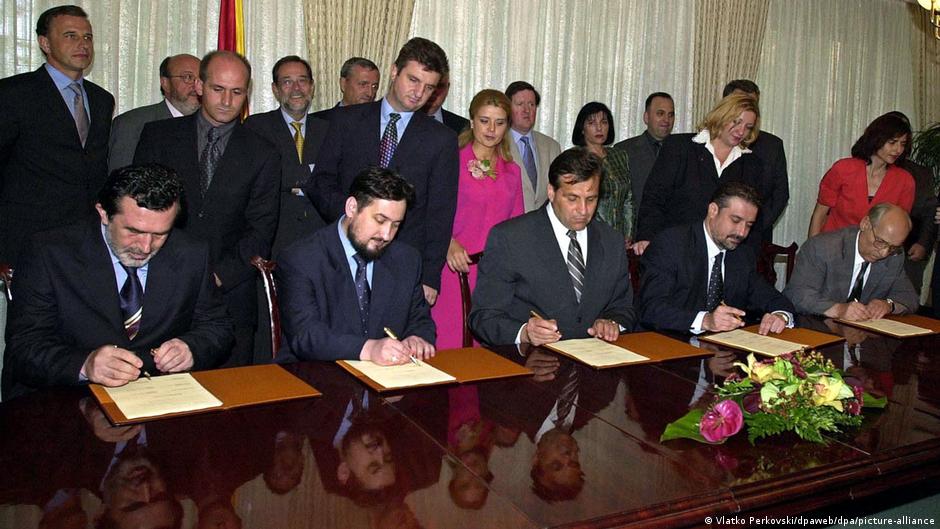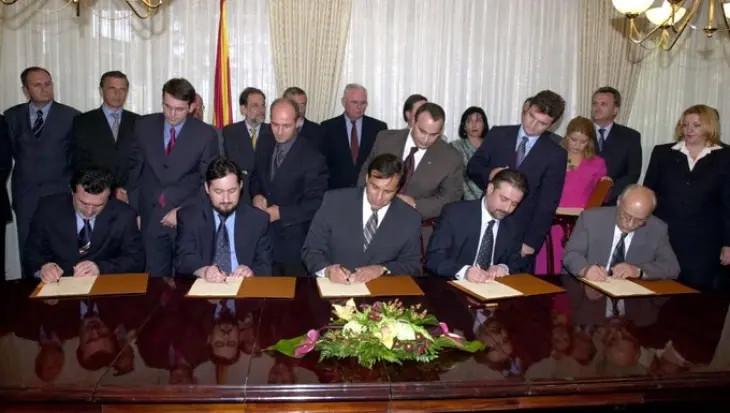
There are moments in history when the future of a country is determined by a single document. Such agreements are rare, but their impact is felt for generations. The Ohrid Framework Agreement is one of them. On Aug. 13, 2001, 25 years ago, the political leaders of North Macedonia, with the support of the European Union and the United States, signed an agreement that was, by every historical measure, to shape the course of the state for decades to come. The Ohrid Framework Agreement remains one of the most significant political and diplomatic achievements in the modern history of our region. It demonstrated that interethnic conflicts in the Balkans would not find their resolution through force but through dialogue, political compromise, respect for rights, and the building of institutions that give every citizen an equal place within the state.JOIN US ON TELEGRAMFollow our coverage of the war on the @Kyivpost_official. At a time when the region was still carrying the open wounds of the wars that accompanied the break-up of Yugoslavia, Ohrid offered a different model: not division, but coexistence; not the victory of one side over another, but compromise; not exclusion, but a transformation in the way the state is built and functions for all. The Ohrid Agreement was, and remains, a strategic choice for peace, coexistence, and the construction of a multiethnic state in which differences would no longer be a source of conflict but part of a shared political and social order. It was the decision that gave North Macedonia the opportunity not to remain hostage to its conflict but to build a more democratic, more inclusive, and more resilient state with a clear European perspective.
EXPLAINER: A Quarter-Century Since Ohrid – The Landmark Agreement Fostering Peace in the Balkans
On the Significance of the Agreement That Gave North Macedonia Its Future
1,502 words~7 min read