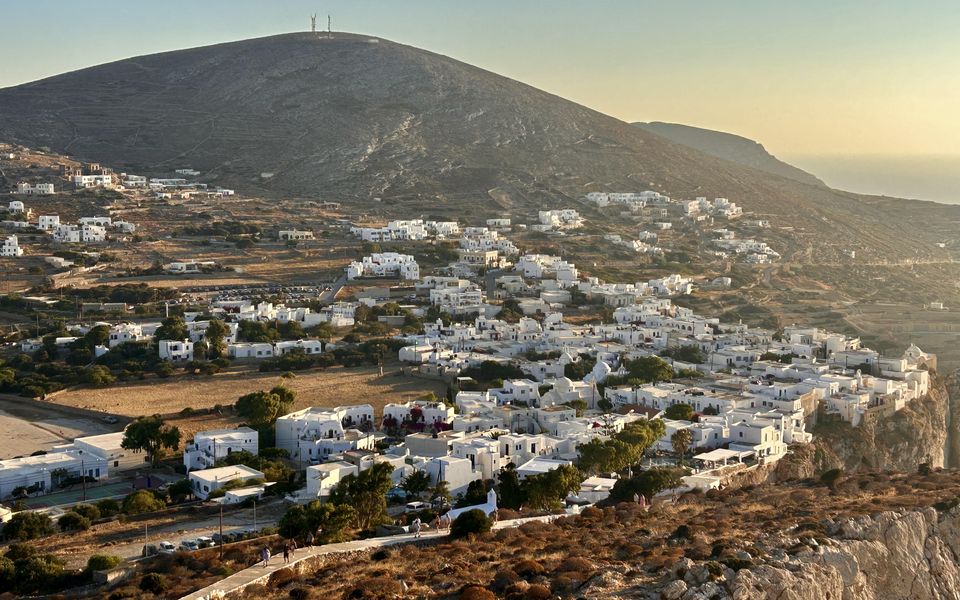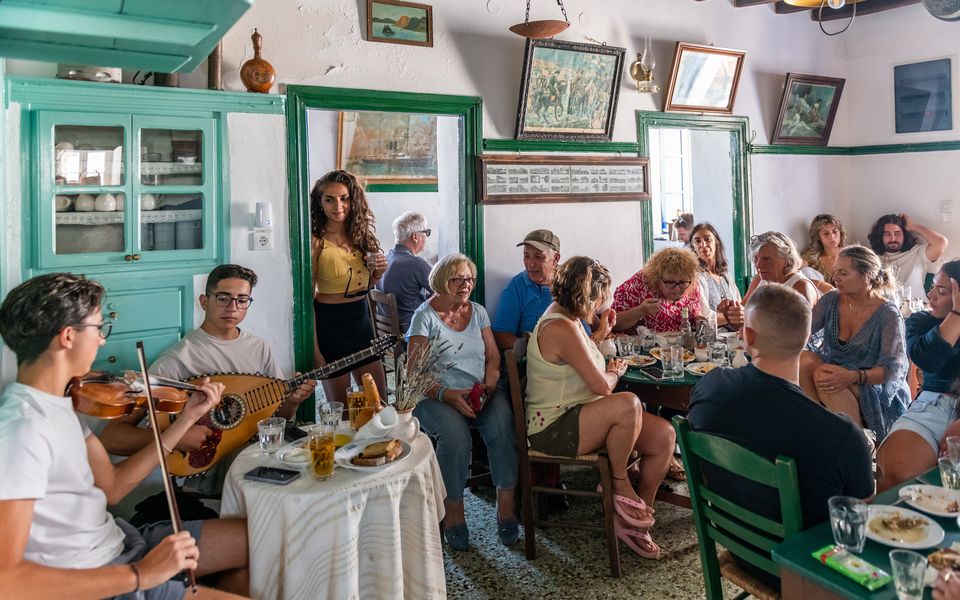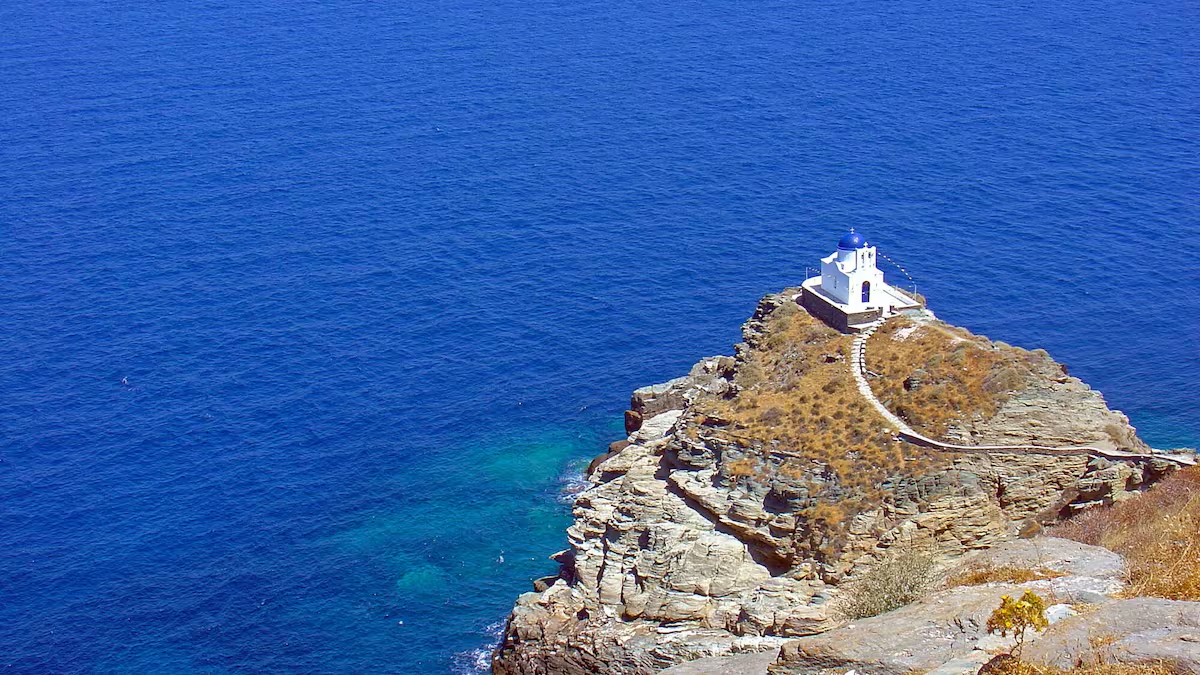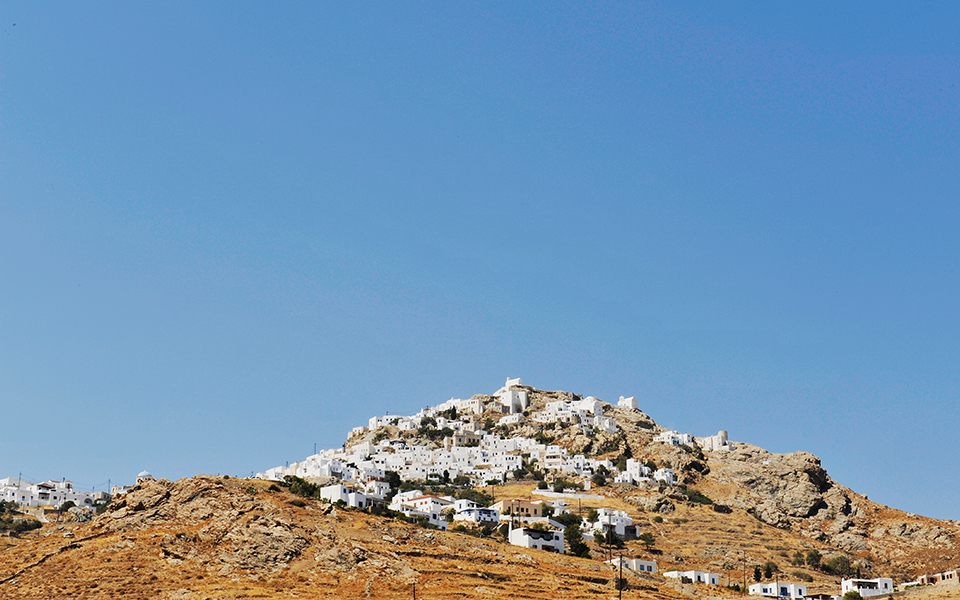
Serifos’ rugged, almost austere beauty has been sculpted by the wind, the salt air and generations of human labor. While Serifos’ Hora is effortlessly elegant and full of life, efforts are being made to preserve local traditions in the sparsely populated villages that are scattered across the island’s arid interior. The historic Rakostasi café in the hamlet of Kallitsos has recently reopened, as has Halida’s traditional wood-fired bakery in Hora.
The climb to the Castle rewards early risers with sweeping views across the endless Aegean and the whitewashed houses cascading toward Livadi and the island’s port. My friend Giorgos Zafeiriou, who has lived on Serifos for many years, describes the island as “the meeting point between the rust-colored mines and the deep blue sea.”
Serifos is also an island steeped in myth. According to legend, when King Polydectes sent Perseus to slay Medusa, the hero returned to Serifos brandishing her severed head. At the sight of it, the king and his companions were turned to stone, leaving behind the island’s distinctive human-shaped rock formations. Another legend places the cave and throne of the Cyclops Polyphemus here, making Serifos one of the landscapes associated with Homer’s world.