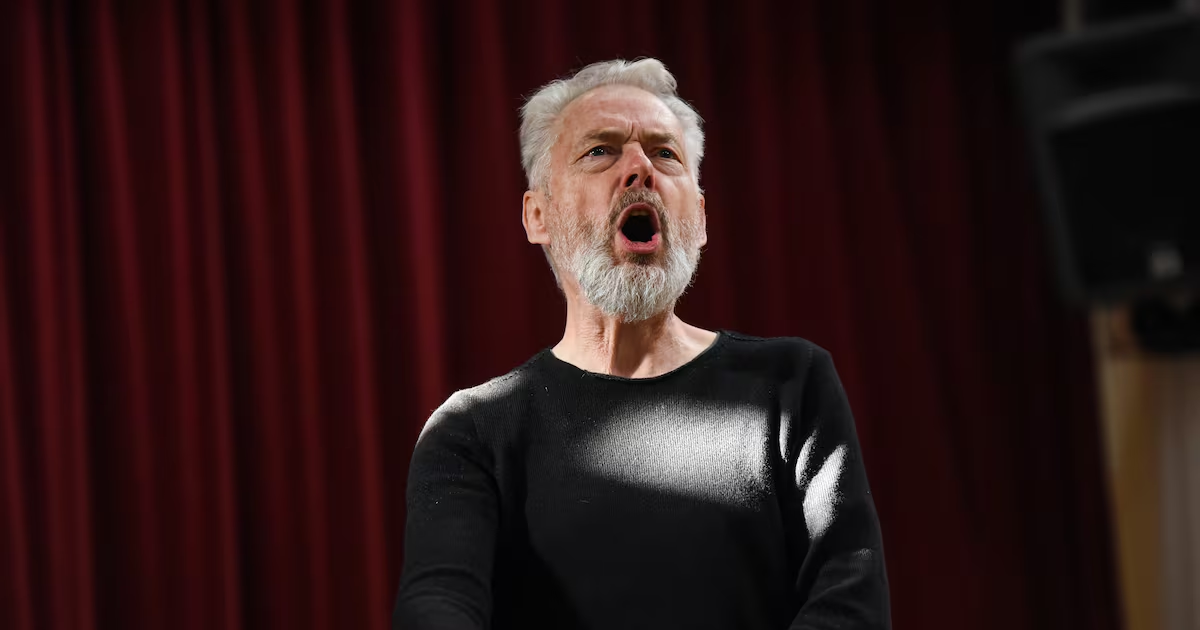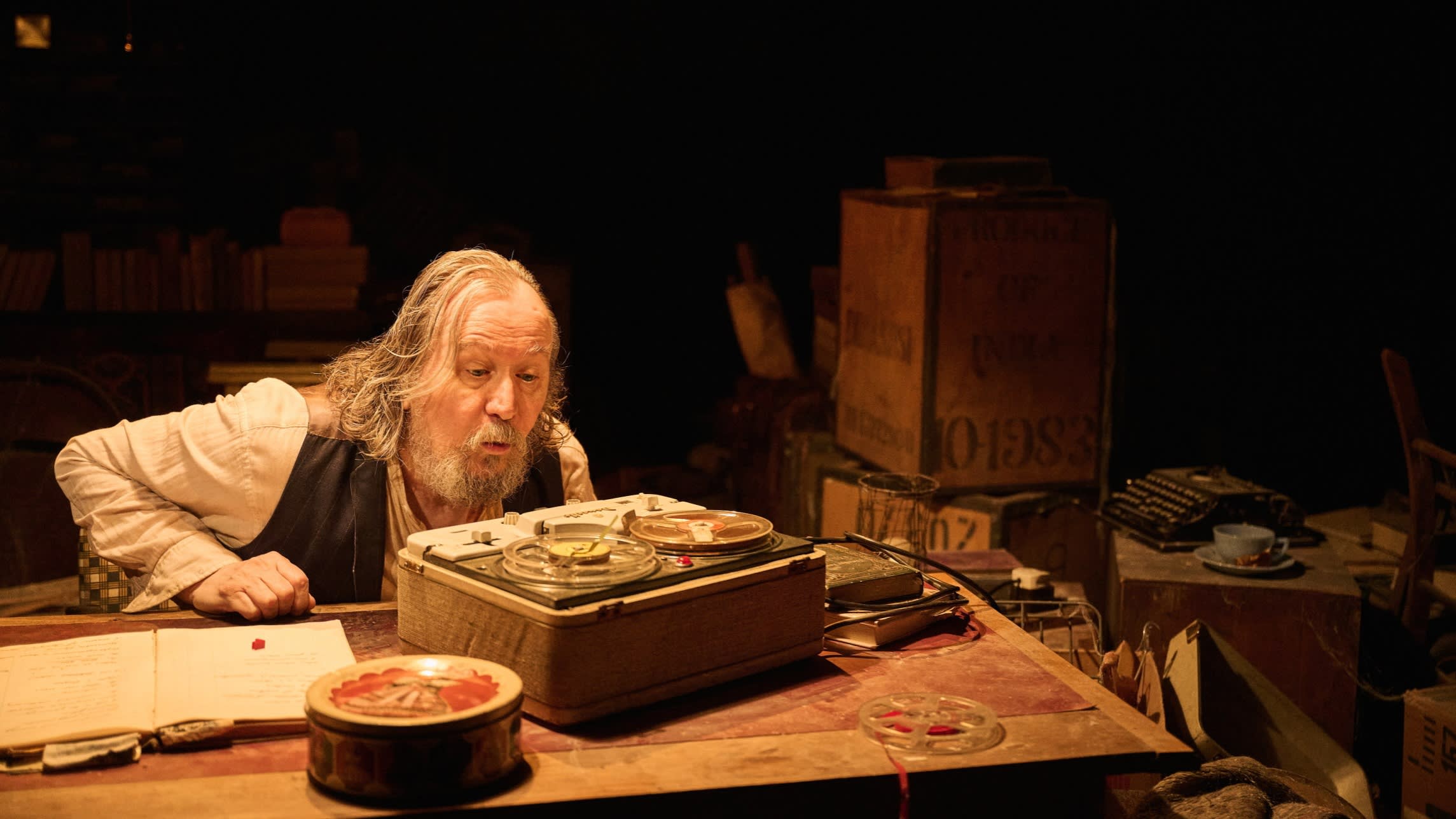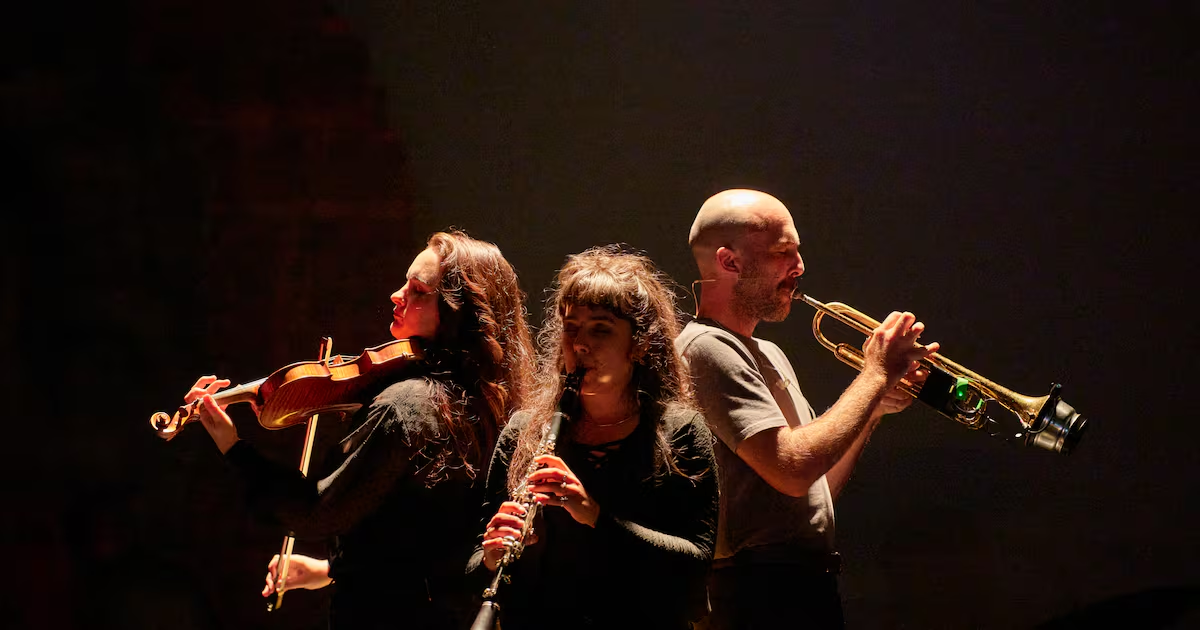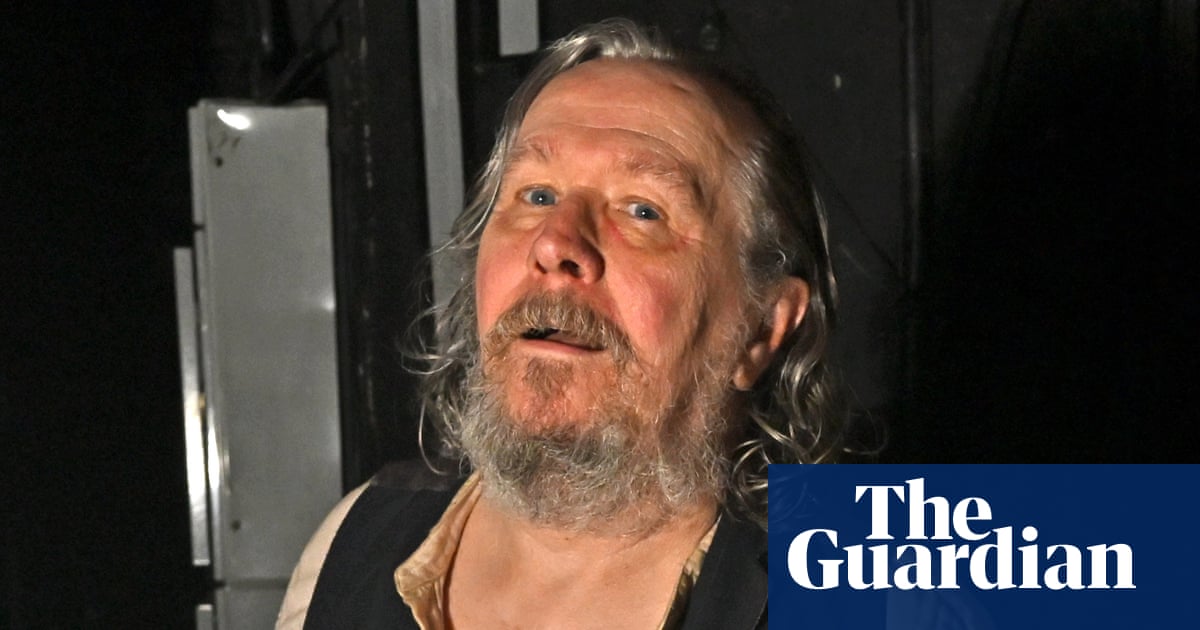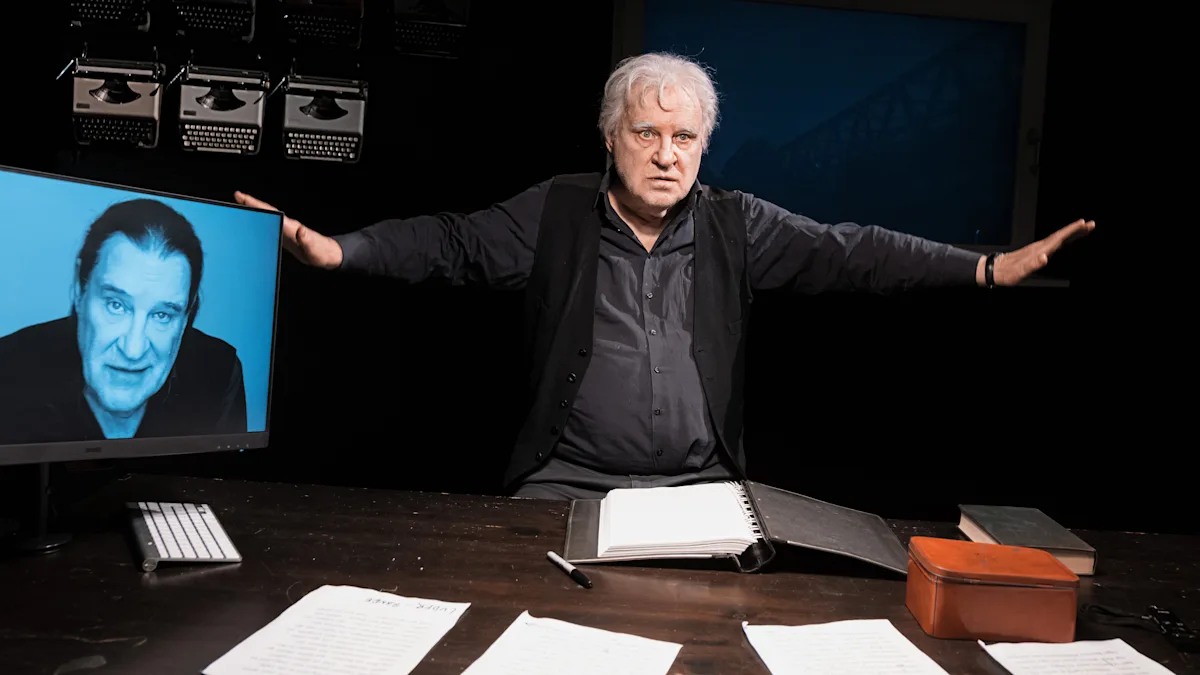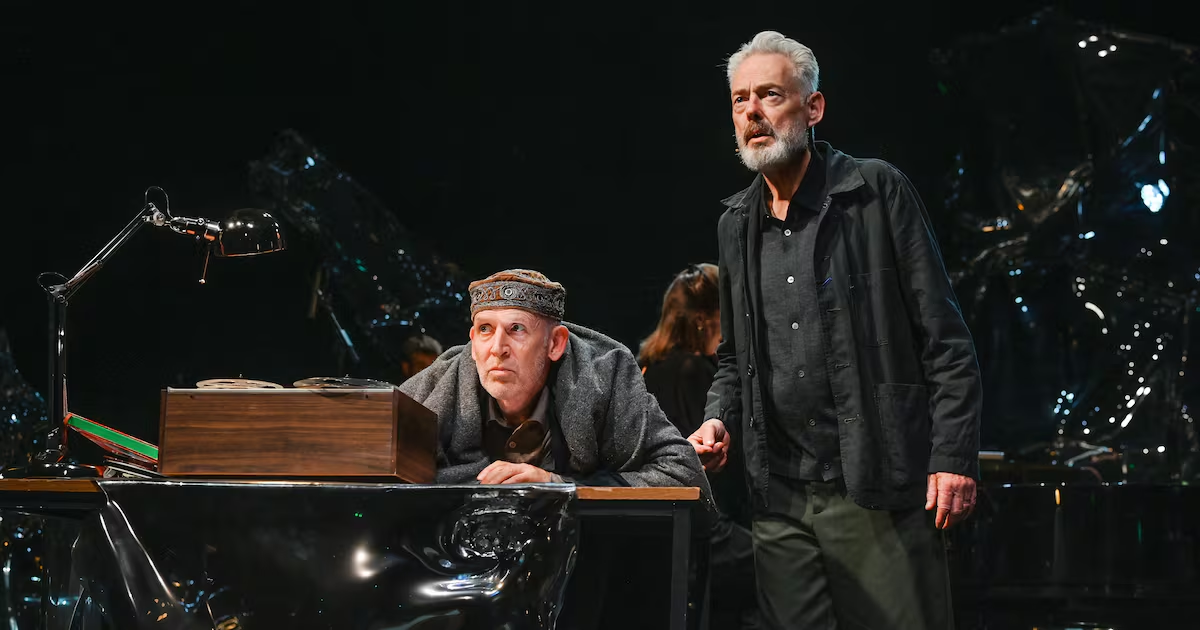
The Last TapeWatergate Theatre, Kilkenny★★★☆☆The Last Tape, Marcel Mihalovici and Samuel Beckett’s operatic adaptation of Krapp’s Last Tape, is a 60-year-old curio, and Gare St Lazare Ireland’s Irish premiere approaches it as material for a new experiment. The result is intriguing, but a little at odds with the ruthless economy of the play on which it’s based.For this production, director Judy Hegarty Lovett creates a hybrid of opera and play in which Krapp is divided between two performers: Conor Lovett speaks him and Mark Padmore sings him. Andrew Synnott, meanwhile, has rearranged Mihalovici’s original orchestral score for a smaller, percussion-heavy ensemble conducted by Elaine Kelly.The doubling is a clever idea. Krapp’s Last Tape is already a play about a man divided from himself, listening to the preserved voice of the person he once was and finding him a stranger. Here that fracture becomes literal. Two men dressed in black appear, their movements mirrored.Both are well groomed and composed. (Is Mark Padmore wearing Camper shoes?) Even their eating of Krapp’s banana has a deliberate, almost formal quality, none of the guttural, compulsive, shamed physical comedy of a man who notes he has eaten three and “only refrained from a fourth with difficulty”, despite their being “fatal for a man with my condition”.This eating of the banana is important. After all, here is a man whose sexual life has dwindled over the years to nothing: incapable of committing at the right moment, he is reduced to weekly visits by an unattractive prostitute, and even she stops calling over eventually.It’s a play about dysfunction: about a man who has failed to grow, failed to love and, in some profound sense, failed to live. Its traditional visual world is shabby and neglected, inhabited by a man who lacks the basic self-respect to look after his appearance. This production overlays Krapp’s squalor with a certain stylishness and, as a result, takes away from the dangerous, howling quality.[ Krapp’s Last Tape: The acting greats who have taken on Samuel Beckett’s one-man playOpens in new window ]Jesse Presley Jones’s sleek, abstract set takes Beckett’s instruction that the action occurs at some point in the future and runs with it. Huge crumpled silver forms surround the stage, glinting like monumental pieces of tinfoil, like the battered husk of a crashed spaceship. The reflective surfaces suggest, perhaps, the hall of mirrors that is Krapp’s consciousness: an old man looking at a younger man looking back towards an even younger one, recording for the future he can’t see. Selves fanning out infinitely.One of the most successful elements of the production is how the two versions of Krapp interact, one voicing the recorded Krapp, the other silently listening, sometimes pressing pause while the other freezes.The problem is structural. Krapp’s Last Tape is lean, desolating, and, crucially, over in under an hour. This version stretches it to twice that length or more. The production’s central device requires each passage to be rewound so that words can pass between Lovett’s spoken Krapp and Padmore’s sung one. This soon becomes cumbersome.Synnott’s reduced arrangement is deliberately chaotic and percussive, with occasional moments of delicacy, such as when Krapp reaches the memory to which he obsessively returns: the night in the boat with the woman he abandoned. “We lay there without moving, but under us all moved, and moved us.” Here the music and Beckett’s language breathe together.The playing is good, Ellen Jansson and Izumi Kimura at the pianos, with percussionists Alex Petcu and Glen Lyons, all held together by Kelly, but over the course of the evening the music can become a little grating.Lovett and Padmore are nevertheless brilliant, and they make the experiment compelling even when it doesn’t quite work.The Last Tape continues at Kilkenny Arts Festival at 2pm and 8pm today
The Last Tape review: Beckett’s language breathes alongside the music in compelling curio
Kilkenny Arts Festival: Hybrid form soon becomes cumbersome, but operatic adaptation of Krapp’s Last Tape still intrigues
628 words~3 min read