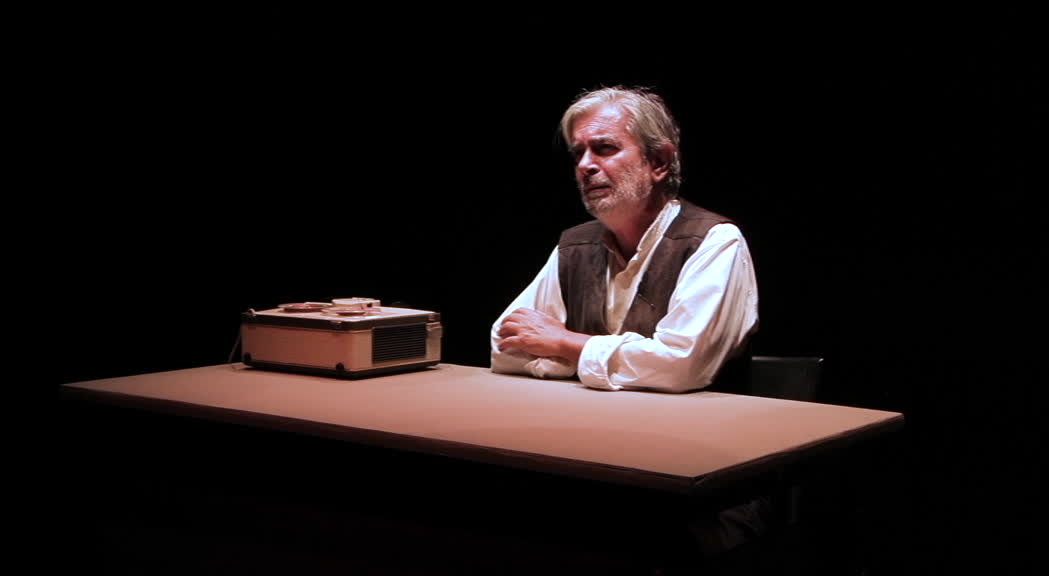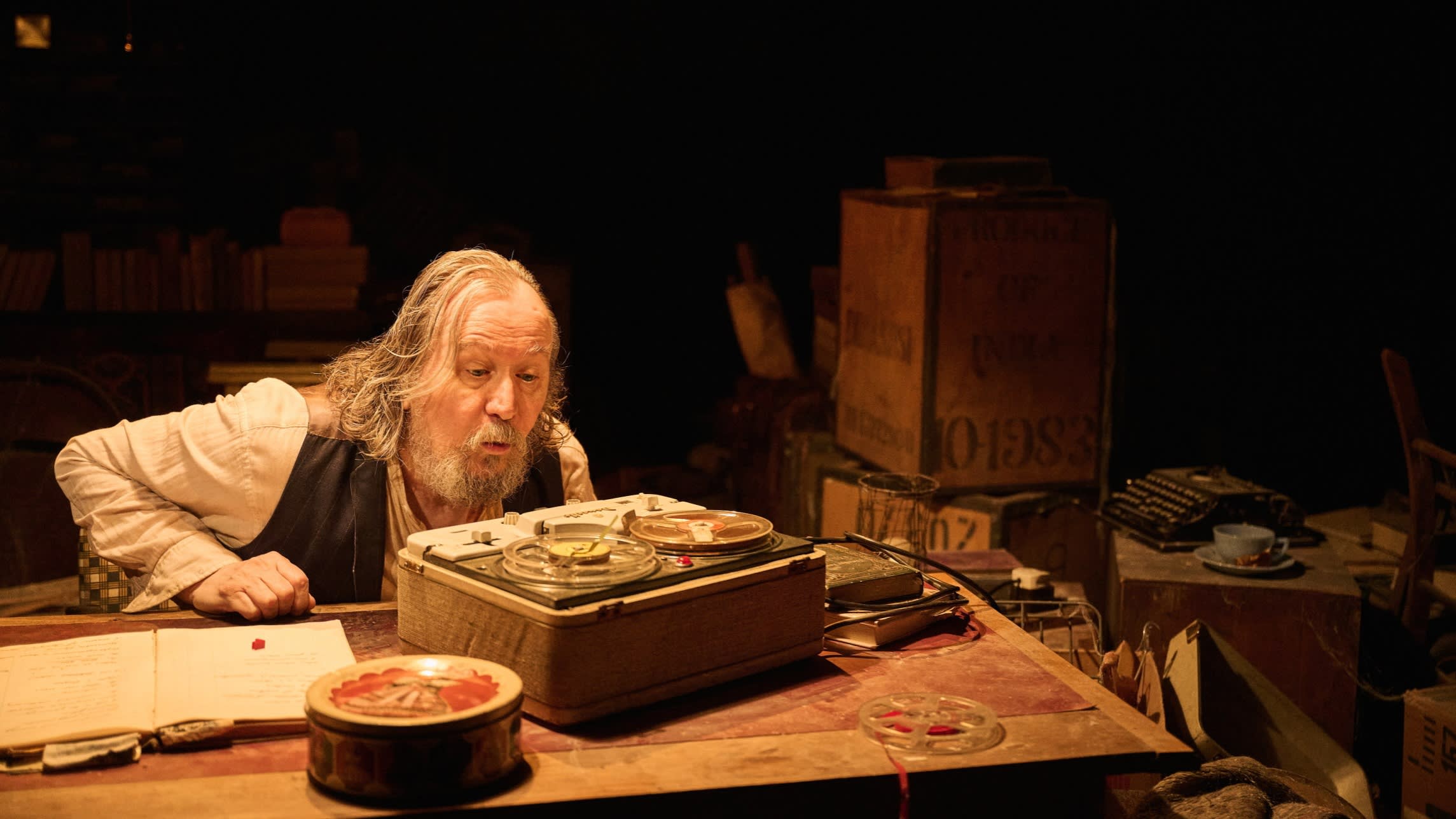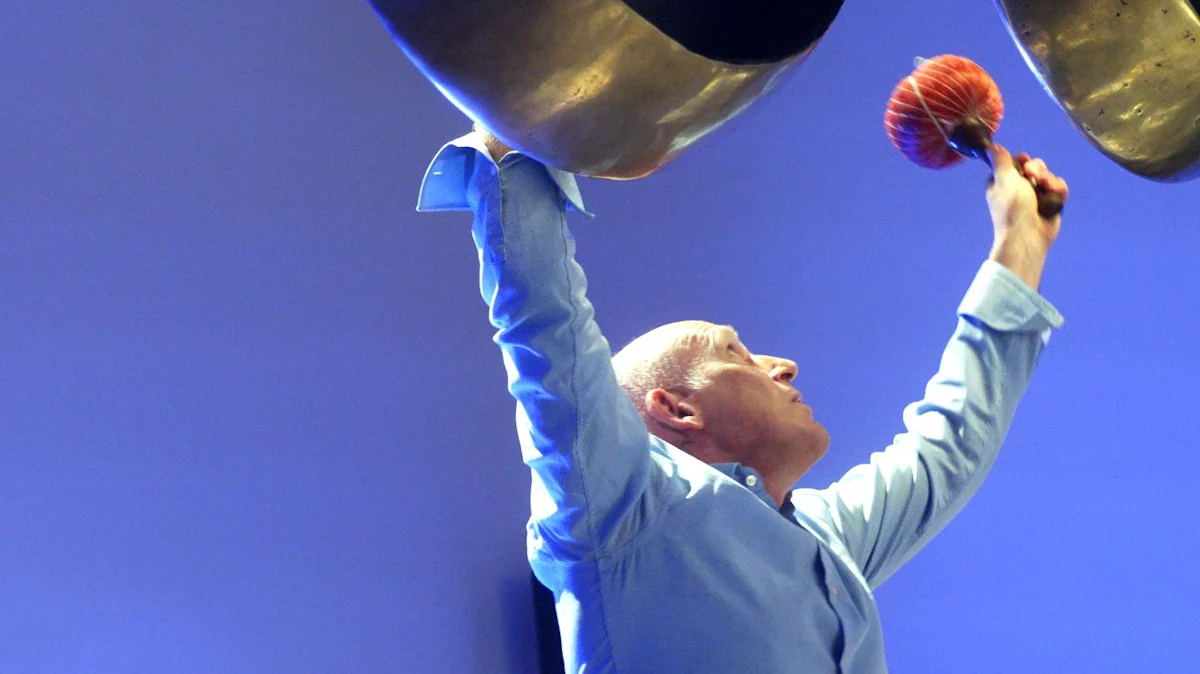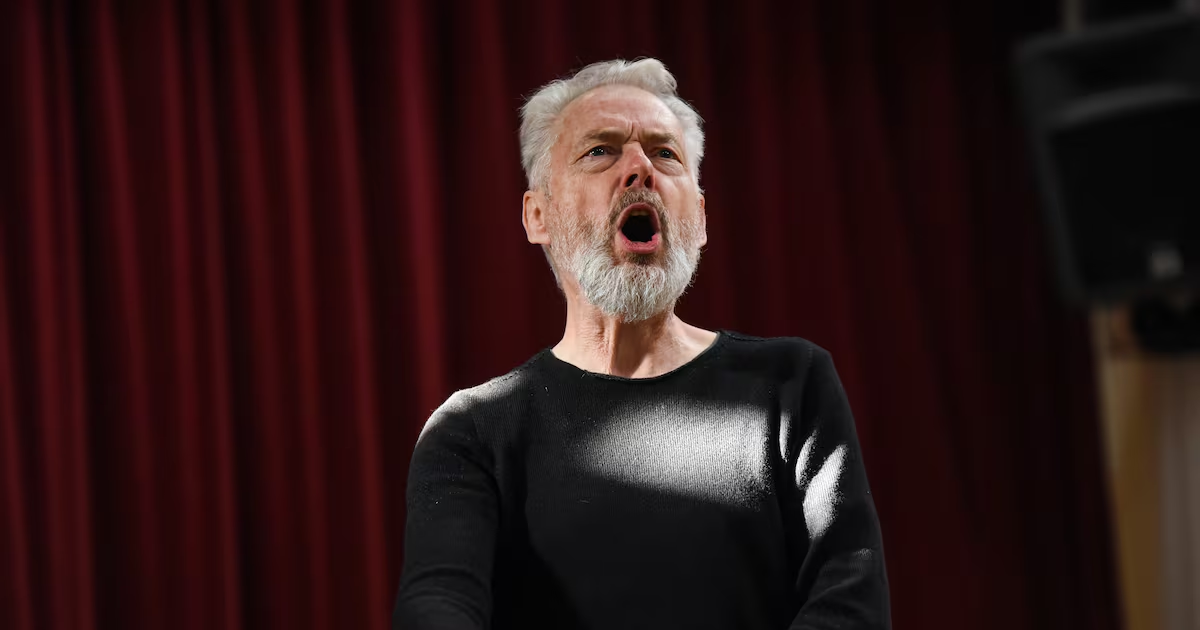
Just when it might be thought that the Paris-based company Gare St Lazare Ireland might be nearing the full extent of its interpretations of the works of Samuel Beckett, director Judy Hegarty Lovett and actor Conor Lovett pop their heads above the parapet and urge us to think again. The company, a globally acknowledged leader in the presentation of Beckett’s plays and prose, is focused on the Irish premiere of The Last Tape, one of the writer’s rare forays into opera. In this ground-breaking version, radically visualised and directed by Hegarty Lovett, the full text of Krapp’s Last Tape will be sung by the internationally acclaimed English tenor Mark Padmore and spoken by Lovett.It will be staged at the Kilkenny Arts Festival on August 14th and 15th, before transferring to REDCAT, a prestigious centre for innovative visual, performing and media arts in Los Angeles, in January 2027. Scarcely two months have passed since the company’s highly praised, six-hour world premiere of How It Is at the Venice Biennale. In the interior of a magnificent Venetian palazzo, Lovett and actor Stephen Dillane clawed their way through the verbal maze that is Beckett’s sprawling, unpunctuated meditation on the madness of human existence. The miracle is not only that the actors survived this gruelling linguistic ordeal but that, in what has been described by one critic as an “almost shamanistic atmosphere”, they carried it off with such flourish.With that landmark production behind them, this tantalising, rarely seen opera beckons. It is, in effect, a sung version of Krapp’s Last Tape and marks the writer’s third collaboration with the Romanian-born, French composer Marcel Mihalovici. He composed the score for Beckett’s 1962 radio play Cascando, a dialogue between music and words, which explored the writer’s obsession with the distinction between story and memory, while his Fifth Symphony featured a soprano voice singing a setting of a Beckett poem.The Last Tape landed on Hegarty Lovett’s radar in 2020, when she was doing research in the library of Reading University. She recalls being “thrilled and intrigued” by her discovery of this previously unknown manuscript. With funding from the Arts Council and in the hands of what she describes as “an amazing, brilliant group of collaborators”, comprising Padmore, Grammy-nominated conductor Elaine Kelly, composer Andrew Synnott, percussionists Alex Petcu and Glen Lyons, pianists Ellen Jansson and Izumi Kimura, and designer Jesse Presley Jones, the piece is being brought to full production. Lovett acknowledges that what Irish audiences will see in Kilkenny is the result of an inspiring, richly supportive team effort.“It’s always the case. Judy puts a team together and gets the best out of them. She gives them the conditions to play their best and do their best. There’s no one person leading the way. The group of artists we have here are all team players, all very open in their approach to this bold, hybrid piece,” he says.Mark Padmore will perform at Kilkenny Arts Festival. Photograph: Ewa Figaszewska Padmore was introduced to the Lovetts by his friend Dillane a few years ago. He had seen them perform in Brighton 10 years earlier and admired their work. He subsequently became involved in How It Is, when it was performed at the Everyman in Cork, and did what he calls “various iterations of it, including a filmed version which was streamed during Covid”. He agrees with Hegarty Lovett’s assessment that, musically, The Last Tape is a complex, challenging piece.“It’s challenging because nobody quite knows what it is and very few people have even seen it. Musically, it’s eclectic and has a lot of different styles. It sounds quite modern to our ears,” Padmore says. [ The Sound of Music at Cork Opera House: Ecstatic, five-star production of beloved showOpens in new window ]“It was written in the 1960s, a period when people were looking at different kinds of music. You’ll probably hear bits of Shostakovich, bits of Boulez and Stravinsky and Schoenberg. Harmonically, it varies – sometimes it’s quite harmonic and diatonic, at other times it’s completely atonal. You’ve got to try and make sense of those different styles and also make it comprehensible, as much as you can.“For a singer, the work presents various challenges; not, as one may think, in capturing the personae of an old man and his younger self, because Mihalovici has not really distinguished between the two. The piece meditates on the way in which time works, in lots of different ways. It’s not just about getting to be an old man, although it is usually performed by people in their 60s. Beckett wrote it for the actor Patrick Magee, who, when he first performed it, was in his mid-30s. So I’m not sure that the old-young thing is absolutely essential. It is certainly about the way memory works and how we try to keep hold of it.” In Beckett’s bleakly introspective play, Krapp makes a tape recording of his inner thoughts every year on his birthday. As he approaches the end of his 69th year, he plays back a recording from 30 years previously and confronts the life choices he prioritised. With the wisdom and experience that come with age, he weighs up the personal cost of those decisions.“I’m coming at it from a whole different angle from Mark because, for me, it is a play text,” says Hegarty Lovett. “The text and the libretto are pretty much word for word, with a few changes where Beckett and Mihalovici, together, adapted some of the text to suit the music. “I find it fascinating to hear the character of Krapp through song. What it delivers, emotionally, is something the text doesn’t necessarily offer. The text seems to hold on to that emotional register. It’s very embedded underneath. I see it like the reeds in the water, quietly lying there below the surface, whereas the music and the score really release it and offer a whole other way of looking at the story of Krapp. We see him in his old age, tired, taciturn, frustrated, world-weary, yet wistful and nostalgic too. The genius of Beckett in that piece is that, through the younger and older versions of Krapp, you see a unifying thread, you see the personality in the younger years already being self-critical and hard on himself.”Conor Lovett at rehearsals for The Last Tape. Photograph: Ewa Figaszewska Elaine Kelly conducts the Gare St Lazare Ireland adaptation. Photograph: Ewa Figaszewska After all the many and varied productions of Beckett’s works undertaken by the pair, they speak with genuine enthusiasm about the new resonances they have come across in this revisioning of a play they know so well. One wonders whether the original opera was written for two voices – one sung, one spoken – or is this a completely new take?“This is, I suppose, a Gare St Lazare special, the hybrid version of it,” says Hegarty Lovett. “I felt it would be really interesting to look at those two worlds that are so embedded, in the text version and then in a much more florid, dramatic, highly emotional register. Because of being so familiar with the play, it has been a bit of a revelation to place them side by side and see how they would relieve each other.”While there are few segments when actor and singer are heard at the same time, the pair admit to gaining a definite sense of two distinctive voices, threading through each other, becoming somehow interdependent.“That’s a good way of putting it,” says Lovett. “We set out with the idea of seeing the two Krapps, the spoken and the sung, together. But we were privileging the sung version because we had come to it through the opera. Then Judy said she thought we should look at them side by side. So that’s where we’re at now, Mark and I are kind of threading the two. “There’s a very sure chance that the audience will see the entire opera and the entire play as well. You can be very familiar with the play – I think I’ve probably seen 10 different Krapps in my lifetime – but it’s not until you start standing up and learning it and saying the lines that you see it in a different way from when you’re just watching it from the audience. And I think that goes for the director too. So that’s really exciting.”Samuel Beckett on the set of Film, a movie starring Buster Keaton, in July 1964 in New York. Photograph: I.C. Rapoport/Getty Images They both praise Padmore’s significant collaborative contribution, as well as Synnott’s achievement in effectively reducing the score from a 36-piece orchestra to two pianos and two percussionists. Another important production element is the design, as Hegarty Lovett explains.“There’s a lovely visual surprise in store for the audience. Jesse is a fine artist, who presented at the Venice Biennale in 2018. She does a lot of performative art and is very invested in theatre and in theatrical practice. All I’d like to say at this stage is that what we’ve tried to do is work towards Beckett’s description of Krapp being in a den. I like that notion and the animal implications of the word ‘den’.“The two pieces work together but are distinctly different. That’s the value of seeing them side by side, to turn the mirror, if you like, and view two versions of Krapp, each with its own purpose and value. But your ear will be attuned to hearing it both spoken and sung, which is a really interesting place to go, tonically. So, yes, the same, but sounding different.”The Last Tape is at the Watergate Theatre, as part of Kilkenny Arts Festival, on Friday, August 14th, and Saturday, August 15th, with performances at 2pm and 8pm each day.
The Last Tape: Beckett foray into opera comes to Kilkenny in hybrid form
Mark Padmore sings the role of Krapp and Conor Lovett speaks it in this Gare St Lazare Ireland adaptation, directed by Judy Hegarty Lovett
1,622 words~7 min read