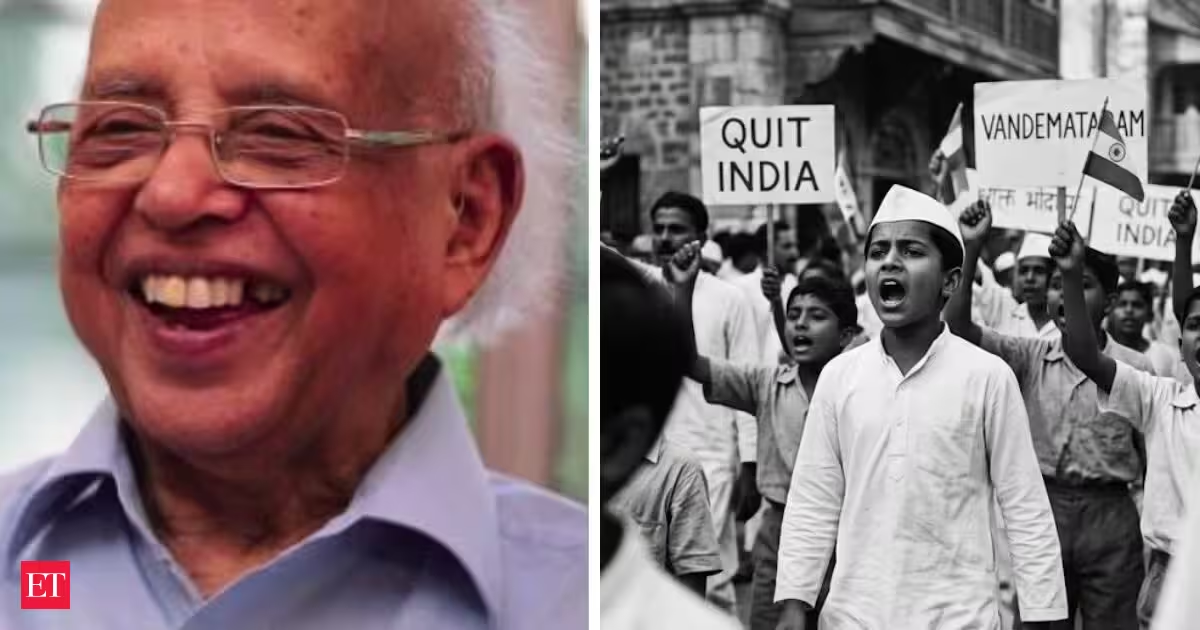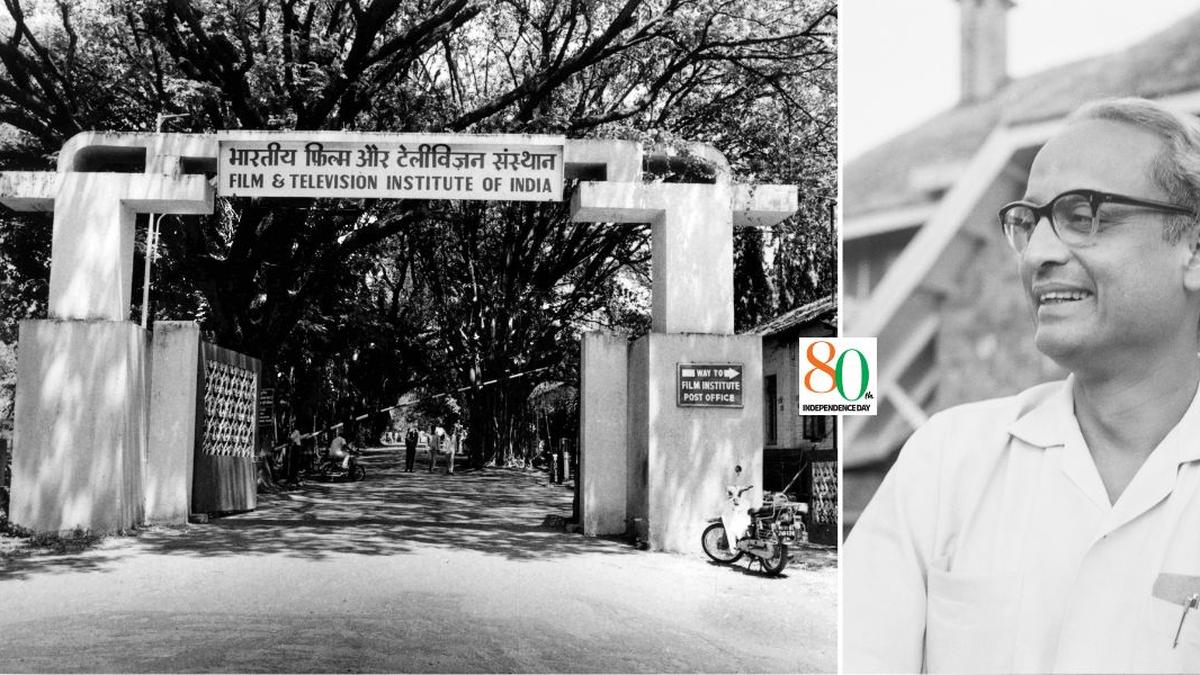
For my father, Jagat Murari, the most important aspect in the “making of a filmmaker” had little to do with the art or technique of filmmaking. It was, instead, about helping each of his young students find their unique voice, and giving them the spunk and spine to use it. As he built the Film and Television Institute of India (FTII; then called the Film Institute of India) — pretty much from the ground up in the 1960s — he put in place a programme that would create brilliant filmmakers who were masters of their craft, but he simultaneously nurtured an environment that would make them free-thinking artists, who would be, as he put it, “even rebels of our time”. His key tools? Debate, dissent, diversity.The results were more than he had hoped for. FTII went from a shaky start-up to a highly coveted film school within a decade, turning out top talent with unfaltering consistency: Jaya Bachchan, Shabana Azmi, Adoor Gopalakrishnan, Mani Kaul, Subhash Ghai, K.K. Mahajan, and many more. Their impact was transformative. They became the most significant actors, directors, cinematographers, sound designers, and editors of Bollywood. They spearheaded the Indian New Wave, kick-started regional cinema, and ushered television into the country. They won awards by the scores — the National Award functions were only half-jokingly referred to as FTII reunions. Over time, they infiltrated every corner of the film industry, steadily upping its technical and artistic standards, paving the way for Indian cinema to become the global powerhouse it is today.
Independence Day 2026 | Jagat Murari and FTII: Where India’s filmmaking rebels were made
On India’s 80th Independence Day, the enduring legacy of Jagat Murari, FTII’s former head, asks if public institutions can still nurture independent thinkers
1,177 words~5 min read