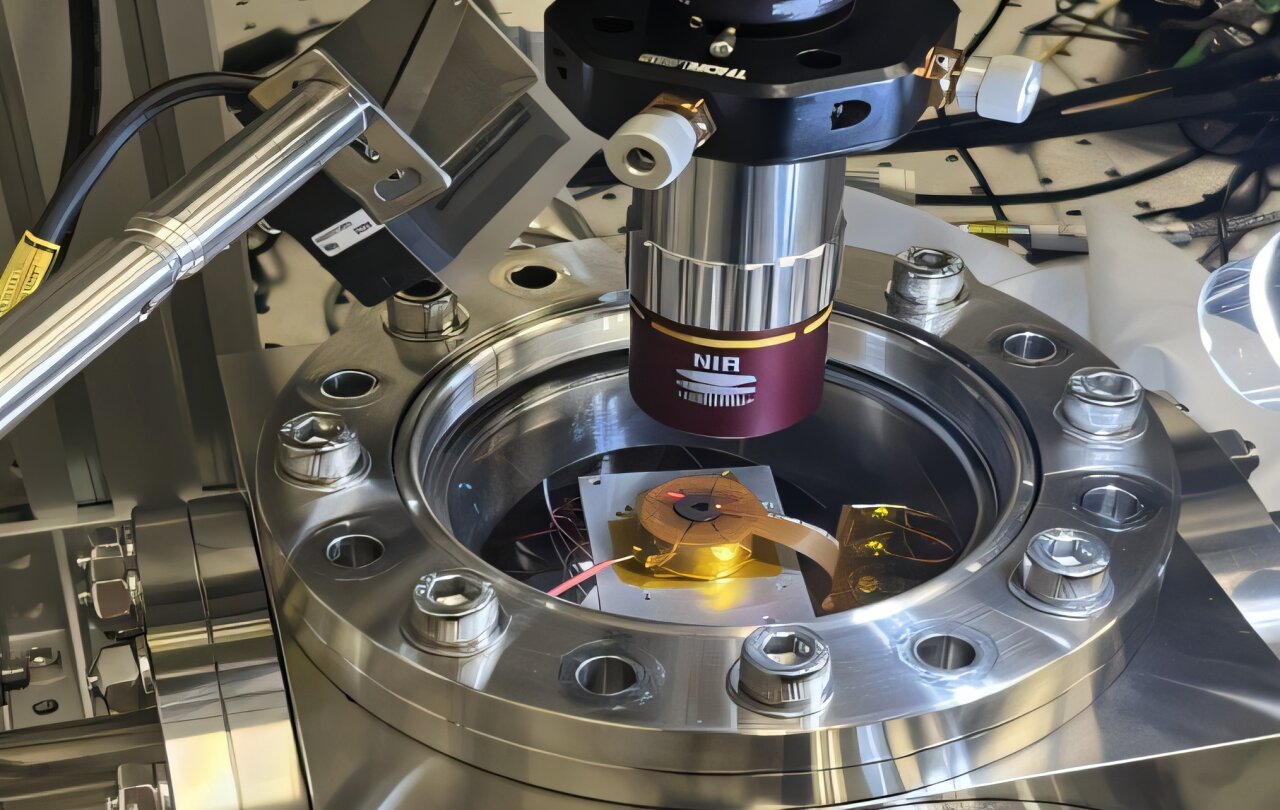
A graphite rotor levitates and spins above permanent magnets in a high-vacuum chamber, while lasers and electrodes monitor and control its motion for gyroscopic sensing. Credit: A*STAR
Researchers at the A*STAR Quantum Innovation Center (A*STAR Q.InC), part of the Research, Innovation and Enterprise (RIE) Flagship in Semiconductors, have developed a levitated, millimeter-scale rotor that continued spinning for more than 10 hours after its drive was switched off, achieving the lowest energy loss reported for a mechanical rotor of its size.
The team used the platform to demonstrate commercial-grade gyroscope sensitivity, providing a foundation for precision sensing technologies that could support navigation where GPS is unavailable, including underground or underwater.
The study, published in Nature Communications, proposes a solution to a longstanding challenge in diamagnetic levitation and establishes a new platform for ultrasensitive sensing technologies.
Rotational symmetry enables record-low energy loss