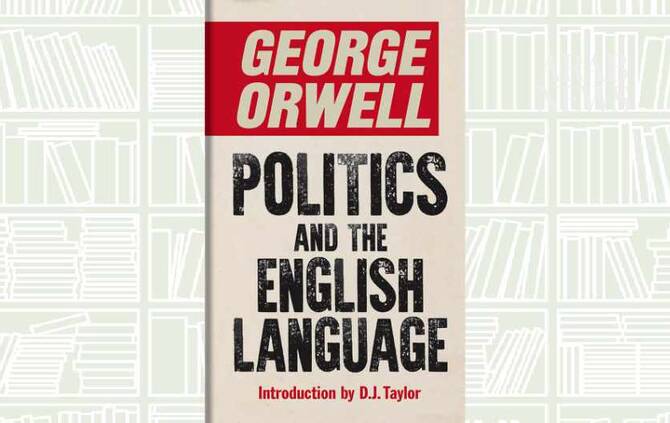
George Orwell’s 1946 essay “Politics and the English Language” is frequently read as a style guide. It is better understood as a warning about how public language can be used to weaken public judgment.
Orwell’s central claim is that careless prose not only reflects unclear thinking; it can actively encourage it. When writers depend on familiar turns of phrase, swollen abstractions, and evasive constructions, they make it easier to present questionable ideas as if they were natural, inevitable, or too complex to scrutinize.
In political contexts, that loss of precision matters. A sentence that refuses to name actors or specify actions can dull moral and factual accountability.
Orwell identifies recurring habits that allow writers to avoid the work of saying exactly what they mean, and to me that reflects a notable strength of the essay’s diagnostic clarity.
He categorizes these habits in a way that remains useful for readers as much as for writers. These incude worn-out figurative language that no longer evokes a clear image; “verbal padding” that lengthens a statement without adding information; inflated or bureaucratic diction chosen for prestige rather than accuracy; and terms so vague that they cannot be verified or falsified.