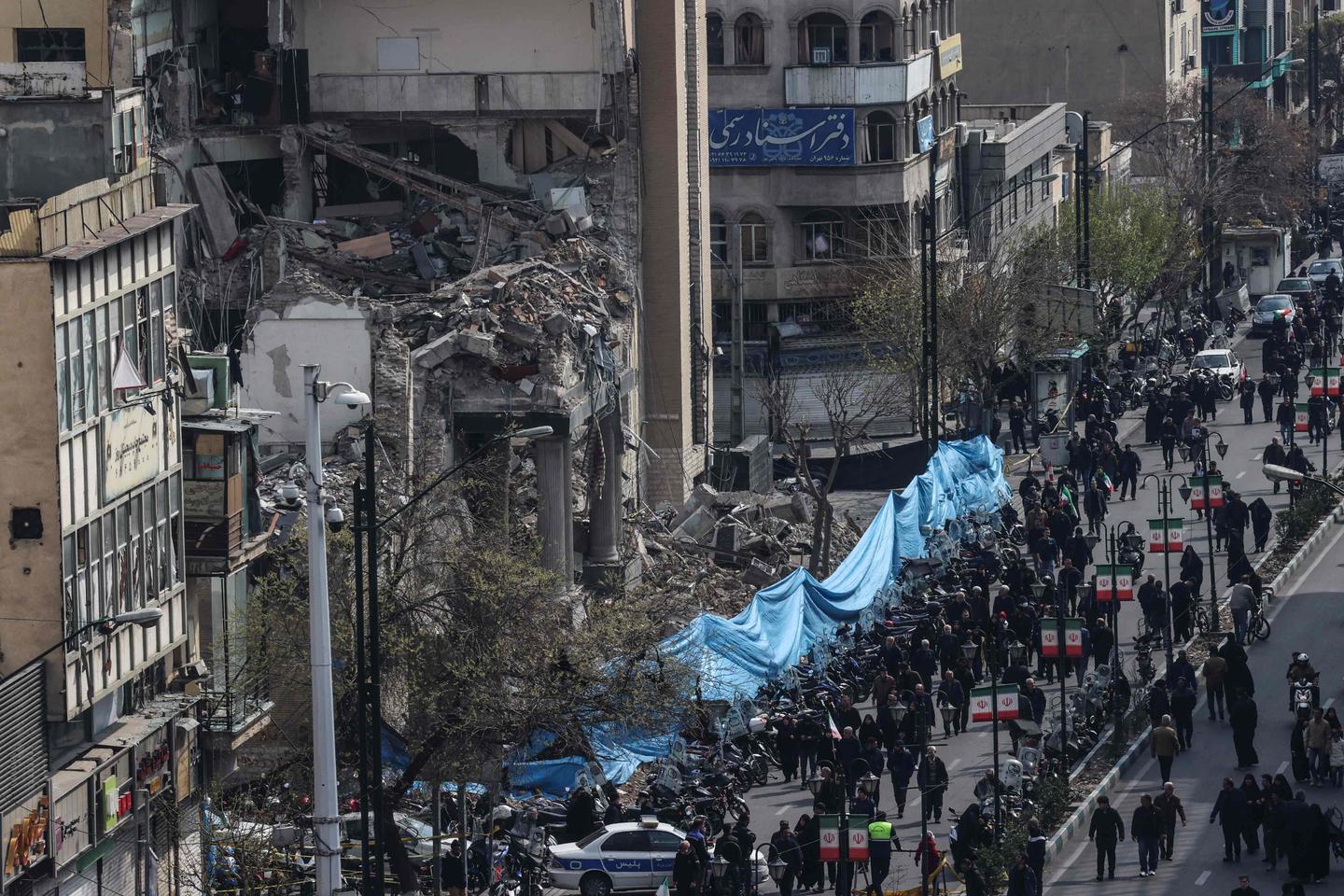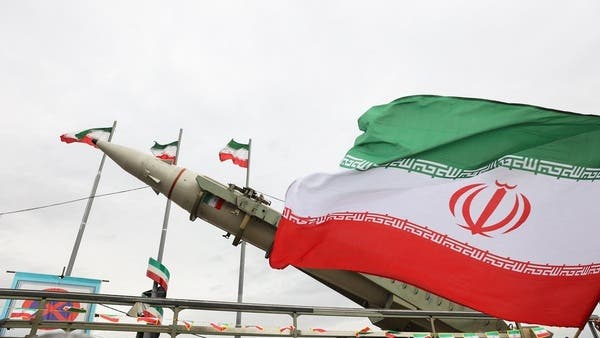
When US President Ronald Reagan came to power, the Soviet Union was at the height of its strength, or so the prevailing belief went. It was a hardline revolutionary regime with a massive nuclear arsenal. So why did it collapse only a few years later?For all the latest headlines, follow our Google News channel online or via the app.Reagan saw what others had failed to see. Despite its outward appearance of strength, the Soviet Union was suffering from a deep crisis of political legitimacy and economic performance. For all its military power, the system was fragile from within and rapidly eroding.In his famous 1982 speech before the British Parliament, Reagan cited Marx, who had predicted that a major revolutionary crisis would erupt in the West. The irony, Reagan argued, was that this crisis was not unfolding in the capitalist West, but in the very heartland of Marxism: The Soviet Union.Something similar can be said, on a regional level, when comparing Iran with the Gulf states.On the surface, the Iranian system appears powerful and victorious. It is capable of harming Gulf states with missiles and drones, threatening them through militias, striking ships and oil facilities, shutting airports for hours and threatening navigation. But behind this image of military strength, Iran’s regime, armed with ballistic missiles, is grappling with deep political and economic crises.Politically, before the outbreak of the war, the system faced a major wave of protests, the latest of which came last January, when thousands were killed. The regime itself acknowledged that more than 3,000 people had died.The causes of popular anger in Iran are likely to persist after the war rather than subside. Large segments of the Iranian population are questioning the value of a revolutionary ideology that has brought their country isolation, sanctions, blockades and wars, as well as the enormous sums spent over decades on allies and proxies across the region.The well-known Iranian slogan, “Neither Gaza nor Lebanon, I give my life for Iran,” which has been chanted during different waves of protests over the years, is in essence a popular indictment of Tehran’s regional priorities.Iran’s political system is suffering from a clear crisis of legitimacy and public trust, one that is acknowledged even by figures within the political establishment and the reformist camp, who have called for deep and urgent reforms.Economically, the picture is even more difficult. Iran’s economy has endured years of sanctions, mismanagement and isolation, and the war has only intensified those pressures.By contrast, Gulf governments enjoy high levels of political stability and internal cohesion. In fact, the war has strengthened public support for Gulf states in the face of an external threat.These states have also succeeded in avoiding direct involvement in the war, limiting the damage caused by Iranian attacks and preventing the external conflict from turning into internal strife among different components of their societies.In practical terms, it is difficult to compare the crisis of legitimacy facing the Iranian system with the state of political stability in the Gulf. Those who possess political legitimacy, internal stability and public support are better positioned to survive and endure.Economically, the same contrast can be seen. While Iran’s economy faces increasing pressure and constraints, Gulf economies are competing to attract capital, companies and talent, build strong infrastructure and diversify their sources of income.The Gulf states have tied their economies to the global economy, and their cities have become centers for business, tourism, investment and technology.Iranian attacks have hit airports, alarmed some tourists and damaged ships and facilities, but ultimately these are losses that can be contained and repaired. They have not been able to halt economic activity or derail long-term development projects.Human appeal is also one of the factors that determines a state’s success and strength. If you asked a citizen of an Arab country, or even someone from Iran itself, where they would prefer to live and work, in Iran or in one of the Gulf capitals, large numbers would most likely choose the latter. This is not a minor issue. Human appeal means attracting more minds, talent, capital and creative ideas. Iran itself has an enormous reservoir of talent and intellectual capacity, but large numbers of its people have chosen to emigrate and seek their futures abroad.The central point is that the Iranian system appears strong and defiant because it launches missiles and drones and creates a sense of exhilaration among its supporters. At the same time, however, it has impoverished its people, repeatedly clashed with them, and is suffering from both a crisis of political legitimacy and a worsening economic crisis.By contrast, the Gulf may appear weaker when it comes under attack, but in reality it possesses the foundations of long-term strength and success: Political stability, public support, development, integration into the global economy and the ability to attract people.Iran can harm the Gulf states. It can disrupt their airports for hours and strike their facilities and ships. But that does not mean it is winning.Strategically, Iran is losing the most important battle of all: The battle to build a state capable of enduring and prospering. The Gulf states, meanwhile, are positioning themselves on the right path, even if dozens of missiles and drones fall on them.
Has Iran defeated the Gulf states?
When US President Ronald Reagan came to power, the Soviet Union was at the height of its strength, or so the prevailing belief went. It was a hardline
864 words~4 min read