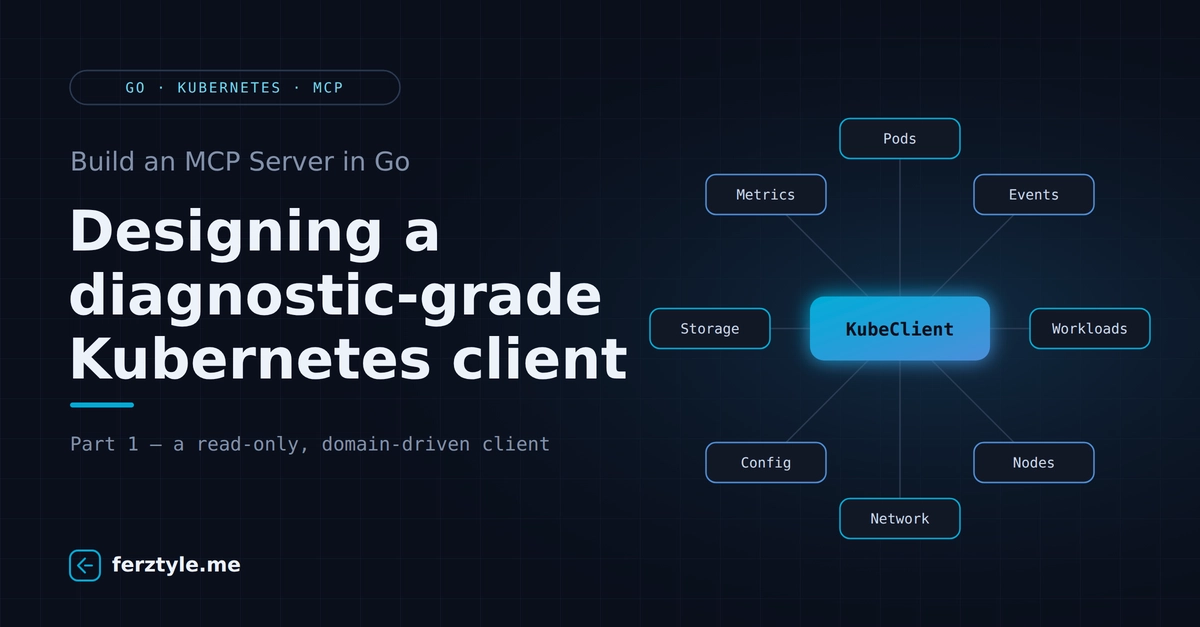
Part 1 designs the KubeClient interface this post builds on. If you haven't read it, the short version: a read-only, domain-composed Kubernetes client, pods, events, workloads, nodes, network, config, storage, metrics, with every unbounded query capped before an agent ever touches it.
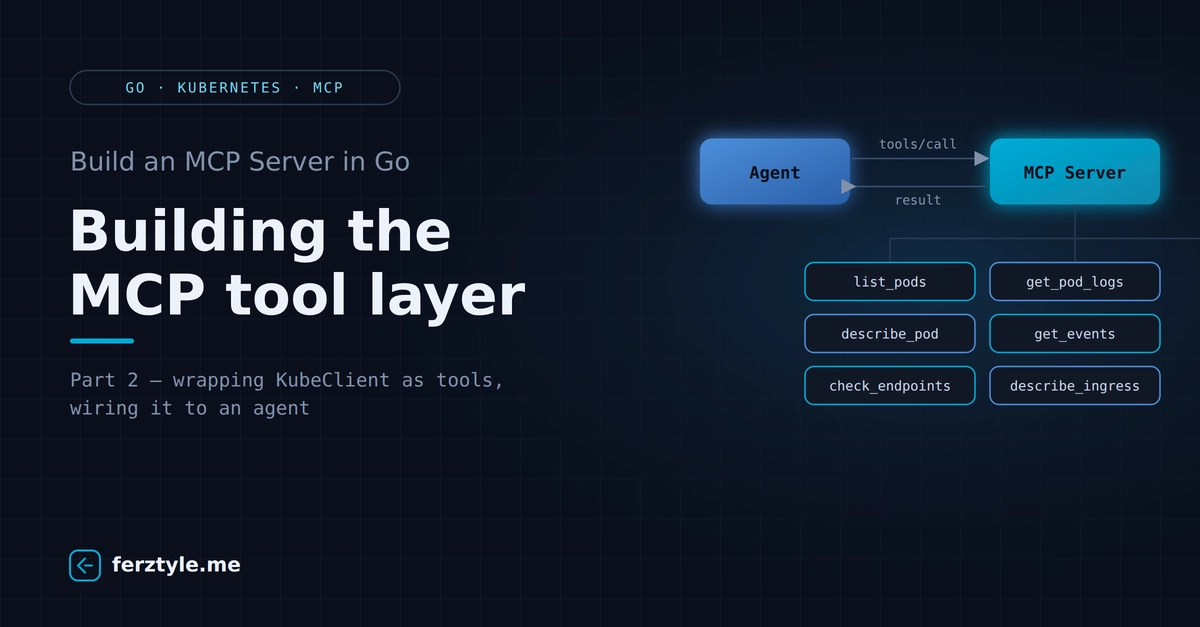
With that client in hand, this post does the rest: wrap it as MCP tools, wire it to an agent, and run the whole thing end-to-end against a real cluster.
What MCP actually is
Strip away the hype, and MCP is a small, well-defined protocol: a server exposes a list of tools, each with a name, a description, and a JSON Schema describing its input. A client, usually an LLM-powered agent, asks the server "what tools do you have," decides which one is relevant to the user's question, and calls it with structured arguments. The server runs the tool and returns a structured result. Repeat, as many times as the agent needs, until it has enough information to answer.
Agent (Claude, etc.)