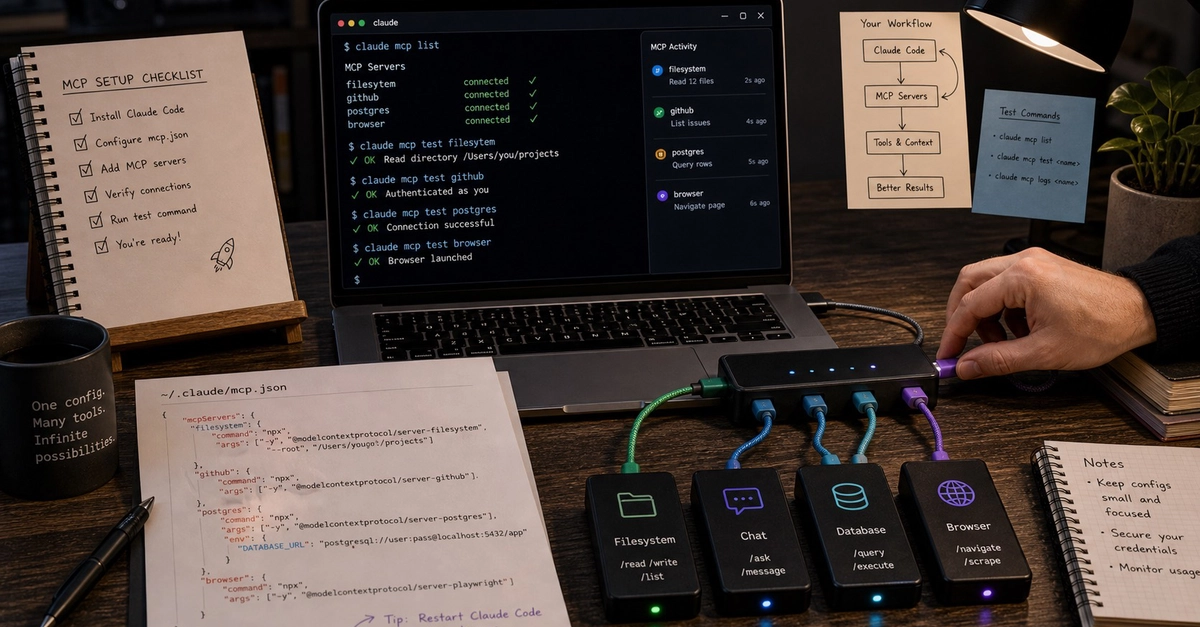
Claude Code can read your repo, run your CLI, query your database — as long as you give it the entry point. That entry point is an MCP server (Model Context Protocol). The day I wanted Claude to query our internal billing API without me copy-pasting JSON responses by hand, I wrote a small MCP server. In Go, not Python — and in hindsight that was the right call, for one specific reason we'll get to.
The official Go SDK (github.com/modelcontextprotocol/go-sdk) matured in 2025. It's perfectly usable in production now, but the docs still center on the "hello world." Here's what actually matters once the server leaves your machine: the transport choice, typed tools, auth, and the design traps I walked straight into.
MCP in 30 seconds: a server that exposes tools to an LLM
MCP is a client-server protocol. The client (Claude Code, Claude Desktop, your own agent) connects to one or more servers, each exposing three things: tools (functions the model can call), resources (data it can read), and prompts (reusable templates). 90% of real-world use is tools.
Claude Code (MCP client) talks to your Go MCP server over stdio or HTTP; the server calls your API or database Claude Code MCP client MCP server in Go Your API DB, services… stdio / HTTP Go calls The model decides to call a "tool" → the server runs it → returns the result