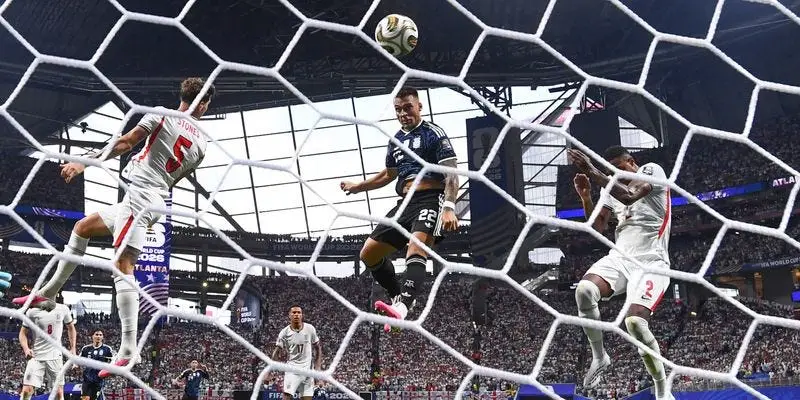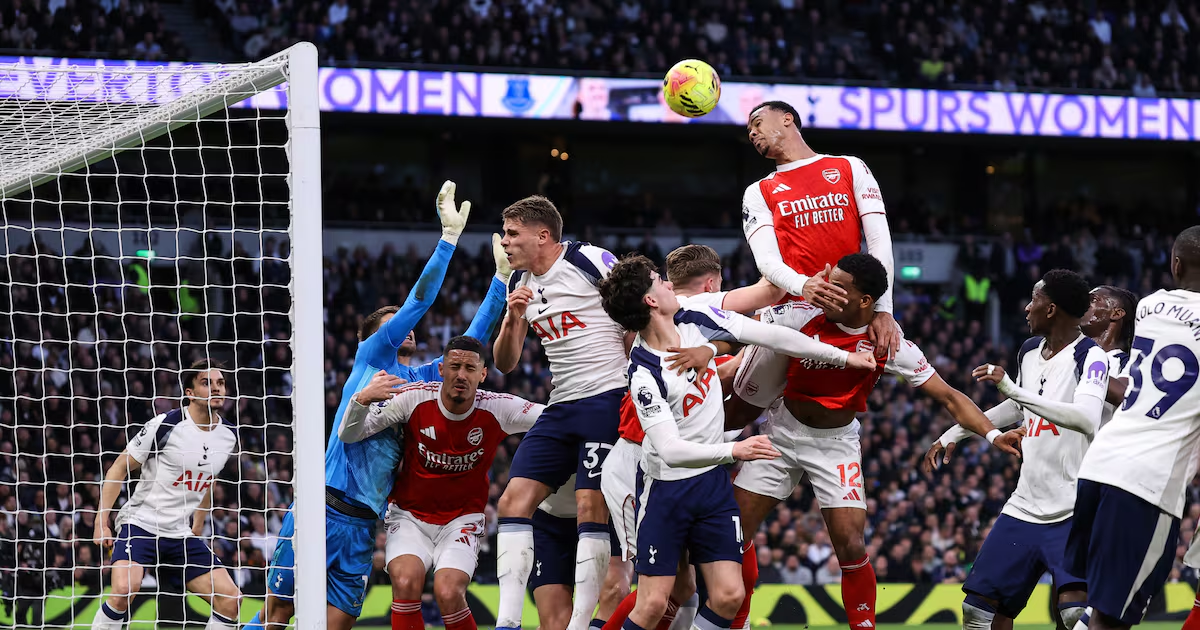
In 2024 Liverpool Football Club entered a collaboration with Google DeepMind to develop strategies around corner kicks. It was the perfect host for an artificial intelligence project because there were so many comparable data points from one corner to the next. The effectiveness of machine learning depends on volumes of information, so they fed the belly of the beast. It is never full.Data was harvested from 9,693 corners over 2½ Premier League seasons. According to an academic paper published by the lead researchers on the project, they logged the height, weight, starting location and movement of every player involved in the corners and developed a tool called TacticAI to process the information.“This tool is designed to accelerate a coach’s ability to spot patterns,” one of the lead researchers Petar Velickovic explained to the New York Times. “Coaches are looking at complex situations, and they have to work out what the key parts are that made or broke a particular strategy, and which players were responsible.”In the Premier League, corners have become a feverish battleground. Last season, 18 per cent of all goals originated from corners, a quantitative jump from 12 per cent a year before. More than a quarter of all goals last season came from set pieces, excluding penalties. All of that is fertile ground for data and its spin-off industries.But during the last two seasons, Liverpool’s record at set pieces, particularly corners, came under increasing scrutiny. In Arne Slot’s title-winning year their performance in this facet of the game ranked them no higher than mid-table against their peers, and last season Liverpool’s incompetence at set pieces was an active ingredient in their downfall. Halfway through the season the situation had become so urgent and troubling that they sacked their set-piece coach, Aaron Briggs. By then, they had conceded 12 goals from this source and scored just three. “The club tried to help so much,” Briggs said recently. “The analyst team were really helpful.”Dominik Szoboszlai takes a corner for Liverpool last season, for all the good that did. Photograph: Shaun Brooks/CameraSport via Getty Images So, did that include heavily processed data and suggested solutions from TacticAI? Liverpool made it clear when they first entered the project with Googe DeepMind that they were exploring the potential of this approach and were not yet committed to its use on match days. It is hard to imagine, though, that Briggs and the other coaches didn’t have access to this information last season.In conversations about AI and its potential to rule the world, soothing reference is usually made to the “humans in the loop”. In sport, they appear at both ends of the process. To perform their function, AI tools must be fed industrial amounts of relevant information and asked the pertinent questions. At the other end, if humans accept the wisdom of AI’s suggestions, they must be able to bring them to life.It is entirely possible that Liverpool had the most insightful diagnosis for a sick set piece in the history of analytics but, on the field, they had the wrong humans in the loop. Sport and AI have gone far beyond the courtship phase of their relationship. There will never be any romance, but it will be forever. For now, both parties are trying to work out where they stand. If there must be boundaries, where should they be erected? If there are no boundaries, will all hell break loose? Earlier this year, for example, Major League Baseball took a stand against the marching influence of AI. In 2025 they had decided to allow iPads in dugouts during matches, with access to video and league-provided data. But there was also a custom tab open to other applications.“In many cases the custom tab had expanded the use of the dugout iPads beyond their originally intended purpose,” the league wrote in a memo to all clubs in June. “[The custom tab was now being used] to include recommendations regarding substitutions, pitch calling and other in-game decisions traditionally made by players and coaches.” Houston Astros player Jose Altuve hitting coach Alex Cintron consult an iPad in an effort to figure out how to beat the Kansas City Royals. Photograph: Juan DeLeon/Icon Sportswire via Getty Images In the heat of battle, Major League Baseball was opposed to the idea of AI as a whisperer on the sideline, so, for the second half of the season, the custom tab was made inaccessible. Other sports, though, are nowhere near drawing a line. In the last nine months, eight Formula One teams have entered new AI partnerships. “It is much more than a sticker on a car or a sticker on a billboard,” one of the Atlassian Williams board members told Reuters. “We see it as one of our differentiating points: how can this [AI] partner help us in that journey back to the top.”A spokesman for Oracle Red Bull Racing made a similar assertion: “It’s gone from a sort of basic AI to more of an agentic approach, where rather than just searching for something, it’s actually providing decisions for us.”In that context, golf is a blank page. Among its amateur playing population around the globe no other sport has a more voracious appetite for technological solutions or shortcuts: from the hitting areas in your local golf shop to the latest range of irons promising forgiveness, to the on-course gadgets spitting out yardages. But what the companies in this field are looking to develop now are basically AI caddies. In a fascinating piece for Golf Digest earlier this summer, Curtis Gillespie test drove the Arccos AI smart laser. “It looks like any rangefinder,” wrote Gillespie, “except it pairs with your phone and a tracking device the size of an earbuds case you keep in your pocket. Together, these tools gathered and assessed available data points – distance, wind, gusts, slope, elevation, temperature, humidity, hole location, green shape, bunkering and, somewhat unnervingly, my anticipated performance.”Golf has been quick to embrace artificial intelligence. Photograph: Valerio Pennicino/Getty Images From a sticky lie in the rough 200 yards from the green, with trees in his flight path, the AI advice was to lay up about 110 yards short of the green. The human in the loop, though, decided to thrash a four-iron and ended up with a triple bogey.What Arrcos, and others, are ultimately trying to produce is a device that can have on-course dialogue with a player. The basic technology exists, though it is far removed from the kind of refinement that would make it practical to use. Golfshot, for example, has already developed a device that gathers your shot data through an Apple watch. “One day there will be a true on-course caddie AI app,” says John Hawley, the chief technology officer of Golfshot. “An app that assesses all the data and then literally has a strategic conversation with you.”The R&A and the USGA have not been called upon to make a ruling on this intervention from the AI metaverse, but eventually they will be. At the many interfaces between sport and AI there is a rampant exploration of new frontiers. Nothing is ridiculous. In football, an app called aiScout has been devised to expedite the business of player recruitment, but also to spread its arms. An activity that for generations was the preserve of gumshoe work and intuitive judgment now has an AI butler.Data analysts run the rule over players during a Bayern Munich-Hamburg match. Photograph: Martin Rose/Bongarts/Getty Images The app is designed to allow young players who might never have been seen by a scout to upload a video, performing up to 75 exercises in predefined drills. The function of the app is not just to gather raw material but to adjudicate on it. Like the first gold prospectors panning gravel from the river, except at warp speed. One of its designers, Richard Felton-Thomas, explained how it works at a TED talk last September. “We created the algorithm,” he said, “and with that algorithm we pumped thousands of videos through it. So, we started to make benchmarks and standards across age and gender.”Chelsea signed a five-year deal with aiScout in 2022. Burnley, Nottingham Forest and others followed. In 2023 they signed a multiyear deal with Major League Soccer in America. How many stars have come through that route? None yet. Clubs, though, are developing their own innovations in this space too. At a conference titled “AI in action: Changing the Sports Industry,” staged at Penn State University in March, Addison Hunsicker from the Philadelphia Union MLS team outlined how AI had transformed their scouting processes.“We recruit from 45-50 leagues around the world, so we handle massive amounts of data and run it through our internal models for scouts and executives to analyse all the players they’re targeting. All of our player recruitment modelling is geared towards our style of play. “So, we’ve created an AI tool that allows scouts to type in queries such as ‘Find me the fastest midfielders who rate well in ball-winning’ and the tool will sort through 4,000-plus midfielders and give them a list of players who fit those qualities.”GAA analysts are among those trying to use artificial intelligence to gain a sporting edge. Photograph: Piaras Ó Mídheach/Sportsfile via Getty Images And that is the thing: AI is open to suggestion. Barry Cleary is the cofounder of GAA Insights and has been working as an analyst with intercounty teams and elite club teams for more than 10 years. In the last couple of years, he has been developing AI tools to improve the efficiency of the services they provide.“It can build whatever you can think of,” says Cleary. “The key to it is what ideas do you have. It can make whatever tools you want. One of the things I built recently was a little app that allows me to tag the game any way I want. So instead of paying for various software [programmes], you build your own thing. I did one where I can pull in a match video, put in players’ names and tag where they are on the pitch as the game goes on. Basically, people are building their own software the whole time.“Analysts at the moment [in the GAA] are doing a lot of the donkey work and they don’t have a lot of time to analyse the output. AI analyses the output really well. Your guidance is teaching it the context of everything but because it is eating up the internet it understands hurling words and terminology up to a point. Eventually there will come a time when it will be able to read the games and spit out the data. That’s not far off.”In sport, AI is all around us in ways we no longer notice. It is embedded in VAR and goal-line technology. On tennis’ ATP Tour, line judges were replaced by electronic line calling in 2025; even Wimbledon dropped line judges after 148 years because AI gave them a cleaner, more reliable alternative. Earlier this year, the NBA announced it was going to lean more heavily on AI for its decision-making after the quality of officiating during the playoffs generated a hail of criticism.The NFL season begins early next month, but their 272-game schedule is the outcome of predictive AI modelling now. Every data point that might affect audience reach and revenue is blended into the fixtures and the kick-off times. They don’t need to tell you. You don’t need to know. That’s how AI works. Whispering.
Computer-generated corners? Robot caddies? As sport embraces AI, nothing is ridiculous
From soccer and GAA to baseball and Formula One, teams are exploring how artificial intelligence can improve decision-making - and trying to decide where boundaries should be set
1,913 words~9 min read