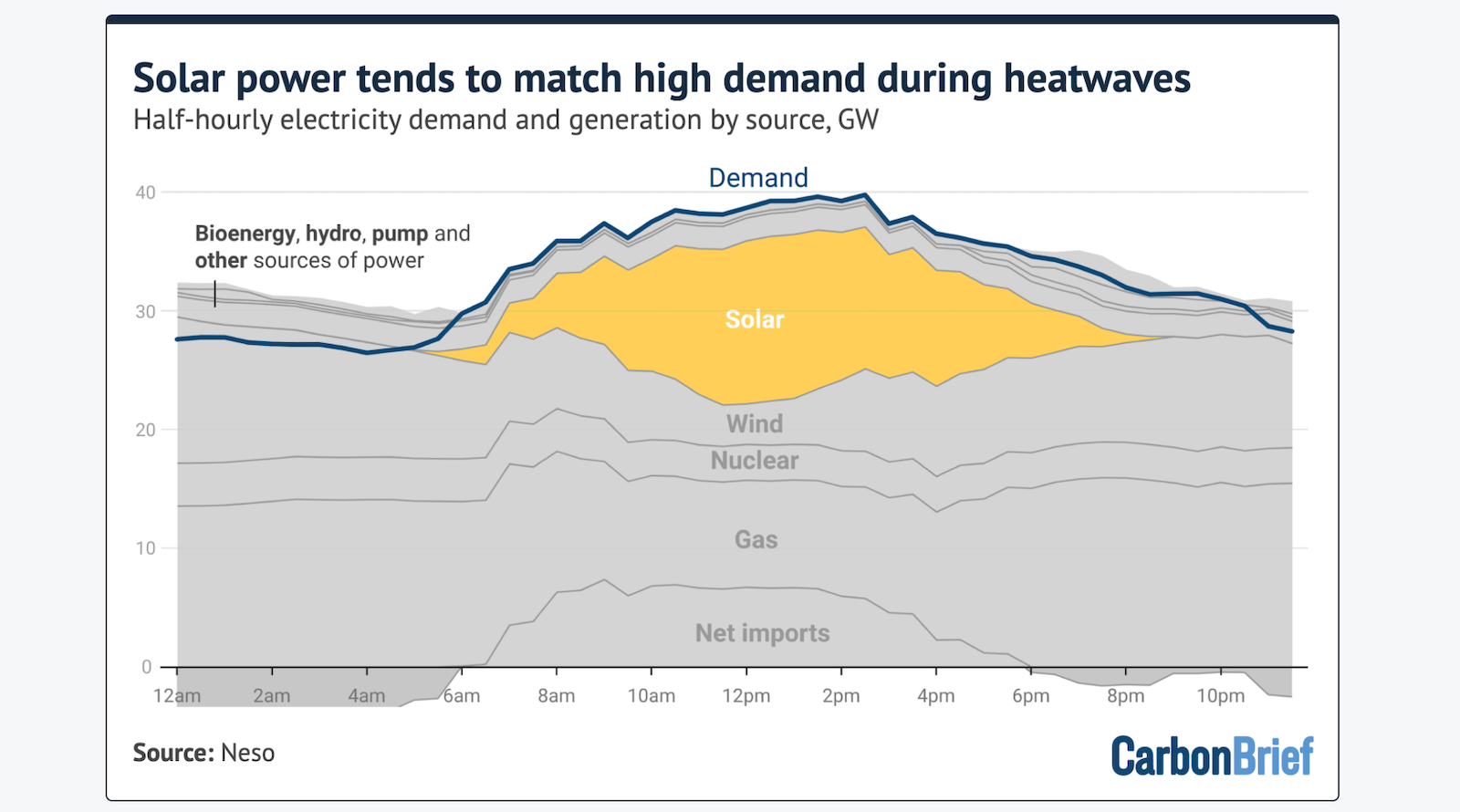
Photovoltaics rely on sunlight. Battery storage systems rely on absorbing and releasing energy precisely when the power grid needs it. Both sound like an ideal combination for hot summer days: plenty of sunshine, high generation, increased electricity demand due to cooling, and greater grid flexibility. In practice, it’s more complex.
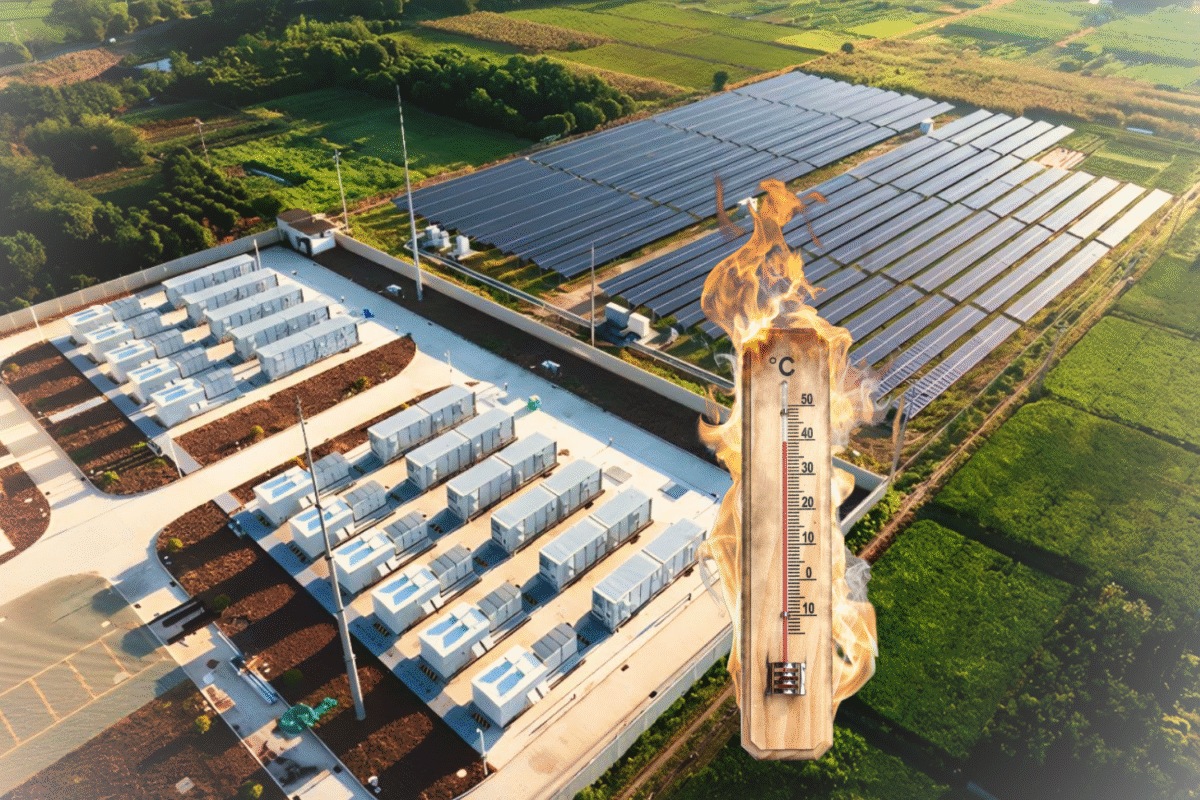
Heat waves in Europe are becoming the norm. Strong sunlight isn’t the problem. The critical factor is temperature. Solar modules are evaluated under standard test conditions: 1,000 watts per square meter of irradiance and a cell temperature of 25 degrees Celsius. In the field, cell temperatures on hot days are significantly higher. Modules can get considerably hotter than the ambient air temperature.
In crystalline solar cells, power output typically decreases with increasing temperature. If the cell temperature is not 25 degrees Celsius but 65 degrees Celsius, this corresponds to a power loss of approximately 16 percent compared to standard conditions, assuming a temperature coefficient of minus 0.4 percent per degree.
For operators, this distinction is crucial. Those who only look at raw yield figures are missing the bigger picture. The more important question is: did the photovoltaic system produce as it should under the actual irradiance and temperature conditions?