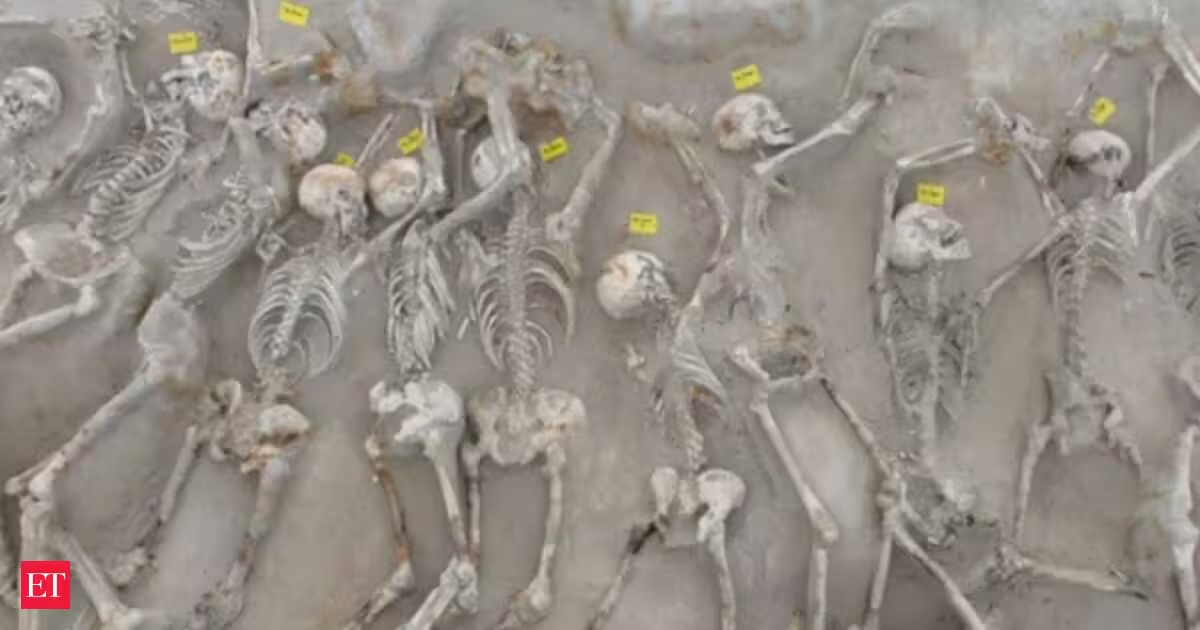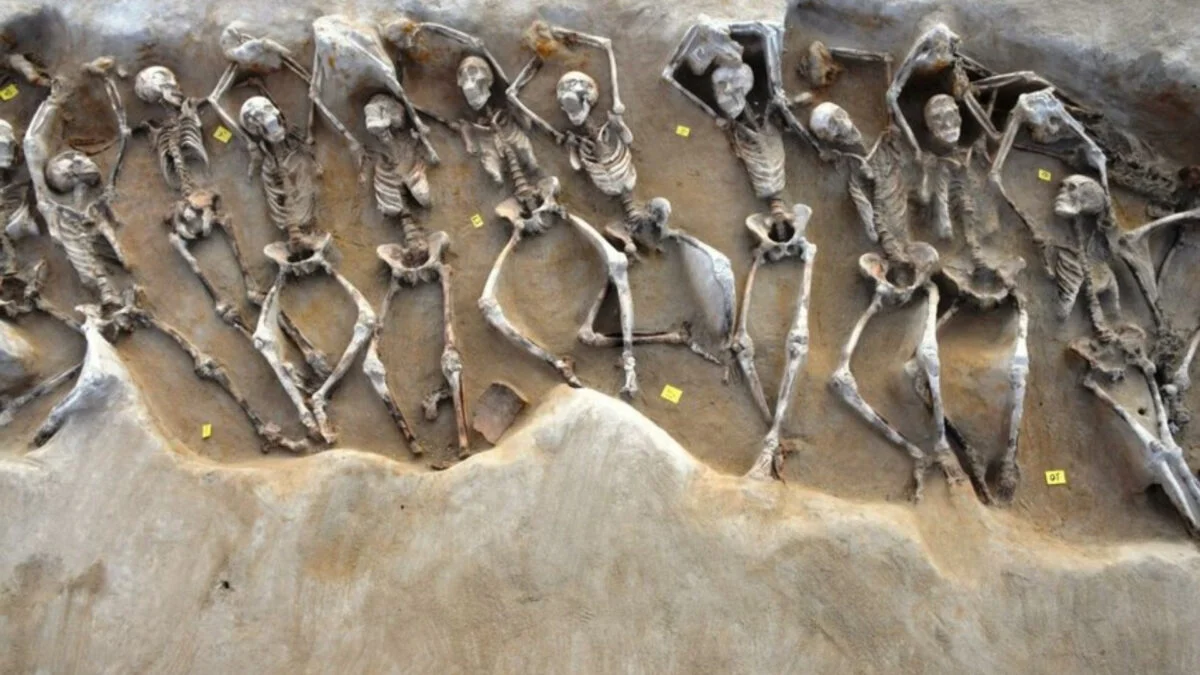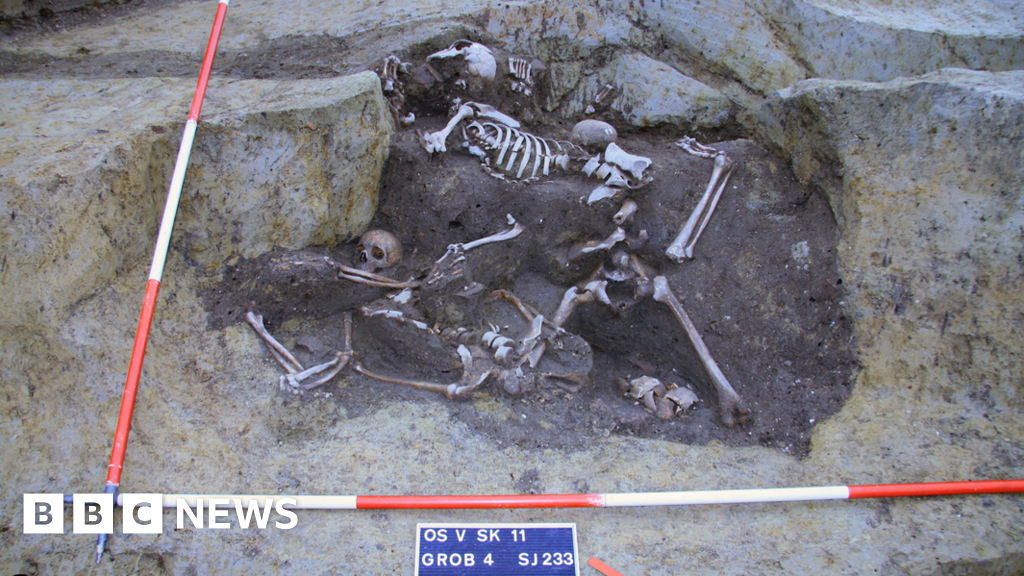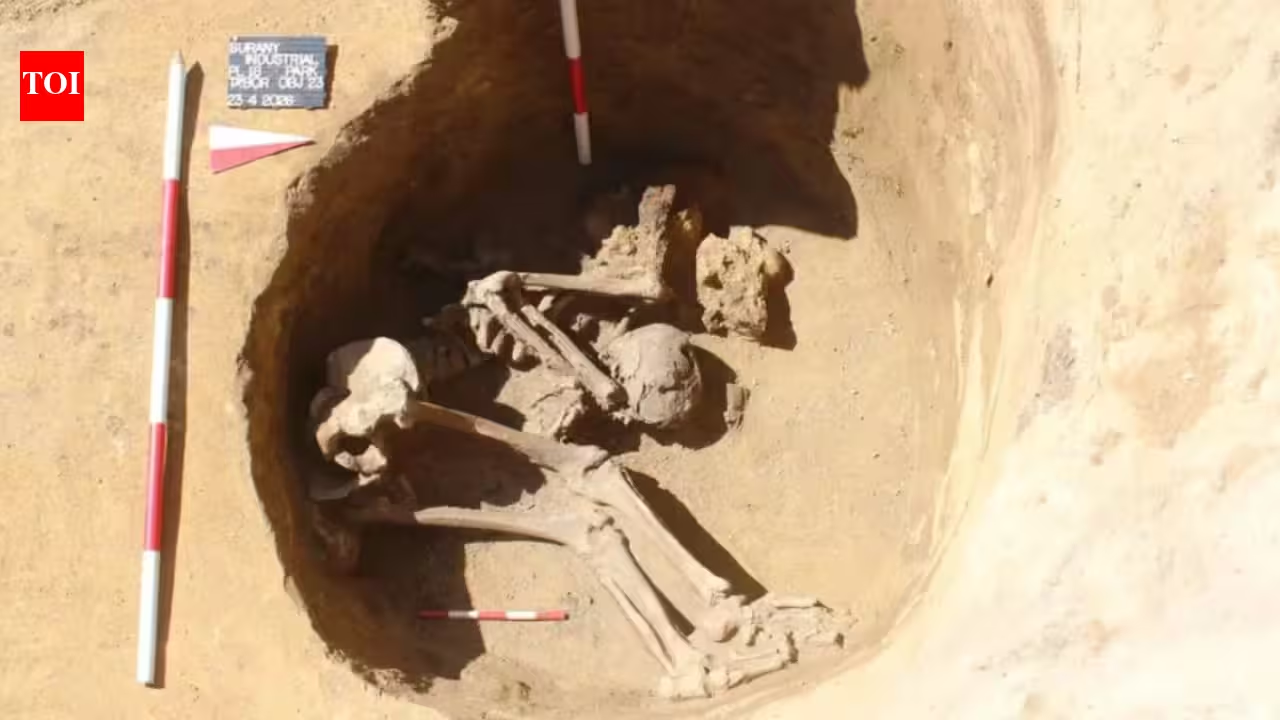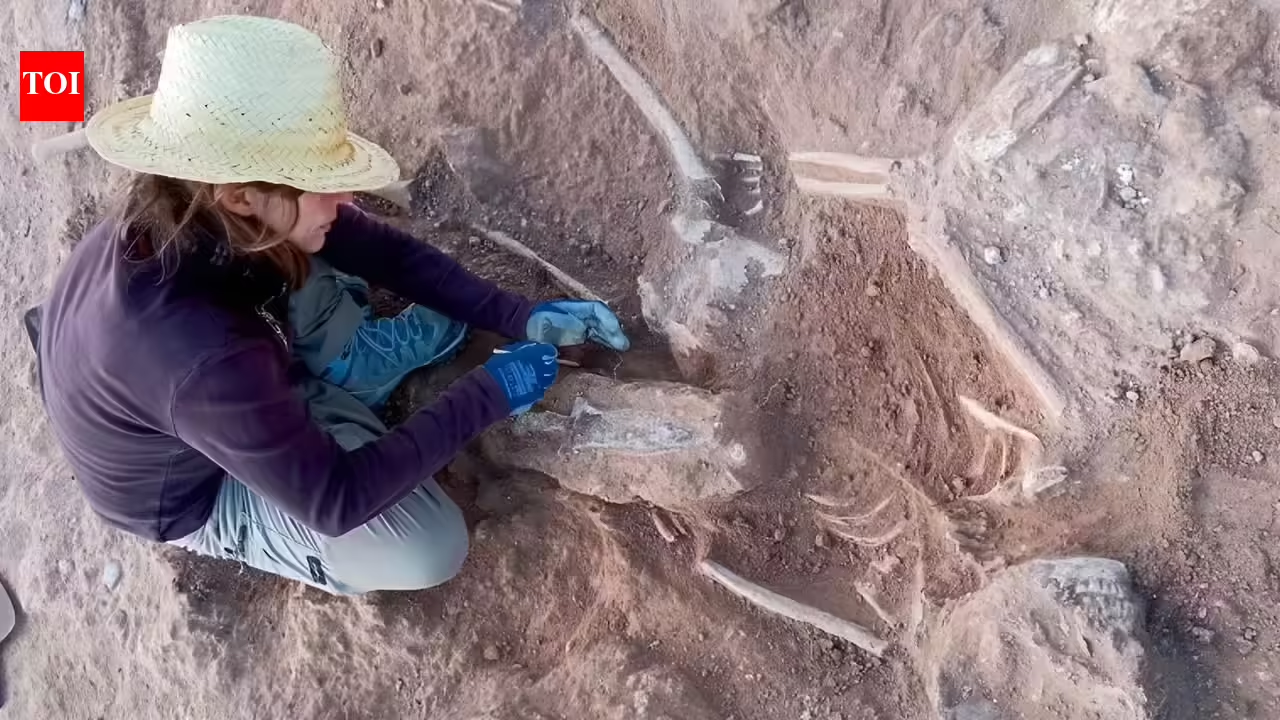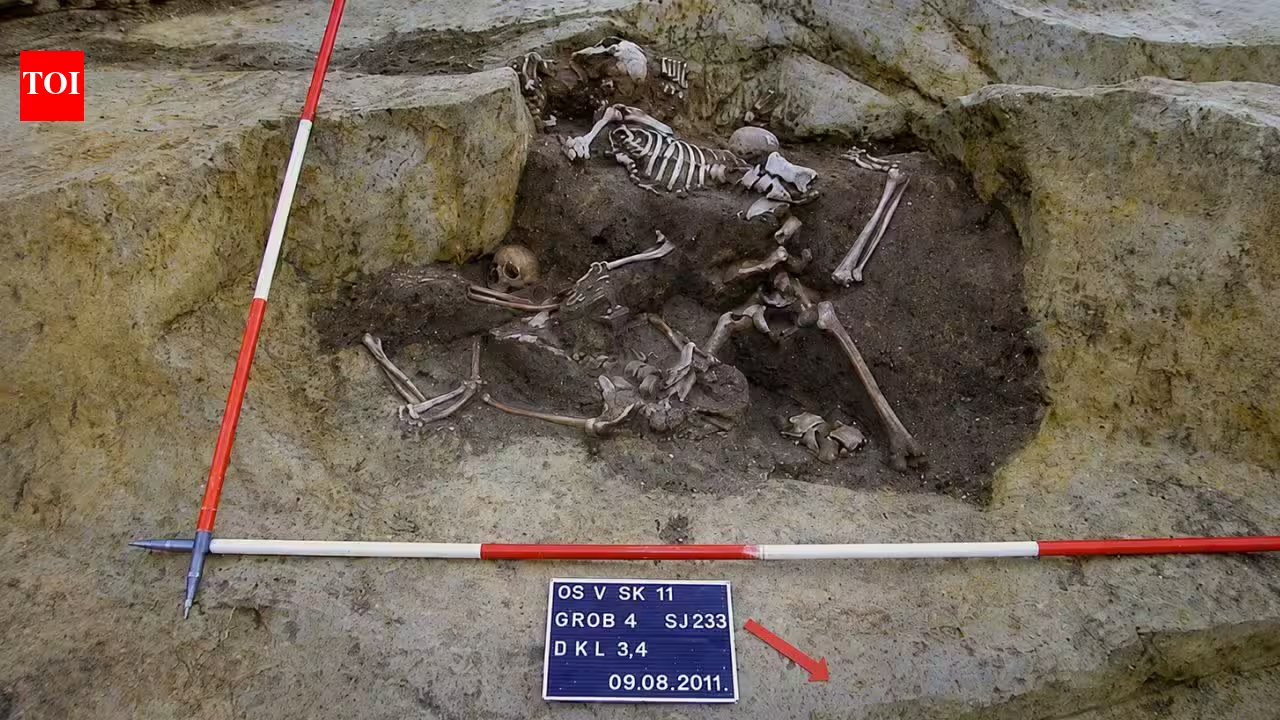
7 Roman-era skeletons found in Croatian mass grave may be soldiers who died in the Battle of Mursa 1,700 years ago(PC: PLOS One)More than 1,700 years ago, seven men were placed together in a former water well at the Roman city of Mursa, in what is now Osijek, Croatia. Their remains are now providing archaeologists with clues about a violent period in Roman history. A study published in PLOS One, titled ‘Multidisciplinary study of human remains from the 3rd century mass grave in the Roman city of Mursa, Croatia’, found that all seven individuals were adult males with evidence of injuries, pathological changes and physically demanding lives. Direct radiocarbon dating placed the burial broadly in the second half of the 3rd century CE. Researchers also examined their diets, ancestry and skeletal remains using archaeological, isotopic and ancient-DNA evidence. The multidisciplinary findings strongly suggest that the men were Roman soldiers who died during a catastrophic event associated with the Crisis of the Third Century. The researchers consider the Battle of Mursa in 260 CE the most likely explanation, although the evidence does not definitively prove that the seven men died in that battle.What do the 7 Roman-era skeletons found at Mursa revealThe mass grave was discovered during excavations in 2011 at the location of the University Library in Osijek, Croatia. The site was part of Mursa, an important Roman settlement in the province of Pannonia. Archaeologists found seven completely preserved skeletons placed together in the burial feature. Direct radiocarbon dating showed that the individuals were buried during the mid-3rd century CE. The researchers then combined several methods to investigate who they were and what happened to them. All seven individuals were identified as adult males. Their bones showed various pathological changes, including injuries and enthesopathies, which are changes where muscles, tendons or ligaments attach to bone. The study concludes that the evidence strongly points towards the men being Roman soldiers who died during a catastrophic event.What do the 7 Roman-era skeletons found at Mursa reveal ( PC: PLOS One)Skeletons show injuries and signs of physically demanding livesThe researchers examined the skeletons for evidence of injuries and other changes to the bones. They recorded both healed injuries, which occurred during life, and injuries that showed no signs of healing. The individuals also had numerous pathological lesions, including enthesopathies. These findings indicate that the men experienced physically demanding lives, although the researchers used the evidence together with other findings rather than treating any single injury as proof of military service. Their stature was also reconstructed from measurements of the humerus and femur bones. Their remains therefore provide a biological profile consistent with people who may have experienced demanding physical activity. However, skeletal evidence alone cannot establish that they were soldiers or identify the exact event that caused their deaths.Ancient DNA and diet reveal the men came from different backgroundsThe researchers also examined the men's diets using carbon and nitrogen stable isotope analysis. The results indicate that they consumed a mixed C3 and C4-based plant diet, with limited amounts of protein from terrestrial animals and very little marine protein. The researchers also analysed ancient DNA to investigate their ancestry. The genetic results showed that the seven individuals had heterogeneous ancestry rather than forming a single genetically uniform group. None showed genetic continuity with the preceding local Early Iron Age population studied by the researchers. This finding is consistent with the possibility that the men came from different backgrounds. Combined with the archaeological and skeletal evidence, the genetic and dietary results support the researchers' interpretation that the group may have been Roman soldiers rather than members of the earlier local population.Mass grave may be linked to the 3rd-century Battle of MursaThe study places the burial within the Crisis of the Third Century, a period from 235 to 284 CE marked by political instability and conflicts across the Roman Empire. Mursa was an important settlement near the Danube military frontier and was involved in several military events. The researchers consider the battle of Mursa in 260 CE the most likely explanation for the mass grave. They describe this as a hypothesis rather than a fact. The researchers argue that their multidisciplinary findings, including radiocarbon dating, bioarchaeology, isotope analysis and ancient DNA, provide strong support for this interpretation while leaving the precise circumstances of their deaths uncertain.
7 Roman-era skeletons found in Croatian mass grave may be soldiers who died in the Battle of Mursa 1,700 years ago
More than 1,700 years ago, seven men were placed together in a former water well at the Roman city of Mursa, in what is now Osijek, Croatia. Their remains are now providing archaeologists with clues about a violent period in Roman history.
720 words~3 min read