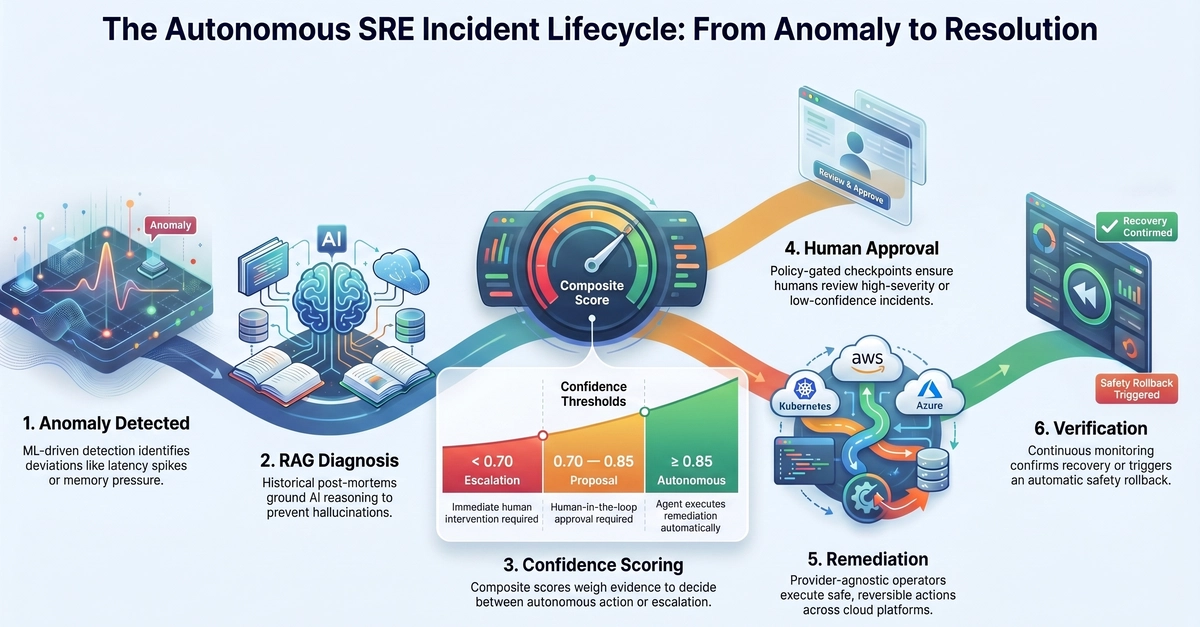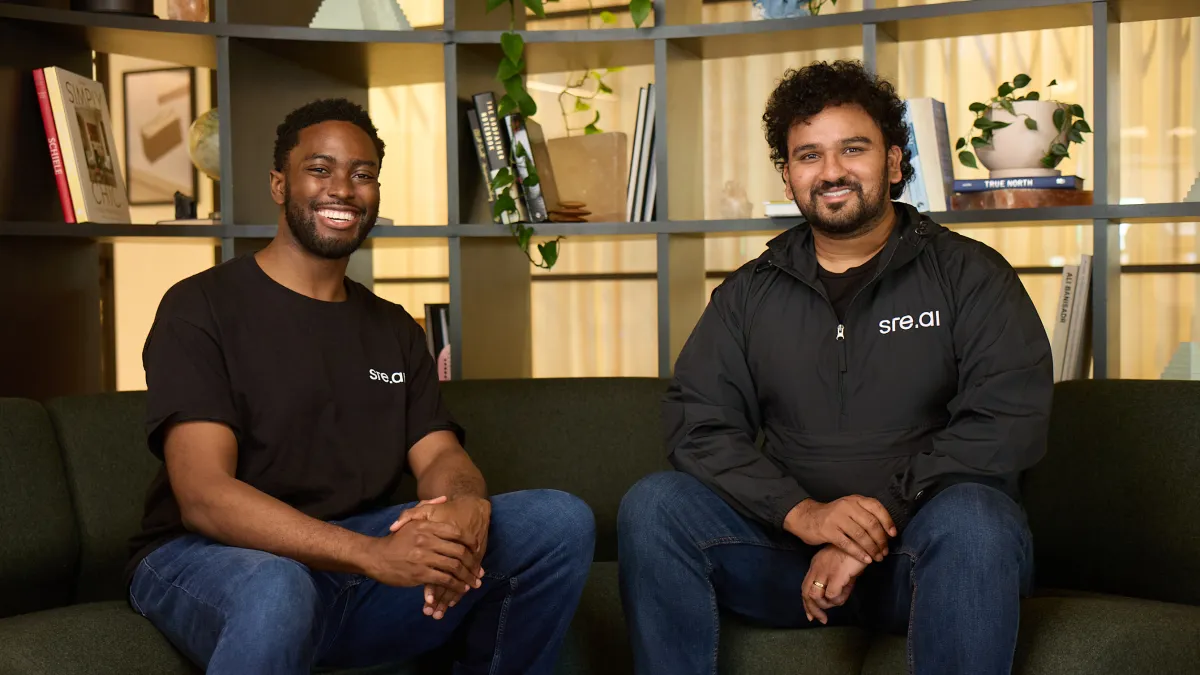
Ben Ofiri, CEO and Co-founder of Komodor, helps companies confidently operate and troubleshoot cloud native infrastructure with AI SRE.gettyPlatform teams are not short on alerts, dashboards, runbooks or incident data. Yet most large cloud environments still depend on a small number of specialists who know which signals matter, which dependencies are fragile and which issues require immediate action. AI SRE will not replace these specialists. Its real value is turning their operational context into shared team intelligence and helping scale human engineering resources. From Tribal Knowledge To Shared ContextThe first shift is from tribal knowledge to encoded context. AI is most useful when it can connect signals across services, infrastructure, deployment history, logs, events, runbooks, prior incidents and known fixes. When that context lives only in the heads of senior engineers, it cannot become shared operating capacity. This is where AI can provide immediate value. It can summarize long incident threads, draft postmortems, compare environments, inspect recent changes, sanity-check documentation, suggest investigation paths and surface related incidents. None of these tasks requires handing AI control of production, but all of them aggregate and make institutional knowledge generally available which can accelerate the development of engineers of all levels to solve more complex issues.AI As First Responder, Not Final AuthorityThe second transition is from human-first triage to AI-assisted first response. In most organizations, humans still perform the first line assessment of incidents: they read alerts, check dashboards, inspect logs, look up recent changes, ask who owns the service, and decide who needs to join. Much of that work is repetitive. AI can absorb a meaningful portion of it, especially when the scope is narrow and the domain is well understood.The right adoption model is crawl, walk, run. Enterprises should start by using AI to gather evidence, narrow the problem, recommend next steps and explain its reasoning with a human in the loop. As confidence grows, teams can allow AI to handle low-risk, repetitive actions under policy, then expand autonomy first in lower-risk environments before applying it to production. The goal is not to hand over the keys and hope for the best. It is to build trust through constrained use cases, clear guardrails and a track record of safe outcomes. A New Division Of LaborThat creates a new division of labor. AI should handle repetitive investigation, summarization, documentation, environment comparison, runbook retrieval and low-risk operational analysis. Engineers should retain ownership of intent, architecture, policy, customer impact and final judgment on high-risk production changes. A platform leader cannot delegate accountability for a customer-impacting outage to a model.Reliability, Not Just VelocityThe third shift is in how teams measure productivity. AI may increase deployment velocity, but that is not the only goal. If teams ship more frequently but also create more incidents, leaders need a balanced view of the trade-off. The right metrics should include mean time to detect, mean time to understand, mean time to restore, escalation frequency, incident recurrence, postmortem quality, documentation freshness and the percentage of incidents resolved without pulling in scarce experts.This is especially important because AI-assisted engineering may change the error profile of software and infrastructure. Faster development can produce more change, which can introduce more operational risk. The answer is to balance deployment velocity with detection, feedback loops and service ownership so teams can move faster without losing control.AI SRE also changes the role of junior engineers. There is justified concern that AI will eliminate the on-ramp into infrastructure roles by taking over basic tasks. In practice, the opposite can be true if leaders design for it. AI can help junior engineers understand unfamiliar systems faster, ask better questions during incidents, retrieve context from prior work and participate meaningfully in operational response. That accelerates the process of acquiring production judgment without pretending experience no longer matters.That does not eliminate the need for mentorship. It changes what mentorship should emphasize. Junior engineers need to learn how to validate AI-generated evidence, challenge recommendations, understand failure modes and connect technical symptoms to customer impact. Senior engineers, meanwhile, need to convert their implicit workflows into reusable practices that others and AI systems can follow.Redesign The Operating ModelFor executives, the practical path forward starts with identifying the knowledge bottlenecks in the current operating model. Which incidents always require the same two experts? Which services have poor ownership? Which runbooks are stale? Which investigation steps are repeated every week? Which escalations happen because context is missing, not because the problem is novel?Those are the best places to introduce AI SRE. Start with workflows that are frequent, bounded, observable and low risk. Use AI to gather context, summarize evidence, draft postmortems, recommend investigation paths, propose remediation actions and assist on-call engineers to achieve faster MTTR. Then expand carefully into automated remediation where policies, approvals, rollback paths and audit trails are clear.The goal should be to make platform teams more effective, not take them out of the loop. The best measure of AI SRE success is not autonomy for its own sake. It is fewer escalations to scarce experts, faster onboarding, cleaner service ownership, better documentation, less churn, stronger post-incident learning and more engineering time spent improving resilience.AI SRE will reshape platform teams because it exposes what cloud operations have needed for years: better encoded knowledge, stronger feedback loops and less dependence on heroics. For cloud infrastructure leaders, the opportunity is to build an operating model where every engineer has access to the evidence, guidance and system understanding needed to keep complex environments reliable. Not to replace them. Forbes Technology Council is an invitation-only community for world-class CIOs, CTOs and technology executives. Do I qualify?
How AI SRE Will Reshape Platform Engineering Without Reducing Headcount
AI SRE can help platform teams turn tribal knowledge into shared operational capacity while improving incident response, reliability and engineering efficiency.
TL;DRAI
Ben Ofiri: AI SRE encodes operational knowledge as shared context, scaling incident response without replacing specialists or increasing headcount. Implication: reduce escalations, accelerate MTTR and junior development, maintain reliability with flat headcount.
929 words~4 min read