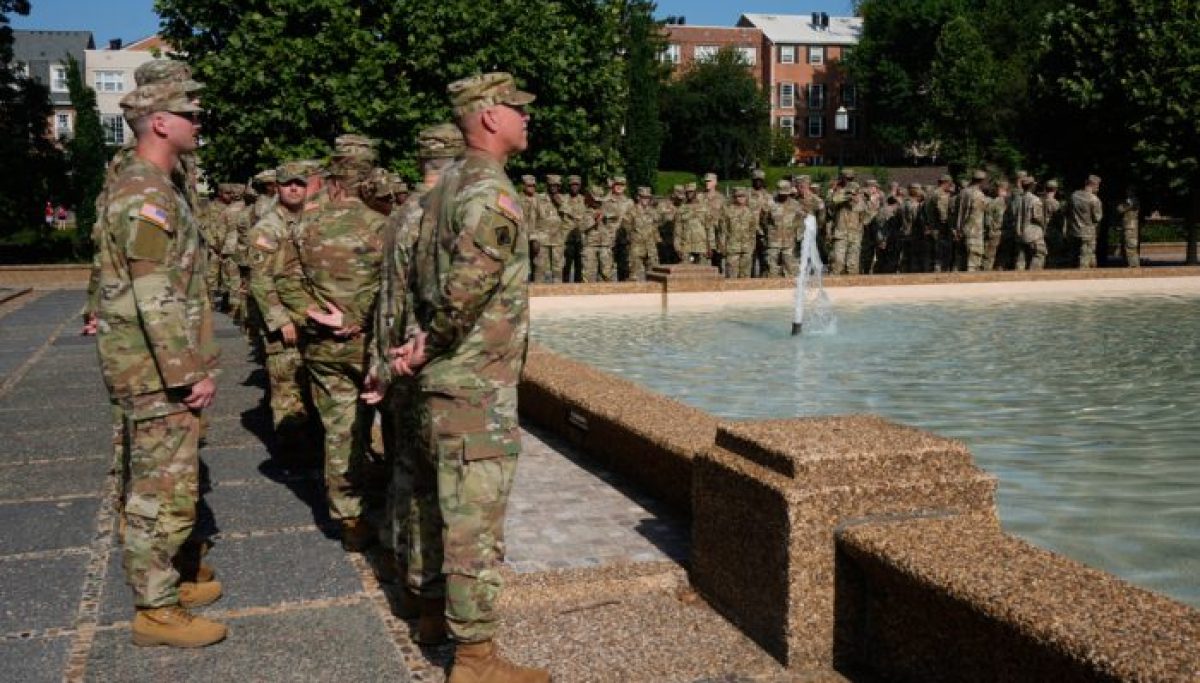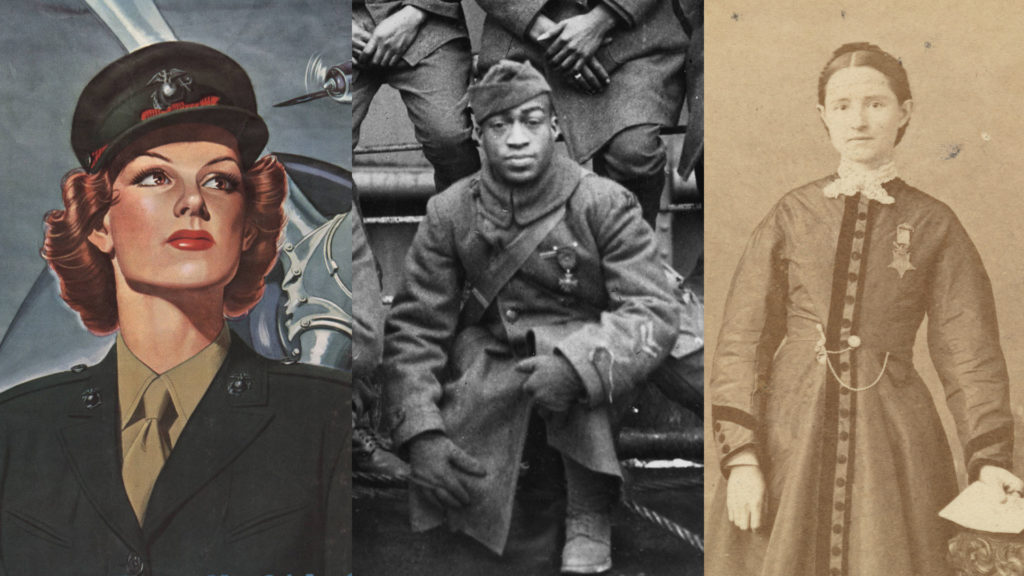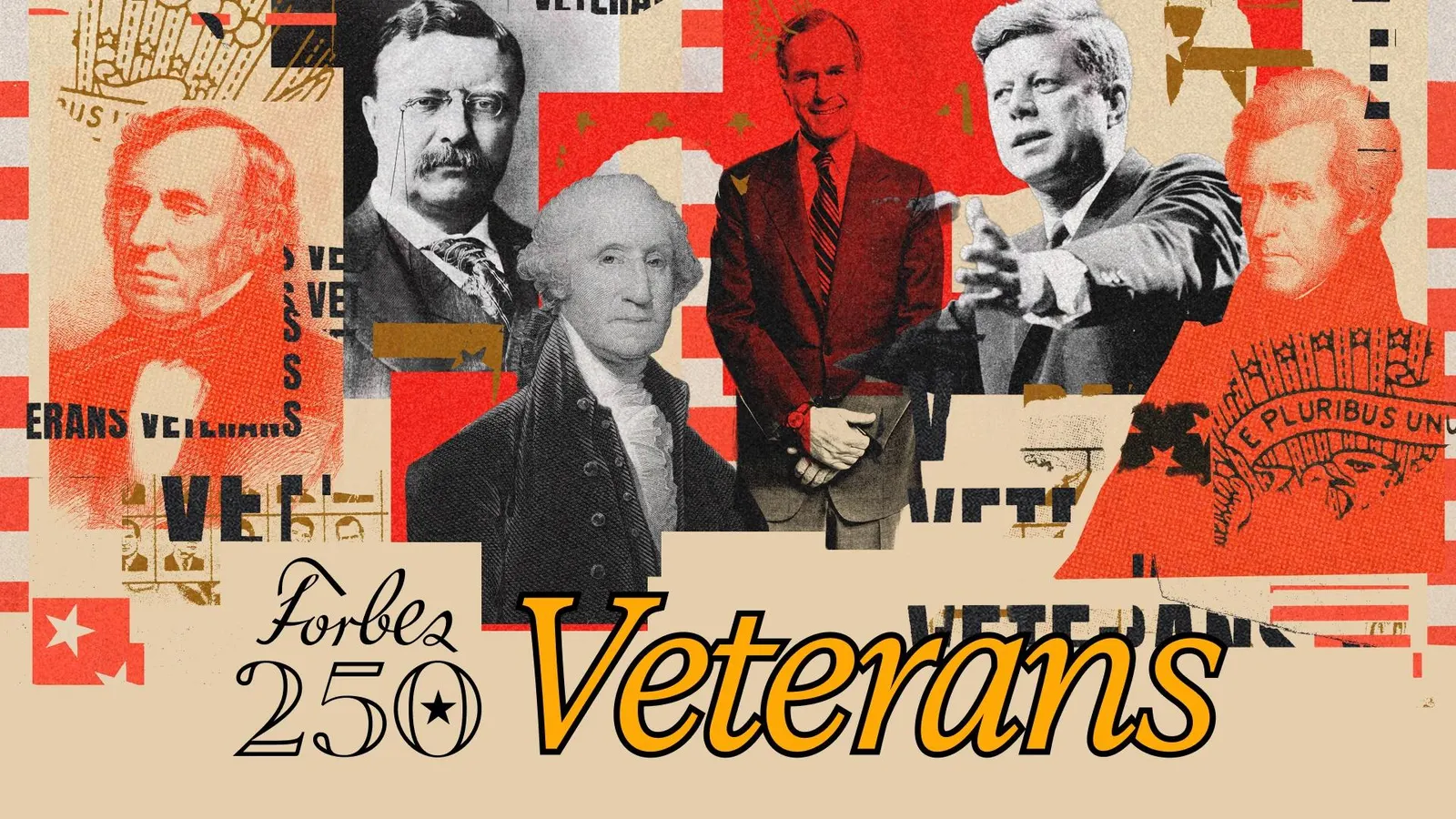
Edited By Alex Knapp and Michael Noer, Forbes StaffReporting by Sydney Goitia-Doran and Jessica JacolbeMilitary service has been a part of American history since the first shots were fired at Lexington and Concord, and a core national idea has been that of the citizen-solider: ordinary people who take up arms when their country needs them and return to normal life afterward. With that in mind, for America’s 250th anniversary, we’ve ranked the entrepreneurs, politicians and cultural icons who’ve worn a uniform since 1776. (Everyone on this list is deceased. For the list of the 250 most successful living veterans, click here.)In compiling the list, we focused as much on the veteran’s achievements after they left the military as they did inside, and since we are Forbes, we gave significant consideration to entrepreneurial accomplishments, wealth creation and philanthropy. We’ve also elected to highlight every veteran who occupied the White House, with one exception: John Tyler, who after his presidency sided with the Confederacy and was elected to its Congress before he died. And with the American ideal of the citizen-solider idea in mind, we also gave extra weight to those, like Jimmy Stewart and Bill Hewlett, who were willing to put their careers on hold in order to answer their country’s call during wartime. AMERICA’S MOST SUCCESSFUL HISTORIC VETERANS #1-50Getty Images#1. George Washington, 1732-1799After winning the Revolutionary War, the Father of our country served as President of the Constitutional Convention before becoming the first President of the United States. He also built a large fortune through real estate speculation and was the biggest whiskey distiller in the young nation, producing nearly 11,000 gallons a year.graphicaartis/getty images#2. Alexander Hamilton, 1757-1804During the Revolution, Hamilton was Washington’s right-hand man, managing both the general’s correspondence and spy network. As the first Secretary of the Treasury, he helped build America’s financial system. He’s also the founder of The New York Post and the bank that is now BNY.stock montage/getty images#3. Abraham Lincoln, 1809-1865Lincoln was a captain in the Illinois militia during 1832’s Black Hawk War. Afterward, in addition to building his own private law practice, he championed infrastructure and chartering of the Illinois State Bank as a state legislator before being elected to Congress. Elected President in 1860, his leadership preserved the Union during the Civil War and ended slavery.rembrandt peale#4. Thomas Jefferson, 1743-1826The author of the Declaration of Independence and third President of the United States was a colonel during the Revolutionary War. After his presidency he founded the University of Virginia in 1819 and was its first rector.#5. George Westinghouse, 1846-1914In the late 19th century, Westinghouse’s alternating current defeated Thomas Edison’s direct current in the “war of the currents,” turning his Westinghouse Electric Corporation into one of the Gilded Age’s largest manufacturers of electrical equipment. Before that, he enlisted at the age of 17 to fight in the Civil War.danny johnston/ap#6. Sam Walton, 1918-1992The founder of retail giant Walmart served as an Army intelligence officer during World War II. His family was the richest in America when he died in 1992.#7. Robert Noyce, 1927-1990Noyce enlisted in the Navy in 1945, before earning a PhD in physics at MIT. In 1959 co-invented the microchip and founded first Fairchild Semiconductor and later Intel.#8. William Lear, 1902-1978The Navy vet was the founder of business jet pioneer Learjet in 1959. He also developed the car radio with Paul Galvin (#17), which went to market in 1930, and the 8-track player, first offered for sale in 1965.#9. Bill Bowerman, 1911-1999The Nike co-founder joined the Army after Pearl Harbor, where he was deployed to Italy and decorated with the Silver Star and four Bronze Stars. After the war, he became head track and field coach at the University of Oregon, where he met Phil Knight in 1955 and designed the “waffle sole” that revolutionized running shoes.#10. Theodore Roosevelt, 1858-1919Roosevelt was Assistant Secretary of the Navy in the spring of 1898 when he resigned to lead the “Rough Riders” in combat during the Spanish-American War. He parlayed his exploits into being elected governor of New York later that year, then was elected vice-president in 1900 and became President after McKinley’s assassination in 1901.#11. Neil Armstrong, 1930-2012Before he became the first person to walk on the Moon, Armstrong was a Naval aviator who saw action during the Korean War and flew on three NASA Gemini missions. Afterward he served on multiple corporate boards, including Learjet, United Airlines and manufacturer Caldwell International.martin schoeller for forbes#12. H. Ross Perot, 1930-2019The billionaire founder of Electronic Data Systems, which he sold to GM for $2.5 billion in 1984 (about $7.7 billion in today’s money), was a 1953 graduate of the Naval Academy and served in the Korean War era. In 1992, he famously launched a third-party bid for the Presidency, amassing nearly 19% of the vote.#13. Jack Taylor, 1922-2016Taylor named the business he founded in 1957—Enterprise Rent-A-Car—after the aircraft carrier USS Enterprise, on which he’d served during World War II as a Naval aviator.christy bowe/getty images#14. Fred Smith, 1944-2025Smith served in the Marines during the Vietnam War, where he led a platoon and won a Silver Star, Bronze Star and two Purple Hearts. He founded overnight delivery service Federal Express in 1971, based on an idea he originally put forth in a college paper. He got a “C” because his professor felt the idea wasn’t feasible.#15. John Marshall, 1755-1835Marshall fought in multiple battles during the Revolutionary War and survived Valley Forge before he became the longest-serving Chief Justice of the Supreme Court from 1801 to 1835. He defined the Court’s key role as arbiter of the Constitution in the landmark 1803 case Marbury v Madison.#16. Ted Turner, 1938-2026Turner served in the Coast Guard during the Vietnam War era. Afterward, he turned Atlanta’s TBS into cable’s first “superstation,” bought the Atlanta Braves in 1976 and invented the 24-hour news cycle with CNN. He died in May.#17. Paul Galvin, 1895-1959The founder of communications pioneer Motorola—named for its first product, the car radio Galvin developed with Lear (#8)—enlisted in the Army during World War I, where he served as a frontline artillery officer in France.#18. William S. Knudsen, 1879-1948While serving as president of General Motors, Knudsen was commissioned as a Lieutenant General during World War II, using his expertise to organize the wartime manufacturing effort.#19. Charles G. Dawes, 1865-1951Dawes served as general during World War I. Afterward, he helped develop the Dawes Plan to rebuild Europe after the conflict, winning him the Nobel Peace Prize in 1925. He then served as vice-president under Coolidge, and after his term founded the City National Bank in Chicago and served as its chairman until his death. He’s one of two American Nobel Prize winners to have written a No. 1 pop hit, “It’s All In The Game.” The other is Bob Dylan.#20. Harriet Tubman, 1822-1913Best known for her work helping slaves escape via the Underground Railroad, Tubman was also the first American woman to lead military forces in combat, serving the Union Army as a scout and nurse during the Civil War. When she died, she was buried with military honors.jacob hilsdorf ullstein bild/getty images#21. Adolphus Busch, 1839-1913Busch immigrated to the United States in 1857 and fought for the Union during the Civil War. Afterward, he joined his father-in-law’s brewery, which they renamed Anheuser-Busch in 1879. Busch took the reins of the company in 1880, and produced the first pasteurized beer, which he called Budweiser.#22. Eberhard Anheuser, 1806-1880The German immigrant was a major creditor for a struggling brewery and decided to take it over in 1860. He served in the Civil War on the Union side, and his son-in-law Adolphus Busch joined the brewery, which the pair turned into one of the largest beer companies in the world.#23. Julian Robertson Jr., 1932-2022The Navy veteran worked as a stockbroker after leaving the military in 1957. In 1980, he co-founded Tiger Management, one of the first hedge funds. During his lifetime, he donated more than $2 billion to philanthropic causes.Getty Images#24. Bill Hewlett, 1913-2001Hewlett co-founded Silicon Valley pioneer Hewlett-Packard Company in a Palo Alto garage in 1939. During World War II, he stepped aside from the business to serve as an Army Signal Corps officer. HP went public in 1957; Hewlett was its CEO from 1968 to 1978.bettmann archive/getty images#25. Elvis Presley, 1935-1977In 1958, at the peak of his fame, the King of Rock and Roll was drafted into the Army. He served two years as a regular solider in a tank battalion in West Germany before resuming his music career.#26. Tom Benson, 1927-2018Benson enlisted in the Navy during World War II, serving on the USS South Dakota. Afterward, he built his career in New Orleans by acquiring successful car dealerships and banks, becoming an owner of the NFL’s Saints in 1985 and the NBA’s Pelicans in 2012. He was worth some $3 billion when he died.#27. Henry Lomb, 1828-1908Lomb co-founded optics giant Bausch & Lomb in 1853. Less than a decade later, he enlisted in the military to fight for the Union in the Civil War. After his militia unit dissolved in 1863, he returned to the business.#28. James Forten, 1766-1842A free Black man, Forten was a privateer for the Continental Navy during the American Revolution. After the war, he built a major sail-manufacturing company and used his wealth to back abolitionist causes. During the War of 1812, he helped mobilize a volunteer force of more than 2,000 men to erect defense for the city of Philadelphia.#29. Jorje Mas Canosa, 1939-1997Canosa fled the Cuban revolution in 1960, settling in Miami and enlisting in the Army. He acquired telecom company Church & Tower in 1971, which he expanded into one of the largest in Florida. The company became the basis for multinational construction giant MasTec (2025 revenue: $14 billion), where Canosa’s son now serves as CEO.#30. George H. W. Bush, 1924-2018Bush flew combat missions in World War II’s Pacific theater. After the war, he co-founded oil company Zapata Petroleum in 1953. He sold his stake in the company in the mid-1960s before embarking on a political career that saw him elected to Congress in 1966, appointed ambassador to the UN in 1970, made CIA director in 1976, elected to the vice-presidency in 1980 and to the White House in 1988.#31. H. Wayne Huizenga, 1937-2018Huizenga enlisted in the Army Reserve in 1959 before founding garbage giant Waste Management, which he took public in 1971. He later bought and expanded Blockbuster Video before selling it to Viacom for $8.4 billion in 1994. He also founded Republic Services, hotel chain Extended Stay America and car retailer AutoNation.#32. Don Valentine, 1932-2019Valentine was in the Army when he first came to California. After his service, he stuck around and in 1972 founded Sequoia Capital, the Silicon Valley venture capital firm that made early investments in the likes of Electronic Arts, Cisco and Apple.#33. S. Daniel Abraham, 1924-2025The co-founder of SlimFast was a combat infantryman during World War II. He sold the company to Unilever in 2000 for $2.3 billion.bettmann archive/getty images#34. Paul Newman, 1925-2008Newman served in the Pacific theater during World War II, then used the G.I. Bill to get a degree at Kenyon College. He starred in more than 50 movies, including Cool Hand Luke (1967), Butch Cassidy and the Sundance Kid (1969), The Sting (1973) and won Oscar for Best Actor in 1986’s The Color of Money. In 1982, he founded Newman’s Own, which makes everything from frozen pizza to salad dressing and donates 100% of its after-tax profits to charity, totaling about $600 million over the decades. #35. Arnold Palmer, 1929-2016After serving for three years in the Coast Guard, Arnold became a professional golfer, winning seven Major championships in his lifetime. He later co-founded the Golf Channel and earned over $1.4 billion in his career from licensing deals. #36. Georges Doriot, 1899-1987Doriot is known as the “father of venture capital” due to founding the American Research & Development Corporation in 1956, which developed the now standard idea of providing strategic advice to startups alongside capital. He was a brigadier general in the Army Quartermaster Corps during World War II.#37. Erle Halliburton, 1892-1957Halliburton enlisted in the Navy in 1910 and served for five years, where he ran the service’s first motorized barge. In 1919, he founded the oil company that became global energy services giant Halliburton.#38. James Monroe, 1758-1831Before he became the fifth President of the United States, Monroe was an officer during the Revolution, serving alongside Washington. After the war, he served as a Senator from Virginia, and ambassador to France where he negotiated the Louisiana Purchase for then-President Jefferson.#39. Kemmons Wilson, 1913-2003After serving as an Army cargo pilot during World War II, Wilson founded Holiday Inn in 1952.#40. Dwight Eisenhower, 1890-1969“Ike” served as Supreme Commander of the Allied Forces in Europe, ensuring victory over Germany in World War II. He was elected President in 1952 and served two terms, during which he helped bolster America’s booming postwar economy through projects like the Small Business Administration, the St. Lawrence Seaway and the Interstate Highway System.#41. Forrest Bird, 1921-2015Bird was a pilot during World War II, and his experience with onboard oxygen systems inspired him to create the first mass-produced ventilators and respirators for hospitals. He founded Bird Corporation in 1953 to commercialize the technology, which has saved the lives of millions of patients.#42. John Wooden, 1910-2010After serving in the Navy during World War II, coach Wooden built a basketball dynasty at UCLA between 1948 and 1975, leading the Bruins to 10 championships.martin schoeller for forbes#43. Sheldon Adelson, 1933-2021Before Adelson became a billionaire Las Vegas casino mogul and powerhouse political operator, he was an Army clerk during the Korean War, serving stateside.mark rucker/getty images#44. Jackie Robinson, 1919-1972Before he shattered baseball’s color barrier in 1947, Robinson was a Second Lieutenant in the 761st Tank Battalion, known as the “Black Panthers,” during World War II, but his military career was derailed in an incident in which he refused to sit at the back of a bus. That led to him being court-martialed for insubordination, but though he was acquitted, the legal process prevented him from being deployed. After his ball-playing career was over, he co-founded Harlem’s Freedom National Bank in 1964 and served as its first Chairman of the Board.#45. Arthur George Gaston, 1892-1996Gaston enlisted in the Army in 1913 and served during World War I. Despite Alabama’s Jim Crow laws, he founded the Booker T. Washington Insurance Company in 1923, whose success he parlayed into a business college and real estate holdings throughout Birmingham.#46. Ted Lerner, 1925-2023The billionaire real estate developer and owner of the Washington National’s baseball team was drafted into the Army during World War II.#47. Tom Love, 1937-2023Love did a three-year stint in the Marines before co-founding Love’s Travel Stops and Country Stores in 1964.#48. James Fergason, 1934-2008After serving in the Army between 1956 and 1957, Fergason transformed consumer electronics with improved LCD displays, an invention he commercialized starting with digital watches and calculators through Ilixco, the company he founded in 1970.#49. Juan Trippe, 1899-1981The founder of Pan Am, the largest airline in the world through most of the mid-20th century, was a Naval aviator during World War I.#50. Ulysses Grant, 1822-1885The architect of the Union Army’s victory in the Civil War was subsequently elected to two terms as President. After a series of costly business failures, he wrote his memoirs, which became a bestseller, generating more than $16 million (in 2026 dollars) in royalties.Casimir Pulaski, President George Washington, James Forten, President Thomas Jefferson, Alexander HamiltonIllustration by Mr. Nelson Design; Bettmann/Getty Images, Stock Montage/Getty Images, The Historical Society of Pennsylvania, Stock Montage/Getty Images, Stock Montage/Getty Images#51-100#51. Lindsey Graham, 1955-2026Graham was a judge-advocate in the Air Force from 1982 to 1989, where he made headlines exposing the service’s faulty drug-testing practices while defending an office. He was first elected to Congress in 1994 and then served as Senator from South Carolina in 2003 until his death this year. #52. Eugene Kleiner, 1923-2003Kleiner served in the Army during World War II. Afterwards, he used the G.I. Bill to earn a degree in industrial engineering, then co-founded Fairchild Semiconductor. In 1972, he co-founded pioneering Silicon Valley venture capital firm Kleiner Perkins, which made early investments in companies like Amazon, Google and Sun Microsystems.#53. Laurans Mendelson, 1938-2025The Army veteran and his sons took control of struggling aerospace and defense electronics company Heico in 1990, turning it around into what is now a $40 billion company.#54. Leroy Grumman, 1895-1982The co-founder of aerospace defense contractor Grumman Aircraft (now Northrop Grumman) flew planes during World War I. After the war, Grumman improved retractable landing gear and helped make folding wings standard on naval warplanes.#55. Arthur Imperatore, 1925-2020Imperatore was a navigator on B-24 and B-29 bombers during World War II. After the war the billionaire founded what became A-P-A Transport Corp, one of the largest trucking firms in the country, and in 1986 founded the NY Waterway commuter ferry service between Weehawken, New Jersey and Manhattan.#56. Jack Northrop, 1895-1981The World War I-era Army veteran founded the Northrop Corporation (now Northrop Grumman) in 1939, where he pioneered the "flying wing" aircraft design that paved the way for the modern stealth bomber.#57. Neal Patterson, 1949-2017The co-founder of hospital IT giant Cerner Corporation (acquired by Oracle for $28 billion in 2022) served in the Army National Guard during the Vietnam War.#58. James Wilson, 1742-1798One of only six people to sign both the Declaration of Independence and the Constitution, Wilson also served as an officer during the Revolutionary War. He was appointed to the Supreme Court by George Washington in 1789.#59. Andrew Jackson, 1767-1845The seventh President of the United States orchestrated the defeat of British forces at the Battle of New Orleans during the War of 1812. Before that, “Old Hickory” joined the Continental Army during the American Revolution at the age of 13.#60. Bobby Jones, 1902-1971The champion golfer co-founded Augusta National Golf Club and the Masters Tournament, laying the foundation for modern professional golf. At age 40 he volunteered to fight in World War II and arrived in Normandy one day after D-Day as an intelligence officer.#61. Ray Dolby, 1933-2013The founder of sound engineering giant Dolby Laboratories worked on military audio projects in the 1950s while in the Army Reserves.#62. Arno Penzias, 1933-2024Penzias served as a radar officer in the U.S. Army Signal Corps. Afterward, he co-discovered cosmic background radiation in 1964, which helped prove that the universe began with the Big Bang. He won a Nobel Prize in 1978.#63. David Murdock, 1923-2025Murdock was drafted into the Army in 1943. After his service, he bought a small diner, then flipped it to start a successful investment and real estate career. In 1985, the billionaire bought a nearly bankrupt Hawaiian real estate company—and its subsidiary, Dole Food Company, which he transformed into the world’s largest producer of fruits and vegetables.#64. Earl Bakken, 1924-2018After serving in the Army Air Forces during World War II, Bakken co-founded medical device company Medtronic in 1949. In 1957, Bakken invented the first wearable cardiac pacemaker, catapulting his company into one of the dominant players in the market.#65. Raymond Damadian, 1936-2022Damadian built the first MRI machine in 1977 and founded the Fonar Corporation to commercialize it the next year. Before that, he was a captain in the U.S. Air Force from 1965 to 1967.#66. Conrad Hilton, 1887-1979The founder of Hilton Hotels was an officer in the Army’s Quartermaster Corps during World War I. #67. Frederick McKinley Jones, 1893-1961The World War I veteran invented refrigerated trailers for trucks in 1938, making it easier to transport perishable goods. He co-founded ThermoKing to commercialize it the same year.#68. William Levitt, 1907-1994The Naval officer managed a construction unit during World War II. Afterward, he applied military mass production techniques to build suburban developments called “Levittowns,” the first of which was on Long Island.#69. Henry Luce, 1898-1967The magazine baron who founded Time, Life and Sports Illustrated joined the Reserve Officer Training Corps while attending Yale in 1917, though he was never deployed to Europe. #70. Charles Merrill, 1885-1956The World War I veteran and co-founder of Merrill Lynch saw the 1929 stock market crash coming, warning his clients to “put your own financial house in order” in 1928.#71. Augustine Sackett, 1841-1914The Civil War veteran invented the precursor to modern drywall in 1894 and commercialized it through his Sackett Plaster Board Company.#72. Harland Sanders, 1890-1980The founder of Kentucky Fried Chicken wasn’t actually a colonel when he served in the Army from 1906 to 1907—he was a private. He was made an honorary “Kentucky Colonel” given the title by the state’s governor in 1935.#73. Jack Tramiel, 1928-2012A Holocaust survivor, Tramiel immigrated to the U.S. in 1947 and enlisted in the Army shortly thereafter. He later invented the Commodore 64, a popular early personal computer.michael ochs archives/getty images#74. Desi Arnaz, 1917-1986With his wife, Lucille Ball, Arnaz starred in I Love Lucy, with which their company Desilu invented both the three-camera sitcom and syndication. Before that, he was drafted into the Army during World War II.#75. James A. Garfield, 1831-1881The 20th President of the United States parlayed his fame as a successful Union Army general into politics, where he represented Ohio in Congress for nearly two decades before moving into the White House in 1881.#76. Seymour Cray, 1925-1996The founder of Cray Research and “father of supercomputing” was a radio operator for the Army during World War II.#77. Grace Hopper, 1906-1992The pioneering computer scientist joined the U.S. Navy Reserve during World War II and retired as a rear admiral. In between she pioneered computer programming languages, most notably Cobol, which was widely used by financial service companies.#78. Lyndon B. Johnson, 1908-1973The 36th President who architected the “Great Society” and signed the Civil Rights Act in 1964 served in the Navy during World War II. Alongside his political career, he built a business empire centered on Texas ranchland, bank investments and ownership of Austin’s only TV station.#79. Paul Zoll, 1911-1999Zoll served as a medical officer in World War II. After the war, he focused on the heart, inventing the first defibrillator that didn’t require surgery in 1956 and developing an implantable pacemaker in 1964. In 1980, he founded Zoll Medical, which was acquired by Asahi Kasei Corporation in 2012 for $2.2 billion.#80. Earl Warren, 1891-1974Warren served in the Army during World War I before he was elected to three terms as governor of California. He was appointed Chief Justice of the Supreme Court in 1953 and presided over many landmark decisions regarding civil rights and civil liberties. bettmann archive/getty images#81. Omar Bradley, 1893-1981The five-star general commanded Allied forces in the invasions of Sicily and Normandy during World War II. After the war, he led the Veterans Administration until 1947 and was then the first Chairman of the Joint Chiefs of Staff from 1949 to 1953. After retiring from service, he was the chairman of the Bulova Watch Company for 15 years and was a consultant for the 1970 movie Patton, which won seven Academy Awards.michael ochs archives/getty images#82. Johnny Cash, 1932-2003Country’s Grammy-award winning “Man in Black” served in the Air Force for four years, during which time he first picked up a guitar and learned music.#83. Craig Venter, 1946-2026Before he led the private-sector team that mapped the human genome in 2000, Venter served as a Navy medical corpsman during the Vietnam War.#84. Meredith Gourdine, 1929-1998After winning a silver medal for the long jump in the 1952 Summer Olympics, Gourdine joined the Navy. He founded Gourdine Systems in 1964, which sold electrostatic systems used to remove smoke from burning buildings and fog from airport runways. #85. Douglas MacArthur, 1880-1964The five-star general commanded Allied forces in the Pacific theater during World War II and UN forces in the Korean War. After retiring he became chairman of the board of Remington Rand, which made UNIVAC, the first commercial electronic computer.#86. B. Wayne Hughes, 1933-2021The billionaire co-founder of self-storage company Public Storage was a Naval Officer who graduated from the University of Southern California in 1957.#87. A. Alfred Taubman, 1924-2015Before he built America’s first shopping mall in 1964, Taubman served in the Army Air Forces during World War II.#88. Harry S. Truman, 1884-1972Truman commanded a field artillery unit on the front lines of World War I. After the war, he was a haberdasher before entering politics and as 33rd President he presided over the end of World War II and oversaw the rebuilding of Europe through the Marshall Plan and the creation of NATO.#89. Henry Kissinger, 1923-2023The architect of Cold War diplomacy under Presidents Nixon and Ford was a combat intelligence specialist during World War II and was decorated with a Bronze Star.#90. Davy Crockett, 1786-1836The “King of the Wild Frontier” was first elected to Congress in 1827. Prior to that, he served under the command of Andrew Jackson (#59) during the War of 1812.nati harnik/ap#91. Charlie Munger, 1924-2023Warren Buffett’s billionaire right-hand man served in the Army Air Forces during World War II.universal images group/getty images#92. Jimmy Stewart, 1908-1997Stewart was already an Oscar-winning movie star (The Philadelphia Story, 1940) when he enlisted in the Army to fight in World War II as a bomber pilot. He was later awarded the Distinguished Flying Cross. He remained in the Air Force Reserve after the war, officially retiring in 1968 at the rank of brigadier general, while also going back to Hollywood to star in films like It’s A Wonderful Life (1946), Rear Window (1954) and The Man Who Shot Liberty Valence (1962).#93. Rutherford B. Hayes, 1822-1893Hayes enlisted in 1861 to fight in the Civil War, where he was wounded multiple times in battle. He was elected to Congress in 1864, then served as governor of Ohio before being elected President in 1876.kidwiler collection/getty images#94. Yogi Berra, 1925-2015The legendary baseball player, coach and wordsmith earned a Purple Heart for injuries he sustained during the first waves of the D-Day invasion. #95. Louis Brus, 1943-2026Brus was a scientific officer for the Naval Laboratory in the Vietnam War era. His discovery and synthesis of quantum dots—which have driven major advances in consumer electronics and renewable energy—earned him the 2023 Nobel Prize in Chemistry.#96. Charles Dolan, 1926-2024The founder of Cablevision Systems and creator of HBO served in the U.S. Army Air Forces during World War II.#97. Arthur J. Goldberg, 1908-1990Goldberg was a strategist for the Office of Strategic Services during World War II, the precursor to the CIA. After the war, he served as Secretary of Labor before being appointed to the Supreme Court in 1962, then resigned 3 years later to serve as UN ambassador.#98. George Carlin, 1937-2008Before he was a Grammy-winning countercultural comedian, Carlin was a radar technician in the Air Force.#99. Wally Amos, 1936-2024The Air Force veteran was a talent agent, working with acts like Simon and Garfunkel, Sam Cooke and Dionne Warwick before he founded his cookie company Famous Amos in 1975.#100. John F. Kennedy, 1917-1963Kennedy was awarded a Purple Heart after saving his PT-109 crew during World War II. After the war, he was elected Senator from Massachusetts in 1952 and wrote the Pulitzer Prize-winning Profiles in Courage in 1956 before being elected as the 35th President in 1960.General George Meade, General Philip Sheridan, Harriet Tubman, George Westinghouse, General Philip SheridanIllustration by Mr. Nelson Design; Fotosearch/Getty Images, Corbis/Getty Images, Archive Photos/Getty Images, Fotosearch/Getty Images#101-150#101. Bruce Halle, 1930-2018The billionaire founder of Discount Tire did a tour of duty as a Marine during the Korean War.#102. Arthur Nielsen, 1897-1980Nielsen was a Navy officer during World War I before developing the “Nielsen Ratings” system that defined TV marketing.bettmann archive/getty images#103. Ronald Reagan, 1911-2004Reagan acted in 30 movies before serving during World War II as captain of the First Motion Picture Unit, producing training films. He then moved into politics and was elected governor of California in 1967, serving two terms. In 1980, he was elected the 40th President of the United States.#104. John Stillwell Stark, 1841-1927After serving in the Union Army during the Civil War, Stark went into the music publishing business. His company discovered composer Scott Joplin in 1899 and sold more than a million copies of his “Maple Leaf Rag.” Stark spent the next two decades promoting ragtime, a truly American musical form that paved the way for Jazz and Rock and Roll. #105. Sidney Weinberg, 1891-1969The long-time leader of Goldman Sachs and pioneer of modern corporate underwriting served in the Navy’s intelligence division during World War I.#106. Autry Stephens, 1938-2024The oil and gas tycoon founded Endeavor Energy Resources in 1979, which was acquired for $26 billion by Diamondback in 2024. He did two years in the Army Corps of Engineers starting in 1962.#107. Sylvan Goldman, 1898-1984Goldman served in the Army during World War I, working in combat food requisitions. After the war, he parlayed that expertise into the Humpty Dumpty grocery store chain. He is best remembered for inventing the shopping cart in 1937.#108. Elias Howe, 1819-1867Howe was already rich from inventing the first commercially successful modern sewing machine when he enlisted in the Union Army during the Civil War. When government funds ran low, he personally covered the paychecks for the soldiers in his unit.#109. Dave Thomas, 1932-2002During the Korean War, the founder of fast-food chain Wendy’s honed his food service skills as a staff sergeant in charge of the mess hall.#110. Oliver Wendall Holmes, Jr., 1841-1935The long-serving and influential Justice of the Supreme Court fought in a number of major battles during the Civil War, including the Battle of the Wilderness, Antietam and Chancellorsville. His influential book, The Common Law, transformed American legal philosophy and has been continuously in print since 1881.zumapress/newscom#111. John Kluge, 1914-2010He sold Metromedia’s TV stations to Rupert Murdoch in 1986, where they formed the nucleus of Fox. His Hollywood assets, including Orion Pictures, were sold to MGM about a decade later. Kluge, a native German speaker, was an intelligence officer during World War II, often tasked with interrogating prisoners of war.#112. James Earl Jones, 1931-2024The Emmy, Grammy, Oscar and Tony award-winning actor, known for voicing Darth Vader and co-starring in Field of Dreams (1989), served in the Army from 1953 to 1955. wesley/getty images#113. Roy Lichtenstein, 1923-1997Lichtenstein was drafted into the Army during World War II and afterwards used the G.I. bill to get his art degree. In the 1960s he became a pop art pioneer, known for drawing inspiration from comic strips. His painting Nurse sold at auction in 2015 for $95 million.#114. James Naismith, 1861-1939The inventor of basketball enlisted as a chaplain in the Kansas National Guard in 1916.#115. Joseph Pulitzer, 1847-1911Before he built his newspaper empire, a bounty recruiter enlisted Pulitzer to replace a draftee in the Union Army while still a teenager in Germany. He didn’t learn English until after the Civil War.library of congress#116. William McKinley, 1843-1901McKinley enlisted to fight in the Civil War in 1861, where he fought in major battles like South Mountain and Antietam. After the war he started a successful legal practice, was elected to Congress in 1877 and became Ohio’s governor in 1892. He was elected President in 1896 and served until his assassination in 1901.#117. Albert Sabin, 1906-1993Sabin served in the U.S. Army Medical Corps during World War II, conducting research on viral diseases. After the war, he developed the oral polio vaccine, which saved millions of children from paralysis after distribution began in 1961.#118. Johnny Carson, 1925-2005The iconic late-night talk show host enlisted in the Navy during World War II, where he served as a communications officer.#119. Roberto Clemente, 1934-1972Three years into a Major League Baseball career that saw him attain 3,000 hits, 4 National League batting titles and 12 Gold Glove awards, Clemente enlisted in the Marine Corps Reserve in 1958.#120. William T. Coleman Jr., 1920-2017Coleman was an Army judge advocate during World War II before becoming one of the lead legal strategists in Brown v. Board of Education, which desegregated schools in the United States. In 1975 he became the first Black person to serve as Secretary of Transportation.#121. Charles Schulz, 1922-2000During World War II, the Peanuts creator was a machine gun squad leader on the European front. His unit liberated the Dachau concentration camp.#122. Jack Warner, 1892-1978Warner enlisted in World War I before co-founding Warner Bros. with his brothers in 1923. He greenlit the first movie with sound, 1927’s The Jazz Singer. He was recalled to serve during World War II, during which time his studio produced training and propaganda films for the war effort. #123. Edward Johnson III, 1930-2022Johnson’s father founded Fidelity Investments in 1946, but it was “Ned” Johnson who transformed it into one of the largest asset managers in the world. He spent two years in the Army after graduating Harvard in 1954.#124. James K. Polk, 1795-1849Polk rose to the rank of colonel in the Tennessee militia before embarking on his political career. He’s the only person in U.S. history to serve as both Speaker of the House and President.#125. Thomas Todd, 1765-1826Todd served in the Continental Army during the American Revolution. He was appointed a Supreme Court justice by Thomas Jefferson in 1807, but also built a significant real-estate empire in Kentucky.#126. Harold H. Burton, 1888-1964Burton fought on the front lines during World War I and was decorated with a Purple Heart. Afterward, he became mayor of Cleveland and was elected to the Senate in 1940 before being appointed to the Supreme Court in 1945 by President Truman.#127. Ken Olsen, 1926-2011Olsen was drafted into the Navy during World War II before he co-founded Digital Equipment Corporation in 1957, a pioneering computer company.#128. Kenneth Adams Jr., 1923-2013After serving in the Pacific theater during World War II, Adams founded ADA Oil Company and parlayed its success into sports. He co-founded the American Football League in 1959, which merged with the NFL in 1970, and was founding owner of the Houston Oilers, which he controversially moved to Tennessee in 1997 to become the Titans. He was worth $1.2 billion when he died in October, 2013.#129. John McCain, 1936-2018Before he gained political fame as Arizona’s “maverick” Senator, McCain survived for five and a half years as a prisoner of war in Vietnam after being shot down over Hanoi and was decorated with the Silver Star, Bronze Star and Purple Heart. He ran for President in 2008, losing to Barack Obama.#130. B.B. King, 1925-2015The Blues guitarist was drafted into the Army during World War II. He started his music career shortly after, winning 15 Grammys. He founded his own record label, Blues Boys Kingdom, in 1956.#131. Richard DeVos, 1926-2018DeVos served in the Army Air Forces during World War II before co-founding multi-level marketing giant Amway. The billionaire bought NBA’s Orlando Magic in 1991.#132. Jerome Kohlberg, 1925-2015Kohlberg spent three years in the Navy during World War II and used his G.I. benefits to get his MBA from Harvard. He started his financial career at Bear Stearns before pioneering the modern leveraged buyout industry at Kohlberg Kravis Roberts & Co.#133. Arnold Beckman, 1900-2004The founder of Beckman Instruments (purchased by Danaher for $6.8 billion in 2011) invented scientific and medical instruments like an electronic pH meter and a monitor for oxygen levels in premature infants. He was a Marine during World War I.#134. George E. Hardy, 1925-2025Hardy flew combat missions in World War II, the Korean War and the Vietnam War. In between, he helped build the Department of Defense’s worldwide military telephone system. After his service, he was a project manager for GTE Corporation and traveled the country to tell the story of his fellow Tuskegee Airmen.#135. Hazel Johnson-Brown, 1927-2011In 1979, Johnson-Brown became the first Black woman to be promoted to general in the Armed Forces. She was also the first Black chief of the Army Nurse Corps. After her service she led the American Nurses Association’s government relations department and served as director of George Mason University’s Center for Health Policy.#136. John Coltrane, 1926-1967The jazz pioneer enlisted in the Navy in 1945.#137. Willie Mays, 1931-2024The Army veteran was the first Major League baseball player to reach both 300 home runs and 300 stolen bases, and the second player to hit 600 home runs after Babe Ruth.#138. Mike Mansfield, 1903-2001Mansfield enlisted in the Navy at the age of 14 after lying about his age in order to fight in World War I. He was discharged when the Navy realized the mistake, but Mansfield then enlisted in the Army in 1919 and then in the Marines in 1920. After his service he was elected to Congress in 1942 and elected to the Senate in 1952, where he served as the chamber’s longest-running Majority Leader from 1961 to 1977.#139. Marvin Minsky, 1927-2016The Navy veteran built a precursor to neural networks in 1951, co-founded what became MIT’s Artificial Intelligence Laboratory in 1959 and built an early head-mounted graphical display (a precursor of today’s VR headsets) in 1963.#140. John Edson, 1932-2019The Korean War veteran founded the Bayliner Marine Corporation in 1955, which made mass-produced, affordable motorboats.#141. Edwin Armstrong, 1890-1954Armstrong served in the Army Signal Corps in France during World War I, where he invented a receiver that is still a core technology for radio and radar. After the war, he invented FM radio in 1933.acey harper/getty images#142. Bob Ross, 1942-1995Before he became famous for painting happy little trees on his show The Joy of Painting, Ross served for 20 years in the Air Force, rising to the rank of master sergeant. In addition to hosting the show, he built a business around it selling art supplies and certifying instructors to teach painting.#143. Robert Smalls, 1839-1915Smalls escaped slavery by commandeering a Confederate transport ship, the Planter, and surrendering it to the Union Navy in 1862. Smalls continued to pilot the Planter on behalf of the Union Army, the first Black man to command a U.S. ship. After the war, he co-founded the Enterprise Railroad in South Carolina and a newspaper, The Beaufort Southern Standard. He was elected to the House of Representatives in 1875 and served five terms. #144. Chuck Norris, 1940-2026Norris started studying martial arts while serving in the Air Force in South Korea. After his service, he opened the first of what became a chain of karate schools in 1962. He also became a professional karate fighter in 1964 (and a six-time undefeated middleweight champion) before pivoting to a long career as a TV and movie action star.#145. William Goldman, 1931-2018The Korean War-era veteran won Oscars for writing Butch Cassidy and the Sundance Kid (1970) and All The President’s Men (1977), but he’s probably best known for writing the 1973 novel The Princess Bride as well as the script for its 1987 movie adaptation.#146. Joe Louis, 1914-1981In 1942, while he was still boxing’s undisputed heavyweight champion, Louis enlisted in the Army during World War II. He resumed boxing in 1946 before retiring for good in 1951.#147. Bob Feller, 1918-2010A baseball prodigy, Feller started his professional career while still in high school and made his Major League debut in 1936, winning his first career start with 15 strikeouts at the age of 17. He enlisted in the Navy on December 9, 1941—two days after the attack on Pearl Harbor. He resumed his baseball career after the war and was part of the Cleveland Indians team that won the World Series in 1948.david cantwell for forbes#148. Chuck Feeney, 1931-2023Feeney was an Air Force radio operator during the Korean War. In 1960, he founded airport giant Duty Free Shoppers, the success of which turned him into a billionaire. Before he died in 2023, Feeney gave nearly all of his money—around $8 billion—to charity.#149. Robert Abplanalp, 1922-2003The World War II veteran invented the mass-produced aerosol spray valve and founded the Precision Valve Corporation in 1949 to commercialize it, revolutionizing the distribution of everything from paint to hair spray.#150. Ralph Baer, 1922-2014The inventor of the Magnavox video game system escaped Nazi Germany in 1938, but returned to Europe during World War II working in Army intelligence.From Left: General John J. Pershing, Douglas MacArthur, Donald Douglas, Henry Luce, General George S. PattonIllustration by Mr. Nelson Design; Heritage Images/Getty Images, Bettmann/Getty Images, Bettmann/Getty Images, PhotoQuest/Getty Images, Bettmann/Getty Images#151-200#151. John G. Kemeny, 1926-1992Kemeny was drafted into the Army during World War II, where he was assigned to the Manhattan Project. After the war, the computer science pioneer co-developed the BASIC programming language in 1964 and served as president of Dartmouth.#152. Bob Dole, 1923-2021Dole was decorated with two Purple Hearts and a Bronze Star for his combat roles in World War II. He was elected to Congress in 1960 and then to the Senate in 1968. He led Senate Republicans from 1985 to 1996, when he lost the Presidential election to Bill Clinton.bettmann archive/getty images#153. Irving Berlin, 1888-1989The iconic songwriter wrote the first draft of “God Bless America” while serving in the Army during World War I (though the most familiar version is his 1938 revision).#154. Colin Powell, 1937-2021The first Black Chairman of the Joint Chiefs of Staff earned a Bronze Star and a Purple Heart during his combat tours in Vietnam. After retiring from the military, he became the first Black Secretary of State under President George W. Bush.#155. Kurt Vonnegut, 1922-2007The bestselling author utilized his own experience as a World War II POW during the firebombing of Dresden to write his classic novel Slaughterhouse-Five (1969). #156. Bill Mauldin, 1921-2003The two-time Pulitzer Prize-winning cartoonist drew the “Willie and Joe” cartoons for the Stars and Stripes newspaper during his World War II service, illustrating the daily life of frontline soldiers.michael fresco/getty images#157. Sammy Davis Jr., 1925-1990The singer, actor and member of the “Rat Pack” was drafted into World War II in 1943.#158. Bob Newhart, 1929-2024The Emmy and Grammy award-winning comedian served in the Army during the Korean War era.#159. Norman Rockwell, 1894-1978The iconic American painter best known for his Saturday Evening Post covers served in the Navy during World War I.#160. George Clinton, 1739-1812The first governor of New York, Clinton served as a brigadier general in the state’s militia during the Revolutionary War, where he defended the Hudson Valley from British forces. He was a major force for adding the Bill of Rights to the Constitution and was vice-president of the United States under both Thomas Jefferson and James Madison.#161. Bill Coleman, 1947-2020Before he co-founded software giant BEA Systems in 1995 Coleman was an officer in the Air Force. BEA was acquired by Oracle for $8.5 billion in 2008,#162. Benjamin Davis Jr., 1912-2002After he retired from military service in 1970, the commander of the Tuskegee Airmen and first Black Air Force general organized the federal sky marshal program.#163. J.D. Salinger, 1919-2010Before he published The Catcher in the Rye in 1951, Salinger landed in Normandy on D-Day and fought at the Battle of the Bulge.#164. Henry Brockholst Livingston, 1757-1823Livingston was an officer in the Continental army during the Revolution, fighting at Saratoga. After the war, he helped swing New York’s electoral votes to Thomas Jefferson in the election of 1800 and was appointed to the Supreme Court in 1807. #165. Sumner Redstone, 1923-2020The Viacom founder was a World War II veteran who worked to break Japanese codes. He was worth $2.6 billion at the time of his death.#166. William Moncrief, 1920-2021The World War II veteran was a 50-50 partner with his father in Moncrief Oil, which developed dozens of successful wells and acquired interest in gas fields around the country.#167. Frank Gehry, 1929-2025After serving in the Army, the architect designed the Walt Disney Concert Hall in L.A., the Dancing House in Prague and the Guggenheim Museum in Bilbao, Spain.#168. Charlton Heston, 1923-2008The Oscar-winning actor (for Ben-Hur in 1959) served as a radio operator and gunner on board a B-25 bomber during World War II.#169. Mal Whitfield, 1924-2015After World War II, the Tuskegee Airman won back-to-back Olympic gold medals for the 800 meter run in 1948 and 1952—and also flew combat missions in Korea.#170. Sidney Poitier, 1927-2022Poitier enlisted in the Army in 1943. After World War II, he began his acting career and was the first Black man to win an Oscar for Best Actor in 1964 for Lilies of the Field.john bryson/getty images#171. Theodore Geisel, 1904-1991Geisel was already famous as Dr. Seuss when he joined the Army in 1943, where he produced training films and propaganda for the Allied cause during World War II.#172. John Marshall Harlan, 1833-1911During the Civil War, Harlan fought in Kentucky, commanding units that fought against Confederate raiders. He was appointed to the Supreme Court in 1877, where he became known as the “Great Dissenter” on the losing side of civil rights cases like Plessy v. Ferguson, which upheld racial segregation. His legal reasoning won out in the 1950s and 60s when the Supreme Court overturned those decisions.#173. Jim Kimsey, 1939-2016Kimsey was a 1962 graduate of West Point and served two combat tours as an Army Airborne Ranger during Vietnam and was decorated with a Bronze Star. After the war, he became a restaurateur before co-founding pioneering internet company America Online in 1983.#174. Benjamin Harrison, 1833-1901The grandson of President William Henry Harrison (#148) served on the front lines of the Civil War. Afterward, he was elected to the Senate in 1880 then to the White House in 1888.#175. David Sarnoff, 1891-1971Sarnoff was president of RCA and had founded NBC in 1926 before being called to active duty in the U.S. Army Signal Corps during World War II, working with General Eisenhower. #176. George McGovern, 1922-2012Before he was a senator and presidential candidate in 1972, McGovern flew 35 World War II combat missions over Europe as a B-24 bomber pilot.#177. Bill Withers, 1928-2020The R&B songwriter known for hits like “Lean On Me” (1972) and “Ain’t No Sunshine” (1971) enlisted in the Navy in 1956 at the age of 17 and served for nine years.#178. Leonard Lauder, 1933-2025Lauder served in the Navy before taking charge of his mother’s company, Estee Lauder, in 1958 and transforming it into a multinational giant.#179. Kris Kristofferson, 1936-2024The Grammy award-winning country star and actor served as an Army helicopter pilot for five years. He got his big break after landing a helicopter on Johnny Cash’s property (see #82) in order to hand him a demo tape. Cash recorded Kristofferson’s song “Sunday Morning Comin’ Down” in 1970, which became a No. 1 hit.#180. Bill Blass, 1922-2002The fashion designer founded his namesake company in 1970. Before that, he served in the “Ghost Army” in World War II, which tried to fool German intelligence with inflatable tanks, fake radio transmissions and other tactical deceptions.#181. Jason Robards, 1922-2000Robards was already in the Navy when Japan attacked Pearl Harbor and continued to serve throughout the war. Afterwards, he embarked on an acting career that led him to win a Tony for The Disenchanted (1959), two consecutive Oscars for All The President’s Men and Julia (1976 and 1977) and an Emmy for Inherit The Wind (1988).#182. Albert Michelson, 1852-1931The Naval Academy graduate was the first American to win a Nobel Prize in science in 1907 for his groundbreaking physics work measuring the speed of light.print collector/getty images#183. Clark Gable, 1901-1960The Oscar-winning actor (It Happened One Night, 1935) enlisted in the Army in 1942 and flew five combat missions over Europe as a gunner during World War II.#184. Franklin Pierce, 1804-1869The 14th President was elected to Congress in 1832 and then the Senate in 1836 before serving as a general during the Mexican-American War.#185. Jerry Reed, 1937-2008Reed played in the Army band from 1959 to 1961, after which he resumed a Grammy-winning music career that included hits like “Guitar Man” and “East Bound and Down.”#186. John Glenn, 1912-2016The first American astronaut to orbit the Earth was a fighter pilot in World War II and the Korean War. After leaving NASA, he became President of RC Cola and co-owned hotels near Disney World. He was elected to the Senate in 1974 and served until 1999.#187. Gene Roddenberry, 1921-1991Star Trek’s creator flew 89 combat missions during World War II.#188. Byron White, 1917-2002White was the highest-paid player in the NFL when he was signed to the Pittsburgh Pirates (now Steelers) in 1938. He played three seasons before enlisting in the Navy, serving as an intelligence officer during World War II, where he was decorated with two Bronze Stars. He was appointed Deputy Attorney General in 1961 and then to the Supreme Court in 1962, where he served until 1993.#189. Leo Gerstenzang, 1892-1961The inventor of the Q-tip was a first lieutenant in the Army during World War I.#190. Cormac McCarthy, 1933-2023The Pulitzer Prize-winning author of Blood Meridian (1985), No Country For Old Men (2005) and The Road (2006) enlisted in the Air Force in 1953 and served for four years.#191. Frank Murphy, 1890-1949After serving as an infantry officer in World War I, Murphy was a U.S. Attorney, mayor of Detroit, the last governor-general of the Philippines, governor of Michigan and Attorney General of the United States before being appointed to the Supreme Court in 1940. He also served in the Army Reserve during World War II while the Court was in recess.#192. Joseph Medicine Crow, 1912-2016During his service in World War II, Crow was an Army scout in Europe, during which time he completed the four traditional tasks to become a Crow War Chief: he disarmed a German soldier, did so without killing him, led a successful war party and stole enemy horses (from the SS). Later he became a historian known for his study of the Battle of Little Bighorn, was a founding member of Little Bighorn College and the Plains Indian Museum at the Buffalo Bill Historical Center.#193. Jimmy Carter, 1924-2024Carter served in the Navy from 1946 to 1953. After his service, he built a successful peanut farming business before going into politics. He was elected governor of Georgia in 1970 and President in 1976. He also won the Nobel Peace Prize in 2002. #194. Knute Rockne, 1888-1931Rockne spent three years in the Illinois National Guard before coaching Notre Dame football to over 100 wins and three national championships before dying in a plane crash at age 43.#195. Millard Fillmore, 1800-1874The last President to be neither Republican nor Democrat (he was a Whig) wasn’t a veteran when he took office, but during the Civil War he commanded the Union Continentals, a home guard unit in New York.#196. Ewing Kauffman, 1916-1993The World War II Navy veteran founded Marion Laboratories in 1950, which merged with Dow Chemical for more than $5 billion (around $10 billion in today’s dollars) in 1989. He also became the founding owner of baseball’s Kansas City Royals in 1968 and established the Kauffman Foundation, which is aimed at advancing entrepreneurship and improving education.#197. Hugh Hefner, 1926-2017The founder of Playboy magazine served in the Army during World War II.taylor hill film magic/getty images#198. Tony Bennett, 1926-2023Before he sold over 50 million records and won 20 Grammy Awards, the jazz and pop vocalist helped liberate the Kaufering concentration camp in 1945.#199. Gerald Ford, 1913-2006A veteran of World War II’s Pacific theater, Ford ascended to the presidency after Nixon resigned in 1974. Before becoming vice-president, he’d served in Congress from 1949-1973.#200. Thomas Paine, 1737-1809Paine didn’t just inspire Continental troops with pamphlets like Common Sense and The American Crisis—he took up arms alongside them as an aide-de-camp to General Nathaniel Greene.From Left: Clark Gabel, General Dwight D. Eisenhower, Sumner Redstone, Ted Williams, Kirk KerkorianIllustration by Mr. Nelson Design; US Army/Getty Images, Harry Warnecke/Getty Images, Michael Tran/FilmMagic, Hulton Archive/Getty Images, Chelsea Lauren/Getty Images#201-250#201. John Backus, 1924-2007The World War II veteran led the IBM team that created Fortran in 1957, a programming language still in use today.#202. Sylvanus Thayer, 1785-1872During the War of 1812, Thayer directed the defense of Norfolk, Virginia and became superintendent of West Point in 1817. #203. Zachary Taylor, 1784-1850Taylor was a career military officer who fought in both the War of 1812 and Mexican-American War before being elected President in 1848.#204. Babe Ruth, 1895-1948The legendary slugger enlisted in the New York National Guard in 1924 to aid in a recruiting drive and served for three years.#205. Fred Vinson, 1890-1953One of the few people to serve in all three branches of the federal government, the World War I veteran served in Congress from 1924 to 1928 and again from 1931 to 1938. He was then appointed to the Court of Appeals before serving as Secretary of the Treasury in the Executive branch from 1945 to 1946. In 1946, he was appointed as Chief Justice of the Supreme Court, a role he held until his death in 1953.#206. Shel Silverstein, 1930-1999The poet known for books like The Giving Tree (1964) and Where the Sidewalk Ends (1974) served in the Army in the mid-1950s.#207. Frank Borman, 1928-2023The Air Force pilot commanded Apollo 8, the first space mission to send astronauts around the Moon. After his NASA service, he became CEO of Eastern Airlines in 1975 and served on the boards of Home Depot and National Geographic.#208. Cy Twombly, 1928-2011Drafted into the Army in 1953, Twombly worked as a military codebreaker, which influenced his artistic style. The painter is known for works like 1968’s Untitled (New York City) which sold at auction for more than $70 million in 2015.#209. William H. Rehnquist, 1924-2005Rehnquist served in the Army during World War II before embarking on his legal career, which saw him appointed Associate Justice of the Supreme Court in 1972 and Chief Justice in 1986, a role he held until his death in 2005.bettmann archive/getty images#210. Audie Murphy, 1924-1971Murphy was the most decorated American soldier in World War II, where he, among other heroics, single-handedly destroyed a German tank. After the War, he became a successful Hollywood actor, starring in films like The Quiet American (1958) and To Hell and Back (1955), in which he played himself.#211. Thomas Johnson, 1732-1819Johnson was a delegate to the Continental Congress and then served as a brigadier general in the Maryland militia during the Revolution. He was elected the state’s first governor in 1777. In 1791, he was appointed to the Supreme Court by Washington.#212. Carl Nelson Gorman, 1907-1998The award-winning painter and founder of the C.N. Gorman Museum was one of the original Navajo Code Talkers, who communicated Allied plans in their own language to thwart German codebreakers.#213. Rocky Marciano, 1923-1969After serving in the Army during World War II, Marciano began his boxing career. He was undisputed heavyweight champion from 1952 to 1956 and retired undefeated with a 49-0 record.#214. Andrew Johnson, 1808-1875Lincoln named Johnson the military governor of Tennessee in 1862 at the rank of brigadier general. Johnson was elected vice-president in 1864 and succeeded Lincoln after his assassination. He was the first president to be impeached in 1868 but the vote to remove him from office failed.#215. Paul A. Sperry, 1895-1982Sperry’s service in the Navy during World War I inspired him to invent the first non-slip boat shoe in 1935. In 1939, the War Department made it one of the Navy’s official shoes. Sperry sold his business to the United States Rubber Company in 1940, which marketed his Top-Siders across the country.#216. Jack Dempsey, 1895-1983The undisputed heavyweight champion from 1919 to 1926, Dempsey enlisted in the New York State Guard during World War II and later joined the Coast Guard, where he completed his active-duty service in 1945 and his reserve service in 1952.#217. Steve McQueen, 1930-1980McQueen enlisted in 1947 and saved the lives of five fellow Marines during a mishap during an Arctic training exercise. After leaving the military he embarked on an acting career, becoming known for his roles in The Magnificent Seven (1960) and The Great Escape (1963).#218. Ted Knight, 1923-1986The Emmy award-winning actor best known for playing Ted Baxter on The Mary Tyler Moore Show (1970-1977) served as a combat radio operator in the European theater of World War II.#219. Spyros Skouras, 1893-1971The World War I veteran became president of 20th Century Fox in 1942, where he championed CinemaScope technology to compete with television and spearheaded movies like The Seven-Year Itch (1955) and The King and I (1956).#220. Charity Adams Earley, 1918-2002Earley was the first Black woman to become an officer in the Women’s Army Auxiliary Corps, where she led a military unit in charge of delivering mail on the European front. After the war, she moved into academia and public service, working as a dean at Tennessee State and Georgia State universities and serving on the board at Dayton Power & Light and the American Red Cross.#221. Jack Palance, 1919-2006The Oscar-winning actor (for 1991’s City Slickers) was a B-24 bomber pilot during World War II.#222. C.R. Smith, 1899-1990Smith was CEO of American Airlines when he was commissioned as a major general in the Army Air Forces during World War II. After his service, he returned to the CEO role, where he stayed until 1968, when he was appointed Secretary of Commerce. #223. Edward Asner, 1929-2021The seven-time Emmy award winner was drafted into the Army during the Korean War and served from 1951 to 1953.#224. William Sherman, 1820-1891The general known for his “March to the Sea” during the Civil War succeeded Grant as Commanding General of the Army. His memoirs, which were published in 1875, became a bestseller. After retiring in 1883, he steadfastly refused a political career, saying of efforts to nominate him to the presidency, “I will not accept if nominated and will not serve if elected.”bettmann archive/getty images#225. Harry Belafonte, 1927-2023The Emmy, Grammy and Tony award-winning “King of Calypso” dropped out of high school to enlist in the Navy during World War II.#226. Neil Simon, 1927-2018Simon served in the Army Air Force Reserve from 1945 to 1946 before becoming an Emmy, Pulitzer and Tony award winning writer.#227. Trammel Crow, 1914-2009 After serving in the Navy during World War II, Crow went into the commercial real estate business in 1948 and by 1971 was the biggest private developer and landlord in the United States.#228. Ted Williams, 1918-2002Williams, who is still the last player to have a batting average of more than .400, paused his baseball career twice to serve as a fighter pilot, first during World War II and then in Korea.#229. Billy Wilder, 1906-2002 After fleeing Nazi Germany, the six-time Oscar winner was a World War II Army colonel in Berlin, crafting denazification documentaries before directing popular Hollywood films like Sunset Boulevard (1950), Some Like It Hot (1959) and The Apartment (1960).#230. Richard Nixon, 1913-1994 The 37th U.S. President was a World War II Navy Commander who served as a U.S. Representative, senator, and vice-president, reshaping Cold War diplomacy before his 1974 resignation.#231. Frank Capra, 1897-1991 Three-time Oscar winner Capra served in both world wars. He directed the Army’s Why We Fight documentary series in World War II before returning to Hollywood to direct It’s a Wonderful Life in 1946.#232. August Wilson, 1945-2005 One of America’s greatest playwrights served a year in the Army before winning two Pulitzer Prizes for Drama for Fences (1987) and The Piano Lesson (1990), both part of his 10-play series Century Cycle depicting African American life during the 1900s. #233. Nathan Most, 1914-2004 A World War II sonar researcher, Most spent decades as a commodities trader before inventing the Exchange-Traded Fund in 1993.#234. Hugo L. Black, 1886-1971 Black was in the Army during World War I before being elected Senator from Alabama in 1927. He was appointed to the Supreme Court in 1937, where he presided for 34 years. #235. James Buchanan, 1791-1868Buchanan is the only veteran President to have been an enlisted man rather than an officer, serving as a private during the War of 1812. Before his Presidency he represented Pennsylvania in both the House and Senate and was Secretary of State for James K. Polk.#236. Douglas Engelbart, 1925-2013 The inventor of the computer mouse was a Navy radar technician during World War II.#237. David J. Mahoney, 1923-2000 A World War II veteran, Mahoney founded a successful ad agency, which he sold in 1956 to become president of ice cream maker Good Humor. In 1969 he became CEO of conglomerate Norton Simon, which sold Hunt’s tomato sauce, Canada Dry soda and magazines.#238. Kirk Douglas, 1916-2020 Douglas spent three years in the Navy during World War II. In 1949 the Hollywood actor founded Bryna Productions, which produced notable films like Paths of Glory (1957), Spartacus (1960) and One Flew Over The Cuckoo’s Nest (1975). roger ressmeyer/getty images#239. Louis L’Amour, 1908-1988 After commanding Army supply trucks in Europe during World War II, L’Amour wrote more than 100 novels, including Hondo (1953) and Last of the Breed (1986).#240. Chester A. Arthur, 1829-1886 Before becoming the 21st U.S. President, Arthur was a brigadier general during the Civil War.#241. Bea Arthur, 1922-2009 The Marine Corps veteran drove trucks in World War II before becoming an Emmy and Tony Award-winning actress, starring in Maude (1972-1978) and The Golden Girls (1985-1992). #242. Charles Bronson, 1921-2003 Bronson was wounded in action in World War II, flying one of his 25 combat missions. He later rose to Hollywood stardom in action classics like The Magnificent Seven (1960) and Death Wish (1974). #243. Adrian Smith, 1936-2026“Odie” Smith was a starter on the 1958 championship University of Kentucky team. After graduating that year, he enlisted in the Army. In 1960, he was part of the Olympic gold medal-winning U.S. basketball team. After his service he joined the NBA, playing for 10 seasons.#244. Humphrey Bogart, 1899-1957 The Casablanca (1942) actor served in the Navy during World War I and the Coast Guard during World War II. In 1951 he won an Oscar for his role as Charlie Allnut in The African Queen.#245. William Paterson, 1745-1806 Paterson was a member of the New Jersey militia during the Revolution while also serving as the state’s Attorney General. He was a delegate at the Constitutional Convention, then became a Senator in 1789 and was elected governor of New Jersey in 1790. Washington appointed him to the Supreme Court in 1793.#246. Eva Mirabal, 1920-1968 The World War II Women’s Army Corps veteran created the popular “G.I. Gertie” comic strip for military publications, depicting experiences of women serving in the armed forces.#247. Stan Musial, 1920-2013 Musial won three World Series Championships during his 22-year baseball career with the St. Louis Cardinals but missed the 1945 season due to his Navy service during World War II.#248. William Henry Harrison, 1773-1841Harrison was a general during the War of 1812, defeating British forces at the Battle of the Thames. He was elected President in 1840 but only served 31 days before his death in 1841.#249. Joseph Unanue, 1925-2013Unanue was drafted after graduating high school in 1943 and fought on the European front, where he was decorated with a Bronze Star for his actions during the Battle of the Bulge. After the war, he graduated college and joined the family business, Hispanic food giant Goya foods, becoming its president in 1976. Over his 28-year tenure, he grew the company into one of the largest food distributors in the United States.#250. Jim Lovell, 1928-2025 Retired Navy captain and NASA astronaut Lovell flew four space missions, most notably the emergency return of Apollo 13 in 1970. He left NASA in 1973 and later became CEO of Bay-Houston Towing Company and president of Fisk Telephone Systems in 1977.★ ★ ★
Forbes 250: America’s Most Successful Historic Veterans
For America’s 250th anniversary, Forbes ranked the historic entrepreneurs, politicians and cultural icons who all have one thing in common: They wore a uniform in defense of our nation.
10,785 words~49 min read