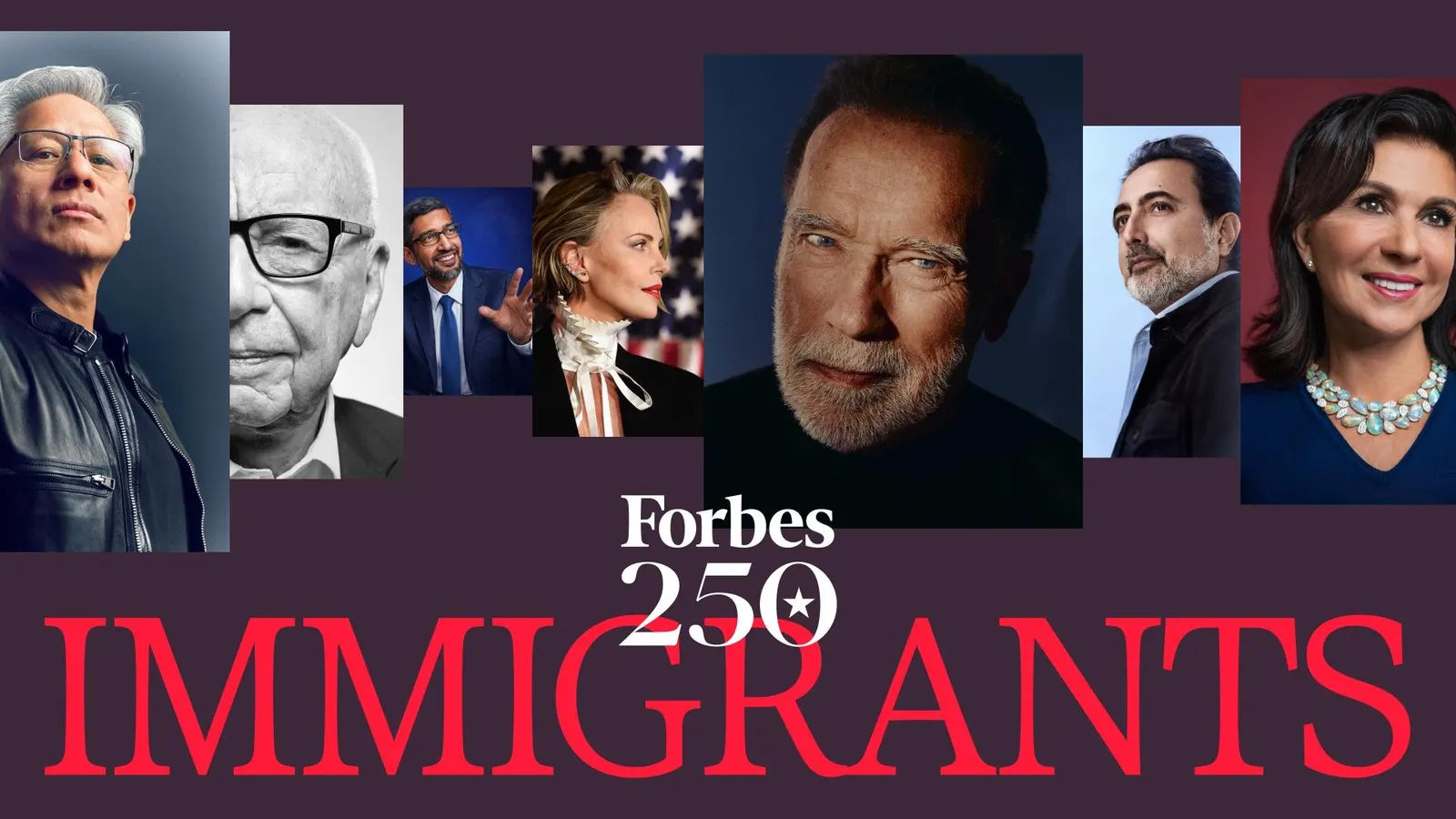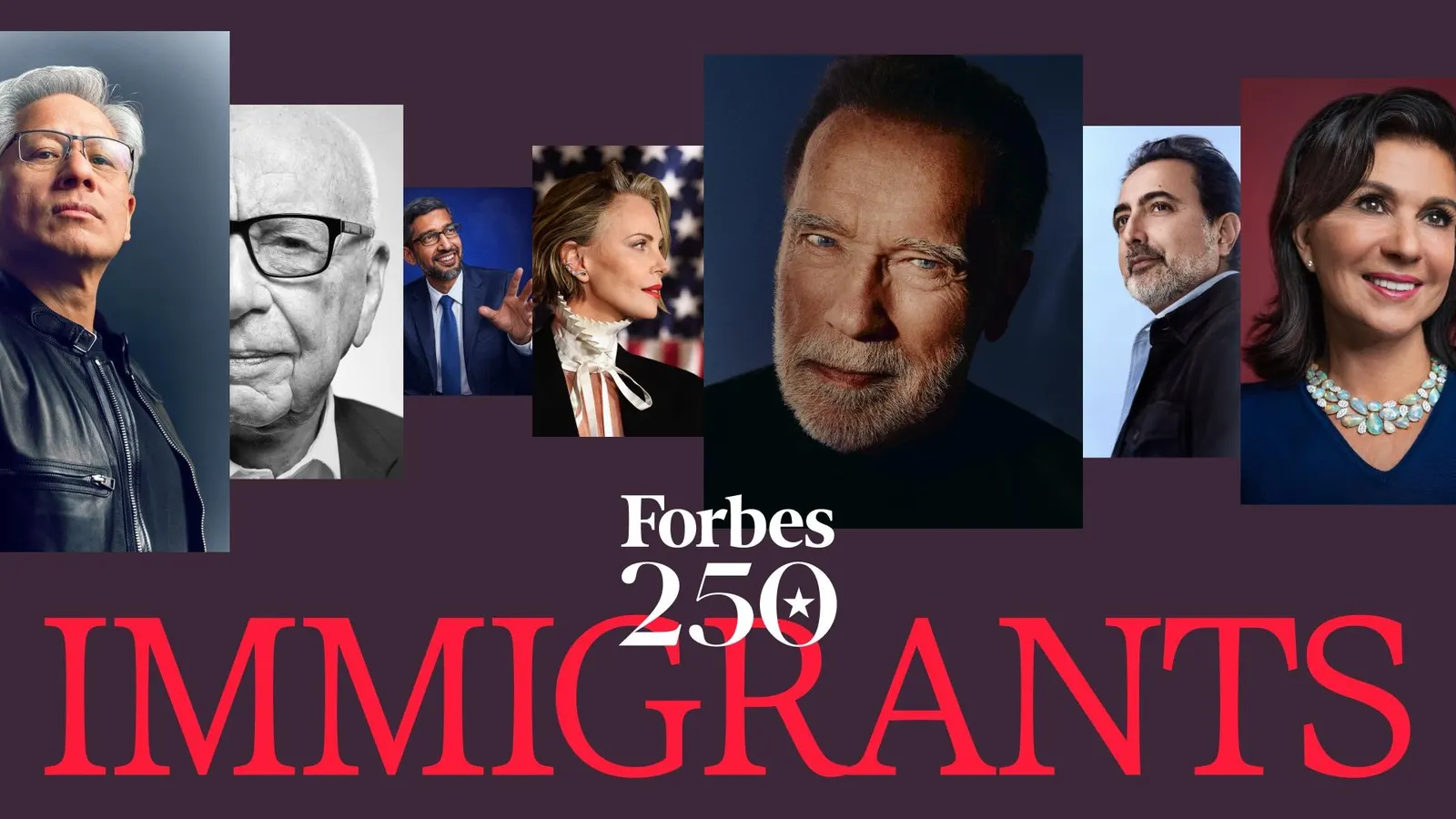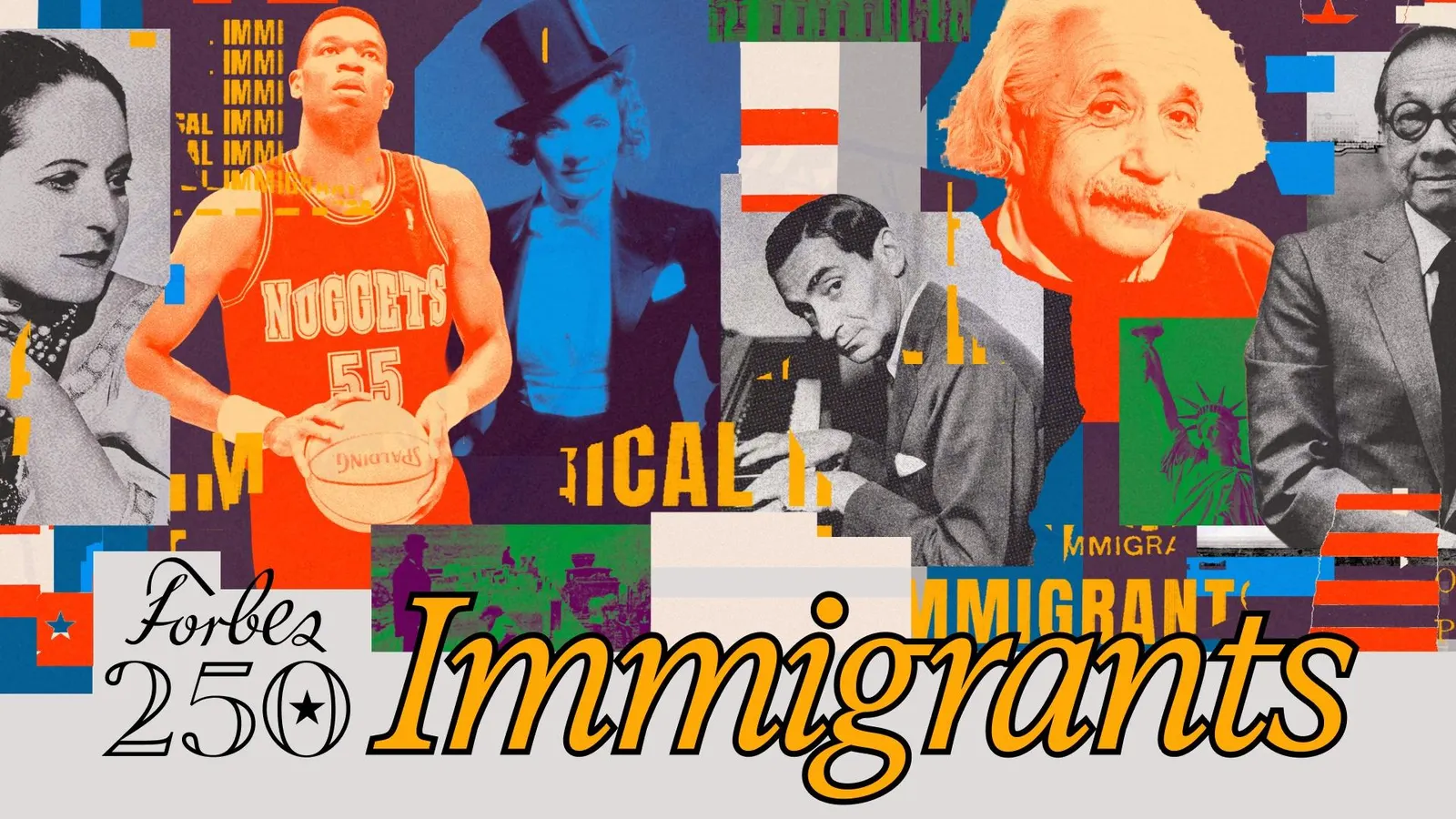
Edited By Alex Knapp and Michael Noer, Forbes StaffImmigrants have been part of this nation’s history since its founding. Many of those who fought in the Revolution, signed the Declaration of Independence or attended the Constitutional Convention were born abroad. For 250 years, the United States has been a beacon for those who wanted the freedom and opportunity to build a better life for themselves. With that in mind, we have ranked 250 immigrants who best succeeded in achieving their own American Dream during their lifetimes. (Everyone on our historic list is now dead. For the list of 250 most successful living immigrants, click here.)AMERICA’S GREATEST INNOVATORS#1-50#1. Alexander Graham Bell (1847 - 1922) • United Kingdom 🇬🇧The founder of AT&T invented the first practical telephone as part of his efforts to invent devices to help the deaf community. He had multiple patents to his name, including ones on wireless communication using light, aerial vehicles and the audiometer—which is still in use to identify hearing problems.#2. Alexander Hamilton (1755 - 1804) • Nevis 🇰🇳Effectively orphaned and penniless when his mother died, his Caribbean community pooled money to pay for his education in New York's King's College (now Columbia). He became Washington's right-hand man during the Revolution, managing both his correspondence and spy rings. Along with James Madison and John Jay, he wrote the Federalist Papers and as first Secretary of the Treasury he defined America's financial system.#3. Andrew Carnegie (1835 - 1919) • United Kingdom 🇬🇧The steel magnate and philanthropist came to America when he was 12 and started working a year later. He built an industrial empire thanks to investments in railroads, oil and steel. He famously sold Carnegie Steel to J.P. Morgan in 1901 for nearly $500 million—which in today's dollars is closer to $20 billion. Carnegie pocketed about half the transaction, using that fortune to fund libraries, schools and other institutions.bettmann archive/getty images#4. Mary Pickford (1892 - 1979) • Canada 🇨🇦In front of the cameras, the Hollywood star was "America's sweetheart." Behind the scenes, she was a savvy businesswoman who quickly gained creative control over her films as a producer. She also cofounded United Artists, which broke the studio system's vertical integration by offering distribution services to independent movies. jhu sheridan libraries/getty images#5. Marcus Goldman (1821 - 1904) • Germany 🇩🇪Tired of being a shopkeeper, Goldman opened up what would become investment banking giant Goldman Sachs in 1869.#6. Irving Berlin (1888 - 1989) • Russia 🇷🇺The writer of classic American songs like "White Christmas" and "God Bless America" came to America at the age of 5 to escape Jewish persecution in Russia.#7. Charles Pfizer (1824 - 1906) • Germany 🇩🇪When he founded his namesake company in 1849, Pfizer started out manufacturing food additives before expanding into pharmaceuticals.#8. Eleuthere du Pont (1771 - 1834) • France 🇫🇷His namesake chemical company, which manufactures everything from medical packaging to insulation to electronics, began life as a gunpowder mill in Delaware.#9. Albert Einstein (1879 - 1955) • Germany 🇩🇪Einstein won the Nobel Prize in Physics in 1921, not for his famous Theory of Relativity, but for his discovery of the photoelectric effect, which is applied in everything from cameras to solar cells. After becoming an American citizen in 1939, he wrote a letter to President Roosevelt successfully urging him to start what would become the Manhattan Project. #10. Levi Strauss (1829 - 1902) • Germany 🇩🇪Strauss came to San Francisco as a dry goods merchant supplying would-be prospectors during the California Gold Rush. One of his customers was Jacob Davis, with whom he co-invented denim "waist overalls"—a.k.a. blue jeans.#11. Jacob Davis (1831 - 1908) • Russia 🇷🇺With Strauss, the Russian-born tailor pioneered the use of copper rivets to reinforce workwear, which made his blue jeans long lasting.#12. Thomas Mellon (1813 - 1908) • United Kingdom 🇬🇧Inspired by Ben Franklin's autobiography, Mellon became a lawyer, using his salary to buy up large portions of downtown Pittsburgh. In 1869, he left the practice of law and founded Mellon Bank, now BNY Mellon.bettmann archive/getty images#13. John Jacob Astor (1763 - 1848) • Germany 🇩🇪After arriving in New York, he built a fur trading empire and used the profits to become Manhattan's first real estate mogul.#14. Nikola Tesla (1856 - 1943) • Croatia 🇭🇷The prolific inventor's pioneering work in alternating current and radio technologies helped lay the foundation for 20th century industry.#15. Emile Berliner (1888 - 1989) • Russia 🇷🇺After coming to America to avoid being drafted into the Franco-Prussian War, Berliner invented the Gramophone, kicking off the modern music industry.#16. Elizabeth Arden (1881 - 1966) • Canada 🇨🇦Arden came to America after dropping out of nursing school and worked at a pharmaceutical company, where she taught herself about skincare. She opened her first Red Door Salon, a luxury beauty parlor, in 1910. Today her eponymous company sells a wide variety of cosmetics. #17. An Wang (1920 - 1990) • China 🇨🇳The engineer was the cofounder of Wang Laboratories, which helped propel computing into the office with its line of word processors. bettmann archive/getty images#18. Joseph Pulitzer (1847 - 1911) • Austria 🇦🇹Best known for his newspaper empire and the journalism prize that bears his name, Pulitzer also fought for the Union in the Civil War and served in the House of Representatives, where his committee position secured New York City as the site of the Statue of Liberty.#19. Thomas Paine (1737 - 1809) • United Kingdom 🇬🇧The author of Common Sense (1776) is also credited with popularizing "The United States of America" as the name for the new nation. Washington had his words read aloud to inspire Continental soldiers during the Revolution.bettmann archive/getty images#20. Frank Capra (1897 - 1991) • Italy 🇮🇹The Oscar-winning director of classic movies like Mr. Smith Goes To Washington (1939) stepped away from movies at the peak of his career to serve in the U.S. Army after the attack on Pearl Harbor.bettmann archive/getty images#21. Meyer Guggenheim (1828 - 1905) • Switzerland 🇨🇭Guggenheim built a successful lace importing business after coming to America, and used the proceeds to invest in Colorado copper mines in the 1880s. By 1901, his company dominated the U.S. mining industry and expanded to sites in Africa and South America.#22. Anna Bissell (1846 - 1934) • Canada 🇨🇦Her husband invented the carpet sweeper, but she was its top salesperson. After his death in 1889, she became CEO of the company, making her the first American female CEO, and over the course of the next 30 years she made Bissell one of the dominant companies in its category. #23. Benjamin Graham (1894 - 1976) • United Kingdom 🇬🇧Warren Buffet's mentor is considered the "father of value investing" and his book The Intelligent Investor has remained in print since its publication in 1949.#24. Eugene Kleiner (1923 - 2003) • Austria 🇦🇹After serving in World War II, he got his engineering education thanks to the GI Bill. Later he helped start chip pioneer Fairchild Semiconductor before cofounding VC firm Kleiner Perkins, which backed many of the companies that dominate today's tech sector.#25. James Wilson (1742 - 1798) • United Kingdom 🇬🇧Born in Scotland, he moved to Philadelphia when he was 22 and became a lawyer. He signed both the Declaration of Independence and the Constitution. In 1789, he was appointed by Washington to the Supreme Court.#26. Andrew Grove (1936 - 2016) • Hungary 🇭🇺Grove survived Nazi-occupied Hungary only to face a Stalinist regime after the war. He escaped across the border in 1957, coming to America for his education. After graduating, he was the first hire at Intel by founder Gordon Moore. Eleven years later, Grove became Intel’s CEO.#27. Don Prudencio Unanue (1886 - 1976) • Spain 🇪🇸The cofounder of Goya Foods (with wife Carolina), he established one of the largest Hispanic-owned American businesses, which is now owned and operated by his grandchildren.#28. Carolina Unanue (1890 - 1984) • Spain 🇪🇸With her husband, she opened and operated Goya's first storefront in New York City, which first specialized in Spanish food like sardines and olives before expanding to include Latin American cuisine.robert coburn/getty images#29. Hedy Lamarr (1914 - 2000) • Austria 🇦🇹The famed actress of Hollywood's Golden Age tinkered with inventions in her spare time, including "frequency-hopping" tech for torpedoes that paved the way for GPS and WiFi.#30. John Mackay (1831 - 1902) • Ireland 🇮🇪He struck out during California's gold rush, but became a silver kingpin in Nevada, using his wealth to launch the Commercial Cable Company, which laid undersea telegraph cables to compete with Jay Gould's Western Union monopoly.#31. Rose Blumkin (1893 - 1998) • Belarus 🇧🇾Three months after "Mrs. B" sold her Nebraska Furniture Mart to Warren Buffett in 1989, she started a rival store across the street. Buffett bought that one in 1992.#32. Stephen Girard (1750 - 1831) • France 🇫🇷The French-born banker came to New York before the Revolution and helped save the nation by becoming the federal government's main source of credit during the War of 1812.bettmann archive/getty images#33. Igor Sikorsky (1889 - 1972) • Russia 🇷🇺After fleeing the Russian Revolution for America, he formed the Sikorsky Manufacturing Company in 1923 and invented the first helicopter.#34. Frederick Weyerhaeuser (1834 - 1914) • Germany 🇩🇪As a young German immigrant, he worked his way up the chain at an Illinois sawmill, and when the business began to struggle, he bought it. He eventually expanded the lumber business to the point where it handled every log processed on the Mississippi. His Weyerhaeuser Company is still the largest seller of timber in the world.bettmann archive/getty images#35. Adolph Zukor (1873 - 1976) • Hungary 🇭🇺In 1913, the Paramount Pictures cofounder and longtime chief produced the first feature-length American movie, The Prisoner of Zenda.#36. Elizabeth Blackwell (1906 - 2005) • United Kingdom 🇬🇧In 1849, Blackwell became the first woman to earn a medical degree in the United States, and mentored other women while practicing medicine. During the Civil War, she and her sisters trained nurses to support the Union war effort.hulton archive/getty images#37. Jacob Schiff (1847 - 1920) • Germany 🇩🇪As head of investment bank Kuhn, Loeb & Company, Schiff financed the growth of railroads, electricity, and telegraphs. In 1904, he floated the first Japanese bonds on Wall Street, which ended up paying for about half of that nation's war effort against Russia during the Russo-Japanese War.hulton archive/getty images#38. Desi Arnaz (1917 - 1986) • Cuba 🇨🇺Arnaz was a Broadway and movie star before inventing television syndication and the multicamera sitcom with his wife Lucille Ball.#39. Sehat Sutardja (1961 - 2024) • Indonesia 🇮🇩The billionaire cofounder of semiconductor firm Marvell held over 400 patents.apic/getty images#40. Harry Houdini (1874 - 1926) • Hungary 🇭🇺The famed escape artist also briefly became an aviator after buying a plane in 1909.#41. Ida Rosenthal (1886 - 1973) • Belarus 🇧🇾Rosenthal first designed a bra that would improve the fit of the dresses she sold, but it soon became so popular she opened the first Maidenform factory in 1925. The company, now a Hanesgroup subsidiary, is led by her granddaughter, Elizabeth Coleman.#42. Valentin Gapontsev (1939 - 2021) • Russia 🇷🇺A physicist by training, billionaire Gapontsev founded laser-maker IPG Photonics and emigrated to the U.S. after the fall of Communism.#43. John Hertz (1879 - 1961) • United Kingdom 🇬🇧The founder of both his namesake rental car company and the Yellow Cab Company began his career as a copyboy at the Chicago Morning Herald.historical/getty images#44. Enrico Fermi (1901 - 1954) • Italy 🇮🇹He built the world's first nuclear reactor in 1942 as part of the Manhattan Project, four years after he won the Nobel Prize in Physics.mondadori portfolio/getty images#45. Wernher von Braun (1912 - 1977) • Germany 🇩🇪After working on Germany’s rocket weapons in World War II, von Braun became one of the principal architects of America's space program, and is widely credited with the success of the Apollo missions.#46. Eugene Houdry (1892 - 1962) • France 🇫🇷The inventor of the catalytic converter, Houdry also developed a chemical process for refining gasoline that was used to make airplane fuel during World War II and still informs modern refining methods.ron bull/getty images#47. Elie Wiesel (1928 - 2016) • Romania 🇷🇴The Holocaust survivor and author of Night (1956) won the Nobel Peace Prize in 1986 "for being a messenger to Mankind."#48. John von Neumann (1903 - 1957) • Hungary 🇭🇺Nearly all modern computers are based on the architecture that von Neumann developed. And that's just one of his myriad achievements in mathematics, computer science, meteorology and physics.#49. Har Gobind Khorana (1922 - 2011) • Sweden 🇸🇪Khorana won the 1968 Nobel Prize in Chemistry for his research into how the body uses DNA to create proteins. In 1970, he built the first artificial gene, paving the way for modern biotechnology companies.hulton archive/getty images#50. Bob Hope (1903 - 2003) • United Kingdom 🇬🇧The comedian began his career as a street performer as a child, and began his famous USO performances for American troops in 1941, headlining dozens of shows over the course of five decades.Illustration by Mr. Nelson Design#51-100#51. Helena Rubinstein (1872 - 1965) • Poland 🇵🇱Rubinstein left Poland for Australia to avoid an arranged marriage, where Rubinstein founded her eponymous cosmetics company. She moved to the U.S. in 1915, where she turned one salon into a national chain and began a vicious rivalry with Elizabeth Arden (see #16).#52. Eberhard Anheuser (1806 - 1880) • Germany 🇩🇪Anheuser was part of a long line of wine makers before moving to the United States, where he switched to beer by taking control of the struggling brewery that eventually became Anheuser-Busch.#53. Adolphus Busch (1839 - 1913) • Germany 🇩🇪After the Civil War, Busch bought out Anheuser's brewery partner and joined his father-in-law's business. He used pasteurization and refrigerated railcars to build a national beer brand, which he christened Budweiser.#54. Allan MacLeod Cormack (1924 - 1998) • South Africa 🇿🇦Cormack won the Nobel Prize for Medicine in 1979 for his research that underpins modern CT scanners. Not bad for a guy who never got a doctoral degree.eduardo comesana/getty images#55. Henry Kissinger (1923 - 2023) • Germany 🇩🇪One of the most consequential influences on American foreign policy, Nixon's Secretary of State recalled being bullied by Hitler Youth before his family fled Germany in 1938.#56. Oscar Mayer (1859 - 1955) • Germany 🇩🇪Mayer worked at Spam-maker Armour & Company before opening his own meat business, which became one of the most popular in Chicago and later went national, embracing the then-novel practice of branding its products.#57. William Colgate (1883 - 1857) • United Kingdom 🇬🇧The founder of Colgate-Palmolive started off making soap, starch and candles. The toothpaste came later, in 1873, when his son ran the business.#58. John Jacob Bausch (1830 - 1926) • Germany 🇩🇪The optical company he started with his friend Henry Lomb was floundering until Bausch started experimenting with rubber on the family stove, making a pair of cheap, durable frames—the first of many inventions.#59. Henry Lomb (1828 - 1908) • Germany 🇩🇪During the Civil War, Lomb sent his soldier's pay to his partner Bausch to keep their optometry company going.#60. Marcus Daly (1841 - 1900) • Ireland 🇮🇪Daly worked in one of John Mackay's mines (see #30) before making his way to Butte Montana, where he got a job running a small mine. After his bosses declined to acquire a nearby copper mine, Daly bought it himself, which became the foundation of Anaconda Copper, one of the largest mining companies of the 20th century.hulton archive/getty images#61. William Fox (1879 - 1952) • Hungary 🇭🇺After building a chain of theaters, Fox founded his own company to distribute movies to them, then a studio to make the films himself.#62. Charles Fleischmann (1835 - 1897) • Hungary 🇭🇺Fleischmann used his experience as a distiller to develop a commercial yeast that enabled the mass production of bread.#63. Stan Mikita (1940 - 2018) • Slovakia 🇸🇰The co-inventor of the now standard curved hockey stick blade, Mikita was the first NHL player to win Hockey's "Triple Crown" (MVP, lead scorer & sportsmanship awards) in 1967. He did it again the following year. Nobody's done it since.#64. William Procter (1801 - 1884) • United Kingdom 🇬🇧Procter was a candlemaker when he met his soapmaker brother-in-law Gamble, and the two decided to team up to pool their common supply chains. The star and crescent logo was his idea.#65. James Gamble (1803 - 1891) • Ireland 🇮🇪Gamble's family fled a depression in Ireland in 1819, and he apprenticed as a soapmaker in Cincinnati. After launching Procter & Gamble with his brother-in-law, their company got a contract to supply soap to the Union Army during the Civil War.archive photos/getty images#66. Samuel Goldwyn (1879 - 1974) • Poland 🇵🇱Goldwyn was a glove salesman before forming the first of several movie studios, including what would become MGM. He spent 35 years as the head of Goldwyn Productions, which produced dozens of movies, including Guys and Dolls (1955) and The Best Years of Our Lives (1946).#67. Adolph Rickenbacker (1887 - 1976) • Switzerland 🇨🇭He pioneered the development of the electric guitar, making rock and roll possible.#68. C. Harold Smith (1860 - 1931) • United Kingdom (England) 🇬🇧He cofounded industrial pigment company Binney & Smith, which developed Crayola crayons.#69. Leó Szilárd (1898 - 1964) • Hungary 🇭🇺The scientist who discovered nuclear chain reactions also co-designed the radiation treatment protocol that sent his bladder cancer into remission.#70. Ottmar Mergenthaler (1854 - 1899) • Germany 🇩🇪Mergenthaler invented the Linotype machine, which made mass-market newspapers possible.#71. Henry Steinway (1797 - 1871) • Germany 🇩🇪Steinway came to America at age 53, learned to make pianos and started his eponymous company in 1853.#72. David Buick (1854 - 1929) • United Kingdom 🇬🇧Buick owned a successful plumbing goods business before he began tinkering with combustion engines and establishing the Buick Manufacturing Company in 1902.#73. Leo Baekeland (1863 - 1944) • Belgium 🇧🇪Baekeland kicked off the modern plastics industry with his invention of Bakelite in 1907. He sold the company he founded to manufacture products from the material to Union Carbide in 1939.#74. Alexander T. Stewart (1803 - 1876) • Ireland 🇮🇪Stewart built the "Marble Palace"—a precursor to modern department stores that covered an entire city block – in New York City in 1862, then started selling products by mail in 1868, inspiring the likes of Sears and Montgomery Ward.#75. John Nordstrom (1871 - 1963) • Sweden 🇸🇪He took his earnings from the Klondike Gold Rush and used it to cofound a shoe store, Wallin & Nordstrom, in from which the retail chain grew.ben martin/getty images#76. Mike Nichols (1931 - 2014) • Germany 🇩🇪One of fewer than 30 people to win an Emmy, Oscar, Tony and Grammy, Nichols is best known for directing films such as The Graduate (1967), Postcards From The Edge (1990), and The Birdcage (1996).#77. Ole Evinrude (1877 - 1934) • Norway 🇳🇴Evintrude invented the outboard motor for powerboats and founded what would become Evinrude Outboard Motors, transforming American lake life.#78. Louis B. Mayer (1884 - 1957) • Russia 🇷🇺The cofounder and production chief of MGM Studios, which at its peak under his reign in the 1930s employed more than six thousand people and was shooting more than a dozen pictures at a time.bettmann archive/getty images#79. Igor Stravinsky (1882 - 1971) • Russia 🇷🇺Stravinsky was already a famous composer when he came to America in 1939, but he reinvented himself in his adopted country, allowing his Rite of Spring (1913) to be used in Disney's Fantasia (1940) and writing works for both Broadway and Barnum & Bailey's Circus.#80. James Kraft (1903 - 1953) • Canada 🇨🇦Kraft built an international food powerhouse on the foundation of his invention American Cheese.#81. Michael Pupin (1858 - 1935) • Serbia 🇷🇸Pupin arrived in America in 1874 with five cents in his pocket. He went on to be the first to use fluorescence in X-rays for medical purposes and invented a crucial device for long-distance telephones. His 1923 autobiography, From Immigrant to Inventor, won a Pulitzer Prize.#82. William Alexander Leidesdorff, Jr. (1810–1848) • Danish West Indies 🇻🇮As a merchant sea captain, Leidesdorff became one of the country's first Black millionaires, and he helped found the city of San Francisco.bettmann archive/getty images#83. Jack Warner (1892 - 1978) • Canada 🇨🇦The cofounder and long-serving production chief of Warner Brothers, he made the studio known for producing dramas like The Public Enemy (1931) and had an eye for talent, casting then-unknowns like James Cagney, Errol Flynn and Bette Davis.#84. Francis F. Lee (1927–2024) • China 🇨🇳The founder of audio equipment manufacturer Lexicon was also a co-inventor of the first heart monitoring systems, which still form the basis of those in hospitals today.#85. Emanuel Bronner (1908–1997) • Germany 🇩🇪Bronner came to the United States in 1929, where he started making his "Magic Soaps" by hand in his own home - after escaping from a mental institution. His company, now headed by his grandson, still pulls in more than $250 million a year.#86. Spyros Skouras (1893 - 1971) • Greece 🇬🇷Skouras, who owned a chain of movie theaters, championed the merger of Twentieth Century Pictures and Fox Studios and became first president of the merged company, 20th Century Fox, where he oversaw production of films such as The Seven Year Itch and The King And I.#87. Tsung-Dao Lee (1926 - 2024) • China 🇨🇳Lee won the Nobel Prize in Physics in 1957 and later organized the China-U.S. Physics Examination and Application, an exchange program which helped bring hundreds of Chinese scientists to eventually study and work in the United States.#88. James Wong Howe (1899 - 1976) • India 🇮🇳The Oscar-winning cinematographer worked on over 130 films, pioneering the use of now-standard techniques such as deep focus and wide angle lenses in movies like The Thin Man (1934), The Rose Tattoo (1955) and Yankee Doodle Dandy (1942).#89. Martin Karplus (1930–2024) • Austria 🇦🇹Karplus won the Nobel Prize in 2013 for developing the computational principles still in use today by pharmaceutical companies to understand how potential drugs interact with the body.#90. Lila Acheson Wallace (1889 - 1984) • Canada 🇨🇦She cofounded Reader's Digest magazine with her husband and managed its day-to-day operations.denver post/getty images#91. Adolph Coors (1847 - 1929) • Germany 🇩🇪Apprenticed to a brewer in Germany, Coors came to America as a stowaway making his way west through New York and Chicago before settling in Denver, where he founded his eponymous brewery.#92. James J. Hill (1838 - 1916) • Canada 🇨🇦Hill bought the St. Paul and Pacific Railroad out of bankruptcy, using it as the foundation for his railway empire, which built the only transcontinental line that didn't rely on public funds.#93. Jorge Mas Canosa (1939 - 1997) • Cuba 🇨🇺After fleeing the Castro regime in 1960, Canosa built Miami-based infrastructure engineering and construction company MasTec. His grandson Jose Mas currently serves as CEO of the $14.3 billion revenue company.#94. Frederick Pabst (1836 - 1904) • Germany 🇩🇪Pabst was a ship's captain before he married, but afterward took the reins of his father-in-law's brewery. He famously tied blue ribbons around his beers to market them as more luxury products, and the brew became famous after being selected as one of two finalists for America's best beer at the 1893 World's Fair. (The other one was Budweiser.)hulton archive/getty images#95. Joseph Seligman (1819 - 1880) • Germany 🇩🇪He cofounded and led investment bank J&W. Seligman & Co, the first bank to sell U.S. government bonds in Europe. The firm was active during the Gilded Age, backing railroad & telegraph tycoon Jay Gould as well as providing capital for J.D. Rockefeller's Standard Oil.#96. Claus Spreckels (1828 - 1908) • Germany 🇩🇪Spreckels came to the United States with less than a dollar in his pocket, and founded multiple businesses before getting into the sugar industry in 1864. He spent the next decades building a sugar empire that had a near-monopoly on production in California by the 1880s and had expanded operations to Hawaii.#97. Lillian Vernon (1927 - 2015) • Germany 🇩🇪Once dubbed "the grande dame of kitsch" by Forbes, Vernon launched her mail-order business, which sold products like fruit-shaped ceramic salt shakers and blue velvet Christmas decorations, in 1956. It became the first female-founded business to be publicly traded on the American Stock Exchange in 1987. #98. Domencio Ghiradelli (1817–1894) • Italy 🇮🇹Ghiradelli started the chocolate business that still bears his name during the California Gold Rush, selling sweets in a mining camp.#99. John Kluge (1914 - 2010) • Germany 🇩🇪The founder of Metromedia was America’s richest person in 1989 before being surpassed by Bill Gates three years later.#100. Ettore Boiardi (1912 - 2000) • Hungary 🇭🇺You know him better as "Chef Boyardee."Illustration by Mr. Nelson Design#101-150#101. James Naismith (1861 - 1939) • Canada 🇨🇦The inventor of basketball is also the only University of Kansas coach to have a losing record.#103. Georges Doriot (1899 - 1987) • France 🇫🇷The "father of venture capital" founded American Research and Development Corporation through which he pioneered the now standard idea of providing advice to startups alongside his capital. new york daily news archive/getty images#103. Lee Shubert (1871 - 1953) • Poland 🇵🇱At the turn of the century, 95% of theaters in the United States were owned by a single syndicate. Shubert and his brothers broke that monopoly and became one of the largest theater production companies in the world.#104. Frederick Rueckheim (1846–1934) • Germany (Prussia) 🇩🇪Rueckheim produced the first lot of Cracker Jack in 1896, after figuring out how to keep molasses-laden popcorn kernels from clumping together by spinning them using a drum, similar to a cement mixer.#105. Solomon Loeb (1828 - 1903) • Germany 🇩🇪The cofounder and head of Kuhn, Loeb and Co. (which merged with Lehman Bros in 1977) was a rival to J.P. Morgan in financing railroads, telegraph companies and electric power.bettmann archive/getty images#106. Isidor Straus (1845 - 1912) • Germany 🇩🇪Isidor took control of Macy's management and business strategy in 1896, helping to turn it into a retail giant. Prior to that, he had served a term in the House of Representatives for New York. He died on the Titanic in 1912, refusing to board a lifeboat while there were still women and children on board.#107. Nathan Straus (1848-1931) • Germany 🇩🇪While Isiidor focused on management and business, Nathan controlled logistics and operations until 1912, when he stepped into his brother's shoes and continued Macy's retail ascent.#108. Albert Gallatin (1761–1849) • Switzerland (Geneva) 🇨🇭After serving in the House of Representatives, he served as Treasury Secretary to Presidents Jefferson and Madison, a role in which he architected the financing that made the Louisiana Purchase possible.#109. Felix Bloch (1905 - 1983) • United Kingdom 🇬🇧He won the Nobel Prize in Physics (1952) for his work in discovering nuclear magnetic resonance, which enabled the invention of modern MRI machines.#110. Isidor Isaac Rabi (1898 - 1988) • Poland 🇵🇱With Felix Bloch, won the Nobel Prize for nuclear magnetic resonance. He also famously won the betting pool at Los Alamos for how large the first atomic explosion would be.bettmann archive/getty images#111. Saul Bellow (1915 - 2005) • Poland 🇵🇱The Nobel Prize-winning novelist of Herzog (1964) and The Adventures of Augie March (1953) is also the only writer to win the National Book Award three times. #112. Konrad Bloch (1905 - 1983) • Switzerland 🇨🇭Bloch began his studies in Germany, but finished them in America to escape Nazi persecution of Jews. He won the Nobel Prize in Medicine for his discoveries about the inner workings of cholesterol, which have led to better treatment of heart disease through medicines like statins.#113. Hattie Carnegie (1886 - 1956) • Austria 🇦🇹The pioneering fashion tycoon hired a young Lucille Ball as a model and counted Joan Crawford and Marlene Dietrich among her clients. Born Henrietta Kanengeiser, she changed her surname in 1909 as an homage to Andrew Carnegie.bettmann archive/getty images#114. Hyman Rickover (1900 - 1986) • Poland 🇵🇱Rickover remains the longest-serving officer in U.S. Navy history—63 years—most notably spearheading development of nuclear propulsion for ships and submarines after World War II.#115. Haym Salomon (1740 - 1785) • Poland 🇵🇱After settling in colonial New York, he became a broker for international merchants. During the Revolution, he escaped British captivity and moved to Philadelphia. There, he built a fortune dealing in negotiable instruments, using that revenue to finance the Battle of Yorktown, which secured American victory.#116. Salvador Luria (1912 - 1991) • Italy 🇮🇹His Nobel Prize-winning discovery (Medicine, 1968) that bacterial mutations could be random re-shaped scientists' understanding of genetics, paving the way for the modern biotech industry.#117. David Sarnoff (1891 - 1971) • Russia 🇷🇺Sarnoff was head of radio broadcasting at RCA when he developed interest in television. He funded research to develop TV, led by Vladimir Zworkyin (#136), and later became founding president of NBC, an RCA spinoff company.#118. Robert Morris (1734 - 1806) • United Kingdom 🇬🇧One of only two men to sign the Declaration of Independence, the Articles of Confederation (the precursor to the Constitution) and the actual Constitution, Morris came to the colonies at the age of 13. A Senator in the first Congress, he was in "the room where it happened" where it was decided that the federal government would assume all state's debts incurred to pay for the Revolution in exchange for placing Washington, D.C. on the border of Virginia and Maryland.#119. Jan Matzeliger (1852 - 1889) • Suriname 🇸🇷Matzeliger invented a critical shoe-making machine in 1883, which enabled the production of hundreds of pairs per day. This made shoes far more affordable and paved the way for the modern industry.#120. Willard Boyle (1924 - 2011) • Germany 🇩🇪Willard Boyle won the Nobel Prize in Physics in 2009 for the co-invention of the charge-coupled device, which is what makes digital photography—and thus your selfies—possible.#121. Willem Kolff (1111 - 2009) • Netherlands 🇳🇱Kolff invented the first kidney dialysis machine and led the team that built the first artificial heart.hulton archive/getty images#122. Olivia de Havilland (1916 - 2020) • Japan (British parents) 🇯🇵The Academy Award-winning actress filed a key lawsuit against Warner Brothers in 1943 that kept actors from being locked into longer-term contracts if they refused roles, enabling more creative freedom in the industry.#123. Paul Warburg (1868 - 1932) • Germany 🇩🇪The heir to a banking dynasty, Warburg was one of the key players in convincing Congress to create the Federal Reserve Bank after the Panic of 1907, and he was one of the first governors to sit on its board.#124. Carl Cori (1896 - 1984) • Czech Republic 🇨🇿With his wife Gerty, he uncovered how the chemistry behind how the body converts and stores energy, which won them the Nobel Prize for Medicine in 1947.#125. Gerty Cori (1896 - 1957) • Czech Republic 🇨🇿She was the first woman to win the Nobel Prize for Medicine (1947), and her and her husband's findings paved the way for understanding metabolic diseases like diabetes.paul natkin/getty images#126. Eddie Van Halen (1955 - 2020) • Netherlands 🇳🇱Widely considered one of the greatest rock guitarists of all time with his band Van Halen, he also wrote and played the solo on Michael Jackson's 1983 megahit "Beat It" (for which he declined royalties).#127. Daniel Kahneman (1934 - 2024) • Israel 🇮🇱The author of the modern classic Thinking Fast And Slow (2011) won the 2002 Nobel Prize in Economics for his work challenging classical economic assumptions about perfect rationality.#128. Charles Steinmetz (1865 - 1923) • Germany 🇩🇪GE's electrical wizard advanced the study of electricity, and Steinmetz was also the first person to create artificial lightning in the laboratory. Over the course of his career he filed more than 200 patents.#129. Alejandro Zaffaroni (1923 - 2014) • Uruguay 🇺🇾The biotech titan founded more than a dozen companies, where he marketed products such as the birth control pill, nicotine patch and corticosteroids.#130. Frank Gehry (1929 - 2025) • Canada 🇨🇦The innovative architect is known for the Walt Disney Concert hall in L.A., the Dancing House in Prague and the Guggenheim Museum in Bilbao, Spain.hulton archive/getty images#131. Maria von Trapp (1905 - 1987) • Austria 🇦🇹Von Trapp's memoir of her musical family escaping Nazi-occupied Austria inspired the Broadway musical - and later film adaptation - The Sound of Music (1965).#132. Shiing-Shen Chern (1911 - 2004) • China 🇨🇳Regarded as one of the greatest mathematicians of the 20th century, he provided the framework that enables physicists to understand quantum computing. (And also helped his collaborator, Jim Simons, earn billions in finance.)#133. Maria Goeppert Mayer (1906 - 1972) • Germany 🇵🇱After working on the Manhattan Project, Mayer developed a mathematical model that determined the stability of isotopes, enabling further discoveries in radiotherapies and nuclear power. She shared a Nobel Prize for this discovery in 1963.new york times co./getty images#134. Ayn Rand (1905 - 1982) • Russia 🇷🇺The bestselling author of The Fountainhead (1943) and Atlas Shrugged (1957) has inspired generations of libertarians, most notably former Federal Reserve chair Alan Greenspan, a close personal friend.#135. John G. Kemeny (1926 - 1992) • Hungary 🇭🇺Kemeny's family came to New York to escape Jewish persecution in Hungary. As a grad student, he worked for Albert Einstein (#9) and in 1964 he co-invented the programming language BASIC with Thomas Kurtz, and later cofounded a company to commercialize it.#136. Vladimir Zworykin (1922 - 2014) • Russia 🇷🇺Although a court ruled that Philo Farnsworth invented the television when the two tussled over it, Zwoykin's version ended up becoming the industry standard because it produced a higher resolution and made production easier. (It also helped that he was backed by RCA and David Sarnoff, #116)bettmann archive/getty images#137. Mark Rothko (1903 - 1970) • Latvia 🇱🇻The abstract expressionist painter arrived at Ellis Island when he was 10.#138. Emilio Segrè (1905 - 1989) • Italy 🇮🇹The Nobel Prize winner (Physics, 1959) worked on the Manhattan Project with a cover name to protect his family still living under Italy’s fascist government. He co-invented the artificial element Technetium, which is today widely used in medical applications like assessing heart or liver function.#139. Otto Stern (1888 - 1969) • Germany 🇵🇱The Nobel Laureate (Physics, 1943) pioneered Molecular Beam Epitaxy, which makes it possible to manufacture lasers and microchips.#140. Mary Harris Jones (1837 - 1930) • Ireland 🇮🇪"Mother" Jones birthed the modern employment landscape through strategic strikes and helped secure bans on child labor.#141. Jack Tramiel (1928 - 2012) • Poland 🇵🇱The founder of home computing pioneer Commodore spent World War II in a concentration camp before coming to America in 1947.#142. Ralph Baer (1850 - 1917) • Germany 🇩🇪Baer invented the Magnavox Odyssey, the first home video game console, which was released in 1972.archive photos/getty images#143. Frances Xavier Cabrini (1872 - 1938) • Italy 🇮🇹Cabrini founded the Missionary Sisters of the Sacred Heart, which built nursing homes, orphanages and schools to serve those in need. After her death she was canonized by the Catholic Church and recognized as the patron saint of immigrants.#144. Max Factor (1872 - 1938) • Poland 🇵🇱The man who popularized the term "makeup" built his cosmetics business in Hollywood, specializing in products aimed at the nascent film industry.#145. Jeremiah Hamilton (1806 - 1875) • Haiti 🇭🇹One of the first Black millionaires, he famously clashed with Cornelius Vanderbilt in the 1850s, going tit for tat in various business battles before he built a proto-hedge fund in the 1860s that earned him a fortune.#146. Adolph Levitt (1883 - 1953) • Russia 🇷🇺In 1920, he changed American breakfast forever with the invention of the donut.#147. Philip Jaisohn (1864 - 1951) • South Korea 🇰🇷The first Korean to become a naturalized citizen of the United States in 1890 also became the first Asian-American to receive a medical degree in 1892.bettmann archive/getty images#148. Albert Sabin (1906 - 1993) • Poland 🇵🇱He developed an oral vaccine for polio that was often delivered via sugar cube, inspiring the Mary Poppins song "A Spoonful Of Sugar (Helps The Medicine Go Down)" and the predominant way polio vaccines were delivered for three decades.#149. Bernard Castro (1904 - 1991) • Italy 🇮🇹Castro earned his fortune through his invention of the sofabed, selling more than 5 million of them during his lifetime.#150. B.C. Forbes (1880 - 2000) • United Kingdom 🇬🇧The Scottish-born journalist came to America in 1904 and toiled for multiple publications before founding his own in 1917.Illustration by Mr. Nelson Design#151-200#151. Lane Bryant (1877 - 1951) • Lithuania 🇱🇹Bryant's parents were killed in an anti-Jewish pogrom before she came to America in 1895. After her husband died, she supported herself by making clothes, eventually opening up a shop in 1904 that became a national retail chain focused on larger-sized clothing.#152. August Belmont (1937 - 2002) • Germany 🇩🇪Working as an agent for the Rothschilds, he bought up distressed assets after the Panic of 1837, earning a fortune when values rebounded. He also founded the Belmont Stakes, one leg of horse racing's Triple Crown.bob riha jr getty images#153. Madeleine Albright (1937 - 2002) • Czech Republic 🇨🇿Clinton's U.N. ambassador and then Secretary of State came to America with her family as political refugees when she was 11.a w cox/getty images#154. Yul Brynner (1920-1985) • Russia 🇷🇺Before he was an Oscar- and Tony-winning actor, Brynner broadcast news to Nazi-occupied France during World War II and to the Soviet Union via Voice of America during the Cold War.#155. Carl Djerassi (1923 - 2015) • Austria 🇦🇹He led the team that invented the first birth control pill, working with Zaffaroni (#129), who was able to scale it to mass production.#156. Alfred Hitchcock (1899-1980) • United Kingdom 🇬🇧The "Master of Suspense" who directed Psycho (1960), Rear Window (1954) and Vertigo (1958) also gave directorial notes and pitched jokes to Mel Brooks for the movie High Anxiety (1977), which parodied Hitchcock's oeuvre.#157. Louis Chevrolet (1878 - 1941) • Switzerland 🇨🇭Chevrolet was a professional racecar driver before founding the car company that still bears his name.john springer collection/getty images#158. Edward G. Robinson (1893 - 1973) • Romania 🇷🇴The famous star of stage and screen was an outspoken opponent of fascism before World War II, devoting his time and money to relief groups aiding victims of Nazi Germany.#159. John Roebling (1806 - 1869) • Germany 🇩🇪The engineer who designed the Brooklyn Bridge built a number of other bridges still in use today, as well as the Allegheny Aqueduct.#160. Arthur Wynne (1871 - 1945) • United Kingdom (England) 🇬🇧Wynne invented the crossword puzzle while working at the New York World newspaper.#161. William S. Knudsen (1879 - 1948) • Denmark 🇩🇰Knudsen was president of General Motors before he was commissioned by the U.S. Army in 1942 at the rank of Lt. General, where his job was overseeing the United States' wartime production.bettmann archive/getty images#162. John Muir (1838 - 1914) • Scotland 🏴The "Father of National Parks" came to America as a boy and used the writings about his explorations and travels to urge nature conservation, which led to the establishment of the first national parks.#163. Carl Laemmle (1867 - 1939) • Germany 🇩🇪The cofounder of Universal Studios was a bookkeeper for twenty years in Chicago before getting into the movie business.#164. David Thouless (1934 - 2019), United Kingdom 🇬🇧Thouless won the Nobel Prize in Physics in 2016 for his research that helped lay foundations for research into superconductors and potential quantum computing hardware.#165. C.F. Martin (1796 - 1873) • Germany 🇩🇪Martin invented the X-braced guitar in 1843, which is strong enough to use steel strings—essential for American rock and country music.#166. Don Vicente Martinez Ybor (1818 - 1896) • Germany 🇩🇪In 1885, he founded Ybor City outside of Tampa, Florida, which housed immigrants employed in the cigar industry.#167. Lee Strasberg (1901-1982) • Canada 🇨🇦Strasberg cofounded the Group Theater and later headed the Actors Studio, where he taught the "Method" style of acting to generations of Hollywood actors, including Marilyn Monroe, Paul Newman and Al Pacino.#168. Cary Grant (1904 - 1986) • United Kingdom 🇬🇧The Oscar-award winning actor was also a savvy investor, taking his Hollywood earnings to develop real estate in Acapulco, helping to turn the Mexican city into a major tourist attraction. He later sat on the boards of MGM and jewelry company Fabrege.#169. John Eberhard Faber (1822 - 1879) • Germany 🇩🇪He quit the study of law to move to America, where he opened up a lead pencil factory in 1861 on the site where the UN stands today. He's credited with putting erasers on the end of pencils.bettmann archive/getty images#170. Knute Rockne (1888 - 1931) • Norway 🇳🇴As head of Notre Dame football, he accumulated over 100 wins and three national championships before his untimely death at age 43. He was the first coach to regularly utilize forward passing, which fundamentally changed how football was played.george karger/getty images#171. Oscar Hammerstein I (1847 - 1919) • Germany 🇩🇪The patriarch of New York's Hammerstein Broadway dynasty earned his first fortune with the invention of a cigar-rolling machine in 1883, using the funds to open a string of theaters in New York as well as the Metropolitan Opera House in Philadelphia.#172. Albert Kahn (1869 - 1942) • Germany 🇩🇪Kahn designed a method that made building with reinforced concrete practical, which enabled him to design large industrial plants for the likes of Cadillac. By 1937, his firm was responsible for nearly one-fifth of all factories in the United States.#173. Joe Shuster (1901 - 1982) • Canada 🇨🇦Along with Ohio-native Jerry Siegel, Shuster created Superman.#174. Joseph Schenck (1881 - 1969) • United Kingdom 🇬🇧He cofounded Twentieth Century Pictures to make movies for United Artists and after it merged with Fox Film in 1935, he ran 20th Century Fox for another 22 years—minus a few months in prison for tax evasion.#175. Nicholas Schenck (1914 - 1992) • Russia 🇷🇺Joseph's brother was also in the movie business, running both Lowe's theater and serving as boss to Louis B. Mayer (#78) at MGM.#176. Sam Warner (1887 - 1927) • Poland 🇵🇱The Warner Brothers cofounder spearheaded technological innovation along with brother Jack (#83), producing the first "talkie" movie, The Jazz Singer.#177. Alexander Winton (1860 - 1932) • Poland 🇵🇱His car company, Winton Motor Carriage, was one of the country's first, and he developed one of the first commercial diesel engines. Unable to compete with Henry Ford, he abandoned cars in favor of engines in 1924 and sold his company to General Motors in 1930.#178. Abe Saperstein (1902 - 1966) • United Kingdom 🇬🇧He founded the Harlem Globetrotters, which famously beat the all-white Minneapolis Lakers in 1948, before the league was integrated. He also developed the three-point shot rule, fundamentally changing basketball. hulton archive/getty images#179. Jacob Riis (1849 - 1914) • Denmark 🇩🇰The photojournalist behind How The Other Half Lives (1890) spurred significant housing reforms that improved living conditions for people living in tenements.#180. Gert Boyle (1924 - 2019) • India 🇮🇳In 1970, she became president of her father's company, Columbia Sportswear, which teetered at the edge of bankruptcy before she focused the business on outdoor clothing.bettmann archive/getty images#181. Peter Drucker (1909 - 2005) • Austria 🇦🇹One of the twentieth century's most influential business thinkers came to America in 1933 after being forced out of his university job when the Nazis took power.bettmann archive/getty images#182. Henry Villard (1835 - 1900) • Germany 🇩🇪Villard was a correspondent for the Chicago Tribune, covering the Civil War and the Austro-Prussian War before he shifted careers, becoming president of the Northern Pacific Railway. In the 1880s, he acquired the New York Evening Post and The Nation and became president of the Edison General Electric Company.#183. Friedrich Wilhelm von Steuben (1730 - 1794) • Germany 🇩🇪Von Steuben joined the Continental Army in 1778, where he helped turn a rag-tag group of farmers into a professional fighting force capable of defeating the largest empire in the world. He spent his remaining years in New York as a citizen of the nation he helped birth.#184. Flossie Wong-Staal (1946 - 2020) • China 🇨🇳Wong-Staal was the first scientist to clone the virus that causes AIDS, a crucial step towards effective treatments against the disease.#185. Joseph Weizenbaum (1923 - 2008) • Germany 🇩🇪In 1966, he built ELIZA, the first-ever chatbot.#186. Fazlur Rahman Khan (1929 - 1982) • Bangladesh (British India) 🇧🇩Khan developed the structural engineering that underlies modern skyscrapers, and himself designed iconic buildings like Chicago's Sears Tower and the U.S. Air Force Academy in Colorado Springs.#187. James Wolfensohn (1933 - 2020) • Australia 🇦🇺An Olympic fencer, Wolfensohn came to the U.S. in 1970 to manage the New York office of investment bank J. Henry Schroeder & Co. In 1979, he worked with Lee Iacocca and Paul Volker to orchestrate Chrysler's rescue from bankruptcy. After serving two terms as chief of the World Bank, he founded Wolfensohn & Company, a private equity fund focused on emerging markets.#188. George Gamow (1904 - 1968) • Ukraine 🇺🇦After defecting from the Soviet Union with the help of Marie Curie, Gamow came to America where he made contributions to physics in the understanding of the Big Bang and quantum tunnelling. He also did biological research, hypothesizing the idea of the genetic code. In his later career, he helped popularize science with a series of bestselling books explaining complicated concepts for kids and the general public.#189. Kurt Godel (1906 - 1978) • Czech Republic 🇨🇿Godel escaped Austria after it became part of Nazi Germany, and came to the United States. His work fundamentally transformed the field of mathematics, and underpins essential aspects of computer science like encryption.#190. Narinder Singh Kapany (1926 - 2020) • India 🇮🇳Kapany helped kickstart the field of fiber optics (he even coined the term in 1960) by co-developing a method to transmit images through them, and founded several companies in the industry focused on healthcare and medicine.#191. Charles K. Kao (1933 - 2018) • Germany 🇩🇪The Nobel Prize-winner (Physics, 2009) was knighted by Queen Elizabeth for his work in fibertopics. Kao discovered that removing glass impurities made it possible to transmit information over hundreds of miles, making the Internet’s infrastructure possible.bettmann archive/getty images#192. Felix Rohatyn (1928 - 2019) • Austria 🇦🇹The managing director of investment bank Lazard Freres became the first head of the Municipal Assistance Corporation, which was formed to solve New York City's fiscal crisis in 1975.#193. Theodosius Dobzhansky (1900 - 1975) • Ukraine 🇺🇦Dobzhansky's work bridged the gap between evolutionary biology and genetics, enabling modern biotechnology and agriculture.#194. Vladimir Nabokov (1899 - 1977) • Russia 🇷🇺The famed author of Lolita (1955) was also an entomologist obsessed with butterflies. He published 18 scientific articles about them, named 12 species and organized the butterfly collection of Harvard's Museum of Comparative Zoology.#195. Arnold Schoenberg (1874 - 1951) • Germany 🇩🇪Schoenberg's development of the twelve-tone technique completely revolutionized music in the 20th century, influencing not only composers like Stravinsky (#79) but also film scores, jazz, and pop artists like David Bowie, Bjork and Kate Bush.#196. Maria Telkes (1920 - 1985) • Hungary 🇭🇺Telkes came to the United States to work as a biophysicist, but soon became enamored with the sun. During World War II, she developed a device that used the sun to desalinate water, which helped save soldiers and sailors by enabling them to use seawater for drinking. In 1948, she helped create one of the first solar-heated houses and later one of the first solar-powered ones.fred stein archive/getty images#197. Hannah Arendt (1906 - 1975) • Germany 🇩🇪The political theorist earned fame through her coverage of Adolf Eichmann's trial, in which she developed her theory of the "banality of evil" to explain why ordinary people participate in atrocities.#198. Arno Penzias (1933 - 2024) • Germany 🇩🇪Penzlas' family fled Nazi Germany when he was a child. In the 1960s, he discovered a radio noise that turned out to be cosmic background radiation, crucial evidence for the Big Bang and won him the Nobel Prize in Physics in 1978.#199. Morris Rich (1847 - 1928) • Hungary 🇭🇺In 1867, he founded a dry goods store in Atlanta, which became a department store in 1901. Rich’s grew into one of the largest chains in the South before its dissolution in 2005.#200. Elijah McCoy (1844 - 1929) • Canada 🇨🇦"The Real McCoy" refers to his steam engine lubricant, which set the industry standard at the time. That was among his many popular industrial inventions, though racial discrimination made it difficult for him to make a lot of money.Illustration by Mr. Nelson Design#201-250#201. Victor Gruen (1903 - 1980) • Austria 🇦🇹Gruen redefined suburban America when he designed the first enclosed shopping mall in Minnesota in 1956.#202. Raoul Cortez (1905 - 1971) • Mexico 🇲🇽Cortez founded KCOR, the first full-time Spanish language radio station in the contiguous U.S., which soon became a network of such stations and then a TV station in 1955. As head of United Latin American Citizens, he also helped spearhead the court cases that ended segregation against Hispanic Americans in Texas public schools.#203. Sir Fraser Stoddart (1942 - 2024) • United Kingdom 🇬🇧Stoddardt shared the 2016 Nobel Prize in chemistry for his invention of the rotaxane, a microscopic machine consistenting of only a few molecules. This work is paving the way for nanotechnology advances in medicine, materials and computing.david corio/getty images#204. Celia Cruz (1925 - 2003) • Germany 🇩🇪The two-time Grammy winner fled Cuba in 1960. After her death, the "Queen of Salsa" was inducted into the Rock & Roll Hall of Fame in recognition of her influence on the genre.#205. Leo Gerstenzang (1892 - 1973) • Poland 🇵🇱Gestenzang invented Q-Tips in 1923, which he built into a massive company that he sold it to Chesebrough-Pond's in 1962.#206. Bhagat Singh Thind (1892 - 1967) • India 🇮🇳The Supreme Court denied the World War I veteran’s naturalization because of his race, which led to him and other Indian-born Americans being stripped of their citizenship. Thirteen years later, he became a citizen, thanks to a law that allowed certain Great War vets to be naturalized. His losing court case became a landmark in a struggle that led to Congress passing a law enabling Indian immigrants to become citizens in 1946, essentially overruling the Supreme Court and marking an early step toward the 1965 Immigration Act, which opened the door to a wave of immigration that helped produce some of the nation’s most successful entrepreneurs. #207. Rocco Commisso (1949 - 2026) • Italy 🇮🇹After executive stints at JPMorgan Chase and Cablevision, Commisso founded cable TV provider Mediacom, which made him a billionaire.#208. Dikembe Mutombo (1966 - 2024) • Congo 🇨🇬After retiring from the NBA, Mutombo devoted himself to philanthropy, building a hospital and other humanitarian services in his home country. During the Covid-19 pandemic, he worked to encourage people to get vaccinated.#209. Dalip Singh Saund (1899 - 1973) • India 🇮🇳A farmer in California's Imperial Valley, Saund was a major lobbyist for Congress to legalize naturalization of Indian citizens. He was naturalized in 1949 and elected to Congress in 1956, the first Indian-American to serve there.#210. Tyrus Wong (1813 - 1890) • China 🇨🇳The painter and muralist is probably best known for his work as lead illustrator for the movie Bambi, which helped solidify Disney's aesthetic for decades.#211. I.M. Pei (1917 - 2019) • China 🇨🇳The iconic architect is known for the Kennedy Library in Boston, the Javits Center in New York and the steel and glass pyramids at the Louvre in Paris.#212. Alexander Pantages (1867 - 1936) • Greece 🇬🇷Pantages spent part of his youth digging the Panama Canal before coming to America, where he built a sprawling chain of more than six dozen theaters showing vaudeville productions and movies. .donaldson collection/getty images#213. Frederick Trump (1869–1918) • Germany 🇩🇪The paternal grandfather of President Trump built a restaurant to serve gold miners in Canada’s Yukon before moving to New York City, where he kickstarted the family fortune buying real estate in Queens. His son, also named Frederick, married Scottish immigrant Mary Anne MacLeod in 1936.#214. Leopoldo Carrillo (1836–1890) • Mexico 🇲🇽An early settler of Tucson, he was instrumental in getting the railroad to come through the nascent town and established a freight company that stretched from Sonora Mexico to St. Louis, Missouri. He used the business to finance other establishments in the city like bowling alleys and ice cream parlors.underwood archives/getty images#215. Charles Atlas (1904 - 1964) • Poland 🇵🇱The bodybuilder and fitness guru best known for his comic book ads developed a training system that was used by boxers like Rocky Marciano and Joe Louis as well as baseball player Joe Dimaggio.#216. Aso Tavitian (1882 - 1556) • Bulgaria 🇧🇬Tavitian cofounded SyncSort (now Precisely), one of the first software development companies, and served as its CEO from 1975 to 2008.#217. Tony Esposito (1943 - 2021) • Canada 🇨🇦The NHL player systemtized the "butterfly style" of goalkeeping pioneered by his mentor Glenn Hall, which is now how pretty much every goalie does it from elementary school leagues on up.bettmann archive/getty images#218. Billy Wilder (1906 - 2002) • Austria 🇦🇹The screenwriter and director of Sunset Boulevard (1950) won seven Oscars throughout his career.#219. Chien-Shiung Wu (1912 - 1997) • China 🇨🇳During the Manhattan Project, Wu developed the crucial process of separating uranium isotopes—that work informed the creation of medical PET scans. "The First Lady of Physics" also studied biology, particularly molecular changes that occur in patients with sickle-cell anemia.#220. Haing S. Ngor (1937 - 1996) • Cambodia 🇰🇭Ngor was a physician before coming to Los Angeles as a refugee from the Khmer Rouge regime. In Hollywood, he began an acting career, winning an Oscar for his first role in The Killing Fields (1984), which depicts the Cambodian genocide.#221. Marlene Dietrich (1901 - 1992) • Germany 🇩🇪Before World War II, the early Hollywood star created a fund with Billy Wilder (#218) to help refugees escape Nazi Germany, donating her entire salary from one film for the cause. During the war, she performed multiple USO shows and contributed to an OSS project designed to demoralize enemy soldiers.#222. Oscar de la Renta (1932 - 2014) • Dominican Republic 🇩🇴He spent two years working as a designer for Elizabeth Arden (#16) before taking over the Jane Derby label and making it his own. His fashions were worn by First Ladies Kennedy, Clinton, Bush, Reagan and Ford as well as celebrities like Taylor Swift and Audrey Hepburn.#223. Piers J. Sellers (1955 - 2016) • United Kingdom 🇬🇧The NASA astronaut made three separate shuttle trips and afterwards helped lead the agency's research on climate change.#224. Charlotte Cramer Sachs (1907–2004) • Germany 🇩🇪The inventor of instant cake mixes, she built Joy Products—a pioneer in instant mix products that are today a staple of grocery store baking aisles.#225. Elizabeth Furse (1936–2021) • Kenya 🇰🇪The first African-born citizen to serve in Congress also founded Oregon's Helvetia Winery with her husband in 1987.#226. Marianne Carus (1928–2021) • Germany 🇩🇪Carus founded the Cricket Magazine Group in 1973, which began with Cricket magazine but soon expanded to other publications for children focused on science, archaeology, math and history.#227. Charles Feltman (1899 - 1962) • Germany 🇩🇪To keep costs down on his sausage cart, he served his "red hots" in a custom bun, avoiding the need for utensils and dishes. Thus, the hot dog was born.#228. Samuel Zemurray (1877 - 1961) • Moldova 🇲🇩The Russian-born executive led the United Fruit Company to dominance in agribusiness. (And helped define the term "banana republic.")#229. Chris Von Der Ahe (1851 - 1913) • Germany 🇩🇪The German-born entrepreneur bought what is now the St. Louis Cardinals out of bankruptcy and pioneered modern practices like Sunday afternoon games and offering beer and hot dogs for sale.#230. Maxwell Kohl (1898 - 1981) • Poland 🇵🇱Kohl used his savings from his factory job to open a small grocery store, which grew into a chain that he sold in 1970. In 1962, irritated by a shirt-buying experience, he founded department store chain Kohl's.#231. Joseph Hirshhorn (1899-1981) • Latvia 🇱🇻Hirshhorn became a stockbroker in 1916 at the age of 17. He famously sold off his stock holdings in 1929—two months before the market crash. He took those millions and put them into the gold and uranium mining interests that earned him a fortune.bruce bennett/getty images#232. Fernando Valenzuela (1960 - 2024) • Mexico 🇲🇽The Dodger was the first and only Major League Baseball player to win both Rookie of the Year and Cy Young Awards in one season (1981).#233. Bernhard Stroh (1822 - 1882) • Germany 🇩🇪Stroh arrived in Detroit in 1850 with $150 and a beer recipe. He started selling his brew door-to-door, and his brewery became one of the largest in 20th century America.#234. Charles B. Wang (1944 - 2018) • China 🇨🇳Billionaire Wang cofounded software company Computer Associates, which sold to Broadcom in November 2018 for nearly $19 billion. In 2000, he became co-owner, then majority owner, of the New York Islanders hockey team.john springer collection/getty images#235. Johnny Weissmuller (1904 - 1984) • Romania 🇷🇴Weissmuller won five gold medals for swimming in the 1924 and 1928 Olympics. Afterward, he got his big break in the movie Tarzan the Ape Man, and is still seen as having performed the definitive version of the character.#236. Leonid Radvinsky (1982 - 2026) • Ukraine 🇺🇦The billionaire owner of OnlyFans passed away from cancer at age 43.#237. Fayez Sarofim (1928 - 2022) • Egypt 🇪🇬The son of an Egyptian cotton farmer, Sarofim was a buy and hold specialist whose long-term investments in the likes of Coca-Cola and Procter & Gamble made him a billionaire.#238. Paramahansa Yogananda (1893 - 1952) • India 🇮🇳His Self-Realization Fellowship introduced millions of Americans to yoga and meditation.#239. Gustav Goelitz (1845 - 1903) • Germany 🇩🇪Goelitz started a candy company in Belleville, Illinois in 1869 that today is better known as Jelly Belly.#240. Vicente F. Garza (1893 - 1984) • Mexico 🇲🇽He built one of America's oldest Mexican food busineses, El Popular, on a foundation of his family's recipes.screen archives/getty images#241. Angela Lansbury (1925 - 2022) • United Kingdom 🇬🇧The iconic actress touched generations on screen in films like The Manchurian Candidate (1962), on Broadway in plays like Sweeney Todd (1979), and on TV in her role as Jessica Fletcher on Murder, She Wrote.#242. Edward Teller (1908 - 2003) • Hungary 🇭🇺A key scientist in the Manhattan Project, Teller later helped design the hydrogen bomb.#243. Lilly Daché (1898 - 1989) • France 🇫🇷After working in sales at Macy's, Dache founded her own hat business in the 1920s. Her clientele included movie stars like Carole Lombard and Marlene Dietrich, and her business thrived even through the Great Depression.#244. Isaac Bashevis Singer (1904 - 1991) • Poland 🇵🇱Fearful of Nazi Germany, Singer fled Poland in 1935 for New York, where he wrote most of the Yiddish works like Enemies, A Love Story and "Yentl, the Yeshiva Boy" that were adapted into movies and won him the 1978 Nobel Prize in Literature.nbc television/getty images#245. Art Linkletter (1912 - 2010) • Canada 🇨🇦A radio and TV personality for decades, Linkletter began his career as an announcer after receiving his teaching degree.#246. Nicholas D'Agostino (1910 - 1996) • Italy 🇮🇹As a child, the supermarket chain founder trained as a butcher, a skill he used to help grow his grocery business.#247. Olivia Newton-John (1948 - 2022) • United Kingdom 🇬🇧The four-time Grammy winner is best known for her role in the film adaptation of the musical Grease (1978).#248. Leo Hirschfield (1868 - 1922) • Austria 🇦🇹He invented the Tootsie Roll in 1907.bettmann archive/getty images#249. Errol Flynn (1909 - 1959) • Australia 🇦🇺As a young man, Flynn sought fortune in tobacco and gold in Papua New Guinea before making his way to Hollywood, where he famously starred in swashbucklers like Adventures of Robin Hood and Captain Blood.#250. Casimir Pulaski (1745 - 1779) • Poland 🇵🇱This son of a Prussian nobleman became enamored with the American cause and led the Continental Army's cavalry. He saved George Washington's life at the Battle of Brandywine and was killed in action in 1779. In 2009, Congress granted him honorary citizenship.★ ★ ★
Forbes 250: The Most Successful Immigrants In American History
The Most Successful Historic Immigrants list showcases those naturalized citizens who have made their mark on American business and culture.
10,103 words~46 min read