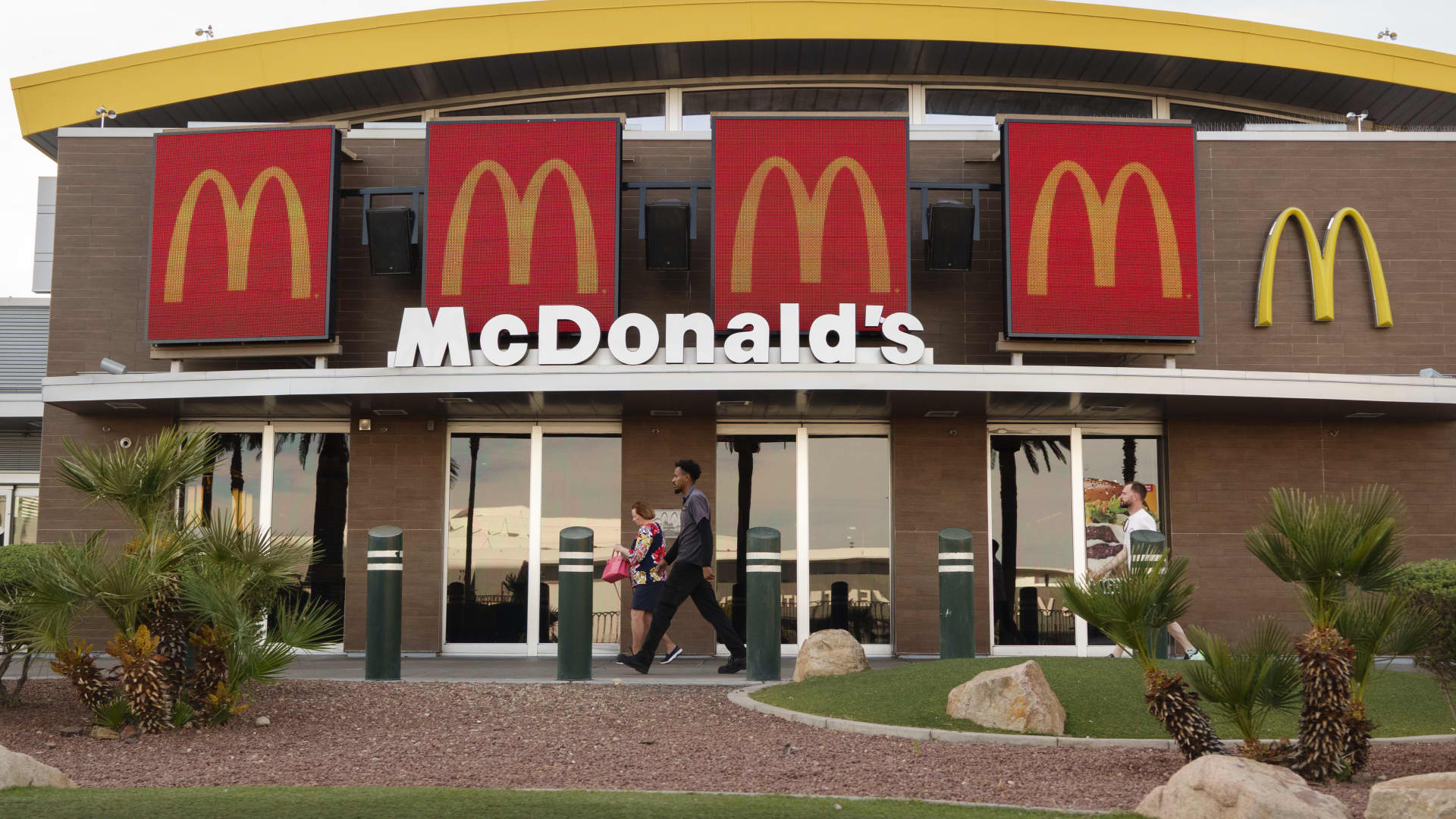
Some diners are turning away from McDonald's and toward rivals.
Mike Kemp/In Pictures via Getty Images
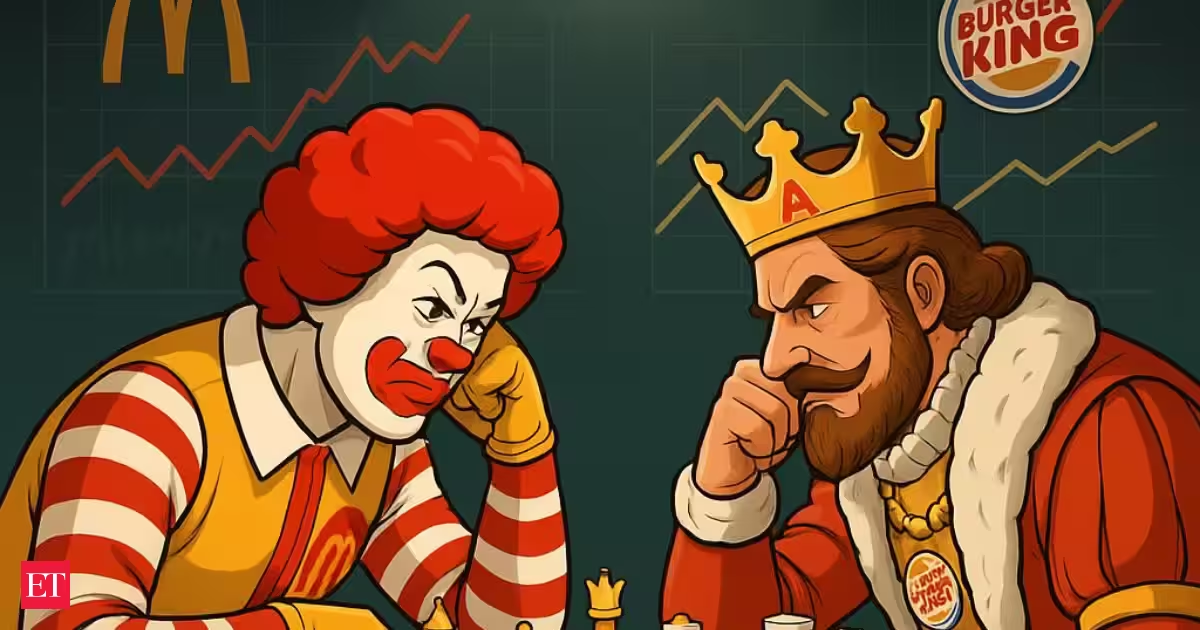
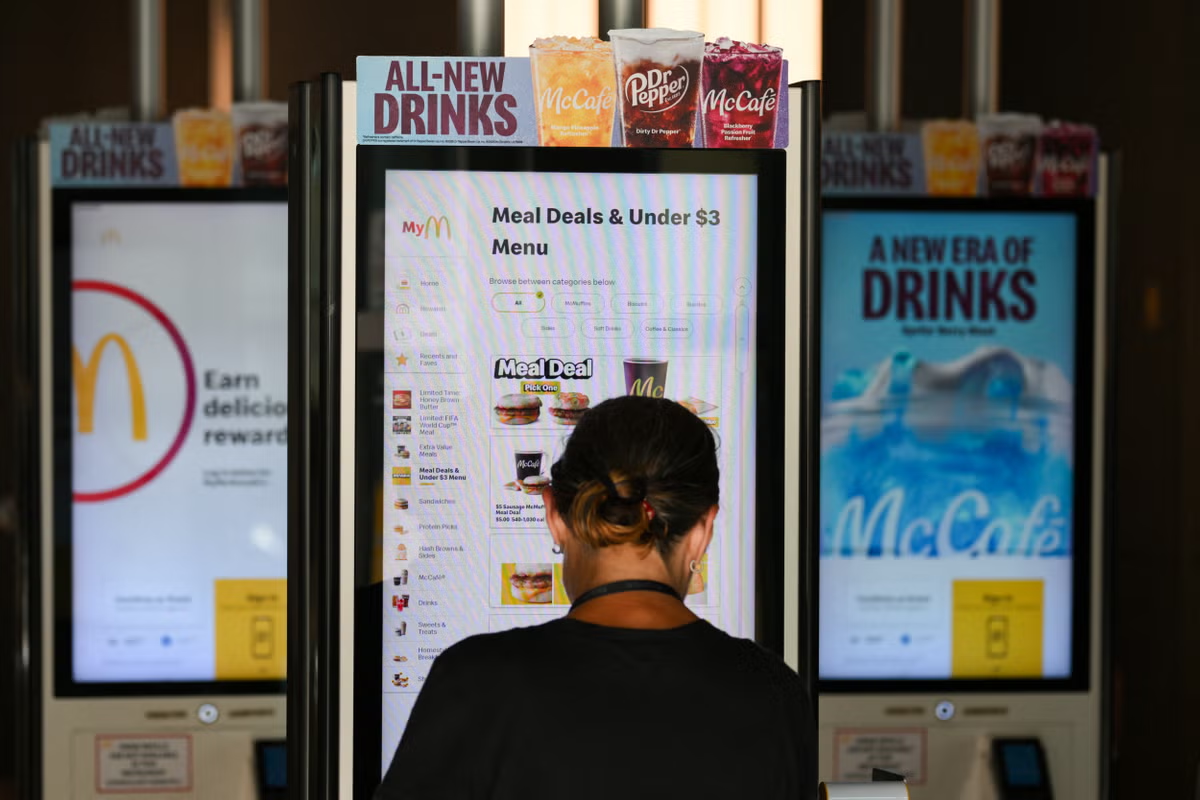
Peter Lauwers used to swing by McDonald's to buy dinner for his family on busy weeknights.A few years ago, though, the Michigan-based father, who runs a mobile app development company, noticed rising prices for Big Macs and Quarter Pounders. The chain also offered fewer deals he liked, such as McDonald's former buy one, get one for $1 deal on burgers. He even started keeping a spreadsheet to track price changes at his local McDonald's.These days, Lauwers said, he and his family don't go as often."It's got to be a special thing," Lauwers said, adding that his family's McDonald's visits are "maybe a quarter of what we used to do."Lauwers is among the diners looking for other places other than McDonald's to get their burger fix. The chain's most recent quarterly sales growth slowed, while rivals like Restaurant Brands International's Burger King seem to be gaining momentum.This apparent reordering of the burger hierarchy is happening as the economy has turned K-shaped in recent years, a situation where higher earners are spending consistently while lower earners are cutting back. That scenario has sent diners looking for value, and fast food chains that provide it are seeing the benefits.McDonald's is still the largest fast-food chain by far, with systemwide sales of $139 billion last year. Burger King, meanwhile, had sales of $29 billion over the same period, and Wendy's reported $14 billion.McDonald's CEO Chris Kempczinski said on an earnings call last week that the chain "simply didn't execute at the level we needed to," especially when it came to rolling out its latest value menu focused on items that cost under $3 each.McDonald's declined to comment beyond the CEO's recent remarks.