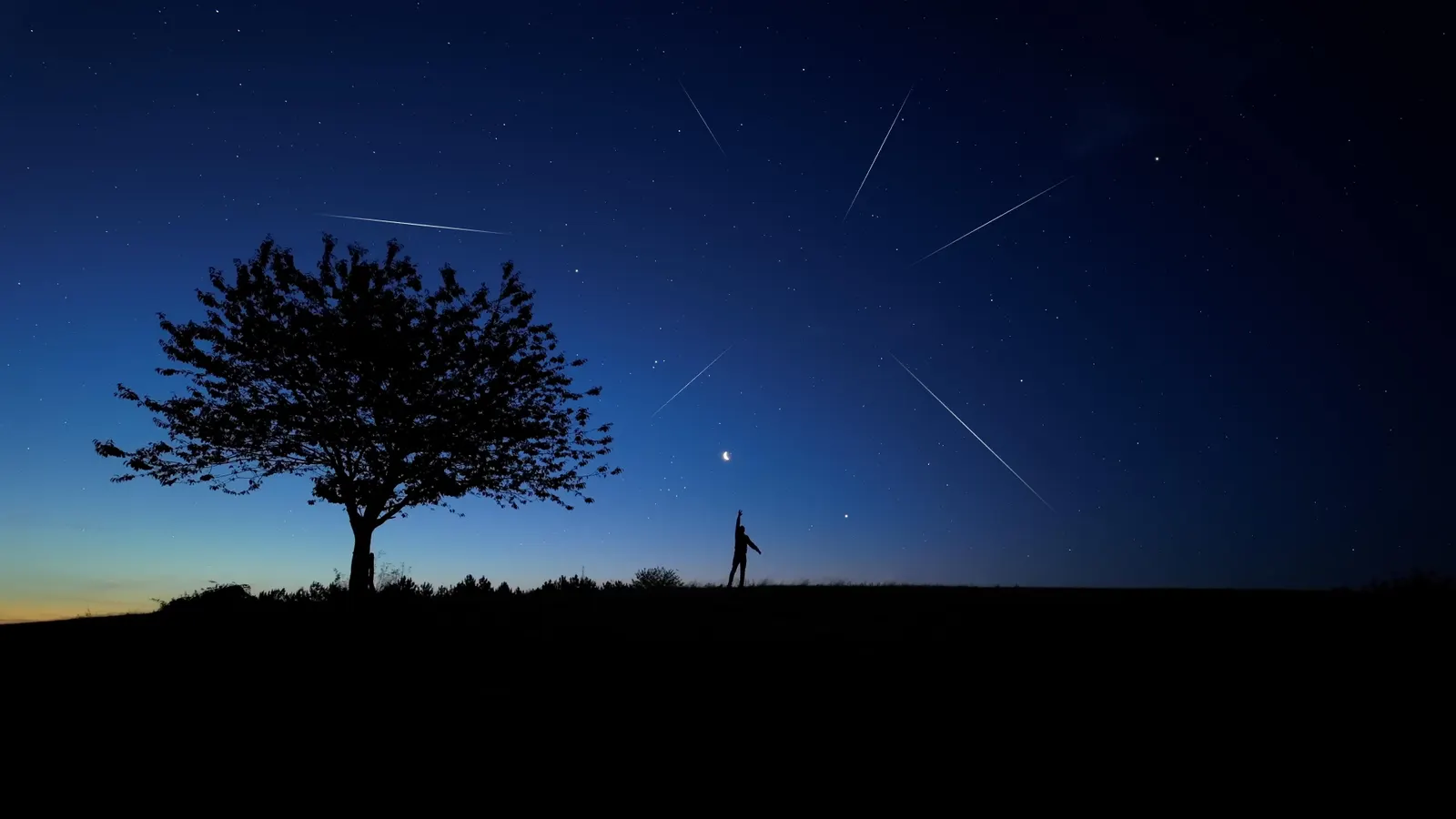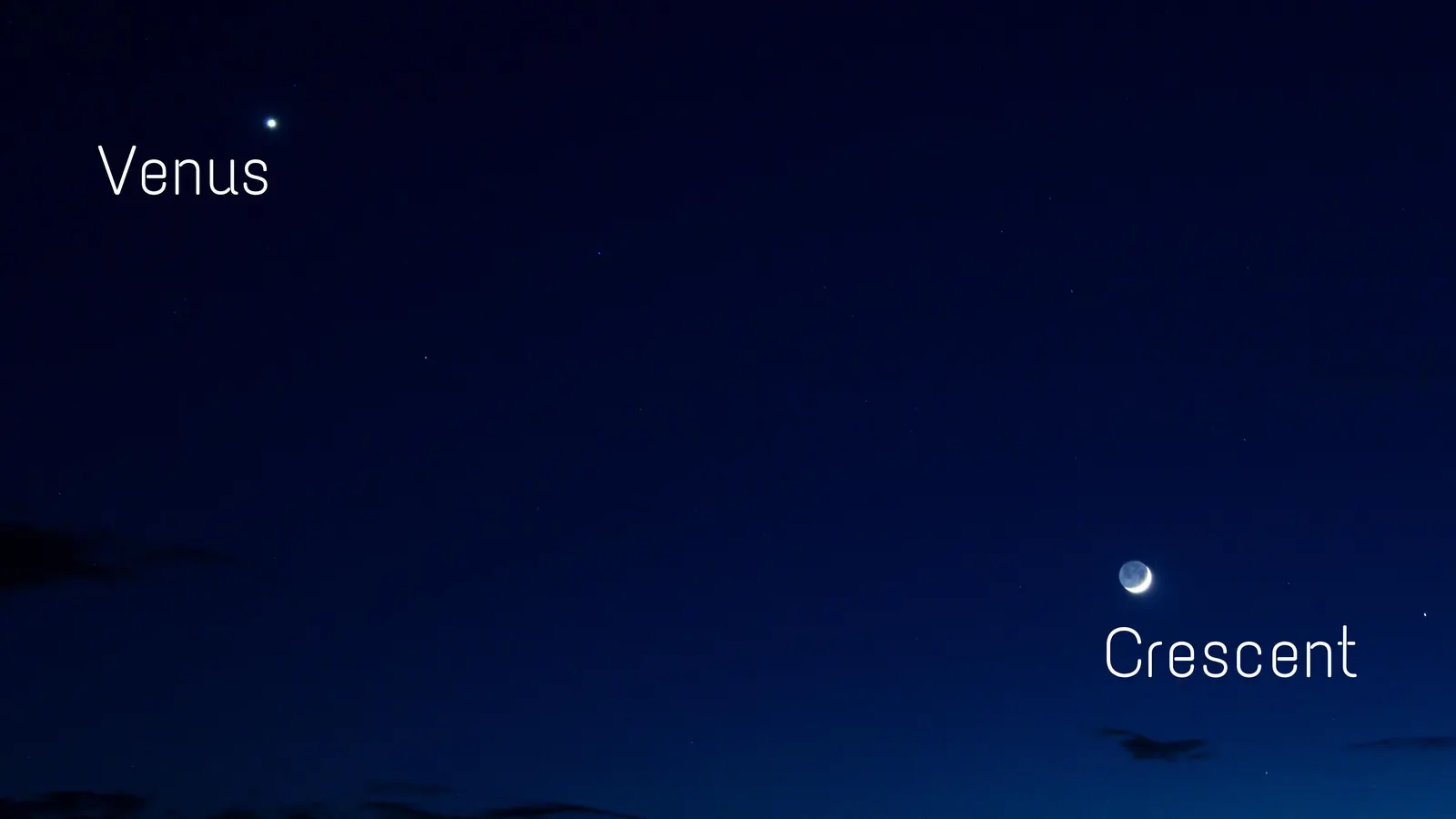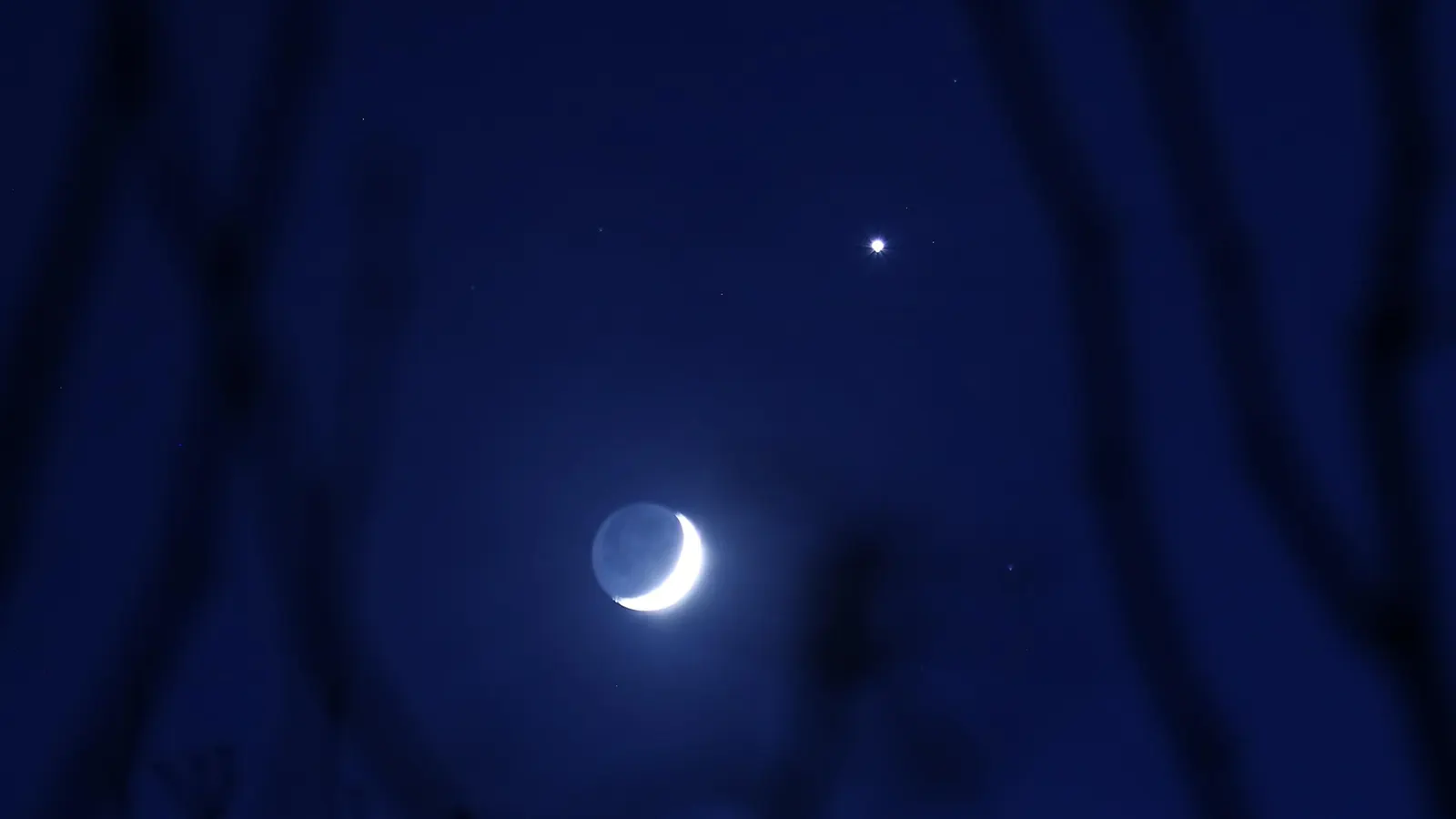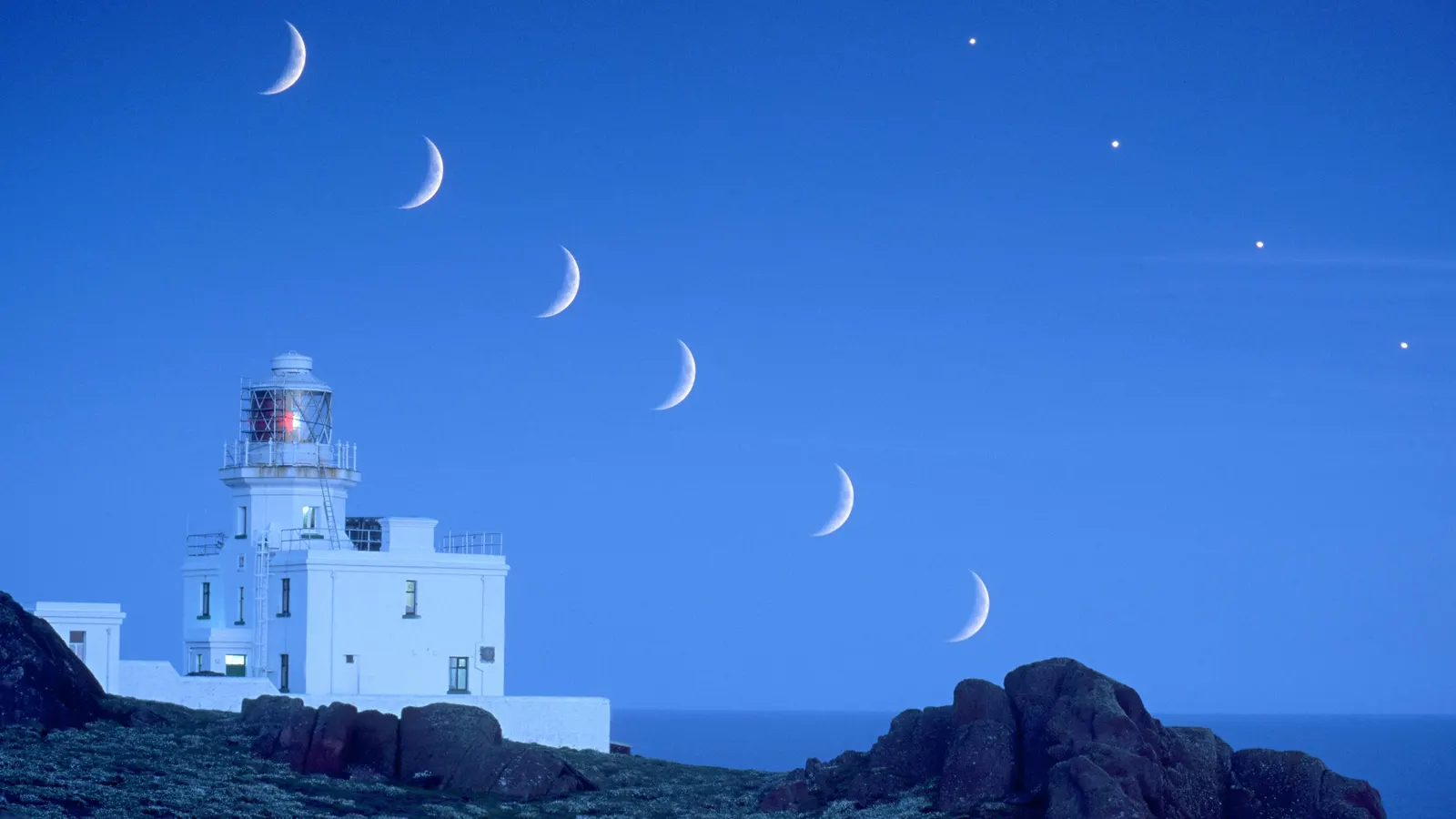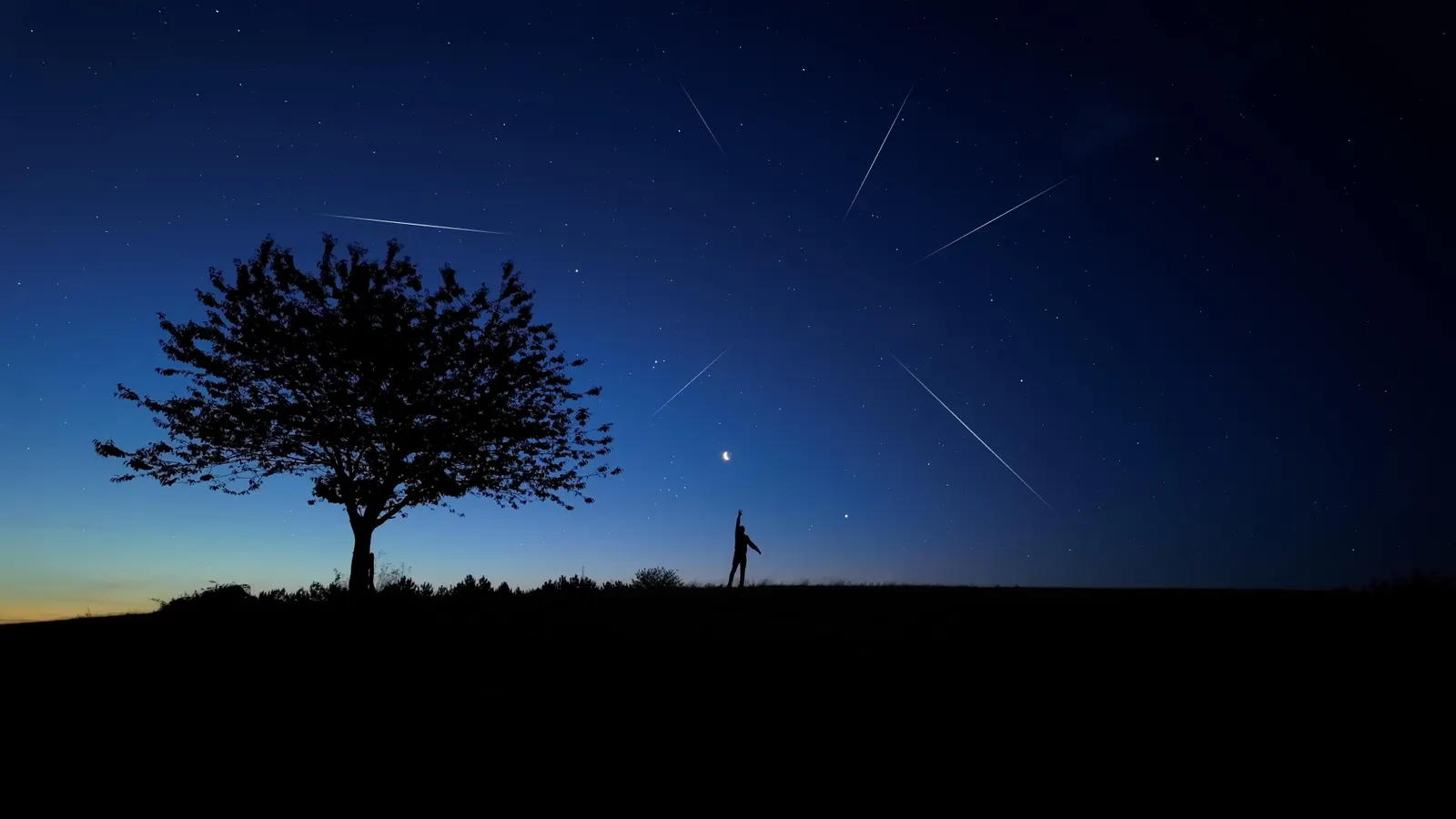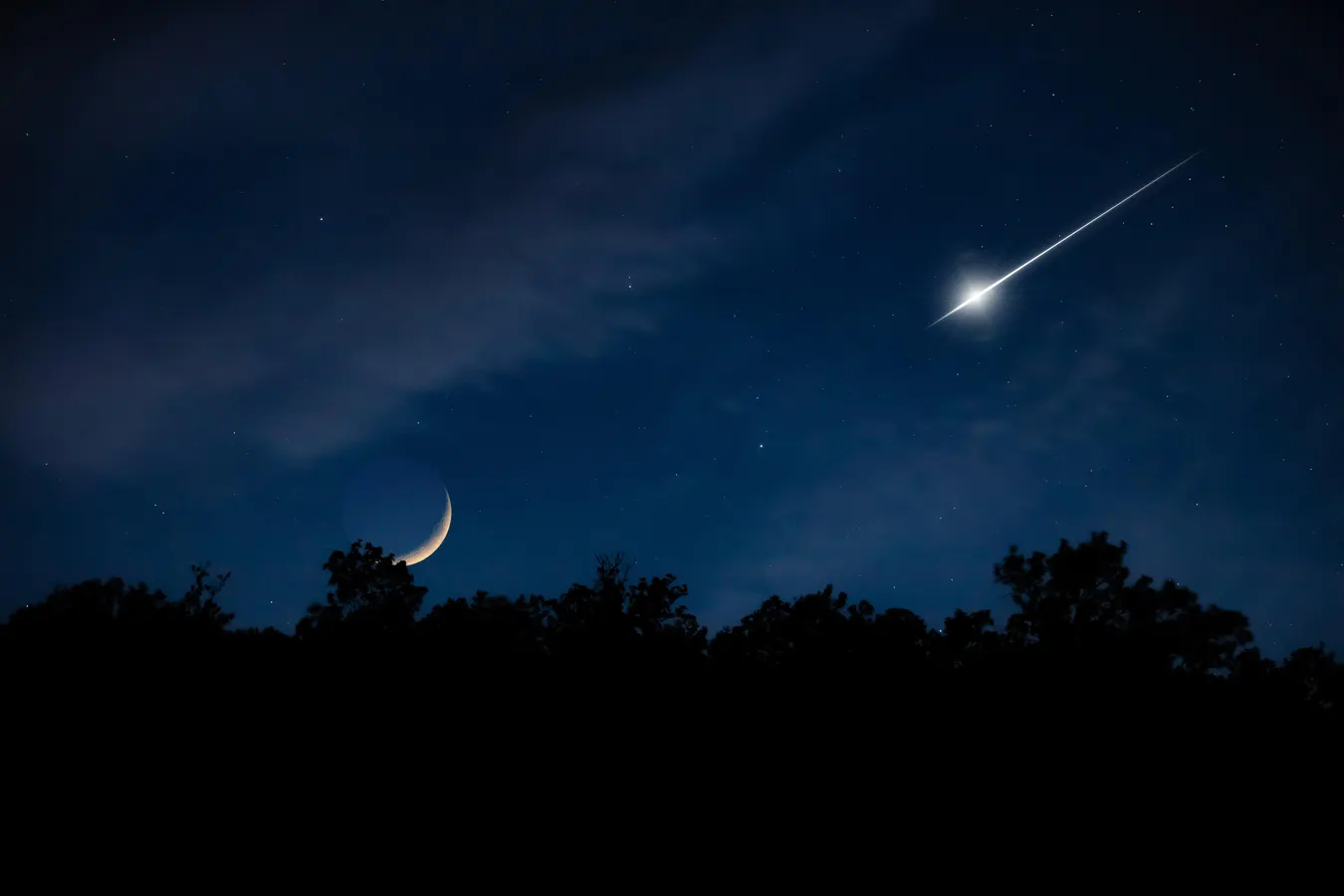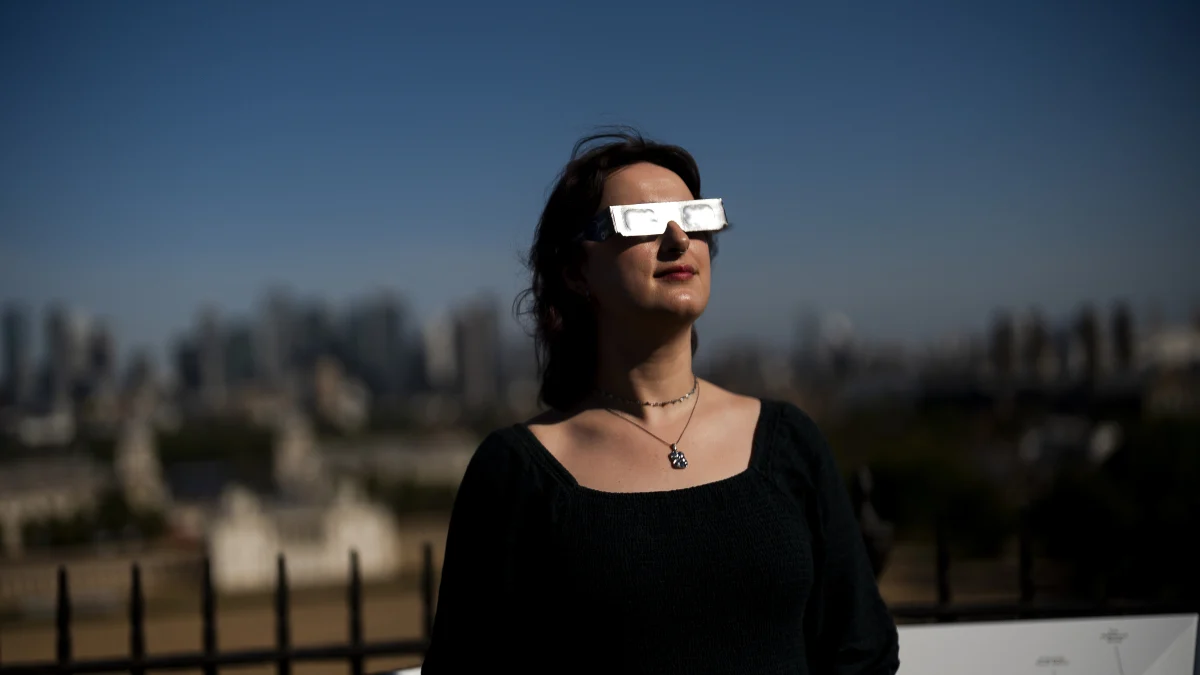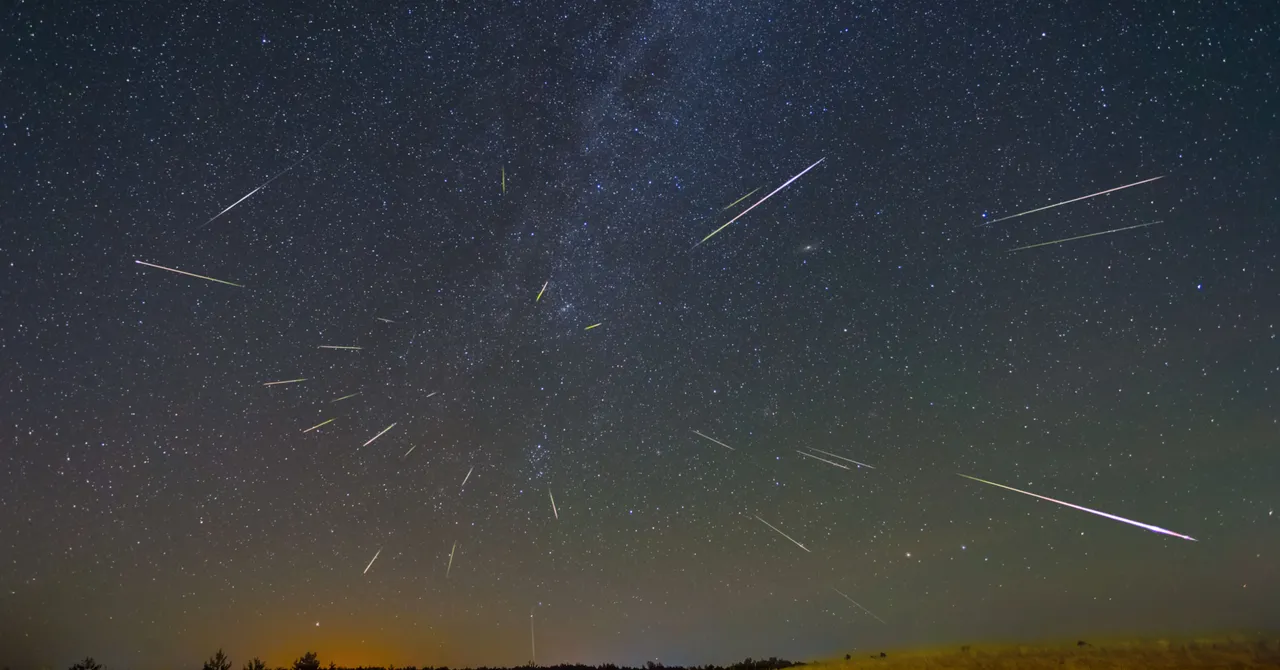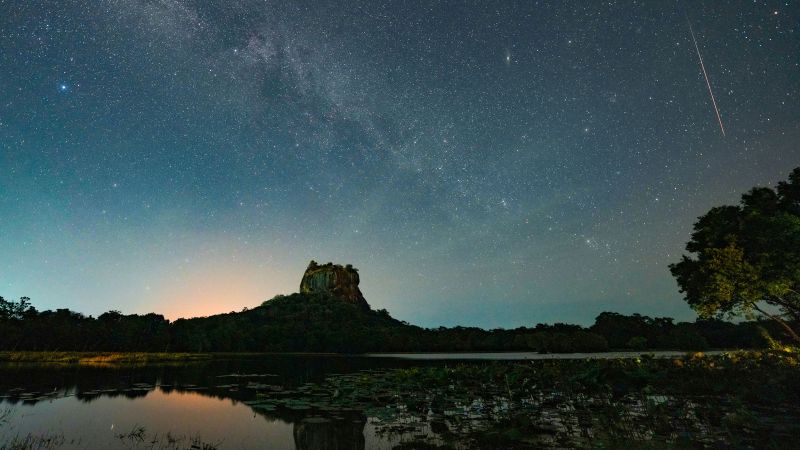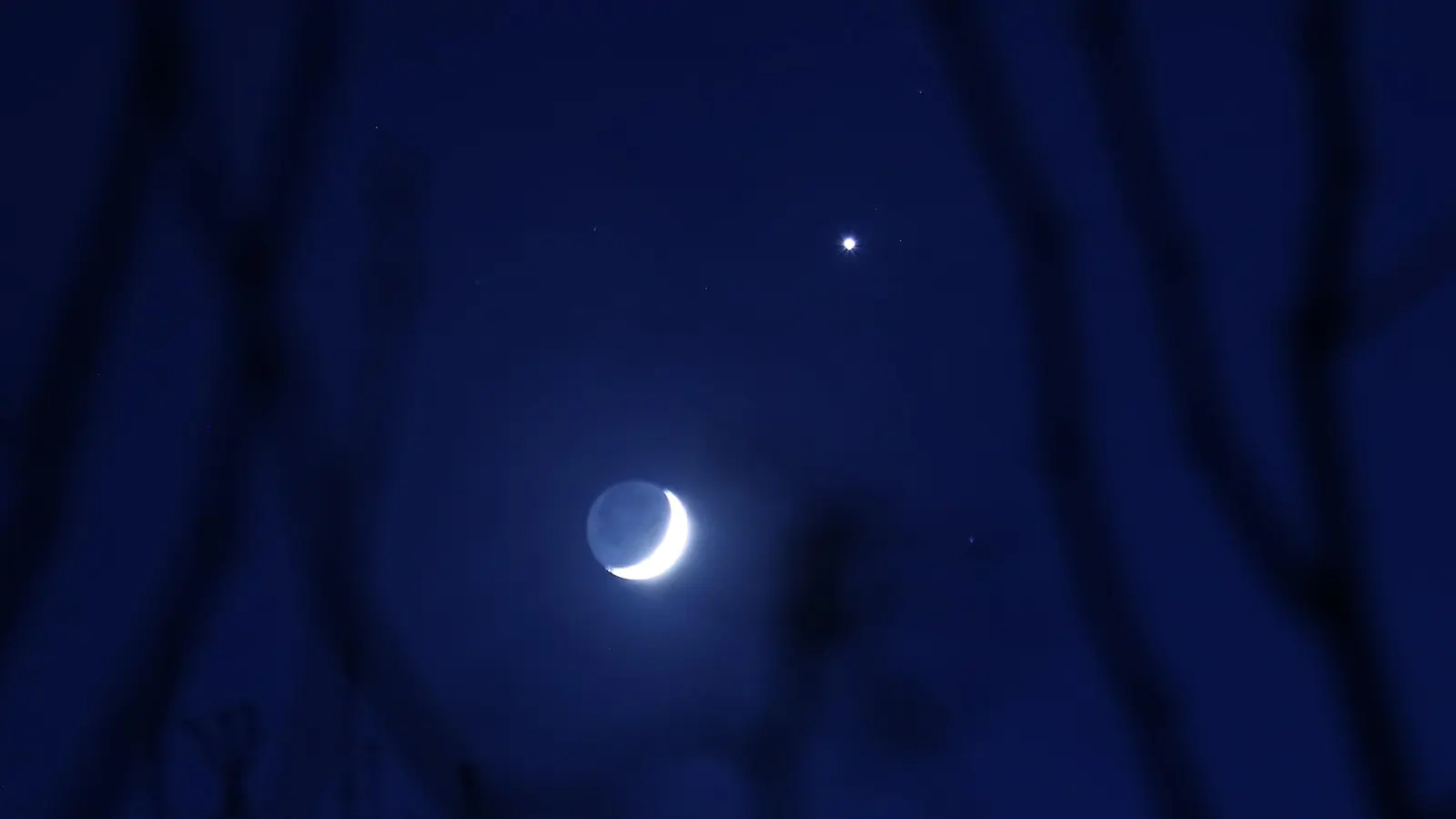
ToplineIf you missed the peak of the Perseid meteor shower and the rare total solar eclipse on Aug. 12, you haven’t missed August. The meteors are still there, fading but far from gone, and now the evening sky introduces its next dominant feature. Now Venus enters its crescent phase as it reaches its farthest from the sun, from Earth’s point of view, just as a crescent moon — fresh from the eclipse — passes closely. Here’s everything you need to know about stargazing this weekend, Aug. 14-16. On Saturday, Aug. 15, a 13%-lit waxing crescent moon will appear beneath Venus in the west just after sunset. At that moment, Venus will be as high in the night sky as it will get all year.Jamie CarterTimelineFriday, Aug. 14The Perseid meteor shower is now on the wane, but look late tonight and into the small hours for meteors still visible. Expect perhaps 10-20 per hour under dark skies, fewer in urban areas.Saturday, Aug. 15Venus reaches greatest elongation east — its widest separation from the sun in the evening sky. A 13%-lit waxing crescent moon will appear beneath it in the west just after sunset.Sunday, Aug. 16A 21%-lit waxing crescent moon will appear close to bright star Spica, in the constellation Virgo, in the west just after sunset.It’s one of the most counterintuitive sights in astronomy — Venus looks brightest when it’s a crescent, not when it’s full — because it’s much closer to us. (Photo by SSPL/Getty Images)SSPL via Getty ImagesVENUS TAKES THE STAGEVenus has been present all summer, but now is its chance to shine. At its greatest elongation this week, Venus sits nearly 48 degrees from the sun, placing it comfortably in the evening sky rather than buried in twilight — though the closer you are to the equator, the higher it is. It sets well after sunset and shines at around magnitude –4.3, outshining every star and planet. What makes this phase particularly interesting is geometry. Venus is now about half-lit, like a miniature version of a quarter moon. Through a small telescope, it appears as a clean, bright half-disk. Over the coming weeks, it will grow larger but thinner, becoming a crescent as it moves closer to Earth. At the same time, it will brighten further, reaching its peak brilliance in September, before quickly fading from view. It’s one of the most counterintuitive sights in astronomy — Venus looks brightest when it’s a crescent, not when it’s full — because it’s much closer to us.The moon, with a partial lunar eclipse, is seen behind the Statue of Freedom, on Capitol Hill in Washington, DC early on November 19, 2021. (Photo by ANDREW CABALLERO-REYNOLDS/AFP via Getty Images)AFP via Getty ImagesWhat’s Next In The Night SkyDid you see this week’s solar eclipse? Eclipses almost always come in pairs (or trios), and this one was no different. As the moon reaches its full phase on Aug. 27-28, it will cruise through Earth’s dark central shadow in space to undergo a deep partial lunar eclipse. During the event, about 96% of the lunar surface will be immersed in Earth’s shadow. This provides one of the most visually striking lunar events of the year. Venus continues to brighten into mid-September, reaching its peak brilliance around Sept. 18, while later in the year, the Geminid meteor shower will peak on Dec. 14-15.The times and dates given apply to mid-northern latitudes. For the most accurate location-specific information, consult online planetariums like Stellarium.Further readingForbesYour Ultimate Travel Guide To The 2026 Total Solar EclipseBy Jamie CarterForbesYour Ultimate Guide To Stargazing And Astronomy In 2026By Jamie CarterForbes7 Spectacular Stargazing Events To See This SummerBy Jamie CarterForbesThe Perseid Meteor Shower Begins Today: When To WatchBy Jamie CarterForbesComet Tonight: How To See Comet 10P/Tempel 2 Now From Where You AreBy Jamie Carter
See A Crescent Venus Dominate The Evening Sky: Stargazing This Weekend
North America’s celestial highlights for the weekend ahead, which also apply to mid-northern latitudes in the northern hemisphere.
632 words~3 min read