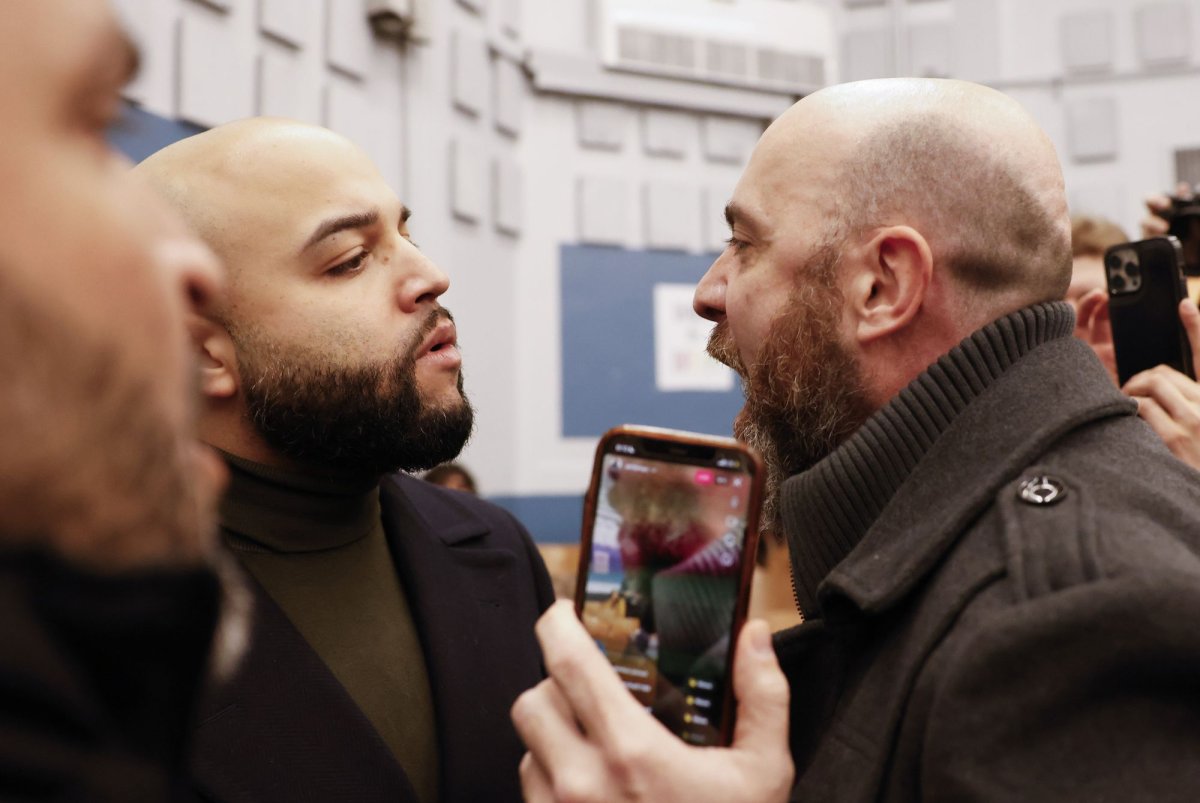
There is something increasingly uncomfortable about political debate in today’s environment: too many people are no longer interested in understanding the world. They are interested in having their version of it confirmed. This is not a problem belonging to one side of the political spectrum. The right does it. The left does it. Liberals do it. Conservatives do it. Progressives do it. Nationalists do it. Everyone seems increasingly convinced that their worldview is not simply one interpretation of reality, but reality itself.Once you believe that, anyone who sees things differently is not just wrong. They become stupid, dangerous, immoral or somehow part of the problem. The result is a political culture in which disagreement is treated as a moral failing. You can no longer say, “I agree with you on this, but I think you are wrong about that” without someone deciding you have betrayed the cause. You can’t acknowledge that an opponent has made a legitimate point without being accused of supporting everything else they believe. We have replaced debate with tribalism. And I think social media has made this considerably worse. We are rewarded for certainty, outrage and moral indignation. Nuance doesn’t go viral, and context does not fit neatly into a post. “It is complicated” is rarely as satisfying as “they are evil”.So, we pick our side and defend it. Facts become useful when they support us and suspicious when they do not. Principles become negotiable when they inconvenience our politics. People who once demanded free speech suddenly want certain views silenced when those views belong to their opponents. We have replaced debate with tribalism. And I think social media has made this considerably worse. We are rewarded for certainty, outrage and moral indignation. Nuance doesn’t go viral, and context does not fit neatly into a post.People who once condemned political hypocrisy suddenly find elaborate ways to excuse it when their own side is responsible. We have all seen this happen, but we tend to notice it more when the other side is doing it. And then comes the “cancellation”. Say the wrong thing, use the wrong word, ask the wrong question, express an inconvenient opinion … suddenly the conversation is no longer about whether you are right or wrong. It is about whether you are a good person. That is dangerous, because once people become afraid that saying the wrong thing will result in them being publicly humiliated, attacked or labelled, they stop speaking honestly. They say what they think they are supposed to say. They retreat into private conversations. And eventually, we end up with a public discourse where everyone is performing their politics rather than actually discussing them. A healthy democracy requires people to be able to sit with uncomfortable ideas. It requires us to hear arguments that challenge our assumptions, change our minds when the evidence demands it, and acknowledge when the other side has a point. That does not mean abandoning principles. It does not mean pretending every argument has equal merit. And it certainly does not mean tolerating racism, bigotry or genuine hatred in the name of “debate”. It means understanding that having principles does not make us infallible. We should be able to say, “I disagree with you, but I understand why you think that.” We should be able to change our minds without being humiliated for having held the wrong opinion yesterday. We should be able to admit that someone we dislike has made a good point. We should be able to criticise our own side without being accused of joining the other. Most importantly, we should be able to talk to one another without constantly asking, “Are you with me or against me?” Because if politics becomes nothing more than competing tribes screaming into their own echo chambers, we lose something far more important than an argument. We lose the ability to have an honest conversation. And once that goes, democracy becomes considerably harder to sustain.• Roos is a Business Day parliamentary reporter.Business Day
TARA ROOS | Political discourse suffers as echo chambers grow
Nuance fades as certainty and outrage dominate online
666 words~3 min read