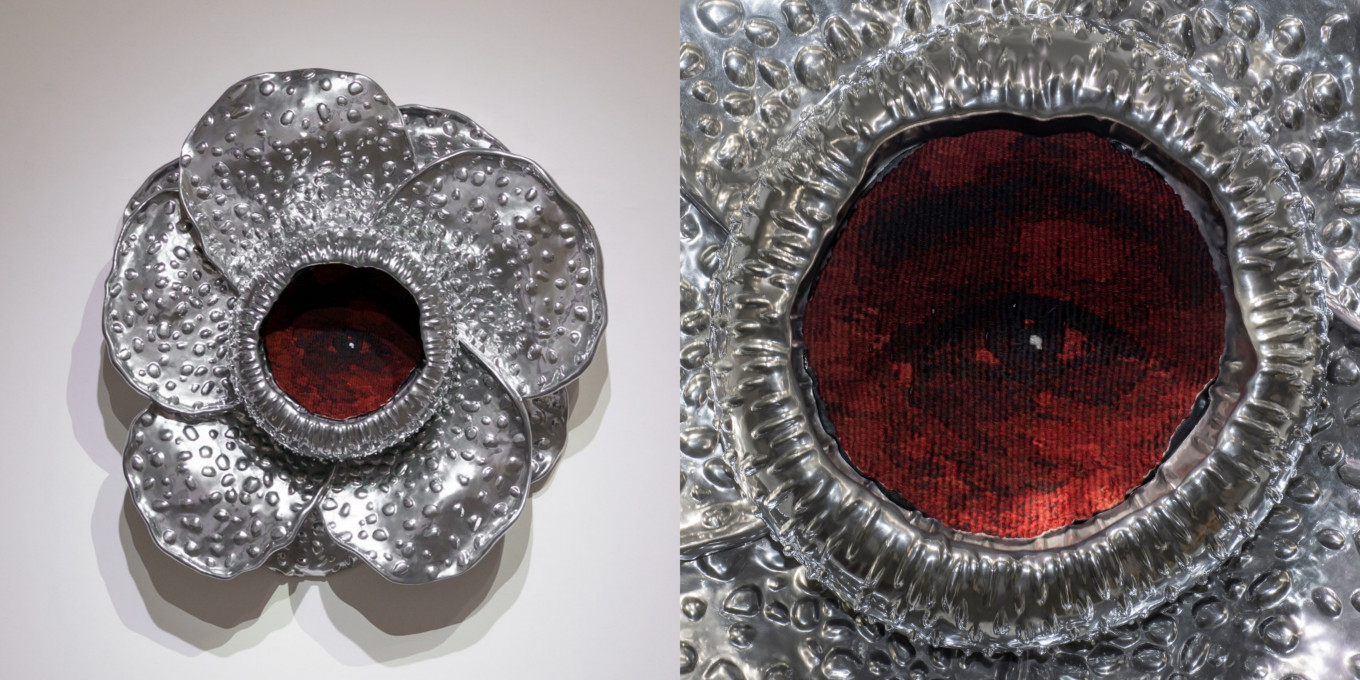
The new solo exhibition Menamai | Naming by artist Octora at Gajah Gallery Jakarta reveals an enduring inquiry into power dynamics and the supposed neutrality of the ways we see, particularly in archival images and ethnographic records produced under the colonial hierarchy of the Dutch East Indies.Often regarded as historical documents, these images and records were, in Octora’s view, constructed according to whoever held the camera, wrote the narrative or controlled the archive under colonial rule.
Her efforts to confront archival collections, including those held by Leiden University, are not new. In this exhibition, however, the materiality of her work takes on an added dimension through the use of merino wool, which she describes as intricate, slow and tactile. Its physicality embodies a sense of care, undoing the sterile objectification embedded in colonial archives and ethnographic photography.
While many of the works sharply critique the colonial gaze preserved in such images, Octora’s concerns extend beyond the archive. Her practice is driven by a broader sensitivity to injustice and the ways authenticity can be diminished when human lives are reduced to categories, data and objects of study.