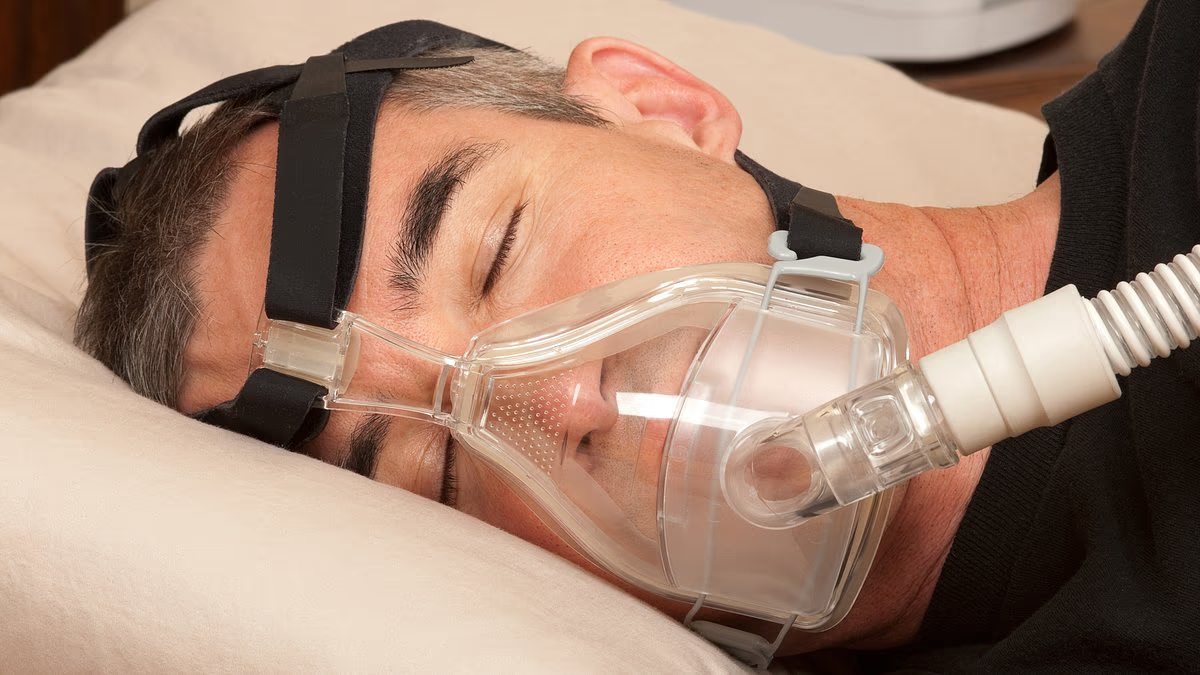
Have you ever wondered if that loud snoring is just a nuisance or a genuine health red flag? Sleep Apnea detection is traditionally done in uncomfortable sleep labs, but with the rise of AI-powered sleep monitoring, we can now turn a simple smartphone recording into a diagnostic-grade insight tool.
In this tutorial, we are diving deep into Whisper-v3 audio processing, leveraging machine learning for health to build a non-invasive acoustic monitor. By the end of this guide, you'll know how to take raw sleep audio, process it using audio signal processing techniques, and fine-tune OpenAI's Whisper-v3 to detect "Apnea" and "Hypopnea" events with high precision. 🚀
Why Whisper-v3 for Audio Events?
While Whisper is famous for speech-to-text, its architectural backbone is a robust encoder-decoder Transformer trained on diverse audio. By treating specific acoustic patterns (like the gasping or silence characteristic of Sleep Apnea) as "tokens" or specific classes, we can repurpose its timestamping capabilities to pinpoint exactly when a health event occurs.
The Architecture: From Raw Audio to Health Insights