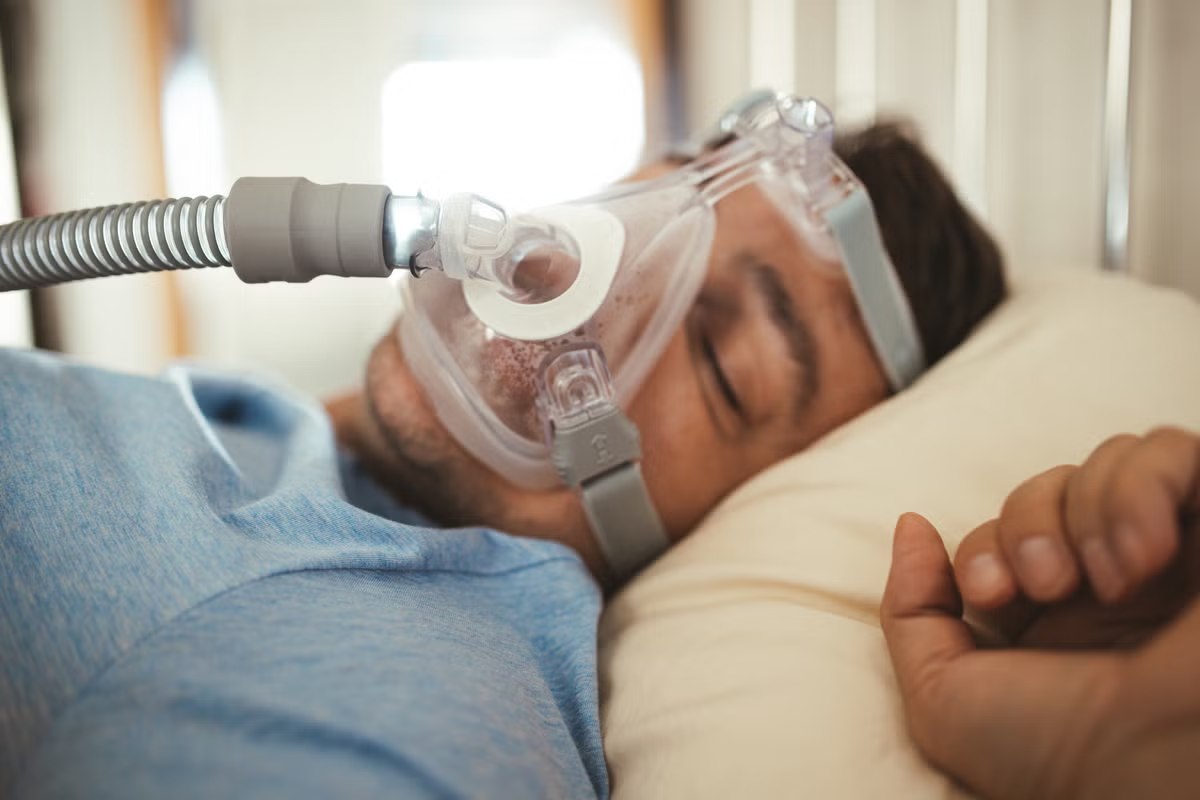
Sleep is supposed to be the time when our bodies recharge, but for millions, it’s a silent struggle. Obstructive Sleep Apnea (OSA) often goes undiagnosed because clinical sleep studies (polysomnography) are expensive and intimidating. But what if you could use the "Black Box" of your bedroom—nocturnal audio—to catch early warning signs? 🌙
In this tutorial, we are building a Sleep Apnea Screening Tool using OpenAI Whisper, Librosa, and Fast Fourier Transform (FFT). We'll leverage Sleep Apnea Detection techniques and nocturnal sound analysis to identify irregular breathing patterns. By combining FastAPI audio processing with AI, we can transform a simple smartphone recording into a data-driven health insight.
For those looking for production-ready AI health monitoring patterns and deeper dives into medical signal processing, be sure to check out the advanced guides at WellAlly Tech Blog.
The system works by ingesting long-form nocturnal audio, segmenting it, and running two parallel analyses:
Temporal Analysis: Using Whisper's VAD (Voice Activity Detection) logic to find "silence" gaps (potential apneas).