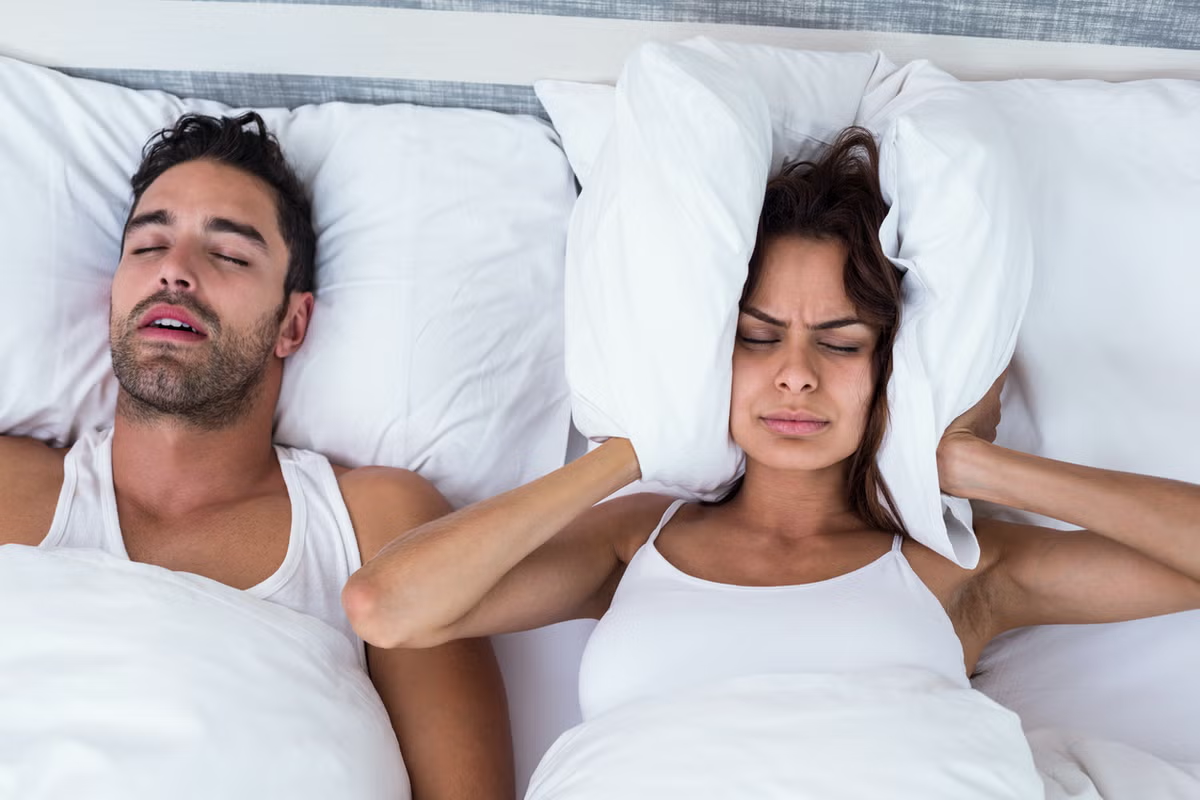
Things used in this project Hardware componentsSmart device with microphone and internet connection×1Software apps and online servicesGithubStory The Inspiration & The ProblemWhen exploring the mysteries of sleep, especially during the deep hours of the night when our bodies are entirely at rest changes in our health and breathing patterns are commonly heard much more easily than they are seen. For the average person, monitoring sleep quality using visual cues or cameras in a pitch-black bedroom is impractical and raises massive privacy concerns. Yet, ignoring what happens in the dark can be dangerous.Sleep apnea is a common sleep disorder that causes repeated interruptions in breathing during the night, often remaining undiagnosed because symptoms occur while the person is asleep. Left untreated, it can lead to serious health problems such as chronic fatigue, cardiovascular disease, reduced concentration, and a significantly lower quality of life. While clinical diagnostic methods like polysomnography (sleep studies) are highly accurate, they are also expensive, uncomfortable, and not easily accessible to everyone.Our Solution: Audio-Based Edge AIThe most prominent and telling feature of our nighttime environment is actually sound. This makes audio-based classification a much more practical, completely non-invasive approach for preliminary screening.To help improve early detection and make monitoring accessible, we developed SnoringNoPlease. Powered by an acoustic Machine Learning model trained and deployed via Edge Impulse, this bedside system is capable of identifying breathing irregularities and potential apnea episodes during sleep in real time.Machine Learning & Model TrainingWe used the Edge Impulse platform to train our machine learning model on audio samples, focusing on effectively identifying snoring patterns and distinguishing them from environmental background noise.To build a robust dataset, we collected and filtered clear, distinctive audio clips of snoring. We also intentionally included ambient background noise (such as fans, air conditioning, or general room acoustics) without any snoring. This ensures that our model can accurately detect irregularities in real-world home environments without being fooled by everyday household sounds.
SnoringNoPlease
Monitor and improve your sleep quality using a machine learning model trained on Edge Impulse to automatically detect and classify snoring By Rodrigo Alvarez Simon, Leire Bisquert Molines, MARGARITA REYES, Zdravko Doykin, and Luka Mali.
686 words~3 min read