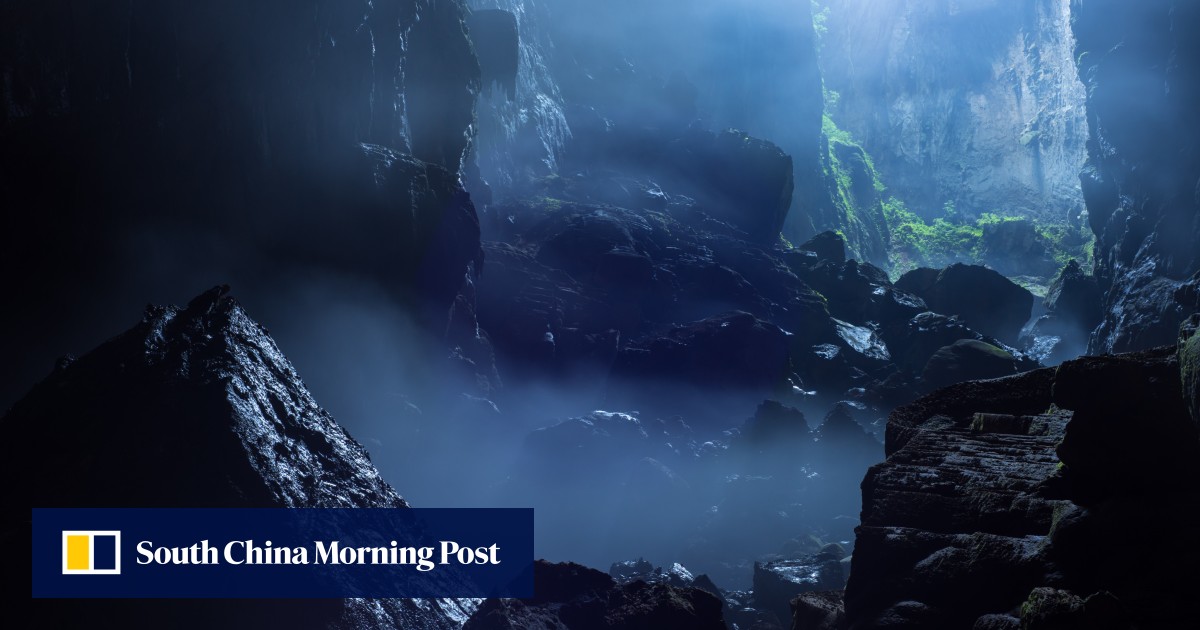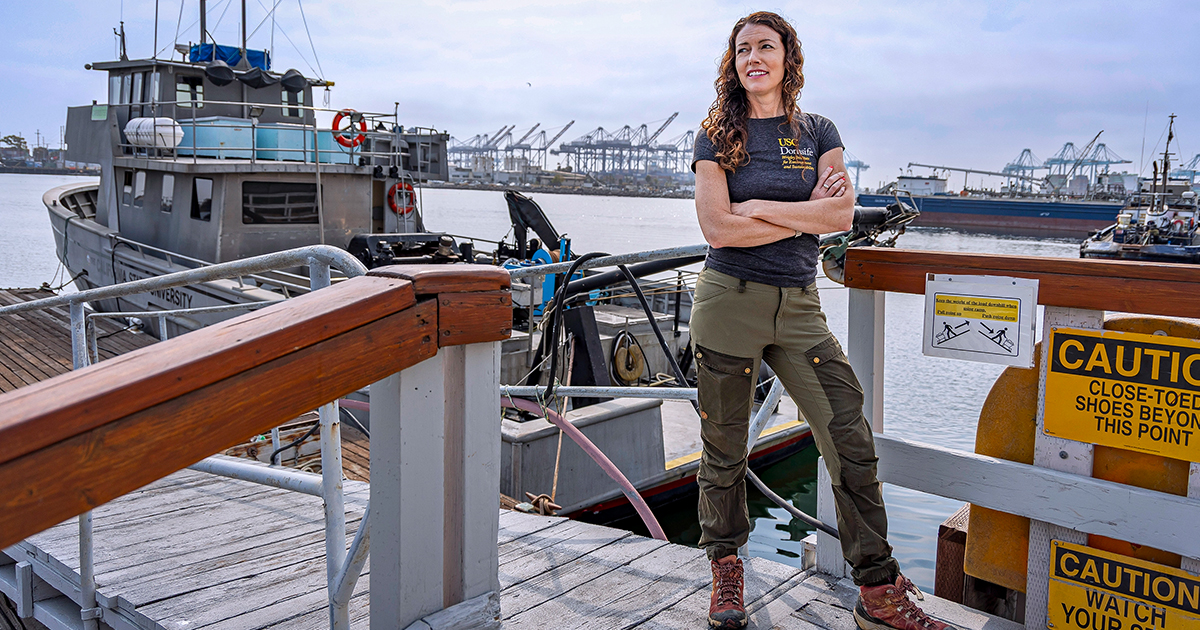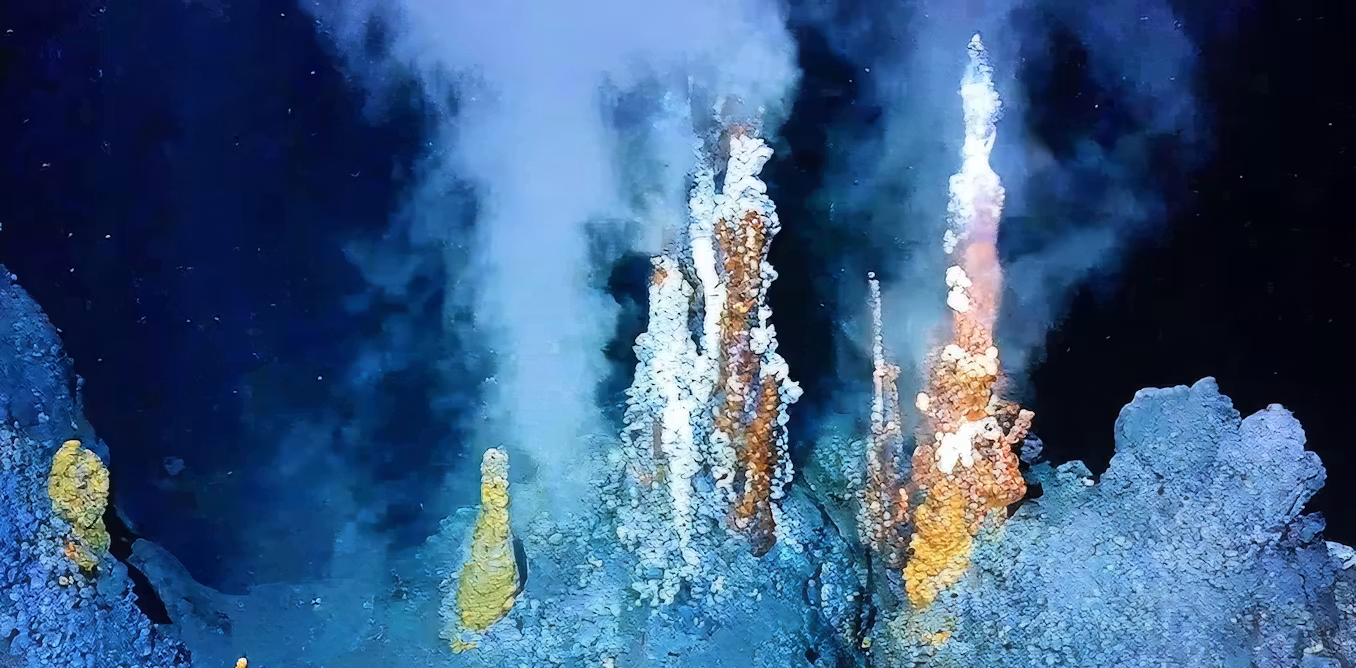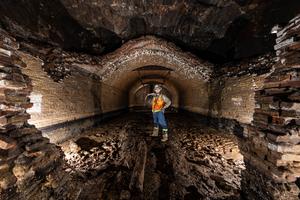
I first heard about a planned descent into one of the world’s deepest mines during a call with the biogeochemist Karen Lloyd. She had recently published a book called “Intraterrestrials,” exploring the microbial ecosystems that pervade Earth’s crust. In this layer, known as the deep biosphere, organisms’ primary source of energy is not sunlight, but gases and compounds leached from the rock. In March, Lloyd would be joining a scientific expedition into a gold mine in South Africa to learn if this subsurface life might also be breathing oxygen. Did I wanna come?A few weeks later, I found myself whizzing down a mine shaft that cut nearly two miles straight into the ground, squeezed into a three-story-tall lift called the Cage with a handful of geochemists and dozens of miners. What was unsettling for me and the researchers was just the miners’ daily commute. More than six thousand workers fill a twenty-four-hour shift rotation to extract ever more gold from ever deeper in the continent.Although similar mines have scarred South Africa’s landscape, they offer a rare opportunity to investigate the deep biosphere up close. This mine in particular, Moab Khotsong, had been a hub for research since the discovery of water that had been trapped in its rocks for more than a billion years. This was a brine far saltier than the sea, and radioactive—yet things were living in it. “It smells like death, but it’s full of life,” as Lloyd put it to me.This particular expedition, led by the microbial ecologist Emil Ruff and funded by NASA, set out to discover whether this strange ecosystem might be fuelled, in part, by an unlikely substance known as dark oxygen. On the surface, all the oxygen we breathe is constantly replenished by plants and algae harnessing sunlight for energy. Any oxygen produced below Earth’s surface was long assumed to rapidly get used up. But Ruff and his colleagues had found dark oxygen accumulating in certain deep groundwater systems. If this dark oxygen proved to be abundant, even in places as isolated as the waters of Moab Khotsong, it could unlock new possibilities for deep life on Earth and perhaps even on other planets.There were some, let’s say, hiccups during our two days in the mine. But by the time we had made it back to the surface, the researchers were buzzing with excitement. I was mainly glad for a breath of fresh air.Illustration by Matt ChaseThe organization is holding its annual summer meeting, and onlookers are calling for the head of its leader, Ken Martin. Then again, Ruby Cramer writes, the Democrats are always doing that kind of thing. Read or listen to the story »More Top StoriesLorenzo Salgado Araujo died during an ICE traffic stop in Houston. Stephania Taladrid reports on what we still haven’t learned about the case. As support for Israel becomes more and more polarizing in elections everywhere, the nation’s leaders are scouring the world for allies. Karoline Leavitt, the White House press secretary, is leaving the job at the end of the month. Vinson Cunningham has written about how the Trump Administration turned the press briefing into a theatre of cruelty. “God alone knows why I limp.” That’s the opening line of the latest in our Flash Fiction series of very short stories for summer. The most-clicked item in yesterday’s newsletter was about the lessons Democrats should take from this week’s Wisconsin primary.A book: “The Shampoo Effect,” by Jenny Jackson, is a study of the season in life when friendships are tested by growing families and by the realization of ambition. A movie: Rob Tregenza’s “Fast” is about a young auto racer who brings speed and passion to small-town life. A bite: Now is the time for a late-summer tart from a misunderstood master of French cooking.Today’s Crossword Puzzle: “Laura” director Preminger’s palindromic first name—four letters. Catalogues: Can you sort the items into the correct order? Shuffalo: Can you make a longer word with each new letter? Laugh Lines: Test your knowledge of classic New Yorker cartoons.
A Mysterious Discovery Deep Underground
From the daily newsletter: what the discovery of life-sustaining oxygen deep underground could mean for the people living on the surface.
671 words~3 min read