A decade ago, Karen Lloyd discovered single-celled microbes living beneath the seafloor. Now she studies how they can survive in Earth’s crust, possibly for hundreds or thousands of years, and push life’s limits of time and energy.
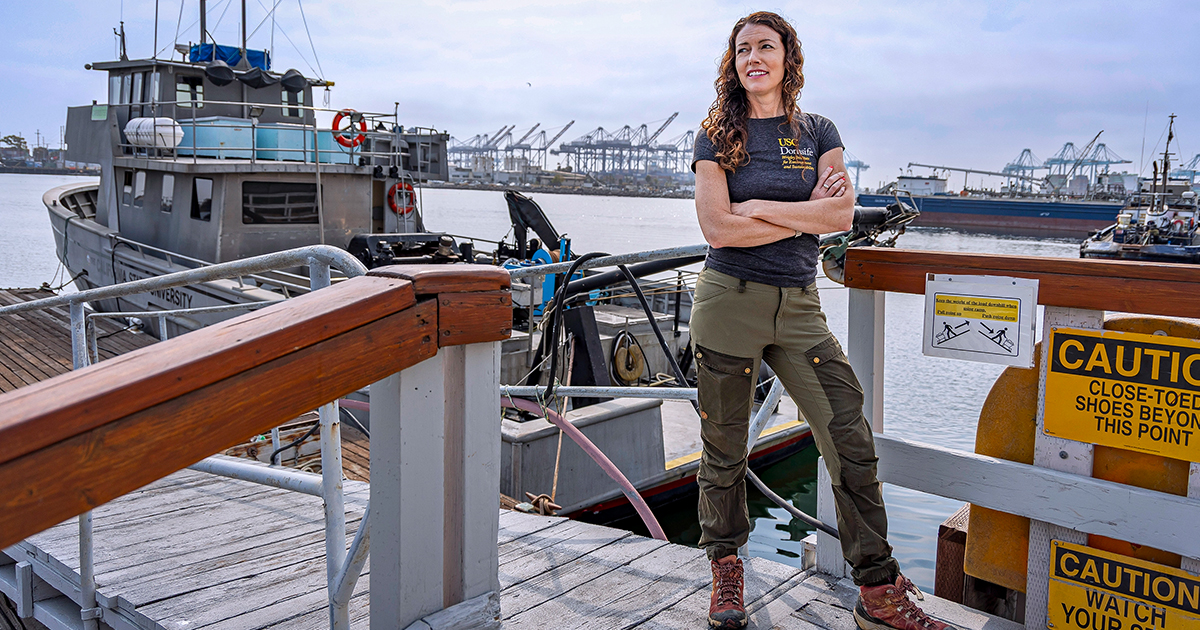
Karen Lloyd seeks the unseen living world in extremophiles, such as cells that live deep in the Earth’s crust and whose lifetimes may extend across geologic timescales.
Monica Almeida for Quanta Magazine
Introduction
When she was a kid, Karen Lloyd enjoyed mucking around along estuaries and beaches on the coast of North Carolina where she lived. With net in hand, the future microbial geochemist dredged up seaweed and mud squirming with snails, crab larvae and other small invertebrates. To the young Lloyd, these were marvelous hidden worlds, out of sight but no less interesting than fish and whales. These childhood experiences made an impression, instilling in her a belief that there is “a lot more to reality than we can see with our eyes,” she said.