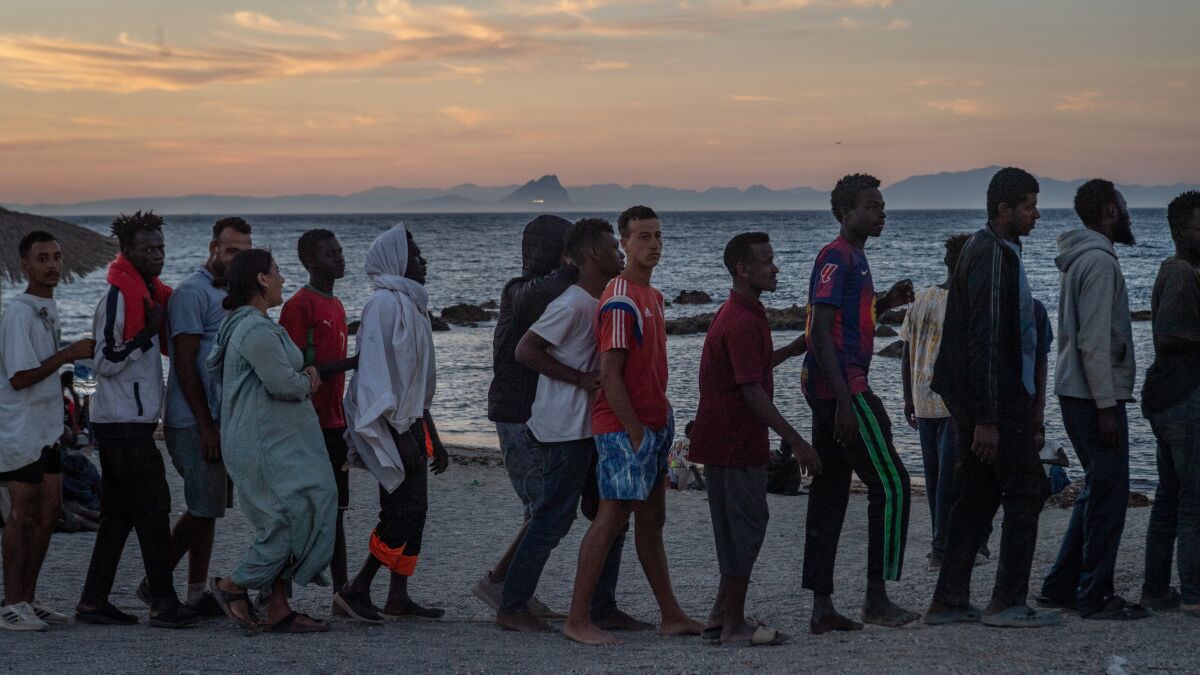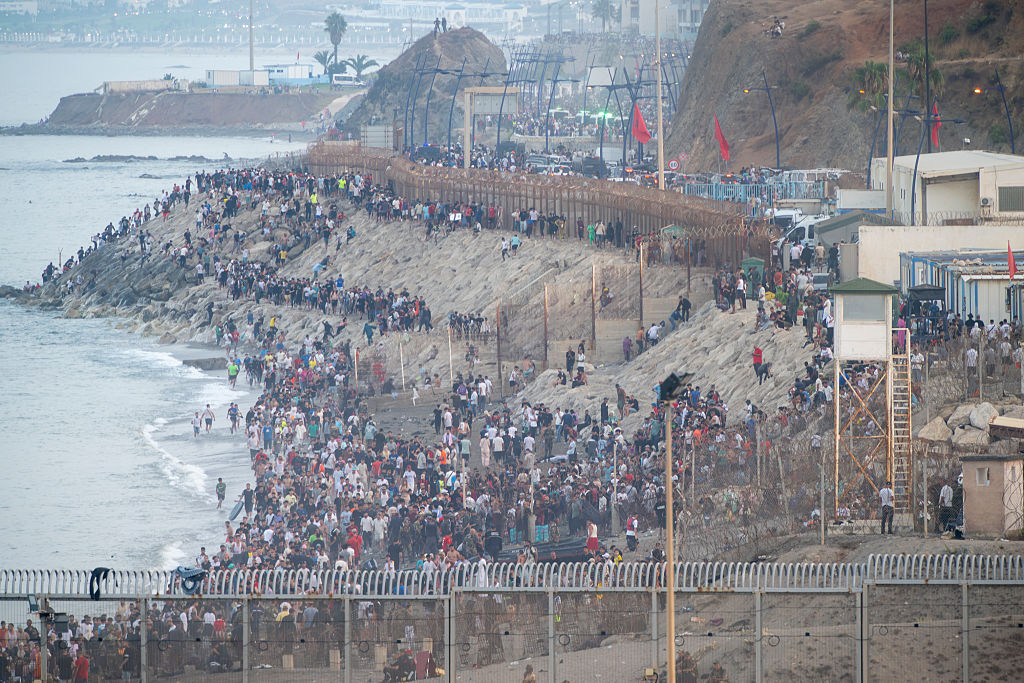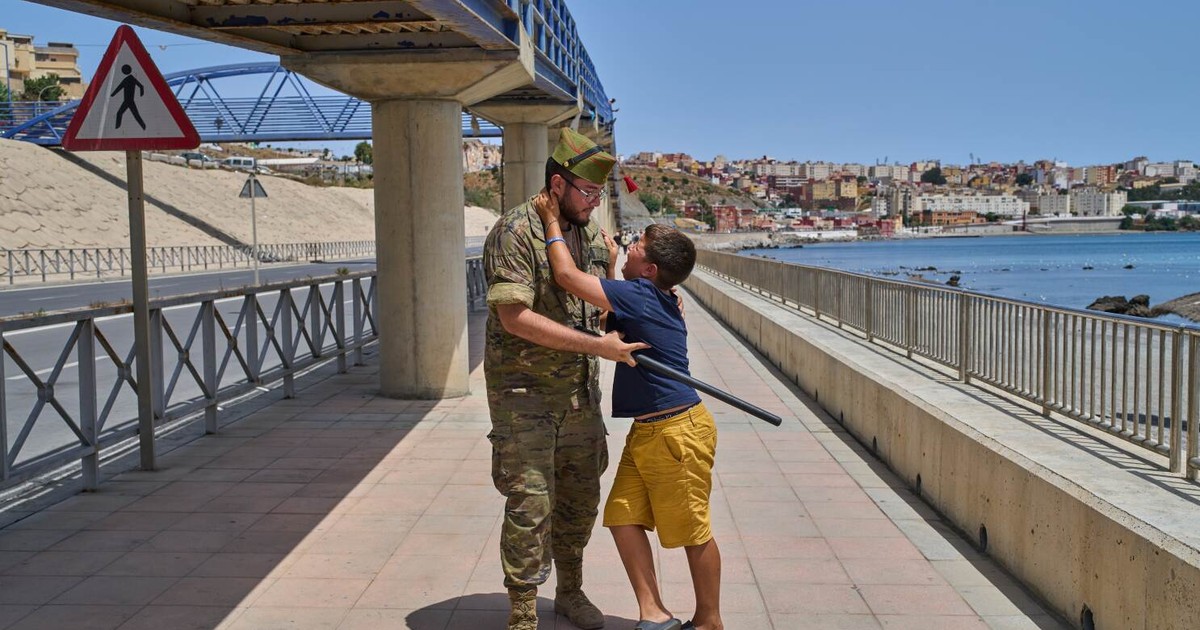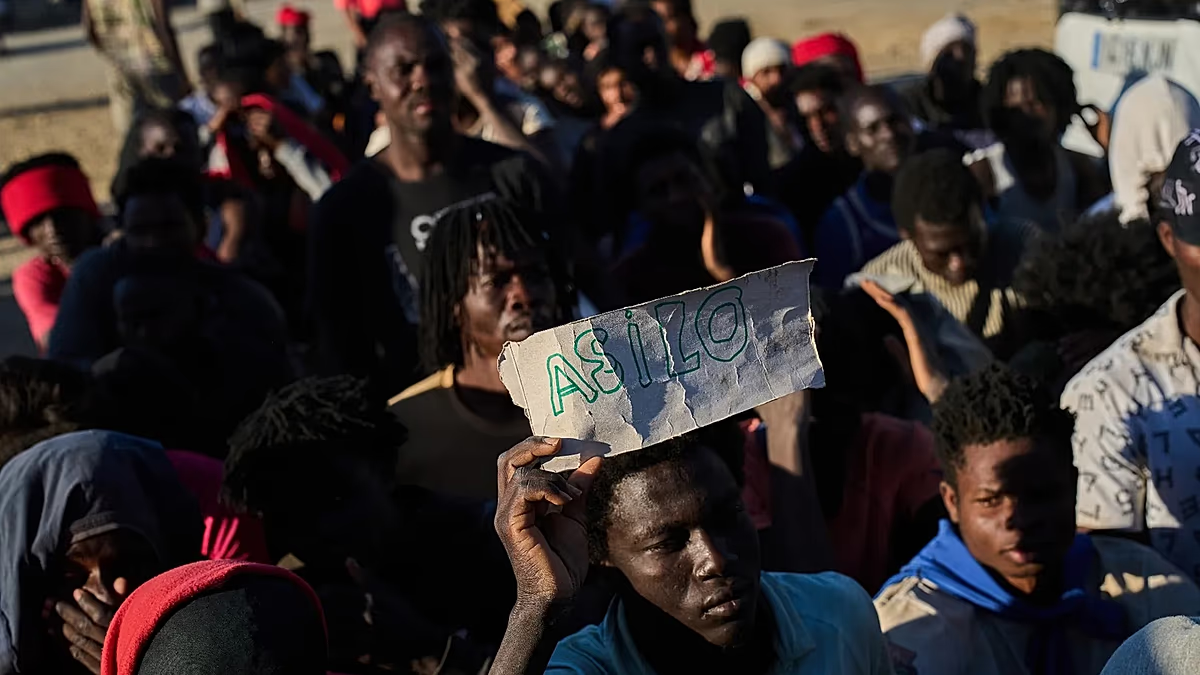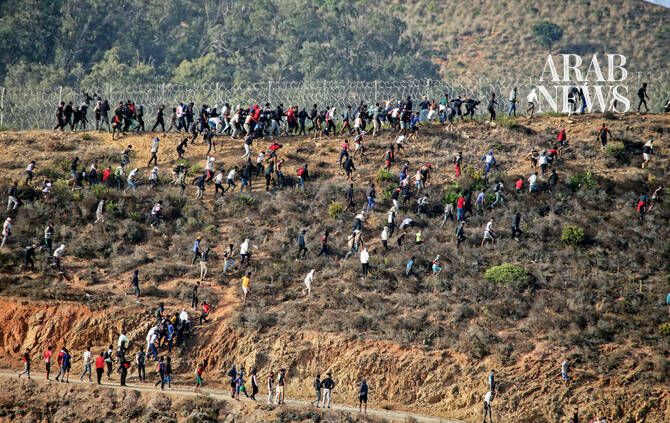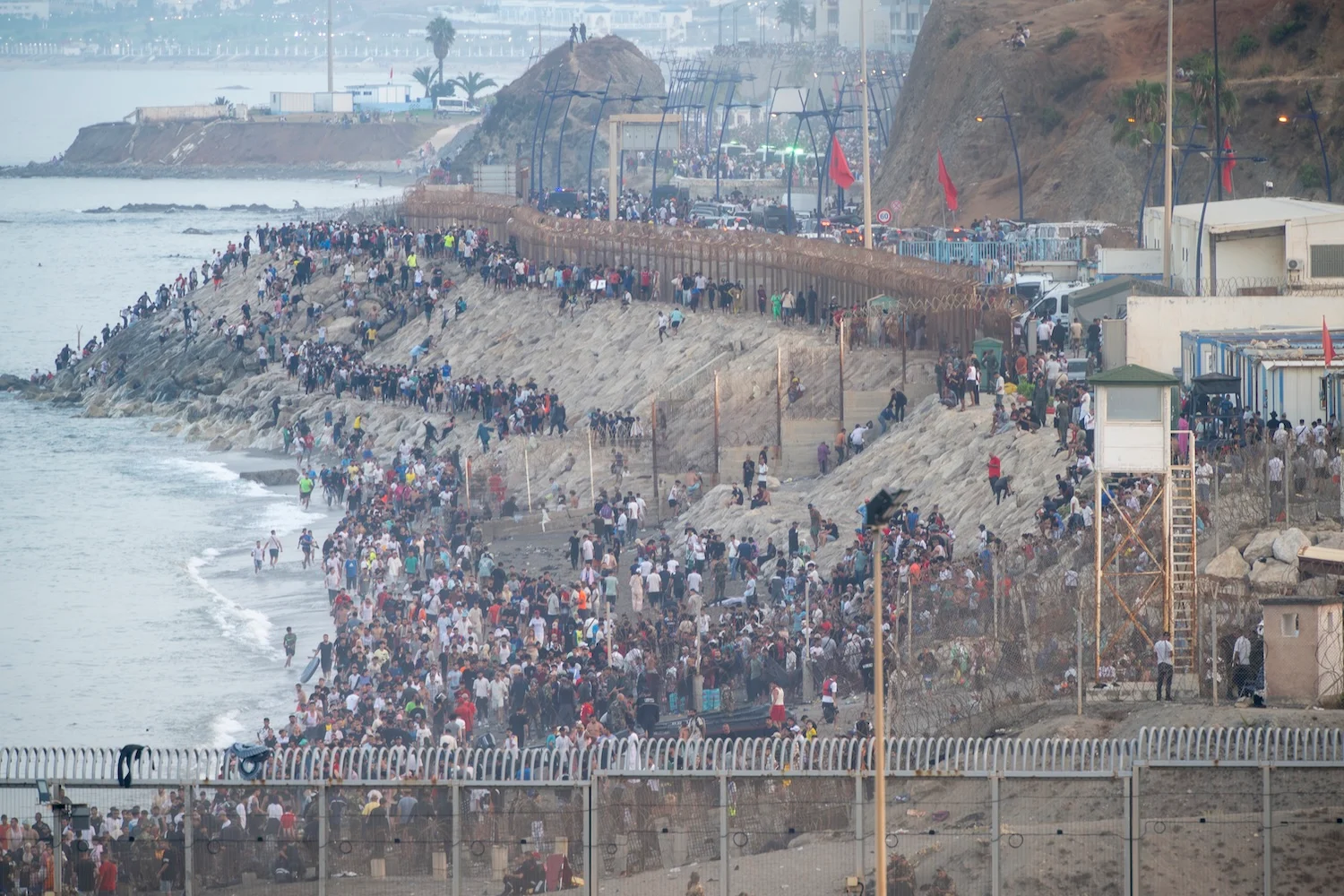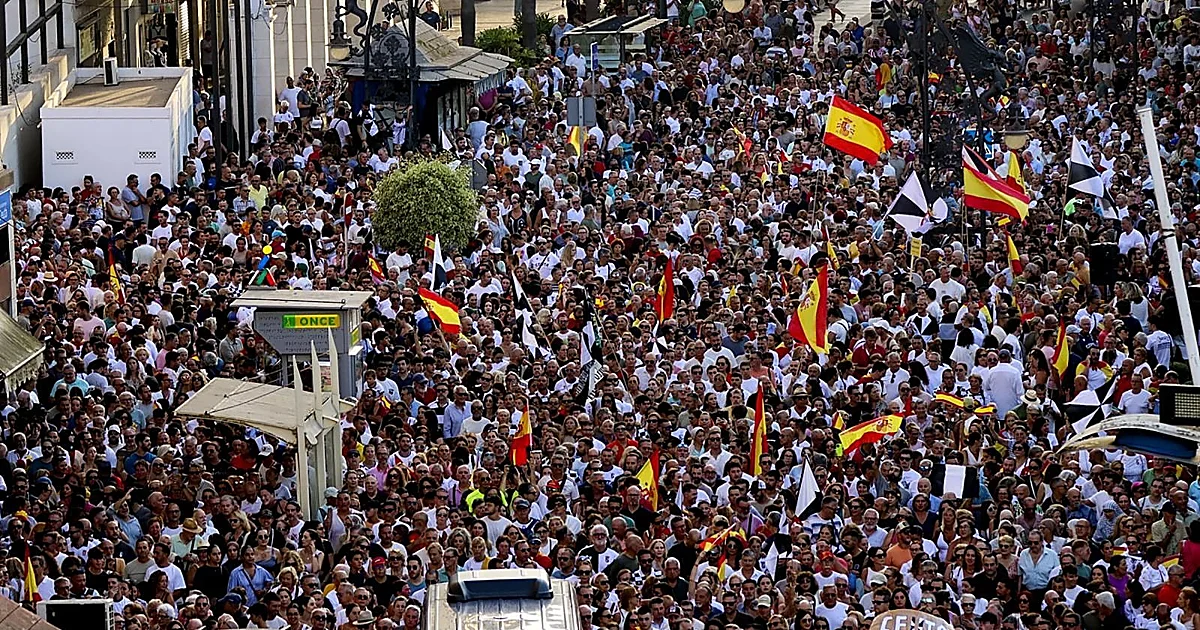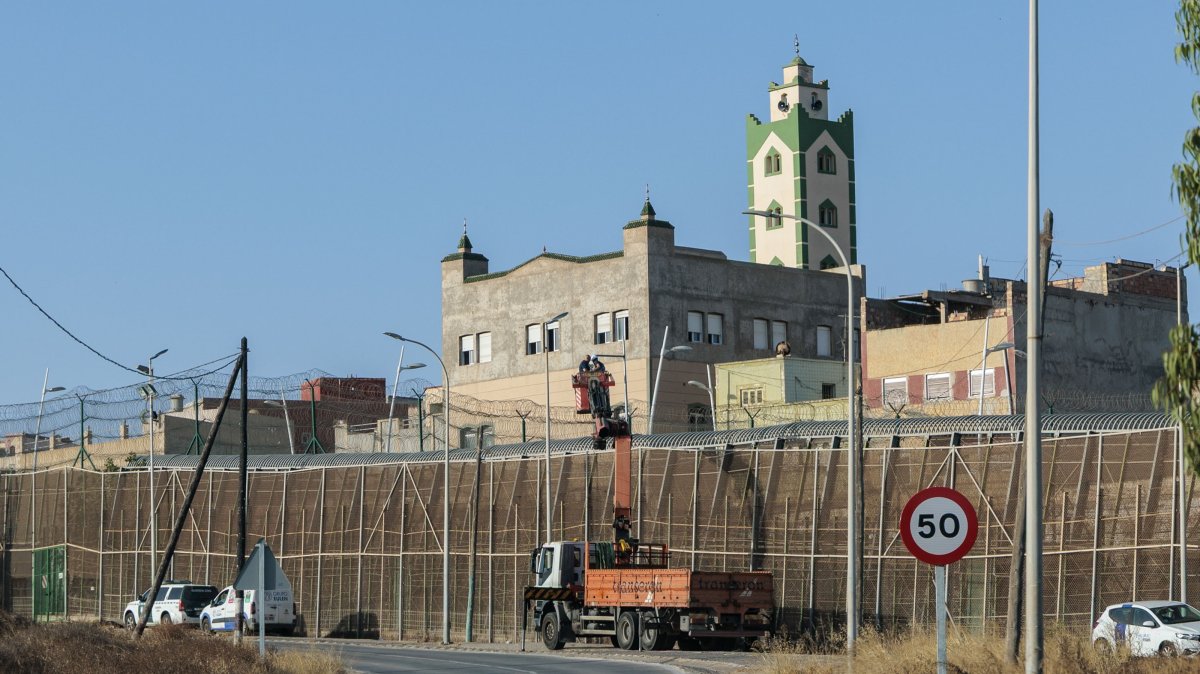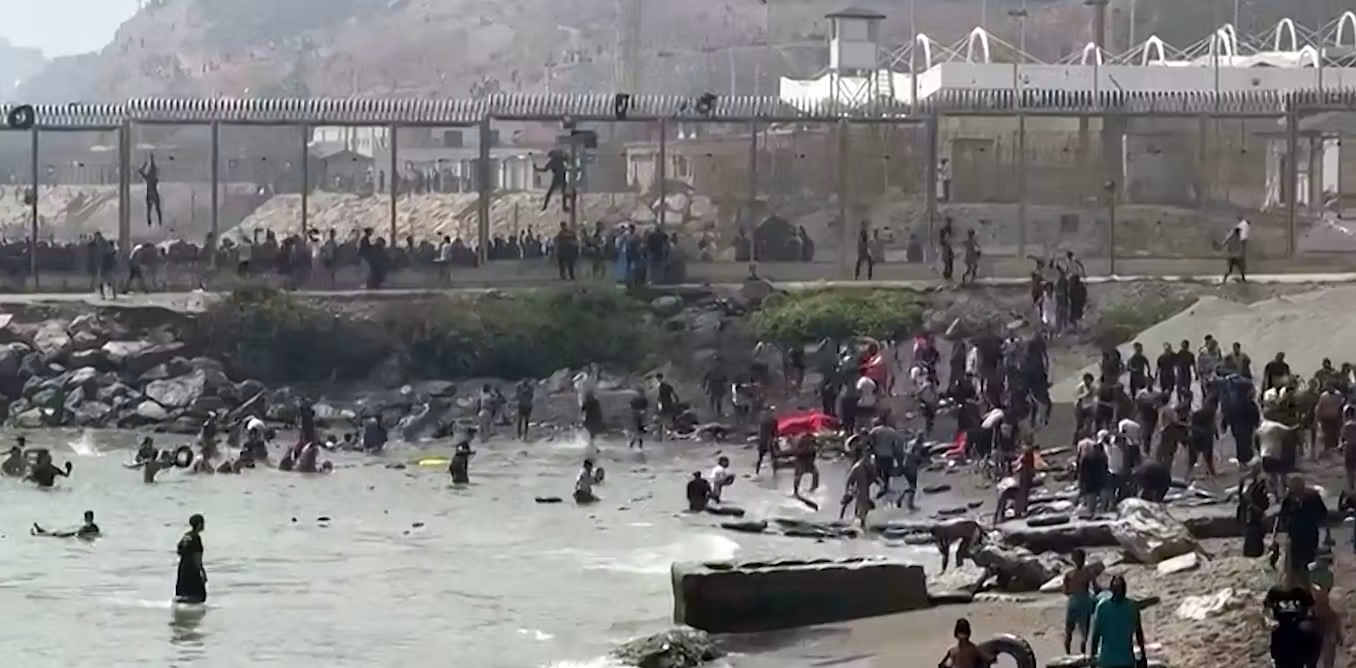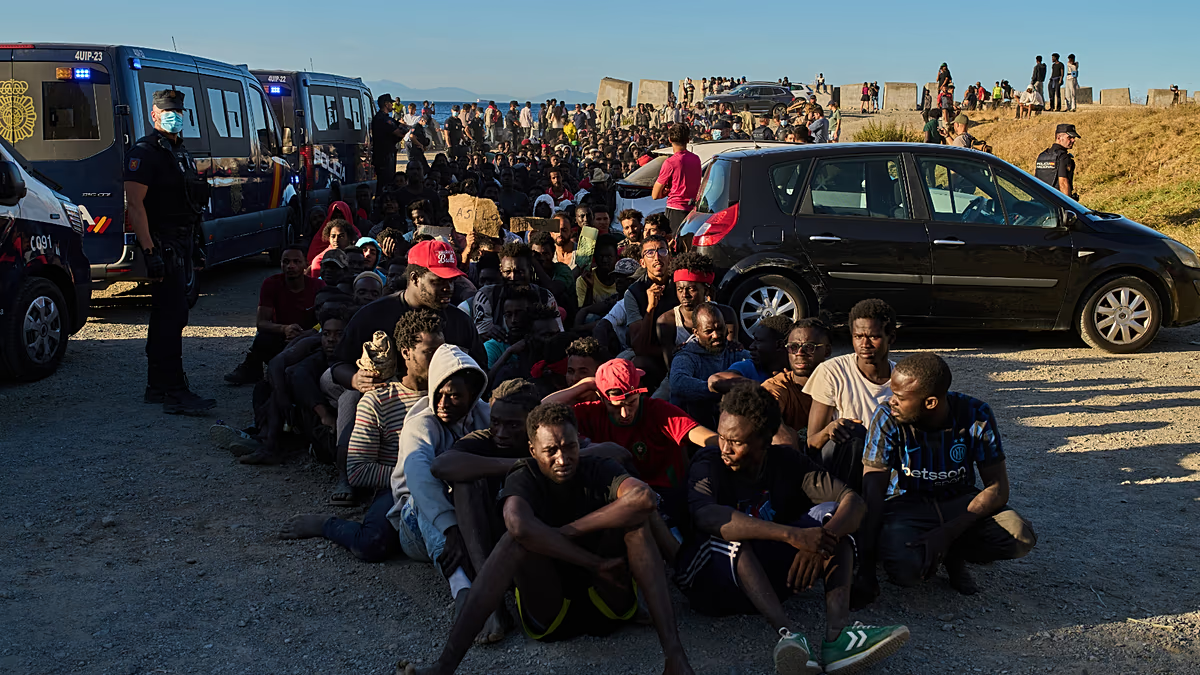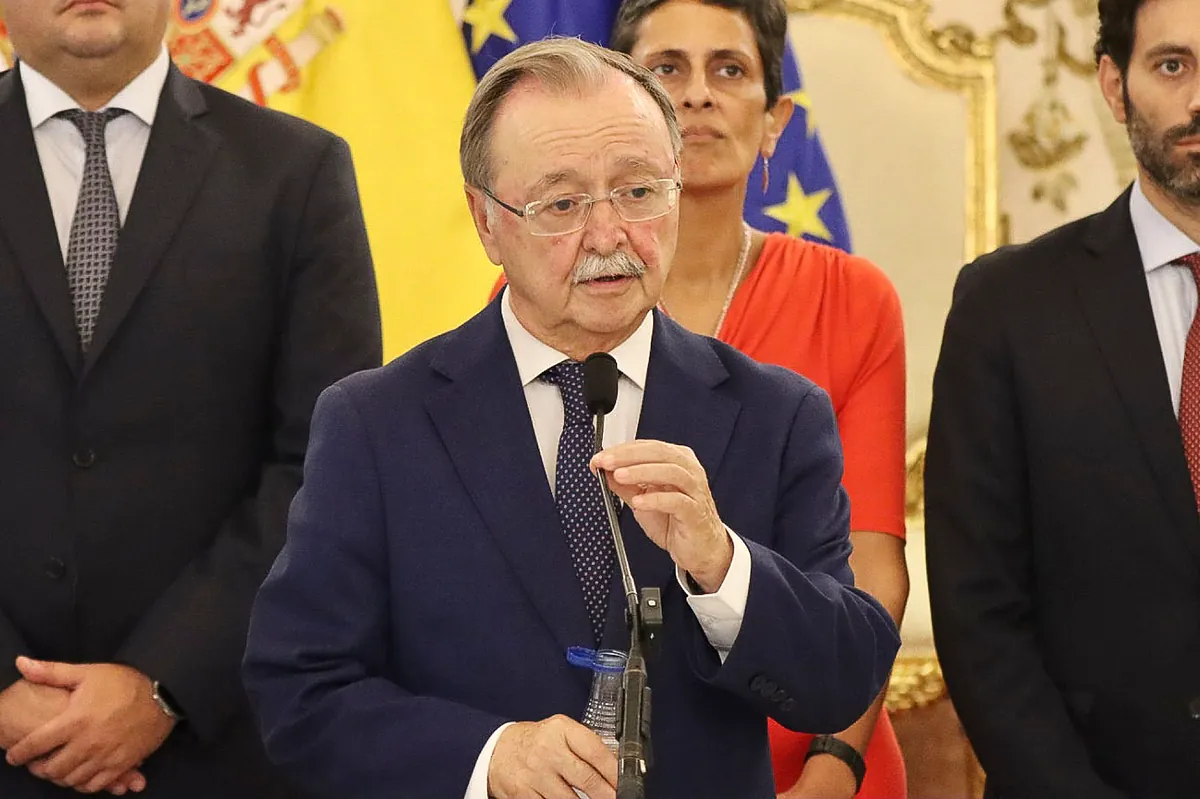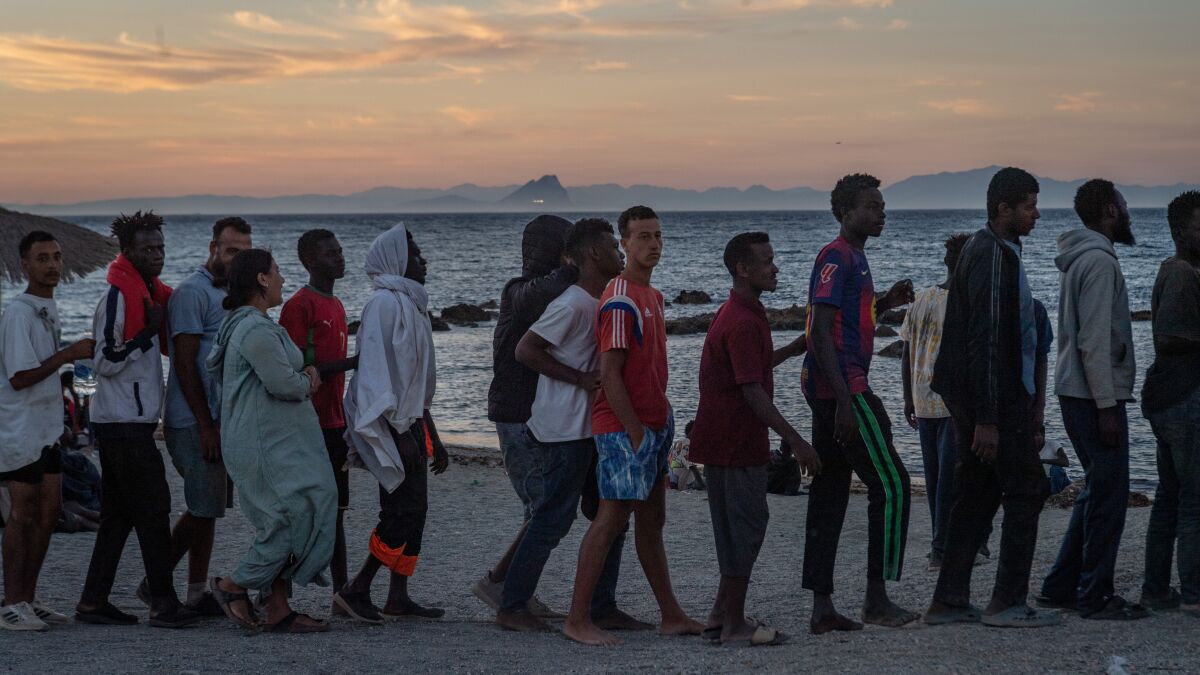
What Morocco really wants from Spain by raising the spectre of migrants in Ceuta was finally explained yesterday by Rabat’s Minister of Justice, Abdellatif Ouahbi: “Ceuta and Melilla are ours,” he said. ‘We will continue to defend them, and the issue is on the table every time we meet with the Spanish.’ Whilst interpretations – ranging from the most to the least conspiracy-theory-laden – have been piling up for days regarding the events of 30 July, when nearly 80,000 migrants stormed the Spanish exclave, the nationalist angle now seems the most plausible explanation for the most serious migration crisis in recent years. Ouahbi did not stop at simply laying claim to the two cities, but took the opportunity to criticise Pedro Sánchez’s government, which, until yesterday, had been at pains to blame everyone from the mafia to smugglers – except Morocco itself – for the events in Ceuta. “You cannot ask me to prevent irregular migration and then, once they have arrived in Spain, grant everyone legal status,” said the Moroccan minister. So yes, “Morocco wants to cooperate, but refuses to be Europe’s policeman. The Kingdom is ready to work with its partners, but not to work for them”. Almost taken aback by such strong language, Madrid responded indignantly with the firm words spoken shortly afterwards by the Defence Minister, Margarita Robles: “Ceuta and Melilla are Spanish – indeed, very Spanish indeed. And they are off limits.” “We are not afraid,” warned the president of Ceuta, Juan Jesús Vivas. However, whilst Vivas may not be afraid, it seems the citizens of Ceuta are somewhat apprehensive, given that for weeks they have been voicing their frustration and levelling criticism at the Spanish government, which they accuse of having abandoned them. Brawls, stabbings and migrant camps are pushing the city’s security situation to the limit of what is bearable, and a possible new mass influx – predicted by the Civil Guard for mid-August – could push the residents’ patience to breaking point.The issue of sovereignty over Ceuta and Melilla is an old one. “It’s a deeply felt issue in Morocco; it’s talked about constantly,” Riccardo Fabiani, a North Africa expert at the International Crisis Group think tank, explains to Il Foglio. “Rabat obviously does not want war with Spain, but would prefer to initiate negotiations modelled on those between the Chinese and the British in the case of Hong Kong. Perhaps by agreeing on a special autonomous status,” says the expert. It was the residents themselves who realised straight away that Morocco’s real objective was precisely to claim sovereignty over the two exclaves: “Ceuta is not for sale! Ceuta is Spain!”, chanted the crowds in the town’s main square on 9 August, when thousands of people took part in one of the largest demonstrations ever held in the exclave. The Moroccan government found ready support in some surprising statements from the United States. On 15 July, coinciding with the start of a disinformation campaign launched on social media encouraging migrants to swim to Ceuta, an official US Congressional document endorsed Morocco’s claims to the two Spanish exclaves. The 2027 Appropriations Act for National Security and the State Department states that the cities “are located on Moroccan territory and remain the subject of Morocco’s long-standing claim”. Not only that, but it supports the efforts of US Secretary of State Marco Rubio to encourage diplomatic dialogue between Rabat and Madrid on their future status. Despite the clarification provided more than three weeks later by Tommy Pigott, a State Department spokesperson – “the United States unequivocally supports Spanish sovereignty over Ceuta and Melilla” – “Morocco has probably exploited Congress’s words to explicitly advance its claims”, explains Fabiani.Meanwhile, theories – some rather far-fetched – are piling up as to what really happened on 30 July. Among the many conspiracy theories – such as those implicating Israel or Donald Trump and his sympathies for King Muhammad VI – new ones are constantly emerging, including those that bring Algeria into the picture. Le360, a Moroccan daily newspaper with close ties to the royal family, has revived the theory that Algiers is the hidden mastermind behind the invasion – “they’d love to, but they don’t even know how to log into Facebook”, quips an analyst quoted by Il Foglio. Other versions outline more plausible scenarios, such as the one put forward yesterday by Ignacio Cembrero in El Confidencial. The passivity of the Moroccan border guards may have been a retaliatory move by Rabat’s secret services in response to an international journalistic investigation. Published by 13 European newspapers in mid-July, the investigation had exposed the espionage operation through which Rabat was monitoring the mobile phones of the Spanish political establishment using the Pegasus system. Anonymous Moroccan agents revealed to the Spanish newspaper, however, that the situation had got out of hand, allowing some 80,000 people to flood into Ceuta. It appears that King Muhammad himself did not fail to express his full anger at the embarrassment suffered on Throne Day, the most important occasion for the royal family.
Morocco lays claim to Ceuta and Melilla
“They are very Spanish indeed,” replies Madrid. But Rabat wants to open negotiations. Regarding the events of 30 July, there is speculation that this was retaliation for a journalistic investigation accusing Moroccan intelligence services of spying on the Spanish establishment
838 words~4 min read