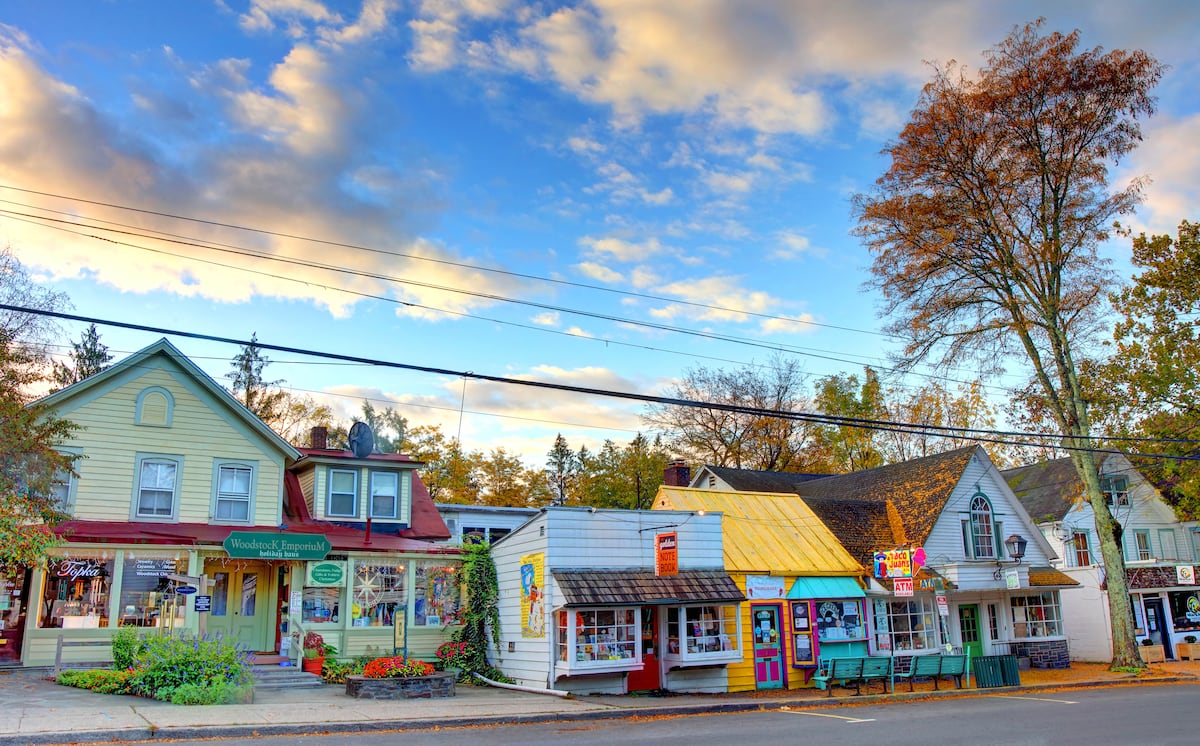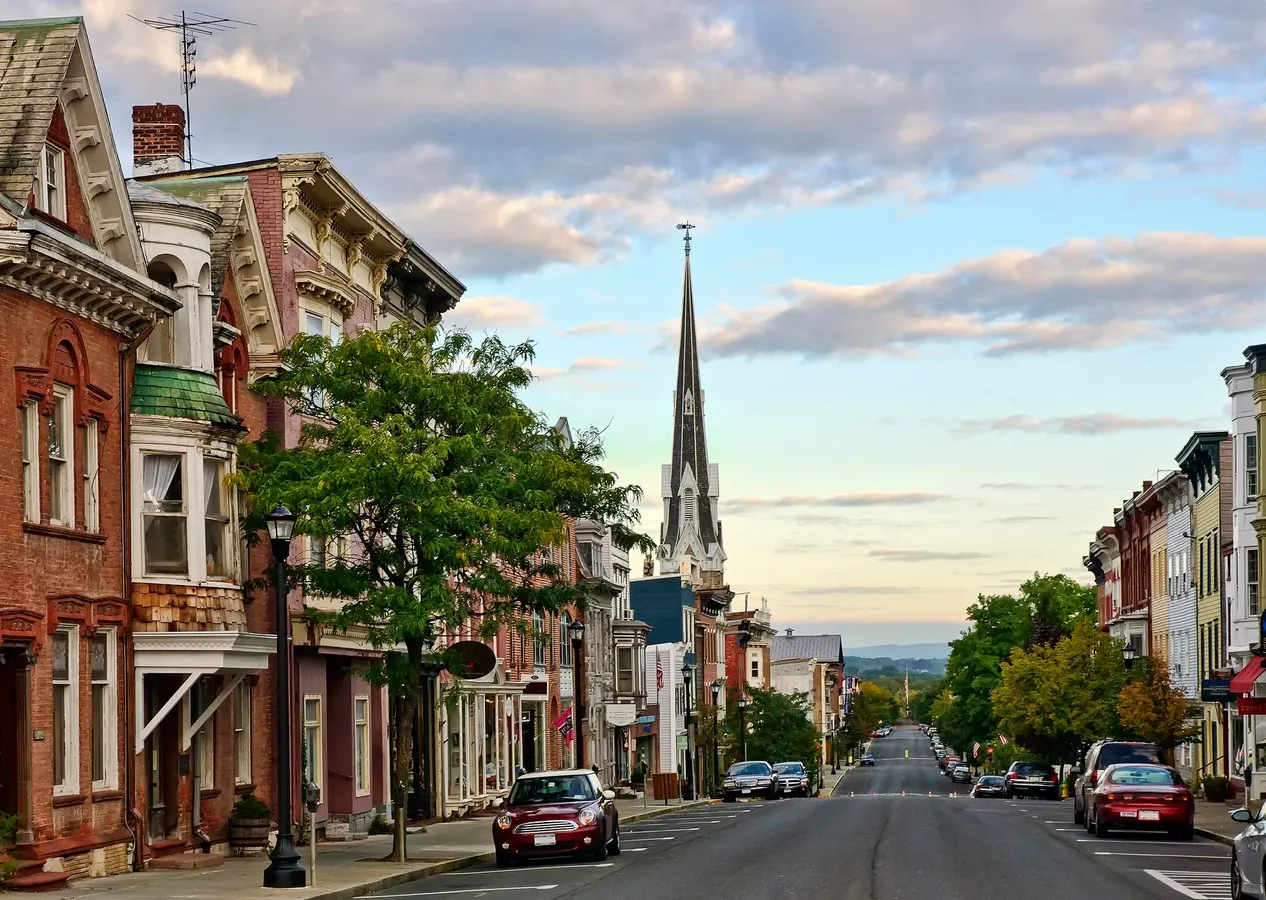
A view of Warren Street in Hudson, New York, one of the most charming towns in the Hudson Valley.gettyHudson has reinvented itself more than once. Founded in the years after the American Revolution by whalers and merchants, the riverfront city became a thriving port before evolving into an industrial center filled with factories and workshops. Today, another transformation is underway. Its historic streets are now lined with galleries, antique stores, boutiques and restaurants, and old industrial buildings are finding new lives.What makes Hudson unusual is how much is packed into such a small place. Sean Roland, co-owner of the new Pocketbook Hudson hotel, calls it “a microcosm of a city.” He points to its unusually broad mix of architecture. “As you walk around, you’ll see incredible Victorian mansions and then you’ll see an early Quaker meeting house from the late 1700s,” Roland told me in an interview.Pocketbook Hudson transformed a historic textile mill and pocketbook factory into a 46-room hotel and creative hub.Sean Davidson/courtesy of Pocketbook HudsonThe surrounding landscape is also part of Hudson’s creative identity. Nearby Olana and the Thomas Cole National Historic Site are connected to the Hudson River School of painters, and the area continues to draw artists, entrepreneurs and other creatives. “Places sometimes have a sense of magic about them,” says Roland. “And I think that Hudson is one of those—there’s just something intrinsically special about it.” To get an insider’s view of Hudson, I spoke with three people who represent different sides of the destination, including Roland, Christy Counts, founder of Neverstill (an intimate tasting room and arts space) and John Frishkopf, co-founder of Klocke Estate (a 182-acre farm, distillery and restaurant).Here, they share what drew them to Hudson and some of their favorite places to experience it.The Baths bring a communal bathing experience to one of the historic factory buildings at at Pocketbook Hudson.Sean Davidson/courtesy of Pocketbook HudsonPocketbook Hudson: A Factory RebornFor years, Sean Roland had his eye on an enormous abandoned textile mill near his Hudson home. It was the city’s largest historic building, an imposing relic of Hudson’s manufacturing past that had sat largely unused for decades. Roland was captivated by its scale, architecture, enormous windows and light. “I lived right around the corner and I always would walk by or drive by and sort of daydream, ‘Wow, someday I would love to figure out how to do a project there,’” he says.Over time, Roland became friends with the building’s longtime owner, Eleanor Ambos, and he and business partners began developing a vision for its future. “The concept was an intersection between hospitality and art and local community, creating a space that feels really open and welcoming to a broad swath of both people who visit Hudson and those who live there,” says Roland.Pocketbook Hudson co-owner Sean Roland.Sean RolandThe result is Pocketbook Hudson, a 46-room hotel, but the guest rooms are only one piece of the project. “It is a hotel, but it’s also so much more than that,” says Roland. “It feels more like a little creative campus.”That campus includes restaurants and bars, retail, nightlife, event spaces and The Baths, a soaring bathhouse and spa. Pocketbook was designed to create spaces where people could gather, entertain and experience performances as well. Art is just as central. Instead of buying a collection when the hotel opened and leaving it unchanged, the team approached Pocketbook as an evolving creative platform. “The whole property is a platform for collaboration,” says Roland. “A lot of the works that are installed in the space are on long-term loan and we have personal relationships with many of those artists, some of whom are based in Hudson and some of them are based in the region.” A guest room at Pocketbook Hudson, where the former textile mill’s original brick walls and oversized windows have been preserved.Adrian Gaut/courtesy of Pocketbook HudsonThat collaborative approach extends beyond what hangs on the walls. Artist Misha Kahn created sculptural sinks. Carpets designed with a Greek fashion collective reference the different layers of the Hudson River. Recycled and vintage textiles throughout the property nod to the building’s original life as a textile mill.Pocketbook also houses about 15,000 square feet of retail. Show: Room brings together work from multiple designers and artisans, with an audio tour that allows the makers themselves to talk about their creations. Kasuri, an avant-garde fashion boutique, carries designers like Comme des Garçons and is home to a tattoo parlor. Pocketbook Market hosts a number of vendors, including a vintage vinyl dealer and an apothecary.Ambos, Pocketbook Hudson’s in-house restaurant, is led by chef Norberto Piattoni, whose cooking draws on his Argentine roots and years in the Hudson Valley and San Francisco.Adrian Gaut/courtesy of Pocketbook HudsonFood and drink are another important part of Pocketbook. Ambos, the in-house restaurant, has two meanings. Ambos means “both” in Spanish, a nod to chef Norberto Piattoni’s cooking. He combines influences from his native Argentina as well as New American influences from his years in the Hudson Valley and San Francisco. The restaurant is also named for previous owner Eleanor Ambos, who resisted offers from other hotel groups because she wanted the old factory to remain tied to the local community and used for creative purposes. “I feel so honored that she chose us to be the next stewards,” says Roland.Pocketbook Hudson’s Lounge Bar pairs the building’s industrial architecture with a warm, contemporary design.Adrian Gaut/courtesy of Pocketbook Hudson Here are some of Roland’s favorite ways to experience Hudson beyond Pocketbook.Freaks New York: Founded by designer and antique dealer Kenzi Wilbur, Freaks specializes in unusual vintage and antique pieces alongside newer work by women and queer makers. “It’s a wonderful antiques store and it’s one of my favorites,” says Roland.The Antique Warehouse: Hudson is known for its antiques and one of its superstars is the Antique Warehouse, the largest independently owned vintage store in the Northeast. “It’s a pretty impressive space with more than 40,000 square feet of different antique dealers down by the waterfront,” says Roland.Pez: When Roland isn’t eating at Pocketbook, a favorite destination is Pez. “One of our fellow hotels, Rivertown Lodge, just opened this restaurant, which is quite delicious,” he says. “It’s coastal Mexican seafood.” Schooner Apollonia, a traditional 64-foot gaff-rigged sailboat.gettyThe Hudson River: Roland recommends experiencing Hudson from the water. “Going out on the Hudson River is always incredible,” he says. In summer, visitors can take the ferry between Hudson and nearby Athens or sail aboard the Schooner Apollonia.Lake Taghkanic: Another natural escape that Roland recommends is Lake Taghkanic, which has two beaches, plus rowboat, paddleboat and kayak rentals. “It’s a beautiful lake that’s near Hudson that I always love to take people to,” he says. “It’s great for swimming.”Neverstill, an intimate tasting room and arts space in Hudson, New York.©2026 Neverstill / Agency EstaNeverstill: Combining Wine And ArtChristy Counts was captivated by Hudson long before she opened Neverstill there. “From the first time I stepped foot in Hudson over a decade ago, I was mesmerized by the creativity, talent and unique nature of this little town,” Counts told me in an interview. “Every store, every alley and every person I came across was thought-provoking. I constantly crave creative stimulation, and Hudson gives it to me in spades.”That creative energy is central to Neverstill, the multi-use concept that Counts opened on Hudson’s Warren Street. In this space—which feels like a stylish living room—she showcases wines she produces in New York’s Finger Lakes alongside a rotating program of art exhibitions, creating a place designed as much for lingering and connecting as it is for tasting wine.Christy Counts, founder of Neverstill.Mendy Waits/courtesy of NeverstillCounts chose to open in Hudson in part because the town is easily accessible from New York City via Amtrak. Plus, many of the visitors coming through her doors haven’t had much exposure to New York wines. “In a way, we are a gateway to Finger Lakes wines,” she says.But Counts’s vision for Neverstill was never simply about pouring wine. She wanted the experience to evoke the feeling that originally drew her to wine in the first place. “I fell in love with wine at an early age because of the connections it made for me,” she says. “A big part of those experiences was about more than just the wine—it was the surroundings, the visuals, the scents and the feeling that you never want the moment to end.”She designed the tasting room accordingly. “I wanted our tasting room to be an escape where our guests feel welcomed, known and treated like family,” she says. “Our space isn’t about the volume of guests; it is entirely about the quality of the experience and unhurried connection.”That emphasis on creativity and connection extends to the art on the walls. Counts hosts exhibitions and collaborates with artists and curators from the Hudson Valley and beyond. A recent exhibition featured photographer Jeannette Montgomery Barron, curated by Theo Coulombe of local Standard Space gallery. Neverstill’s tasting room was designed to feel more like a welcoming home than a traditional winery.©2026 Neverstill / Agency Esta“Hosting artists is one of my greatest pleasures,” says Counts. “The Hudson Valley is filled with incredible talent.” Rotating both internationally known and local artists through Neverstill, she says, “keeps our space dynamic, fresh and visually ‘never still.’”For Counts, that creative community is also what makes Hudson special. “I love that I am constantly humbled by the people in this town,” she says. “Everyone here is wildly interesting, they do amazing things, they have endless talent, and they keep me endlessly inspired.”Neverstill produces a range of wines in New York’s Finger Lakes, which are showcased at its Hudson tasting room.Meghan Spiro/courtesy of NeverstillHere are five of Counts’s favorite places in Hudson.Feast & Floret: Counts’s restaurant pick is Feast & Floret, an Italian restaurant that doubles as a flower shop. “You just can’t go wrong here,” she says. “The atmosphere is as beautiful as the food, and there is something so magical about enjoying a perfect plate of handmade pasta and leaving with a fresh, hand-tied floral bouquet.”Hereafter: For drinks, Counts recommends The Hereafter, a cocktail bar founded by a Brooklyn artist and his actor wife. “The space is effortlessly cool and creative, yet incredibly welcoming,” she says. “You can genuinely taste the artistry in every single drink they pour. My favorite is the Hellcat cocktail, which is mezcal infused with ancho and Pasillas poppers.”The Quiet Botanist: For gifts, Counts loves The Quiet Botanist, an atmospheric shop inspired by old-world apothecaries and overgrown European gardens. “The moment you walk in, the scent completely transports you,” she says. “I always stock up on their beautifully curated apothecary items and dried floral bundles; they make the most thoughtful, unique gifts. Their beautifully packaged chocolate bars are especially delicious to gift.”Creative Legion: To get a glimpse of Hudson’s creative community, head to Creative Legion, a coworking and social space that hosts events ranging from sunset yoga and meditation to author talks and mahjong nights. “Get a day pass at Creative Legion for a few hours of work and socializing in the coolest space in town,” says Counts.Morningstar Farm: Just outside Hudson, Morningstar Farm is a 30-acre vegetable farm with a store selling its produce and other local goods. “It is tucked just out of the way, making it feel like a true local secret,” says Counts. “Their sustainably grown, seasonal produce is unparalleled, and stopping by the farm store is my absolute favorite way to stock up for a weekend of cooking.”A view of Klocke Estate, a distillery and fine dining restaurant overlooking the Hudson Valley.Courtesy of Klocke EstateKlocke Estate: Farming And Fine DiningJust outside Hudson, Klocke Estate brings together farming, distilling and fine dining on a dramatic 182-acre hilltop property overlooking the Hudson Valley. John Frishkopf created the estate with business partner Brett Mattingly around one fundamental idea: If they wanted to make world-class brandy, they needed to begin with world-class fruit.“It starts with the fruit,” Frishkopf told me in an interview. “Cognac and Armagnac are grape brandies; Calvados is an apple brandy. Those are the two fruits with a real claim to greatness in this category, so from day one we have strictly built around the apples and grapes.”Klocke Estate cofounder John Frishkopf.Courtesy of Klocke EstateFinding the right property meant looking for the conditions to grow both. “You need a fruit-growing region with the right acid and structure, a culture that already understands slow food and patience, and land with real character,” he says. Frishkopf and Mattingly found a 182-acre hilltop site with what one local told them were “the best views in Columbia County.”Today, those orchards and vineyards feed directly into a distillery, tasting program and destination restaurant. Executive chef Becky Kempter leads a seasonal farm-to-table American kitchen with a French accent, while the Ken Fulk-designed dining rooms feature chandeliers, crushed velvet walls, a marble fireplace and floor-to-ceiling windows facing the Catskills. “The restaurant’s real job is to set the table for the brandy and vermouth,” Frishkopf says. “Everything on the plate and in the glass points back to the same 182 acres. We cook with what we and our neighbors grow, ferment and distill. The cocktail program is built on our own spirits. And the dining room looks straight out over our vineyards and orchards.”The integration is deliberate. “We built this as one continuous experience intentionally,” he says. “You can taste a brandy at a bar anywhere. Understanding why it tastes the way it does only happens when you can see the hillside it came from while you’re enjoying it.”An apple tart and bottle of Klocke Estate apple brandy.Mike Altobello/courtesy of Klocke EstateWhat surprises first-time visitors most, Frishkopf says, is the scale and ambition of Klocke. “People drive up expecting a rustic tasting room, maybe a barn with some barrels in it, and instead they find 182 acres of vineyards and orchards, and a distillery and restaurant,” he says. “We’re proof that you don’t have to fly to California or France to find that level of craft and that level of place.”That combination of sophistication and earthiness is also what Frishkopf loves about Hudson itself. “It manages to be endlessly sophisticated and profoundly down to earth at the same time, which is a rare combination,” he says. “You’ll have a genuinely serious conversation about art or wine with someone at dinner, and the next morning that same person is mucking out their cows on their organic farm. The people here have real creative energy and a great attitude about it. Nobody’s precious about it.”A view of the bar at Klocke Estate.William Geddes/Courtesy of Klocke EstateHere are five of Frishkopf’s favorite places.Haema: When Frishkopf isn’t eating at his own restaurant, you might find him at his new favorite restaurant, Haema. “It’s an intimate spot on Warren Street from chef Hannah Wong and SJ McLaughlin, serving Asian street-food-inspired dishes built almost entirely on Hudson Valley farms,” he says. “Small, personal and completely unlike anything else in town.”Finch: “There are many exceptional furniture and design shops in town,” says Frishkopf. “My favorite is Finch, set inside a former police precinct, with an eye for vintage and modern design that’s as good as anything you’d find in New York or Paris. They collaborate with great artisans, including John Derian, and have their own lines of ceramics, candles, and furniture. It’s a great snapshot of what Hudson does best: serious taste without any pretension. We have several finds from Finch at Klocke Estate.”Spotty Dog Books & Ale: One of the most quintessentially Hudson stops is Spotty Dog Books & Ale, an independent bookstore, art-supply shop and craft-beer bar in a former firehouse. “You’re just as likely to find the mayor as a visiting writer,” says Frishkopf.Hudson Roastery: “Hudson Roastery is a genuine neighborhood café,” says Frishkopf. “They roast their own beans right in back of the cafe, and it is the kind of place where you run into half the people you know before you’ve finished your first cup.”Hudson Hall: Frishkopf calls Hudson Hall “the anchor of the town’s cultural life.” Housed in the restored 1855 Hudson Opera House, it hosts concerts, dance, readings and classes for kids and adults, along with the Hudson Jazz Festival. “It’s the kind of civic institution that makes a small city feel like it has a real cultural heartbeat,” he says.MORE FROM FORBES:ForbesAn Insider’s Guide To Lyon, The Culinary Capital Of FranceBy Laura Begley BloomForbesThe 10 Best Beaches In The U.S. In 2026—According To Dr. BeachBy Laura Begley BloomForbesThis 20-Year-Old Is Trying To Become The Youngest Person To Travel To Every CountryBy Laura Begley Bloom
An Insider’s Guide To Hudson, New York’s Creative Upstate Escape
Two hours north of New York City, Hudson is known for its creative community. Here, three local insiders share their favorite places to eat, shop and explore.
2,762 words~13 min read