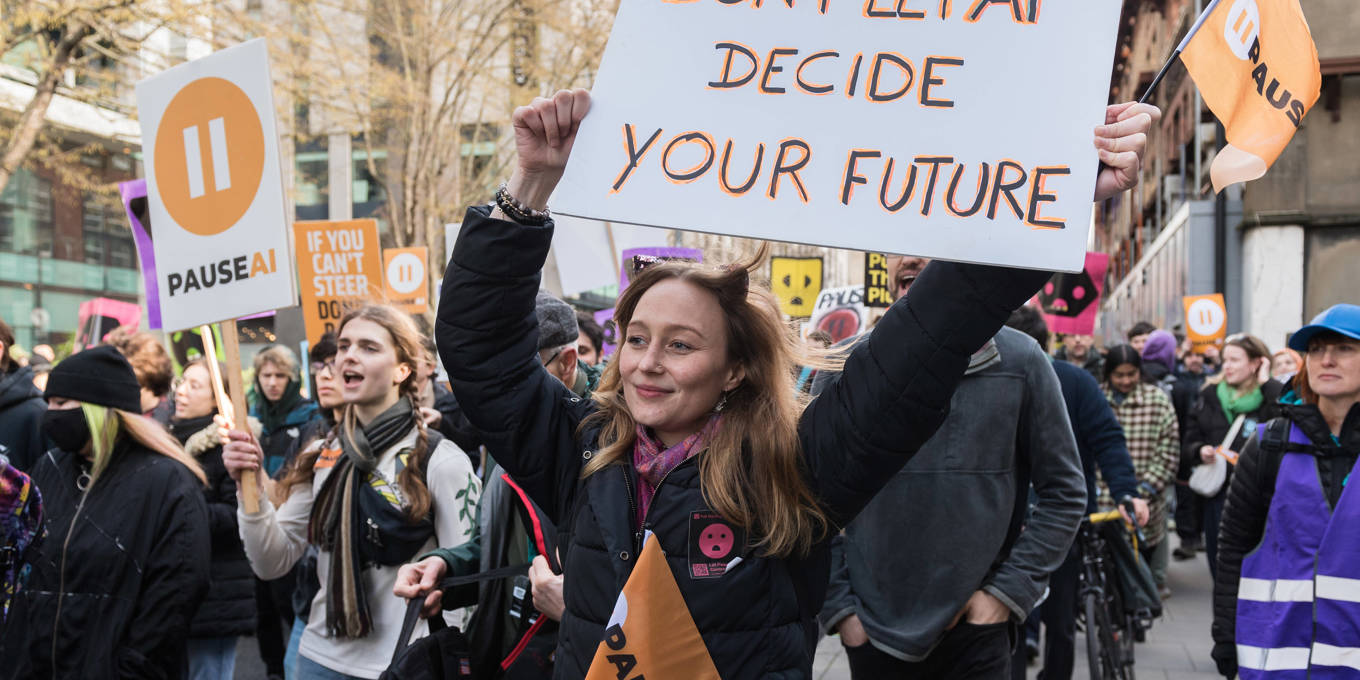
AI has become an everyday tool for communicators, but many of the audiences they're trying to reach remain deeply skeptical of how it's being used.Why it matters: Communicators risk getting stuck in a pro-AI bubble, where the ubiquity of the technology among colleagues and executives makes it easy to overlook the skepticism — and sometimes outright hostility — it generates. Half of U.S. consumers prefer to give their business to brands that don't use generative AI in consumer-facing messages, advertising and content, according to a Gartner survey from earlier this year. Younger consumers were particularly skeptical: 57% of Gen Z and millennials said generative AI has made content quality worse.In contrast, AI has become deeply embedded in comms. Earlier this year, Muck Rack found 80% of PR professionals say they already use generative AI in their workflow.Zoom in: Comms teams have to know the audience. That includes creators, whose livelihoods depend on understanding what their audiences will tolerate, celebrate or reject.YouTuber Hank Green faced backlash after viewers of a July 29 video zeroed in on language they associated with ChatGPT and accused him of using AI to write his script.Green denied the allegations but acknowledged that he'd become overly reliant on the technology for research and later shared a personal AI policy restricting how he'll use it going forward.OpenAI's first influencer brand trip — a luxury "Summer Club" retreat in New York's Hudson Valley — backfired as participating creators were criticized for promoting the company amid broader concerns about AI's environmental impact, job displacement and corporate power.The big picture: The episodes highlight just how unsettled the boundaries around acceptable AI use remain. "Where do you draw the line of what's immoral and what is moral?" content creator and marketing strategist Sam Ogborn says. "It's a very subjective question that I believe every person has to answer for themselves."Communicators must help companies read the room. "Don't become so fascinated with the technology that you forget your audience is human," Reddit chief communications officer Adam Collins said."The best way for communicators to avoid an AI bubble is the same way communicators have always avoided any information bubbles: Listen to people outside of it," he said.AI companies can avoid that whiplash by figuring out where an audience's line is before crossing it."We don't want to rage bait people for no reason," says Higgsfield founding growth lead Alisher Shariyazdanov.He explained the AI video company proactively addresses concerns. For example, a 10-person team studies the audiences of creators Higgsfield partners with and develops a different brief for each community of filmmakers, marketers and content creators.The company also built an internal dashboard that tracks social trends to gauge the backlash risk of potential campaigns.Zoom out: It's not just AI. There's a broadening influencer fatigue. (See the viral "no influencers" sign in Nantucket.)Consumers know they're addicted to their phones and are trying to solve for that, fueling interest in tech like Brick, which locks users out of their social apps.The economic backdrop and wealth gap have also left audiences irritated rather than inspired by displays of wealth, including flashy brand trips.Between the lines: Anti-AI sentiment is part of broader anxiety about jobs, creative work, the environment and the power of technology companies.Sen. Bernie Sanders on Monday called for a pause on the development of more advanced AI systems, arguing that companies are moving forward without adequately accounting for their effects on workers and society.Silicon Valley's futurist predictions have fallen flat before, argue anti-AI activists. Tech companies, most notably Meta, spent billions trying to build a metaverse where users could shop, go to concerts and attend meetings. And, of course, who can forget NFTs? Reality check: AI isn't like any of those things. Hundreds of millions of people already use AI products, and the technology is increasingly embedded across the economy."It's very easy to say, 'I'm anti-AI,' without recognizing that AI is embedded now in every part of our lives," said Ogborn.But widespread adoption doesn't mean widespread acceptance.Social media can push people to further extremes. "The more anti-AI someone becomes, the more they're going to continue to see that content," she noted.The bottom line: The biggest risk can come from trying to appease everyone. Pick a side and be transparent with your audience, says Ogborn. "The worst is when people try to play both sides, whether it's companies or creators."Madison Mills contributed reporting.
The AI perception bubble
The ubiquity of the technology among colleagues makes it easy to overlook the skepticism — and sometimes outright hostility.
TL;DRAI
80% of PR professionals use generative AI, but 50% of U.S. consumers reject brands using it in consumer-facing messages. Internal adoption risks missing market skepticism—the real barrier to scaling AI in communications isn't tech, but audience acceptance.
725 words~3 min read