A long-standing idea in environmental research is that people are more likely to care about the environment, and do something to prevent environmental damage, once they earn enough to stop worrying about paying their bills. But what happens in rural communities with high levels of poverty, where money is scarce and environmental changes directly affect people’s livelihoods?
We are economists who wanted to find out what explained environmental action best: income levels, or the strength of people’s connections to their fellow community members.
À lire aussi :
What Archbishop Tutu’s ubuntu credo teaches the world about justice and harmony
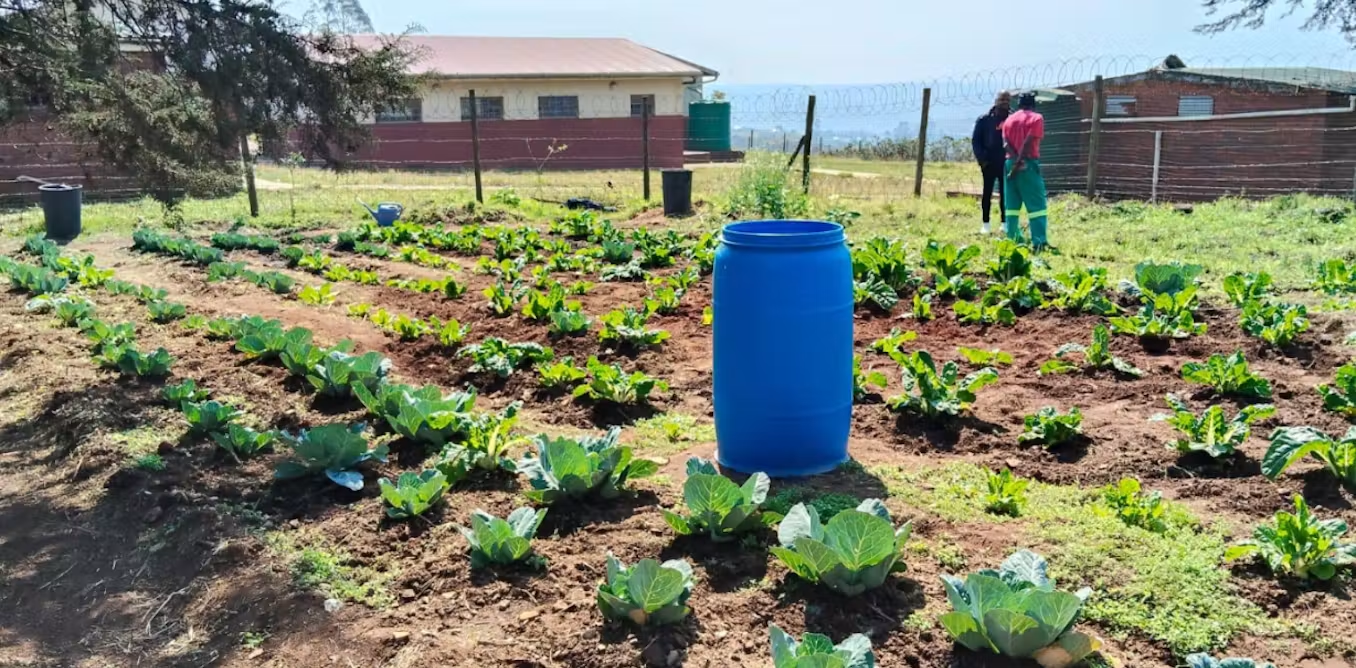
We carried out research in Hlokozi, a rural village in southern KwaZulu-Natal, about two hours’ drive from the coastal city of Durban in South Africa. In this village, homesteads are scattered across steep grassland, home to roughly 2,000 households. Formal jobs are scarce and most families earn an income through a mix of smallholder crop and livestock farming, social grants and money sent home by relatives working in cities.