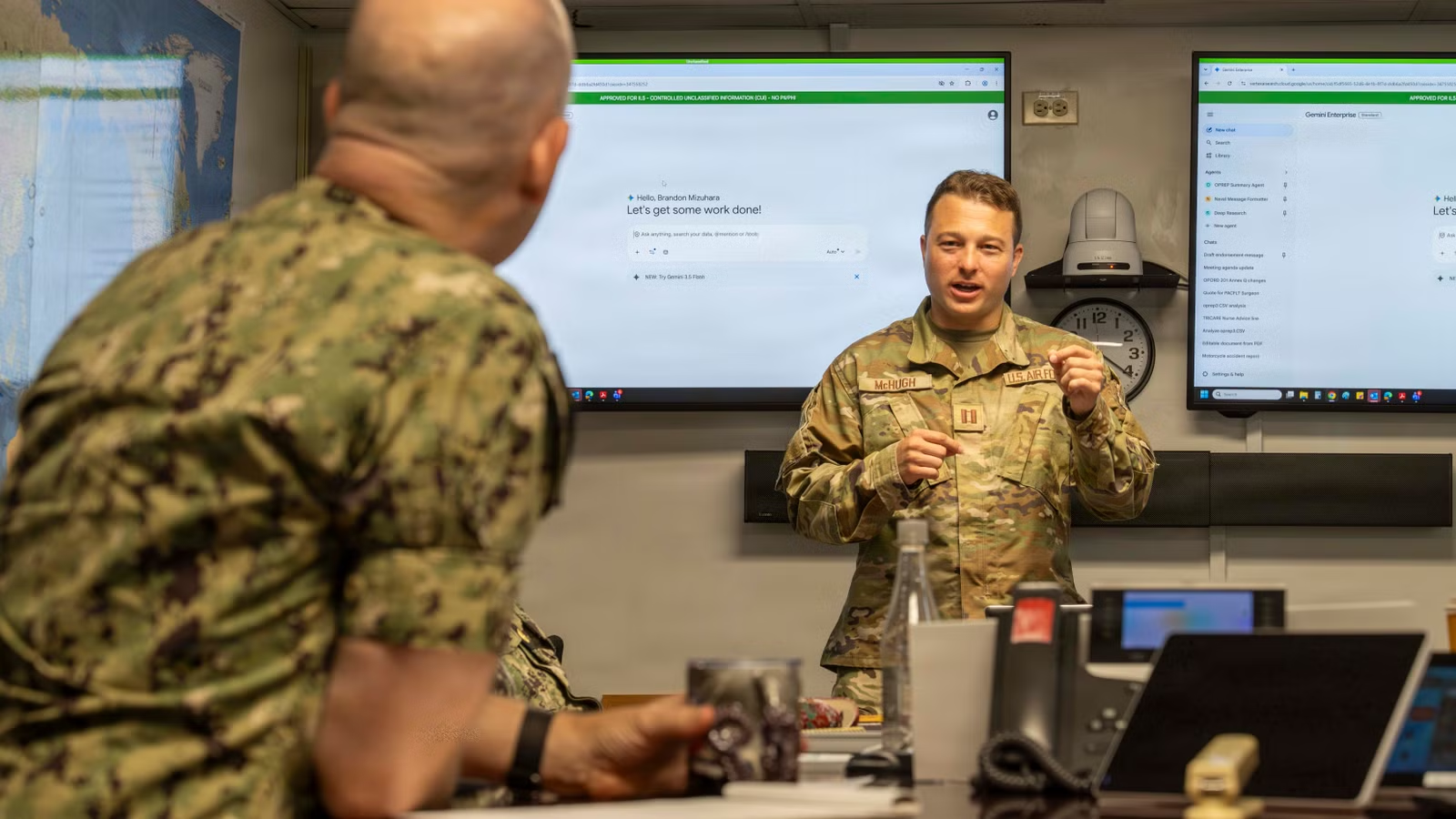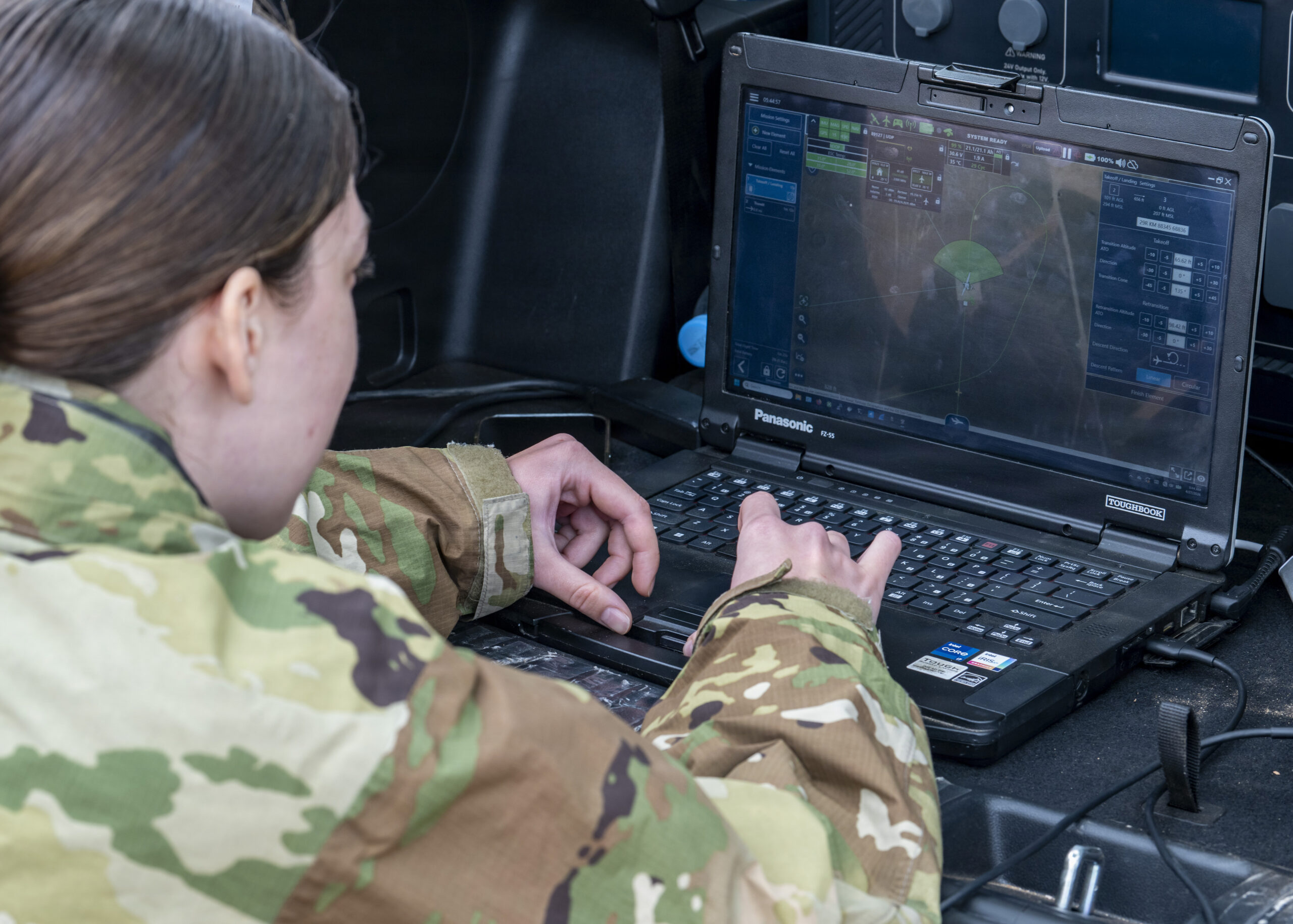
TAMPA — The future of the US Intelligence Community is likely to involve networks of AI agents working amongst themselves — exchanging information, coordinating tasks and providing actionable intelligence, key officials said this week.
“Building agents, and then agents with agents, is the direction that we want to go,” Maj. Gen. Robert Kinney, chief artificial intelligence officer for the Defense Intelligence Agency, said during an AI panel at DIA’s DODIIS show on Wednesday. “We’re laying the foundation and the pipes, if you will, to get after building agents.”
The concept goes well beyond today’s chatbots, where a user asks a question and receives an answer. Kinney envisioned an AI agent that supports intelligence functions communicating with multiple other agents supporting operations, fires, logistics, communications and planning, creating an interconnected system able to help reason through complex mission problems.
The early challenges are figuring out the “tradecraft” piece, Kinney said: how to responsibly use agents to interact and control other agents, and how to deal with compliance, security and trust while those agents are being built.
Also still to be determined is how far the government should allow agents to operate without human intervention. Kinney suggested the answer will depend on the consequences of a decision. In potentially reversible mission areas, agencies could accept more risk and keep a human “on the loop,” while irreversible actions such as fires would require a human “in the loop.”