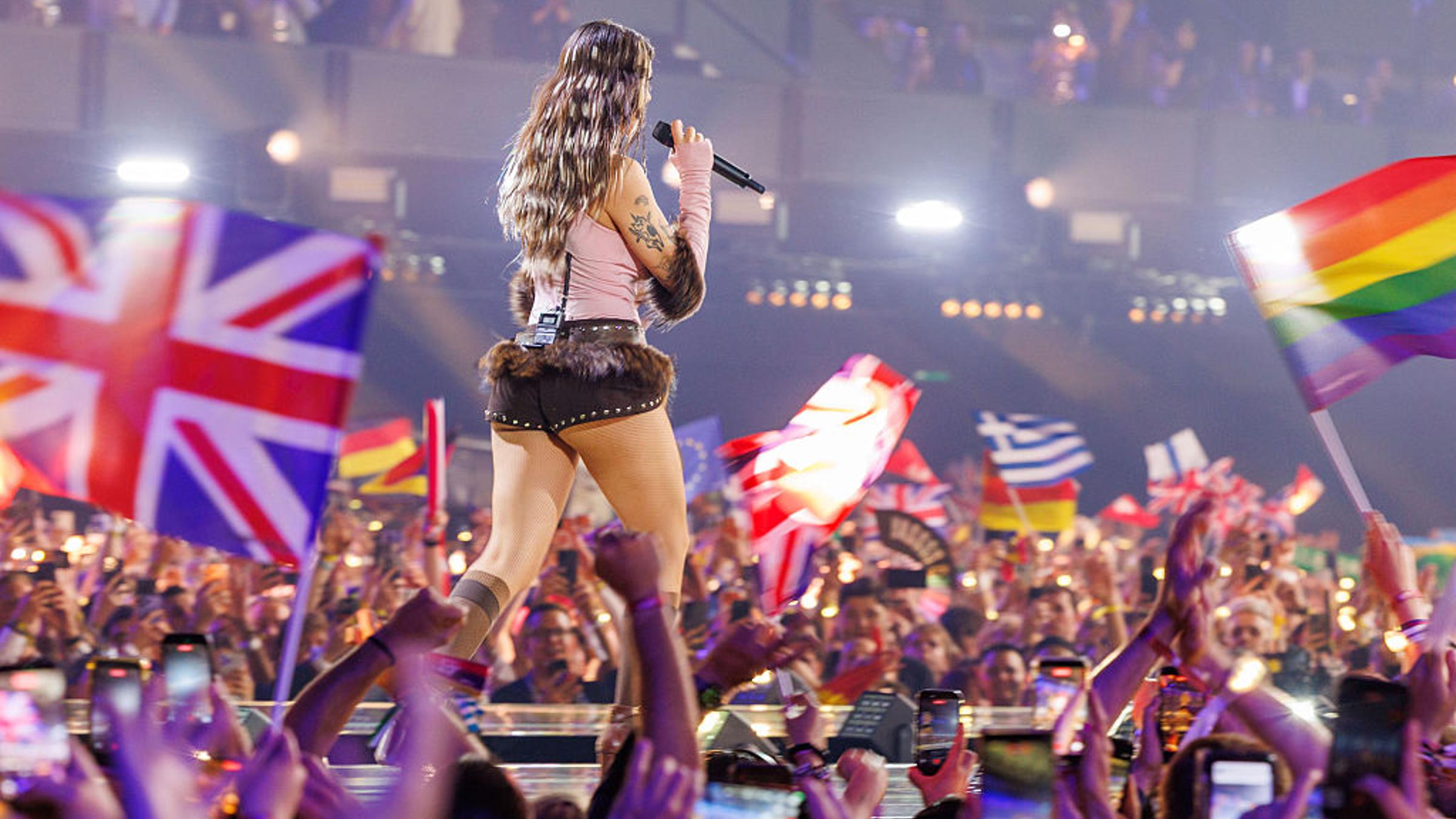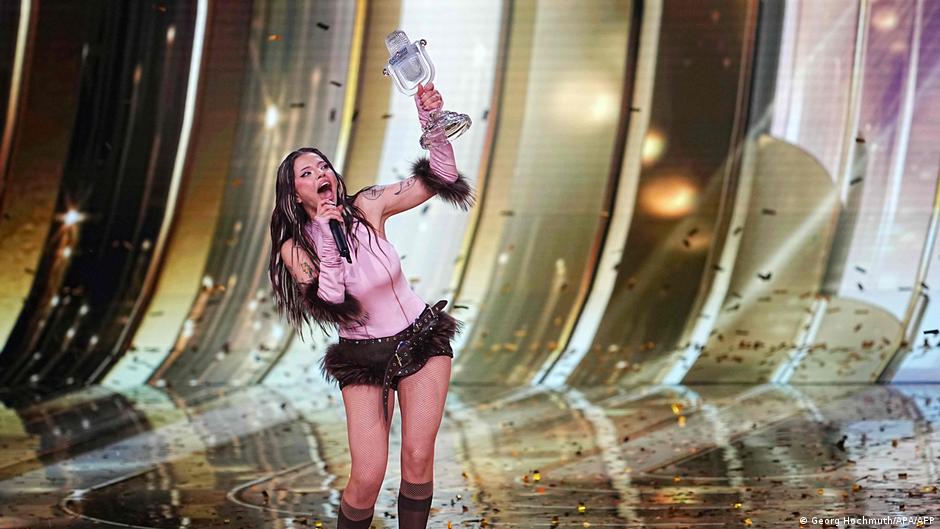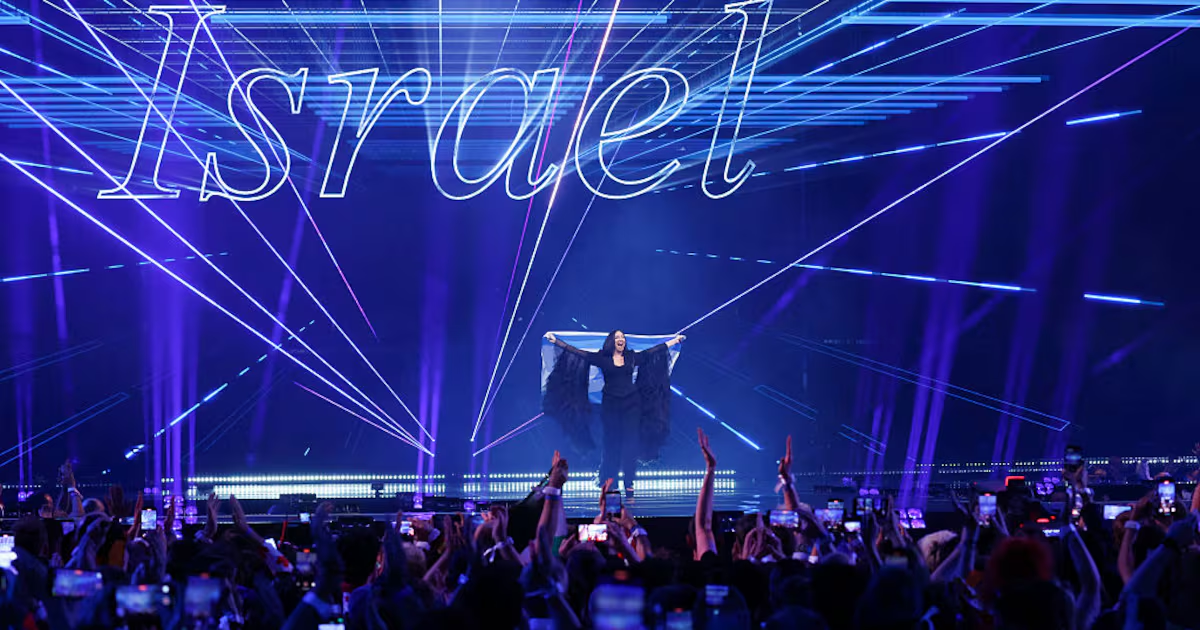
The organisers of the Eurovision Song Contest have announced that any country involved in an “armed conflict” or “sensitive geopolitical situation” will no longer be allowed to host the annual tournament.The announcement on Wednesday by the European Broadcasting Union (EBU), which organises Eurovision, comes as Russia’s war on Ukraine and Israel’s war on Iran, genocide in Gaza, occupation of Lebanon and raids and arrests in the occupied West Bank continue.Recommended Stories list of 3 itemslist 1 of 3Israeli minister blasts Barcelona’s Lamine Yamal for Palestinian flag wavelist 2 of 3Eurovision braces for new protests over Israel’s participationlist 3 of 3Where did Eurovision go wrong?end of listWhile Russia was barred from competing in the contest at all in February 2022 over its invasion of Ukraine, Israel was permitted to continue both hosting and competing despite multiple protests and the boycotting of the contest by several countries last year.Now, while Israel may not be able to host the event – which it did in 2019 as winner of the 2018 contest – it can still take part.Here’s what we know about what this all means.What is Eurovision?The Eurovision Song Contest, which began in 1956, is an annual event co-produced by EBU and its member broadcasters, “most notably the public broadcaster of the preceding winning country, the Host Broadcaster”. Next year, Bulgaria, which won the 2026 contest in May, will host.Ukraine won the contest in 2022 but was unable to host the following year amid the war with Russia.Despite its name, the contest is open to any country which has broadcasting operations in Europe and is a member of the EBA. Israel was the first non-European country to participate in 1973.What has Eurovision announced and why?On Wednesday, EBU said that under new rules, “the winning broadcaster will automatically be ineligible to host the contest if an armed conflict, a sensitive geopolitical situation, or any other situation materially affects the security, safety or stability of their state or immediate region.”If necessary, EBU said it will commission “an independent security assessment of the winner’s region” and hold consultations to decide if the winning country may still host.If the winning country is not allowed to host, then the contest’s organisers will find an alternative host broadcaster.The organisers of the contest have come under increasing pressure to exclude Israel from the contest since its genocidal war on Gaza began in 2023. Some participant countries refused to take part last year, and several protests have taken place.It is, however, unclear if the change in the contest’s rules is due to the boycotts and Israel’s participation.Eurovision director Martin Green said in a statement on Wednesday: “The Eurovision Song Contest is constantly evolving, and our annual review of the rules is an important part of making sure the contest remains fair, transparent and consistent for all those who participate, including the millions who engage with the event globally.”He noted that the rules are guided by feedback from EBU members.“These changes are about giving everyone involved greater clarity, protecting artists and ensuring the contest continues to provide a safe and welcoming environment, while preserving the spirit and integrity that make the Eurovision Song Contest so special,” he added.Why have some countries boycotted Eurovision in recent years?As soon as Israel’s participation in the 2026 contest was confirmed by EBU in December last year, several countries, politicians and artists began calling for a boycott of the contest.On December 4, the Netherlands, Slovenia, Spain, Iceland and Ireland said they would boycott the contest if Israel took part.Dutch broadcaster AVROTROS, representing the Netherlands, accused Israel of “proven interference” in the previous year’s contest while also noting its “serious violation of press freedom” during the Gaza war. It said “under the current circumstances, participation cannot be reconciled with the public values that are fundamental to our organisation.”Ireland said it would not take part either, with its broadcaster RTE citing “the appalling loss of lives in Gaza and humanitarian crisis” as the reason for its boycott.Slovenia’s national broadcaster said it would boycott participation “on behalf of the 20,000 children who died in Gaza”, while Spain’s public broadcaster RTVE also announced it would not participate.“The situation in Gaza, despite the ceasefire and the approval of the peace process, and the use of the contest for political goals by Israel, make it increasingly difficult to keep Eurovision a neutral cultural event,” RTVE’s secretary-general, Alfonso Morales, said in a statement.On December 10, Iceland’s broadcaster RUV said the Nordic nation would also not participate in the 2026 competition. “It is clear from the public debate in this country and the reaction to the EBU’s decision last week that there will be neither joy nor peace regarding RUV’s participation,” the broadcaster’s Director-General Stefan Eiriksson said in a statement.Despite the boycotts, the contest took place in May this year, in Vienna, and 35 countries participated.Has there been any response from countries affected?Not from Israel, which last hosted the event in 2019. It came second place in the 2026 tournament and thus very close to hosting it again in 2027.Last year, amid widespread protests over Israel’s confirmed participation in the contest, Israeli President Isaac Herzog wrote in a post on X on December 4: “Israel deserves to be represented on every stage around the world, a cause to which I am fully and actively committed.”Russia is already barred from hosting or participating, and Ukraine would be unable to host the event even if it could.Ukraine has never hosted Eurovision. In 2023, when it was meant to host the contest, the United Kingdom did so instead.EBU told Al Jazeera: “The rules of the Eurovision song contest apply to all participating broadcasters and any assessment of the ability to host would be made much closer to the time of the event.”Will countries that boycotted this year return?There has been no response so far from Spain, the Netherlands, Slovenia or Ireland about the contest’s new rules.However, given that they staged their 2026 boycott over Israel’s participation in the contest, not just whether it would be permitted to host, it seems unlikely they will change their stance.Many critics have stressed that Israel’s participation in the contest signals EBU’s hypocrisy given its stance on Russia.In an interview with Al Jazeera in May, Sven Kuhn von Burgsdorff, former European Union representative to the occupied West Bank and Gaza, said the actions of both Russia and Israel against Ukraine and the Palestinian people have been found to be in violation of international law and human rights.“It would be only consequential to also suspend Israel’s participation in the Eurovision song contest as long as the country maintains its illegal occupation of Palestinian land, thereby not only suppressing Palestinian rights but also entrenching a regime with characteristics of segregation or apartheid, as ruled by the International Court of Justice (ICJ),” he said.In April – one month before the contest final took place in Vienna – more than 1,000 musicians and people working in the cultural sector signed a letter calling on nations to boycott the contest and accused the EBU of hypocrisy over its refusal to allow Russia to take part because of its invasion of Ukraine in 2022.“The EBU’s hypocritical responses to Russia’s and Israel’s crimes have removed any illusion of Eurovision’s claimed ‘neutrality’. In 2022, the EBU said that Russia’s presence would ‘bring the competition into disrepute’,” the letter stated.“Yet more than 30 months of genocide in Gaza – alongside ethnic cleansing and land theft in the besieged West Bank – aren’t considered sufficient to apply the same policy to Israel.”
Eurovision to bar countries at war from hosting: What that means
Israel, which hosted the contest in 2019, will no longer be allowed to do so - but can still compete, protesters say.
1,250 words~6 min read