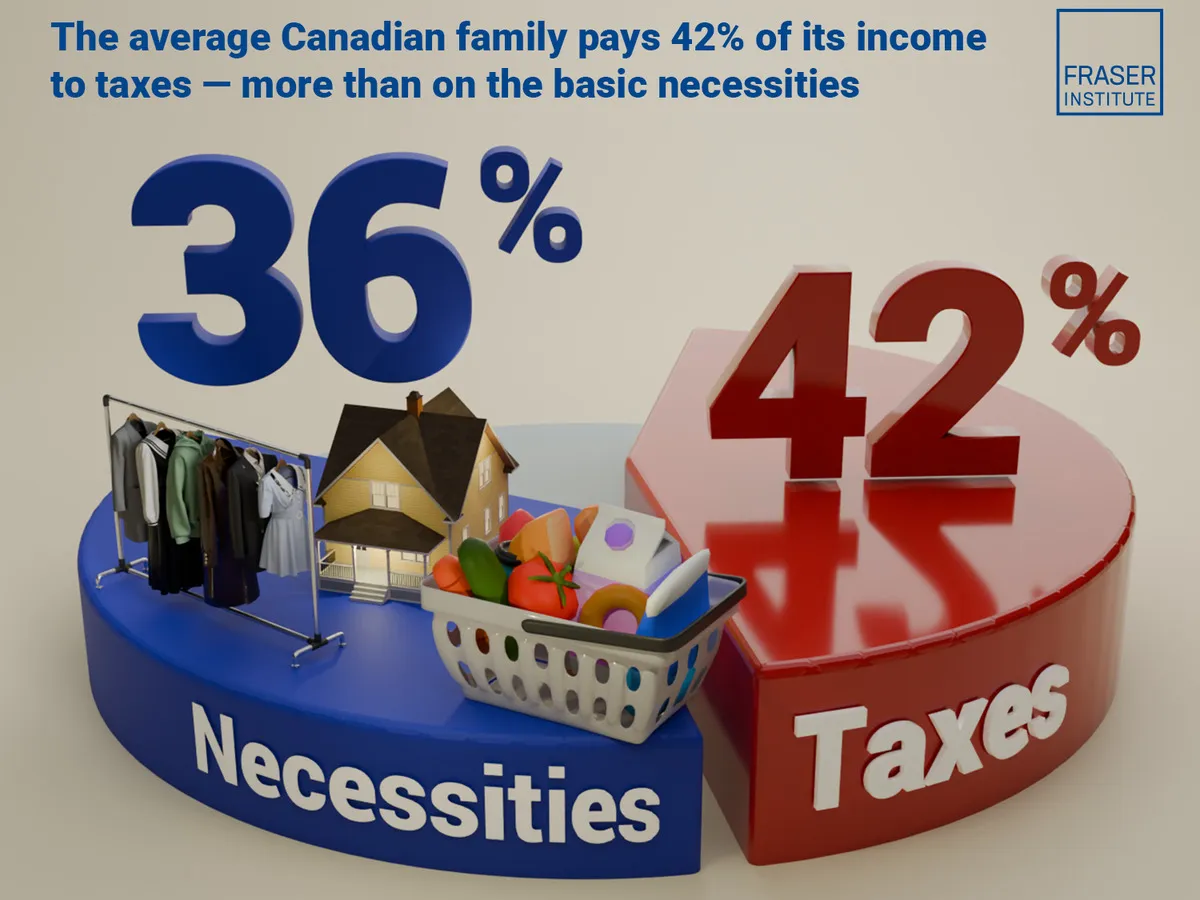
Skip to Content News Archives Economy Energy Oil & Gas Renewables Electric Vehicles Mining Commodities Agriculture Real Estate Mortgages Mortgage Rates Finance Banking Insurance Fintech Cryptocurrency Work Wealth Smart Money Wealth Management Investor Personal Finance Family Finance Retirement Taxes High Net Worth FP Comment Executive Women Puzzmo Newsletters Financial Times Business Essentials More Innovation Information Technology FP500 Podcasts Small Business Lives Told Tails Told Shopping Financial Post Store Obituaries Place a Notice Advertising Advertising With Us Advertising Solutions Postmedia Ad Manager Sponsorship Requests Classifieds Place a Classifieds ad Working Profile Settings My Subscriptions Saved Articles My Offers Newsletters Customer Service FAQ News Economy Energy Mining Real Estate Finance Work Wealth Investor FP Comment Executive Women Puzzmo Newsletters Financial Times Business Essentials HomeFP CommentOpinion: Canadian families spend more on taxes than basic necessitiesThe rising cost of food, clothing and shelter has been the big political story this year but the cost of taxation is higherLast updated 5 minutes ago You can save this article by registering for free here. Or sign-in if you have an account.If governments across the country want to help families make ends meet, they should reduce the tax burden and let Canadians keep more of their hard-earned money. Photo by Kraken Images/Adobe StockIn a recent poll, 76 per cent of Canadians said the cost of groceries had “most impacted” their family’s financial well-being over the past few months, followed by the price of gasoline (mentioned by 47 per cent) and mortgage or rent payments (mentioned by 33 per cent). Subscribe now to read the latest news in your city and across Canada.Exclusive articles from Barbara Shecter, Joe O'Connor, Gabriel Friedman, and others.Daily content from Financial Times, the world's leading global business publication.Unlimited online access to read articles from Financial Post, National Post and 15 news sites across Canada with one account.National Post ePaper, an electronic replica of the print edition to view on any device, share and comment on.Daily puzzles, including the New York Times Crossword.Subscribe now to read the latest news in your city and across Canada.Exclusive articles from Barbara Shecter, Joe O'Connor, Gabriel Friedman and others.Daily content from Financial Times, the world's leading global business publication.Unlimited online access to read articles from Financial Post, National Post and 15 news sites across Canada with one account.National Post ePaper, an electronic replica of the print edition to view on any device, share and comment on.Daily puzzles, including the New York Times Crossword.Create an account or sign in to continue with your reading experience.Access articles from across Canada with one account.Share your thoughts and join the conversation in the comments.Enjoy additional articles per month.Get email updates from your favourite authors.Create an account or sign in to continue with your reading experience.Access articles from across Canada with one accountShare your thoughts and join the conversation in the commentsEnjoy additional articles per monthGet email updates from your favourite authorsSign In or Create an AccountorThis is not surprising given the high levels of food inflation, the long-standing decline in housing affordability, and recent spikes in the price of gasoline due to conflict in the Middle East. But despite these real cost pressures, taxes remain the single largest expense for Canadian families.Canadians pay a multitude of different taxes to all three levels of government (federal, provincial and local), including income taxes, property taxes, sales taxes, payroll taxes, fuel taxes, import taxes and more. Because there are so many different kinds of taxes and some are more visible than others — you can see how much income and payroll tax is taken off each paystub, for example — it can be hard to know how much we actually pay in total. So we’ve done the math.Get the latest headlines, breaking news and columns.By signing up you consent to receive the above newsletter from Postmedia Network Inc.A welcome email is on its way. If you don't see it, please check your junk folder.The next issue of Top Stories will soon be in your inbox.We encountered an issue signing you up. Please try againAccording to our new study published by the Fraser Institute, the average Canadian family (with a household income of $121,111) paid $50,721 (or 41.9 per cent of its income) in total taxes to all levels of government in 2025.Meanwhile, that same family spent $13,249 on food, $27,686 on shelter and $2,722 on clothing. In other words, last year the average family spent a larger share of its income on taxes (again, 41.9 per cent) than on total basic necessities (36.0 per cent). It’s also worth noting how much the total tax bill has grown over the years. In 1961, the average Canadian family paid $17,518 (inflation-adjusted) — or 33.5 per cent of its household income — in total taxes. This means the average family’s tax bill grew almost 190 per cent from 1961 to 2025 (even after adjusting for inflation), and grew faster than its income. The total tax bill represents the price Canadians pay for government services. Whether or not we get our money’s worth is a different question. In recent years, a number of polls have shown that many Canadians don’t feel they receive good value for their tax dollars. That suggests many families might find it easier to make ends meet if governments cut their taxes and allowed them to keep more of their hard-earned money, rather than maintaining high taxes and introducing costly (and often poorly designed) spending programs.As many Canadian families struggle to pay their bills, the “affordability” focus has been on rising grocery bills, declining housing affordability and prices at the pump. These costs pressures are real, but Canadian families spend more on taxes than on the basic necessities of food, shelter and clothing combined. If governments across the country want to help families make ends meet, they should reduce the tax burden and let Canadians keep more of their hard-earned money.Grady Munro is a senior policy analyst at the Fraser Institute, where Jake Fuss is director of fiscal studies. Join the Conversation This website uses cookies to personalize your content (including ads), and allows us to analyze our traffic. Read more about cookies here. By continuing to use our site, you agree to our Terms of Use and Privacy Policy.
Opinion: Canadian families spend more on taxes than basic necessities
The rising cost of food, clothing and shelter has been the big political story this year but the cost of taxation is higher. Read here now
1,035 words~5 min read