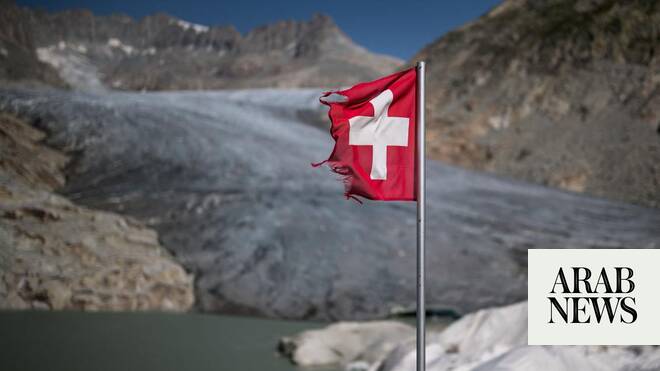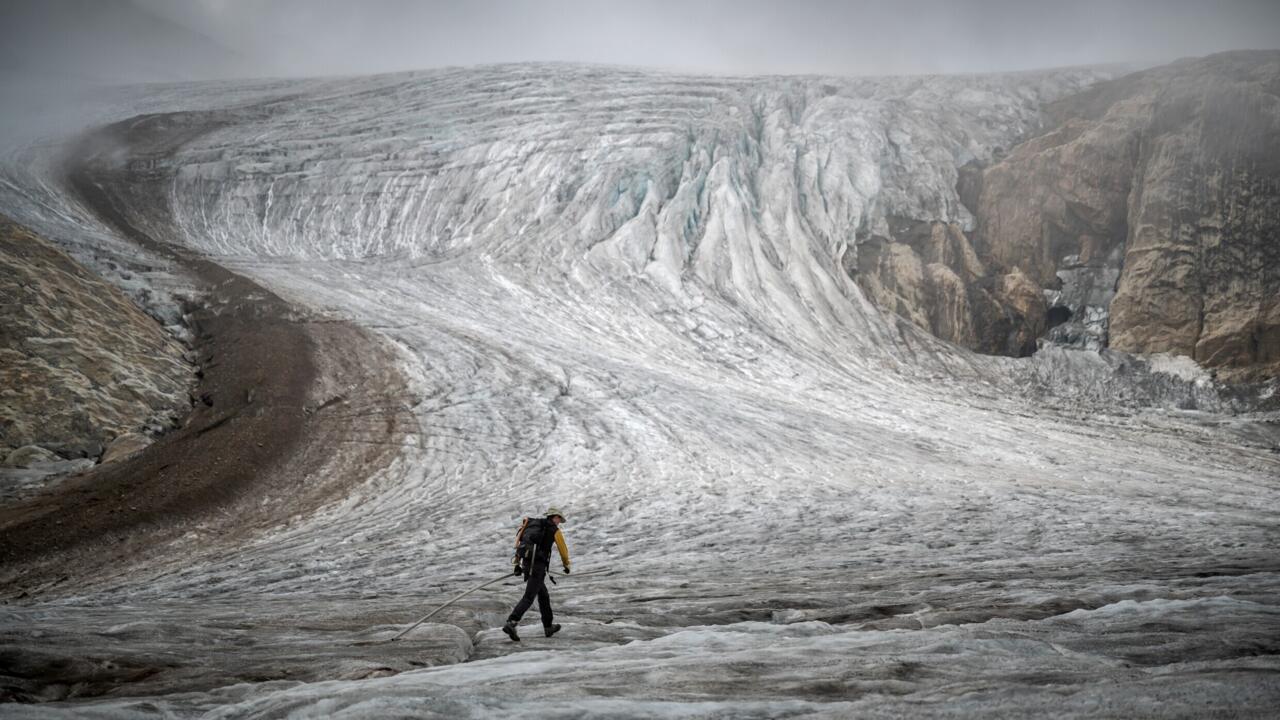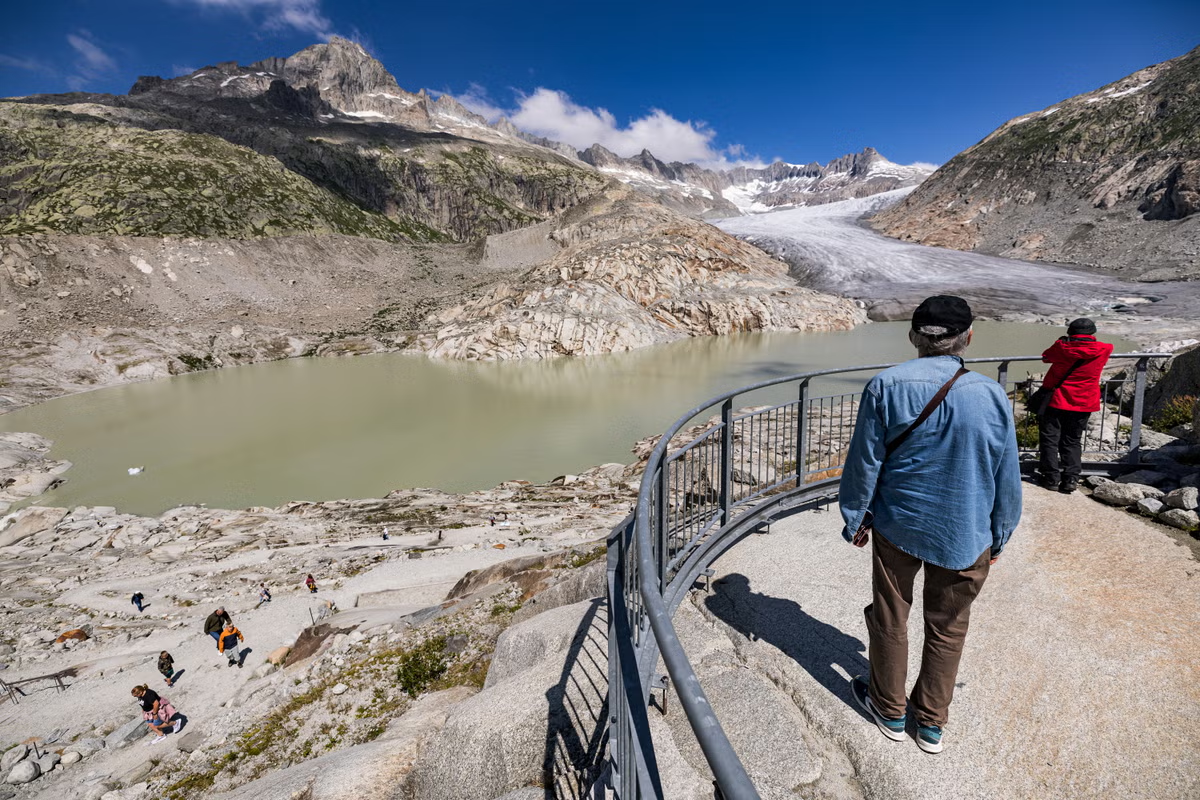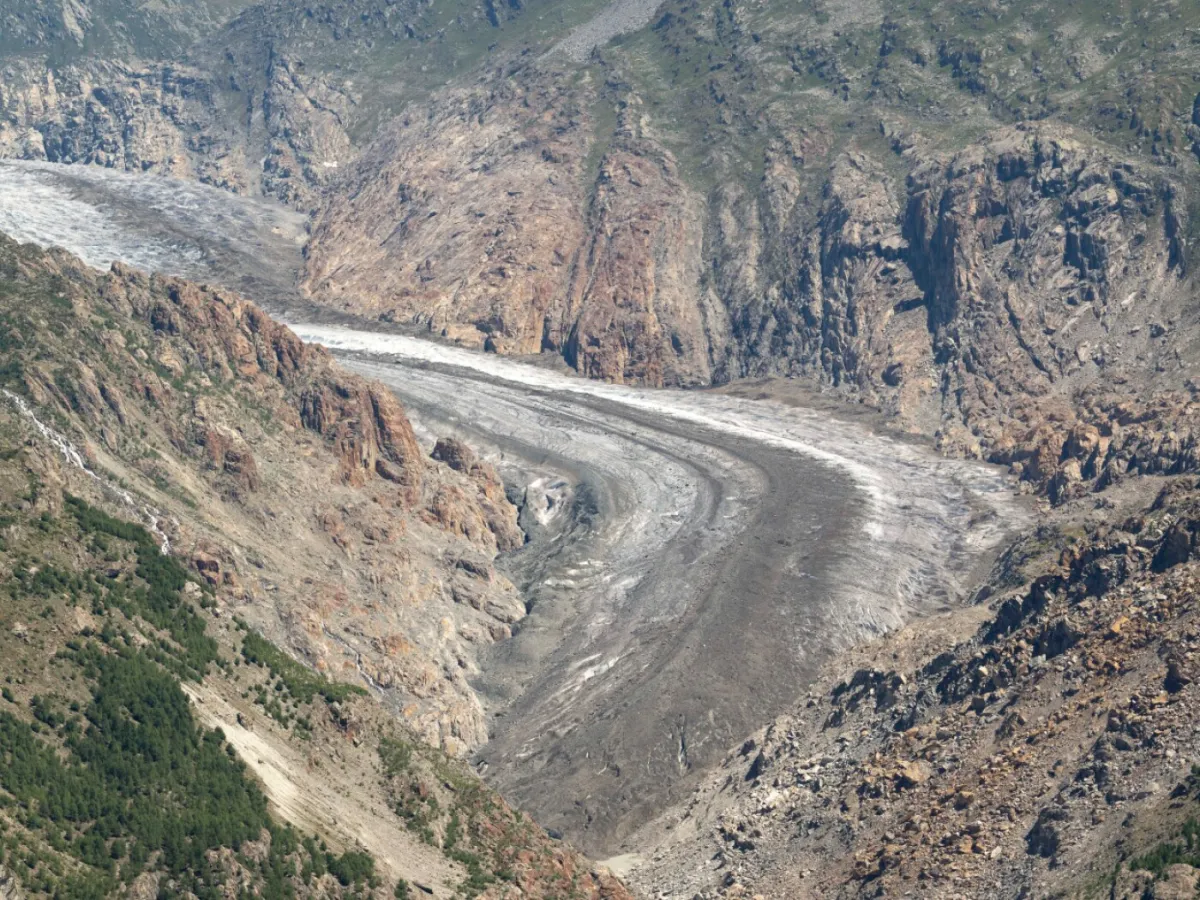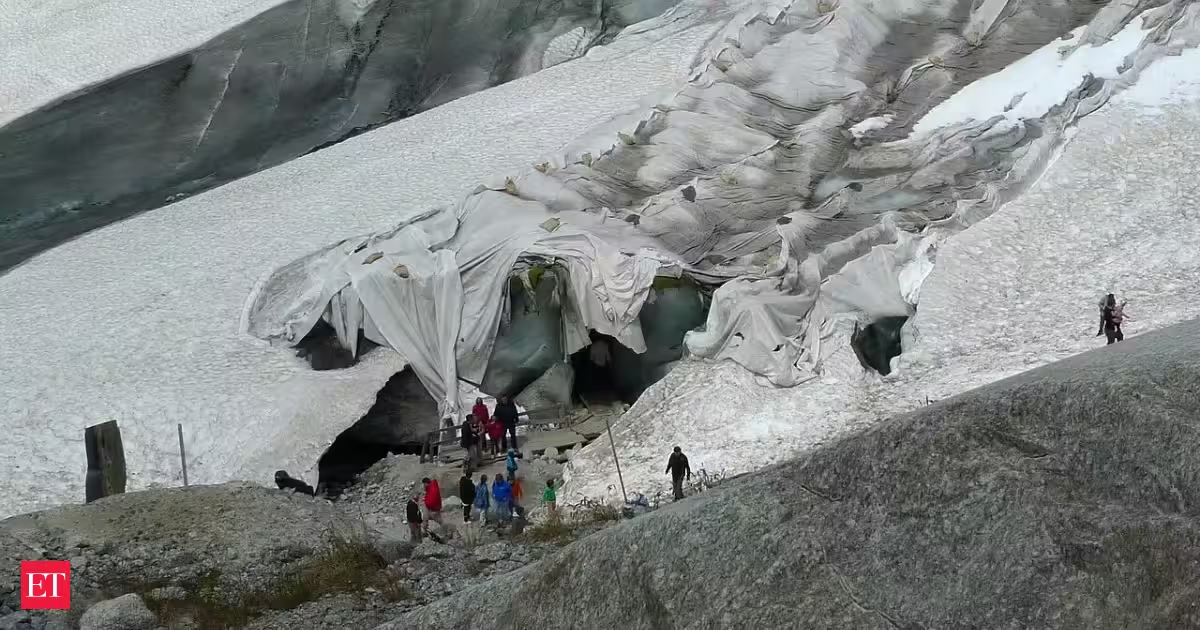
Switzerland has been quietly wrapping parts of its glaciers in giant white sheets since 2004, and the results have been measurable. The first installations at Swiss sites took place between 2004 and 2009, with the practice continuing at nine active sites. Glaciologist Matthias Huss and his co-authors tracked the practice in a paper published in Cold Regions Science and Technology, titled Quantifying the overall effect of artificial glacier melt reduction in Switzerland, 2005–2019. Their analysis found an average 59% reduction in melt beneath newly installed geotextiles, based on a meta-analysis of previous field studies, while their calculations estimated that the coverings prevented up to 350,000 cubic metres of ice melt per year across Switzerland.How the blankets actually workWhite reflects heat and dark colours absorb it, which is why a black T-shirt feels unbearable on a scorching afternoon while a pale one doesn't. The geotextile sheets, usually white or light grey, bounce a good chunk of incoming sunlight straight back into the atmosphere instead of letting it soak into the ice. The fabric also changes the surface energy balance by reducing the amount of radiation available for melting. Huss's team identifies this radiation effect as a key reason geotextiles can substantially reduce melt.The geotextile sheets are made from synthetic fibres such as polyester and polypropylene and are fabricated in large rolls. Workers place them on top of the spring snow surface and remove them in autumn at sites where the coverings are seasonally replaced. The paper notes that eight of the nine sites use this seasonal replacement approach, while one installation is permanent.Why only small patches get coveredThe study found that geotextiles covered about 0.18 square kilometres of Swiss glacier area by 2019, equivalent to just 0.02% of the country's total glacier area. The researchers also found that the covered area had doubled since 2012. Up to 350,000 cubic metres of annual ice melt had been mitigated by the technique.The researchers then modelled what would happen if the technique were expanded across Switzerland's glaciers. They found that even covering the largest 1,000 glaciers completely would avoid only about two-thirds of average annual volume loss. Achieving the maximum effect in their scenario, with 76% of those glaciers' surfaces covered, would require an investment of about CHF 1.4 billion each year. The authors conclude that such large-scale intervention would be unsustainable and that technological measures cannot realistically save Alpine glaciers at mountain-range scale.The paper also points to the ecological risks of such a large-scale intervention, saying they would be extremely difficult to assess. That concern adds another limitation to an approach that already requires substantial financial and logistical resources.ReutersWhile this innovative strategy has successfully safeguarded specific glacier patches, the expense and feasibility of scaling it throughout the Alps raise concerns about its long-term viability. Ultimately, these geotextile blankets provide localized defense without addressing the broader challenges facing glacier preservation.A pause button, not a solutionThe areas being protected, such as the tourist ice cave at the Rhône Glacier and the small glacier at Diavolezza, are chosen for their practical and economic value. Huss and his co-authors note that geotextiles can help safeguard the operation of ski slopes and other tourist attractions. At the Rhône Glacier, the study documents extensive coverage protecting a tourist ice cave, while at Diavolezza, a very small glacier was completely covered and subsequently regrown.The study concludes that these interventions can be effective and economically worthwhile at individual sites, but that extending them across the Alps is neither achievable nor affordable. The blankets can slow melting where they are deployed, but the research shows that they are a local intervention rather than a solution to the wider loss of Alpine glacier ice.
Since 2004, Switzerland has covered parts of eight glaciers with white blankets; protected ice melted about 59% less, preserving up to 350,000 cubic metres a year
Since 2004, giant white sheets have been deployed over Swiss glaciers to combat ice melt by reflecting solar radiation and altering energy absorption on their surfaces. While this innovative strategy has successfully safeguarded specific glacier patches, the expense and feasibility of scaling it throughout the Alps raise concerns about its long-term viability. Ultimately, these geotextile blankets provide localized defense without addressing the broader challenges facing glacier preservation.
611 words~3 min read