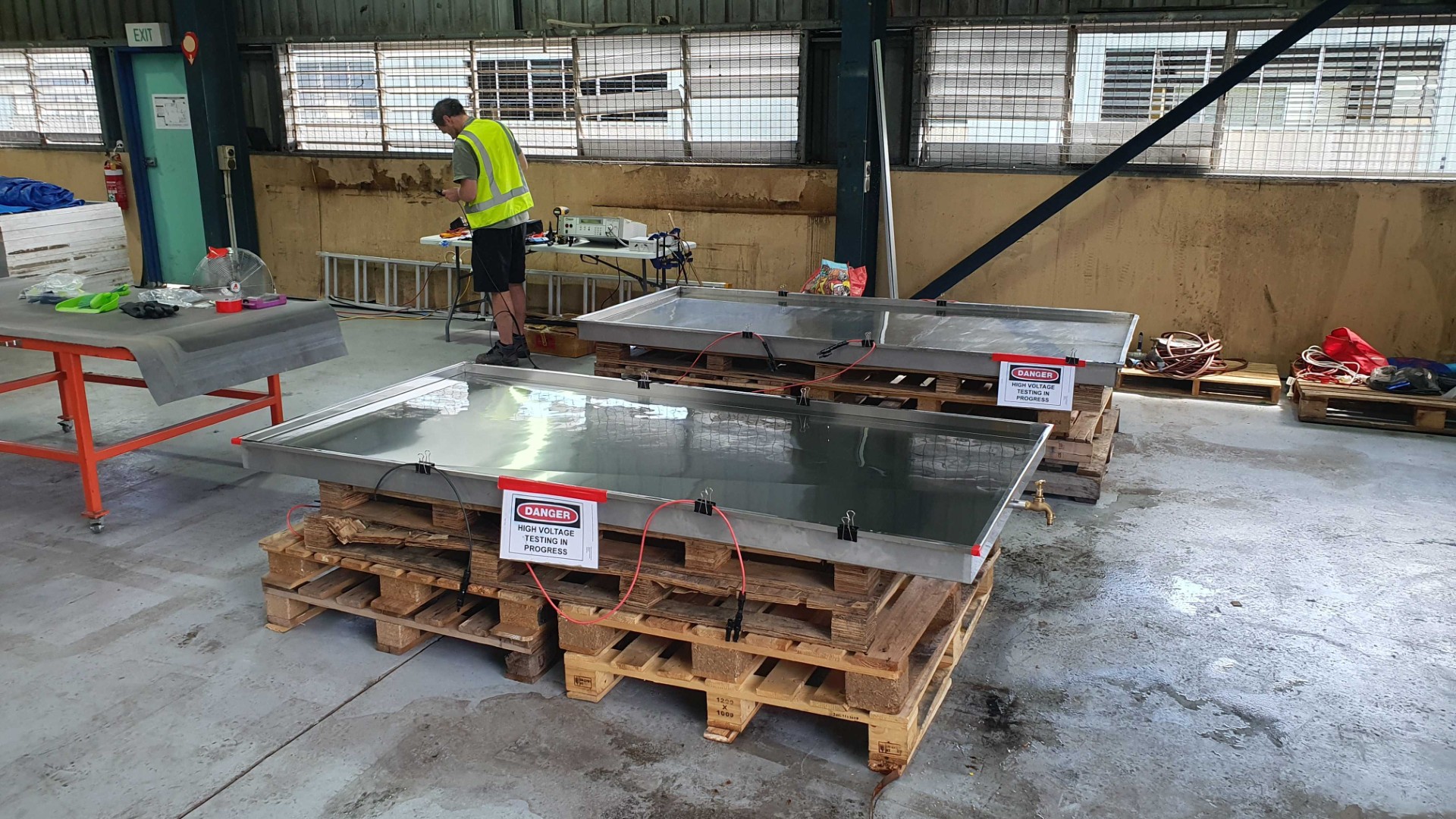
Researchers in Australia identified two scalable routes for electrical safety qualification of second-life PV modules: silicone backsheet repair and faster parallel wet-leakage testing. A Queensland pilot found that 15% of 2,200 reuse-ready modules failed the wet-leakage test, highlighting the need for dedicated safety screening while modified testing could reduce costs and processing time.
A group of researchers from the Australian National University has investigated how to integrate electrical safety test into a reuse qualification of PV modules through a large-scale field testing and has found that around 15% of the decommissioned modules intended for reuse failed to meet legal requirements.
“With the increasing number of fully functional PV panels being decommissioned, reliable and efficient testing is becoming increasingly important before these panels can be deployed in second-life applications. However, the lack of rapid and cost-effective safety testing methods remains a major bottleneck for the reuse of PV modules,” corresponding author Rabin Basnet told pv magazine. “Our work addresses this electrical safety challenge by proposing two potential pathways: silicone coating of the module surface and modification of the standard wet-leakage (WL) testing procedure to enable faster and more practical qualification.”