For the first time since Brexit, the EU has a tangible chance to grow again. But as countries like Montenegro fast approach membership while others look to Europe as a security anchor, Brussels' enlargement ambition is about to face its moment of truth.
The EU's enlargement is riding a once-in-a-generation momentum, with several "frontrunners" nearing the finish line, Ukraine and Moldova taking their first definitive steps out of Moscow's orbit, and Iceland weighing whether to resume accession talks.
The situation has not looked this promising in years, with EU officials boasting that more negotiating chapters have closed in the last six months than in the past decade.
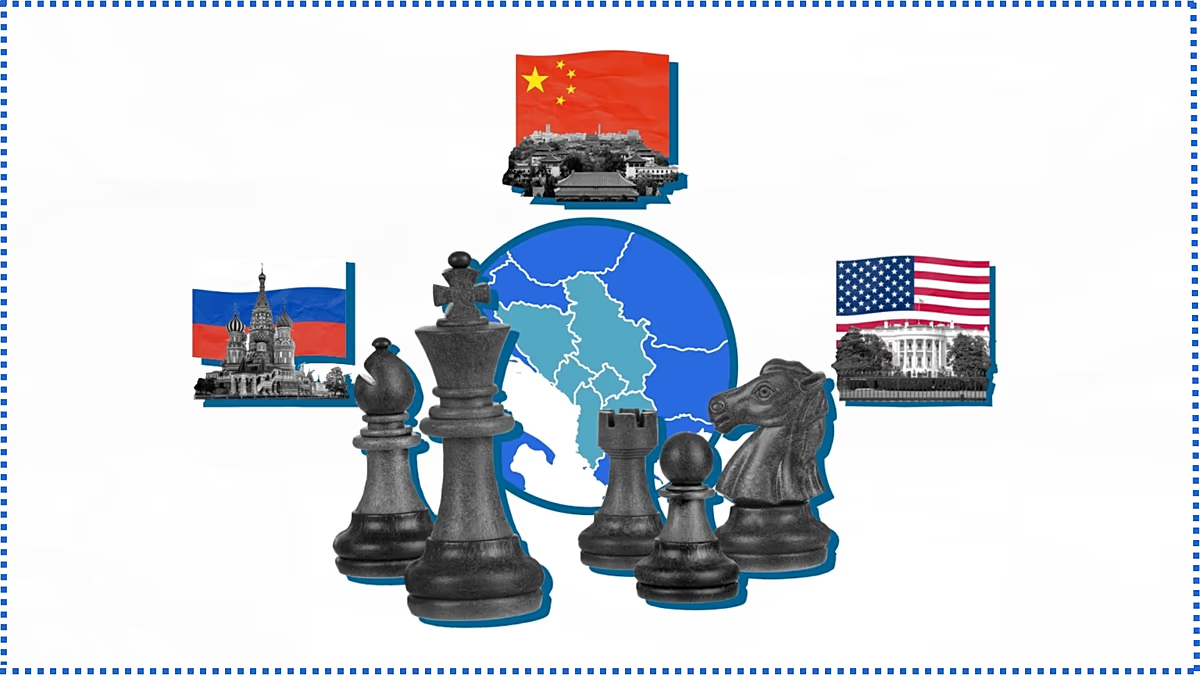
Brussels has increasingly wielded EU accession as a foreign policy tool — to consolidate its influence in its immediate neighbourhood, extend security guarantees that curb the influence of hostile powers, and anchor stability amid a volatile geopolitical landscape.
But as the prospect of an expanded Union becomes more concrete, EU institutions and member states are being increasingly confronted with a series of political and strategic questions that will come to a head if the next wave of enlargement happens.